
Milan vs. Florence: Two Capitals of Italian Style
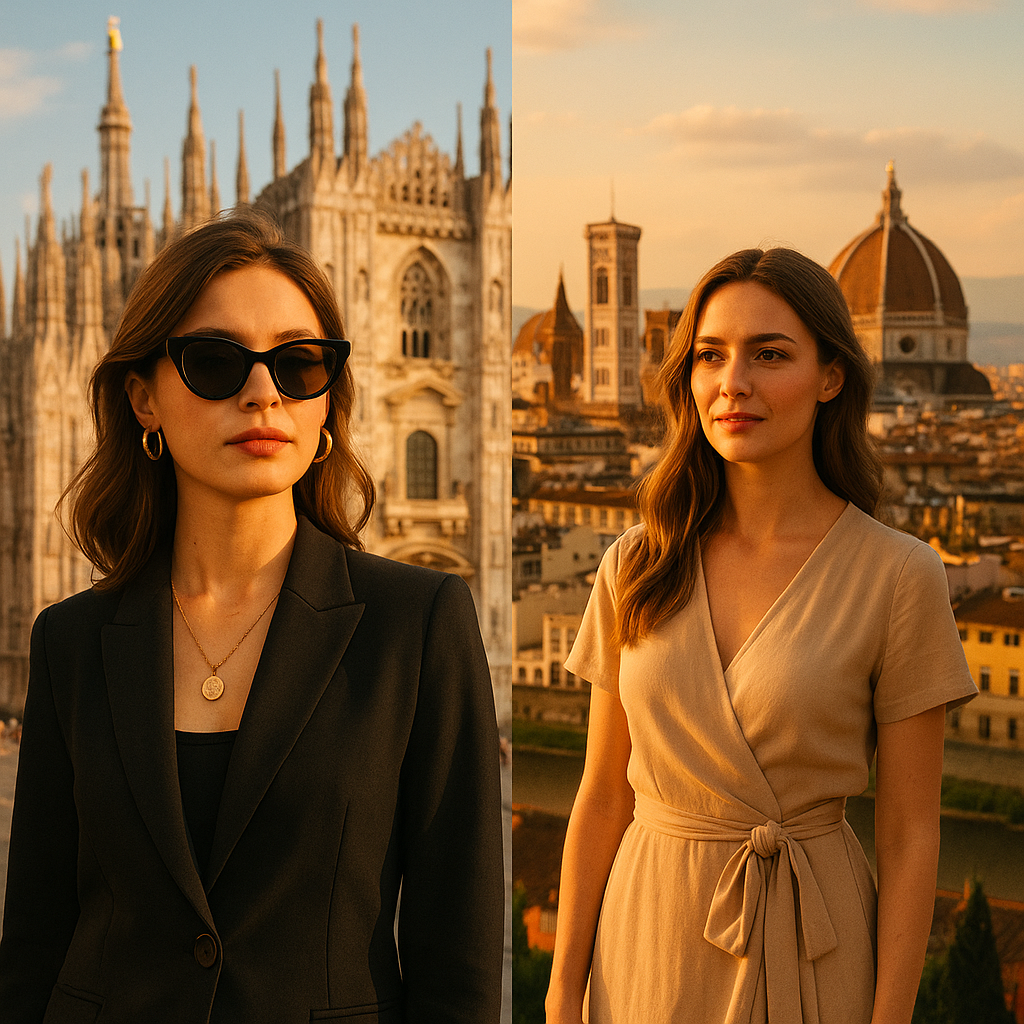
When Italians talk about style, they rarely mean just clothing. Style in Italy is a way of walking through the world, of arranging a plate of food, of hosting guests at home, of carrying yourself with confidence and grace. Few countries can claim such a deep and multifaceted culture of elegance, and within Italy itself, two cities rise above the rest as icons of taste and refinement: Milan and Florence. Both are capitals of Italian style, but they embody it in very different ways—Milan with its sleek, modern, cosmopolitan flair, and Florence with its Renaissance heritage, artisanal traditions, and quiet sophistication. To set them side by side is not simply to compare fashion weeks and boutique windows, but to uncover two complementary visions of what it means to live beautifully in Italy.
This article will explore Milan and Florence through the lenses of fashion, history, art, architecture, lifestyle, and culture. Whether you’re a traveler deciding which city deserves a spot on your itinerary, a student of Italian fascinated by regional character, or simply someone who dreams of adopting a more stylish way of life, the contrasts and connections between these two cities will give you plenty to think about.
Milan: The Powerhouse of Modern Italian Style
Milan is Italy’s beating heart of business, fashion, and finance. It is not a city that seduces with obvious charm right away; instead, Milan grows on you as you discover its layers. Unlike Florence, whose beauty is laid out in full display with its cathedral dome and Renaissance piazzas, Milan rewards the observant traveler—the one who notices the exquisite details hidden behind the façades.
Fashion and Design Capital
Milan is globally famous for being home to Milan Fashion Week, a twice-yearly event that sets the tone for designers and style houses worldwide. Versace, Prada, Armani, and Dolce & Gabbana all call Milan home. The Quadrilatero della Moda, a rectangle of high-end shopping streets, is perhaps the densest concentration of luxury boutiques on earth. Even beyond the catwalks, Milan’s design culture permeates everyday life. From cutting-edge furniture showcased at the Salone del Mobile to architectural experimentation like the Bosco Verticale (Vertical Forest), Milan embodies contemporary sophistication.
Urban Elegance
The Milanese are known for a subtler, more restrained elegance compared to their southern counterparts. Neutral palettes, well-tailored suits, and understated luxury dominate the streets. A Milanese commuter might ride a bicycle in a perfectly pressed trench coat and leather loafers, embodying the city’s effortless chic. This understated but unmistakable polish defines Milan’s style ethos: beauty without shouting.
Cultural Landscape
While Milan is a fashion capital, it is also an artistic hub. Leonardo da Vinci’s The Last Supper resides in the refectory of Santa Maria delle Grazie, and the city’s opera house, La Scala, is the mecca of classical music lovers. Modern culture thrives as well, with avant-garde galleries and international art fairs attracting global audiences.
Florence: The Timeless Cradle of Elegance
If Milan is sleek and modern, Florence is timeless and rooted in tradition. Every street corner in Florence feels like it belongs to the Renaissance, and for good reason: this was the city that gave the world Michelangelo, Botticelli, Brunelleschi, and the Medici family. Florence is less about the latest collection on the runway and more about craftsmanship passed down through generations.
The Birthplace of Renaissance Style
Florence’s reputation as a style capital rests on its history as the birthplace of Renaissance art and architecture. The iconic Duomo, designed by Filippo Brunelleschi, still dominates the skyline, while the Uffizi Gallery houses masterpieces that changed the trajectory of Western art. This deep artistic heritage shapes Florence’s aesthetic even today.
Artisanal Traditions
Florence is the city of artisans. Leather goods from Florence—bags, shoes, jackets—are world-renowned for their quality. Goldsmiths work along the Ponte Vecchio, continuing traditions that date back centuries. Paper marbling, bookbinding, and textile production thrive in Florence’s workshops. If Milan is about the fashion house, Florence is about the craftsman’s workshop, where individuality and artistry take precedence over mass production.
Lifestyle and Elegance
Florentines carry themselves with an understated dignity rooted in centuries of civic pride. They value heritage, family, and community, and their style reflects this balance between history and modern living. To sip an espresso in a café on Piazza della Repubblica is to feel surrounded by an elegance that is not about trend but about tradition.
Milan vs. Florence: Contrasts and Complements
Both Milan and Florence are undeniably stylish, but their expressions of style highlight different Italian values.
CategoryMilan: Modern CapitalFlorence: Timeless CapitalFashionGlobal fashion houses, runways, international influenceArtisan leather goods, handmade jewelry, heritage textilesArchitectureContemporary skyscrapers, modernist design, urban planningRenaissance cathedrals, palaces, and timeless piazzasArtLeonardo’s Last Supper, cutting-edge galleriesMichelangelo’s David, Botticelli’s Birth of VenusLifestyleFast-paced, business-driven, cosmopolitanSlow-paced, tradition-focused, artisanalStyle PhilosophyUnderstated chic, urban eleganceClassic refinement, rooted in history
These differences are not oppositions but rather two sides of the Italian coin. Milan pushes style into the future, while Florence guards the treasures of the past. Together, they show how Italian style manages to be both innovative and timeless.
Which City Fits Your Style?
Choose Milan if you are drawn to innovation, cosmopolitan energy, and the cutting edge of fashion and design. Milan is the place to see global trends before they appear elsewhere.
Choose Florence if you love history, artistry, and a slower pace that allows you to savor the richness of tradition. Florence offers a living museum of elegance that never goes out of style.
Of course, the best way to understand Italian style is to experience both cities. Milan and Florence are only about two hours apart by high-speed train, making it easy to pair them in one trip.
FAQs
1. Why is Milan considered the fashion capital of the world?
Milan earned its title through its concentration of fashion houses, its hosting of Milan Fashion Week, and its influence on global trends. It also has a strong design culture beyond clothing, including furniture and architecture.
2. Is Florence also known for fashion?
Yes, but Florence’s fashion reputation is more artisanal. It is famous for its leather goods, jewelry, and textiles, as well as its history with houses like Gucci, which was founded there.
3. Which city is better for shopping?
Milan is better for high-end, luxury fashion shopping, while Florence is ideal for unique, handmade pieces with timeless quality.
4. What is the best time to visit Milan and Florence?
Spring and early autumn are ideal for both cities, offering pleasant weather and fewer tourist crowds. Fashion enthusiasts may prefer to visit Milan during Fashion Week.
5. How do Milanese and Florentines differ in lifestyle?
Milanese tend to lead fast-paced, business-oriented lives with a focus on efficiency and modernity. Florentines emphasize tradition, community, and craftsmanship, living at a slower, more reflective pace.
6. Which city is more “Italian” in feel?
Florence often feels more traditionally Italian, with its Renaissance heritage and artisanal culture, while Milan feels more international and cosmopolitan.
7. Can you experience both cities in one trip?
Absolutely. With high-speed trains, you can travel between them in under two hours, making it possible to enjoy the contrasts in a single journey.
8. Do I need to know Italian to enjoy Milan or Florence?
Not strictly, as English is widely spoken in tourist areas. However, knowing Italian—even basic phrases—will enrich your experience and help you connect with locals.
Conclusion: Two Cities, One Spirit of Style
Milan and Florence may differ in pace, personality, and aesthetic, but they both embody the Italian devotion to beauty, elegance, and living well. Milan looks ahead, defining what is modern and fashionable. Florence looks back, preserving what is timeless and eternal. Together, they represent the full spectrum of Italian style: innovation balanced with tradition, cosmopolitan energy balanced with artisanal pride.
If your heart beats faster at the sight of sleek urban design, Milan will enchant you. If you long to walk streets where Renaissance genius still lingers in the air, Florence will feel like home. But ultimately, both cities teach the same lesson: in Italy, style is not an accessory—it’s a way of life.
At Polyglottist Language Academy, we believe that learning Italian is not only about mastering grammar and vocabulary, but also about understanding the cultural and stylistic worlds of cities like Milan and Florence. Our classes combine language with culture so you can speak with confidence and connect with Italy on a deeper level.
👉 Ready to start your journey? Sign up for our Italian classes today!
And if you enjoyed this article, check out some of our other posts: