
Types of Ramen Explained: Tonkotsu, Shoyu, Miso, and Shio
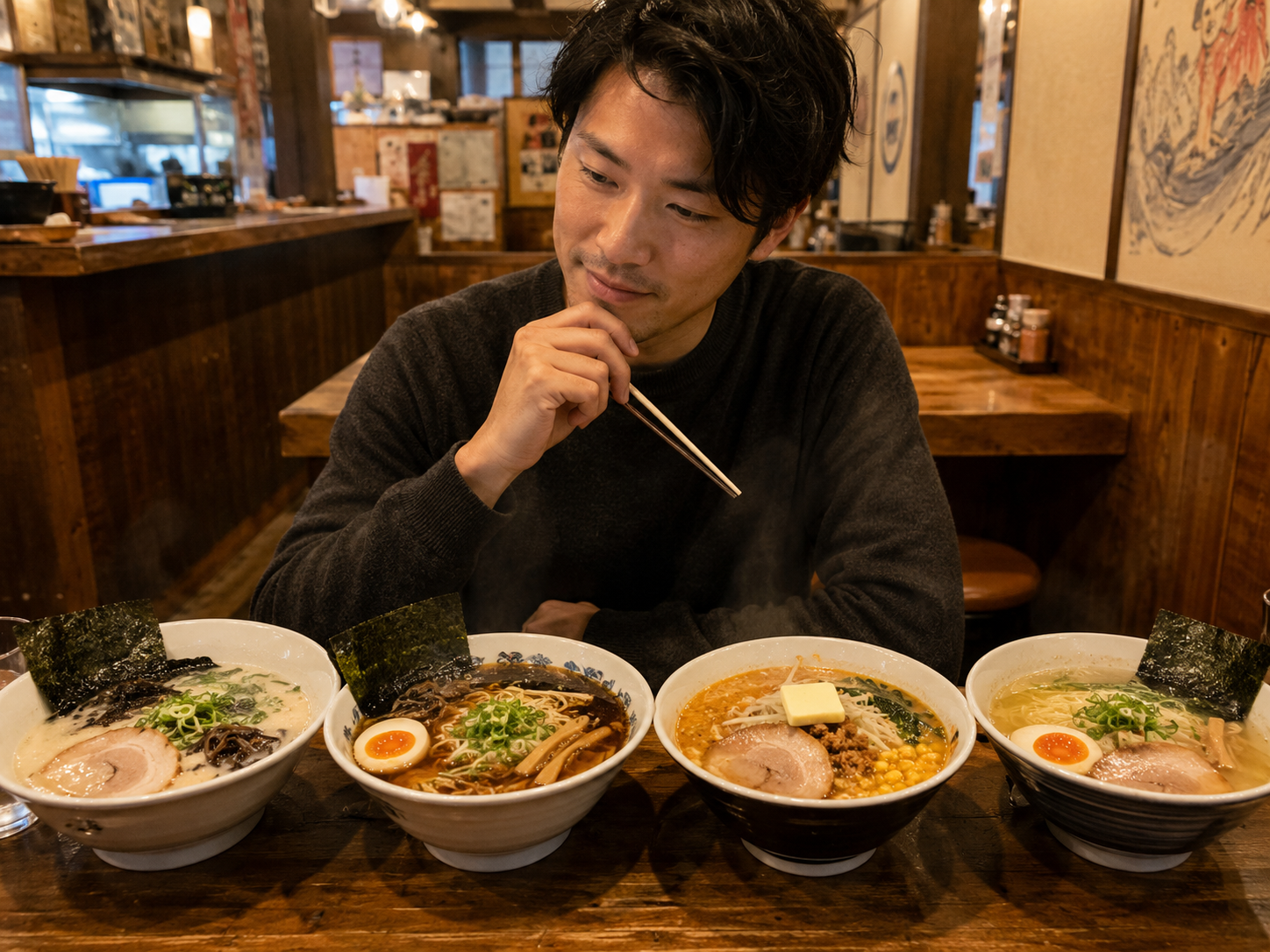
When you sit down in a small ramen shop, you quickly realize that ramen is not simply “Japanese noodle soup”—it is a whole world of regional history, cooking technique, personal preference, and everyday Japanese culture served in one unforgettable bowl.
For many people outside Japan, ramen begins with instant noodles: a packet, a seasoning sachet, boiling water, and a quick meal. But in Japan, ramen is something much deeper and more varied. It can be a late-night comfort food, a quick lunch for office workers, a regional specialty worth traveling for, or a carefully crafted culinary experience made by chefs who spend years perfecting their broth, noodles, tare, aroma oil, and toppings.
One of the first things beginners notice when exploring ramen is that menus often mention words like tonkotsu, shoyu, miso, and shio. These four names appear again and again in ramen shops, travel guides, food blogs, and Japanese restaurant menus around the world. At first, they can seem confusing. Are they different broths? Different flavors? Different regions? Different toppings? The answer is: sometimes all of the above—but not always in the same way.
Understanding these four ramen styles is one of the easiest ways to begin appreciating Japanese food culture. Each one tells a story. Tonkotsu ramen is rich, creamy, and pork-based, strongly associated with Kyushu and especially Fukuoka. Shoyu ramen is soy sauce–seasoned, often considered one of the most classic styles, especially linked with Tokyo. Miso ramen is bold, hearty, and deeply savory, famously connected with snowy Hokkaido and the city of Sapporo. Shio ramenis salt-seasoned, often lighter and clearer, but still full of flavor when made well.
Learning these ramen types also gives Japanese language learners a useful entry point into real menu vocabulary. Words like 豚骨 (tonkotsu, pork bone), 醤油 (shoyu, soy sauce), 味噌 (miso, fermented soybean paste), and 塩 (shio, salt) are not abstract textbook words. They are words you can see, taste, order, and remember. Food is one of the most enjoyable ways to connect language with lived experience, and ramen is a perfect example of how vocabulary, culture, and daily life come together.
This guide explains the four major ramen styles in a clear and beginner-friendly way. We will look at what makes each bowl different, where these styles come from, how broth and seasoning work, what toppings are commonly used, and how to choose the best ramen for your own taste.
What Is Ramen?
Ramen is a Japanese noodle soup made with wheat noodles served in a seasoned broth and finished with toppings such as sliced pork, soft-boiled egg, green onions, bamboo shoots, seaweed, or vegetables. Although ramen is now one of Japan’s most famous foods, its roots are connected to Chinese wheat noodles that arrived in Japan through port cities and Chinese communities in the late nineteenth and early twentieth centuries.
Over time, ramen became fully localized in Japan. Japanese chefs adapted the noodles, broths, seasonings, toppings, and serving styles to local tastes. After World War II, ramen became especially popular as an affordable, filling, high-energy meal. Street stalls, small shops, and later national chains helped ramen spread across the country. Eventually, instant ramen helped make the dish known worldwide, while specialty ramen shops in Japan continued developing increasingly refined regional styles.
Today, ramen exists on many levels. It can be cheap and casual, or highly specialized and chef-driven. It can be eaten quickly at a counter during a lunch break, or it can be the reason someone travels across Japan to visit a famous shop. It is both comfort food and culinary craft.
The Four Main Parts of Ramen
Before comparing tonkotsu, shoyu, miso, and shio, it is helpful to understand the basic structure of a ramen bowl. Most ramen consists of four main elements: broth, tare, noodles, and toppings.
Broth
The broth is the soup base. It may be made from pork bones, chicken bones, seafood, dried fish, seaweed, vegetables, mushrooms, or a combination of several ingredients. Some broths are simmered gently and remain clear, while others are boiled vigorously until they become thick, opaque, and creamy.
Tonkotsu broth, for example, is made from pork bones that are boiled for a long time until collagen, fat, and marrow create a milky, rich soup. Other broths may be lighter and clearer, such as chicken and seafood broths used for many shio or shoyu ramen bowls.
Tare
Tare is the concentrated seasoning base added to the bowl before the broth. This is one of the most important parts of ramen, because it controls the main salty and savory flavor. The most common tare types are:
Shoyu — soy sauce tare
Miso — fermented soybean paste tare
Shio — salt-based tare
This distinction is very important: shoyu, miso, and shio usually describe the seasoning base, while tonkotsu describes the pork-bone broth. This means that ramen categories can overlap. You can have tonkotsu-shoyu ramen, which uses pork-bone broth seasoned with soy sauce tare. You can also have miso-tonkotsu ramen or shio-tonkotsu ramen.
Noodles
Ramen noodles are usually made from wheat flour, water, salt, and kansui, an alkaline mineral water that gives ramen noodles their firm, springy texture and slightly yellow color. Noodles can be thin or thick, straight or wavy, soft or very firm. Different ramen styles often pair with different noodle types.
Toppings
Toppings add flavor, texture, color, and personality. Common toppings include chashu pork, soft-boiled marinated eggs, bamboo shoots, seaweed, green onions, corn, butter, bean sprouts, mushrooms, and fish cake. Some toppings are strongly associated with certain regions or styles, such as corn and butter with Sapporo miso ramen or kikurage mushrooms with Hakata tonkotsu ramen.
Tonkotsu Ramen: Rich, Creamy Pork-Bone Ramen
Japanese: 豚骨ラーメン
Romanization: tonkotsu ramen
Pronunciation: ton-koh-tsu
Meaning: pork bone ramen
Tonkotsu ramen is one of the most famous ramen styles outside Japan, especially because of its rich, creamy broth. The word tonkotsu comes from 豚 (ton), meaning pig or pork, and 骨 (kotsu), meaning bone. Together, 豚骨 means pork bone.
It is important not to confuse tonkotsu with tonkatsu. Tonkotsu refers to pork-bone broth. Tonkatsu is a breaded and fried pork cutlet. They sound similar, but they are completely different foods.
Origins of Tonkotsu Ramen
Tonkotsu ramen is strongly associated with Kyushu, especially Fukuoka and the Hakata area. Hakata-style tonkotsu ramen became famous for its milky pork-bone broth, thin straight noodles, and quick service. It was originally a hearty, efficient meal for workers and became one of Japan’s most recognizable ramen traditions.
How Tonkotsu Broth Is Made
Traditional tonkotsu broth is made by boiling pork bones for many hours. The bones are often boiled vigorously rather than gently simmered. This high heat helps break down collagen, fat, marrow, and other elements in the bones, creating a cloudy, creamy, opaque broth.
The result is a soup that is rich, silky, and deeply savory. It often has a strong pork aroma and a satisfying mouthfeel that coats the tongue. The broth may be seasoned with shio, shoyu, or another tare, which is why you may see combinations such as tonkotsu-shoyu.
Flavor and Texture
Tonkotsu ramen is usually:
Rich
Creamy
Porky
Savory
Full-bodied
Opaque white or beige
Heavier than most other ramen styles
Some people fall in love with tonkotsu immediately because it feels luxurious and comforting. Others find it too heavy or too strongly pork-flavored. If you like creamy soups, roasted pork, garlic, and bold umami flavors, tonkotsu may become your favorite.
Typical Noodles and Toppings
Hakata tonkotsu ramen often uses very thin, straight noodles. These noodles cook quickly and are often served firm. Many shops allow customers to choose noodle firmness, from soft to very firm.
Common toppings include:
Chashu pork
Green onions
Kikurage wood ear mushrooms
Nori seaweed
Sesame seeds
Pickled ginger
Garlic
One famous custom connected to Hakata-style tonkotsu is kaedama, or ordering an extra serving of noodles to add to the remaining broth.
Shoyu Ramen: The Classic Soy Sauce Ramen
Japanese: 醤油ラーメン
Romanization: shoyu ramen
Pronunciation: show-yu
Meaning: soy sauce ramen
Shoyu ramen is one of the most classic and widely recognized ramen styles. Shoyu means soy sauce in Japanese, and in this style, the tare is made primarily with soy sauce. Shoyu ramen is often associated with Tokyo and with older styles of Japanese ramen.
Origins of Shoyu Ramen
Many early Japanese ramen bowls were soy sauce–seasoned, making shoyu ramen one of the oldest and most traditional styles. Tokyo-style shoyu ramen is often viewed as a classic version of ramen: clear or lightly cloudy broth, soy sauce aroma, wavy noodles, and familiar toppings such as chashu, menma, nori, green onions, and sometimes narutomaki fish cake.
How Shoyu Ramen Is Made
Shoyu ramen is usually made with a soy sauce tare combined with a broth made from chicken, pork, seafood, vegetables, or a mixture of these. The soy sauce adds saltiness, umami, color, and aroma.
A good shoyu ramen is balanced. It should not taste simply like soy sauce poured into soup. The tare, broth, oil, and toppings should work together. The broth is often amber to dark brown, but it is usually lighter in body than tonkotsu.
Flavor and Texture
Shoyu ramen is usually:
Savory
Aromatic
Medium-bodied
Soy-forward
Balanced
Clear brown or amber in color
Less heavy than tonkotsu
For many beginners, shoyu ramen is an excellent first bowl because it offers a classic ramen flavor without being too rich or too unusual. It has enough depth to be satisfying, but it is usually not as intense as tonkotsu or as fermented as miso.
Typical Noodles and Toppings
Shoyu ramen often uses medium-thin, slightly wavy noodles. The waves help catch the broth and carry the soy-based flavor.
Common toppings include:
Chashu pork
Menma bamboo shoots
Nori seaweed
Green onions
Ajitama marinated egg
Narutomaki fish cake
If you want a ramen bowl that feels traditional, familiar, and balanced, shoyu is a wonderful place to start.
Miso Ramen: Bold, Hearty, and Perfect for Cold Weather
Japanese: 味噌ラーメン
Romanization: miso ramen
Pronunciation: mee-so
Meaning: miso ramen, made with fermented soybean paste
Miso ramen is rich, hearty, and deeply flavorful. It is most famously associated with Hokkaido, especially Sapporo, where cold winters helped shape a ramen style that is warming, filling, and robust.
What Is Miso?
Miso is a fermented soybean paste used widely in Japanese cooking. It can be salty, earthy, nutty, slightly sweet, and deeply savory. Different types of miso vary in color and flavor. Some are lighter and sweeter, while others are darker, saltier, and more intense.
In ramen, miso is used as the tare. It gives the broth body, complexity, and a fermented depth that is different from soy sauce or salt.
Origins of Miso Ramen
Sapporo miso ramen became especially famous in the twentieth century and is now one of Hokkaido’s signature foods. Because Hokkaido is known for cold weather, agriculture, dairy, corn, and hearty cooking, Sapporo-style miso ramen often includes toppings like corn, butter, bean sprouts, ground pork, and stir-fried vegetables.
How Miso Ramen Is Made
Miso ramen usually begins with a broth made from chicken, pork, or a combination of ingredients. A miso-based tare is added, often with garlic, ginger, or other aromatics. In many Sapporo-style bowls, vegetables may be stir-fried before being added to the soup, creating extra fragrance and richness.
The broth may be golden-brown, orange-brown, or darker depending on the miso and other ingredients used.
Flavor and Texture
Miso ramen is usually:
Bold
Hearty
Savory
Slightly sweet
Nutty
Fermented
Medium to rich in body
Warming and filling
Miso ramen is a great choice if you like strong flavor but do not necessarily want a creamy pork-bone broth. It is especially satisfying in cold weather and is ideal for people who already enjoy miso soup but want something deeper and more filling.
Typical Noodles and Toppings
Miso ramen often uses medium-thick, curly noodles. These noodles stand up well to the heavier broth.
Common toppings include:
Corn
Butter
Bean sprouts
Ground pork
Chashu
Green onions
Garlic
Cabbage or other vegetables
Corn and butter are especially associated with Hokkaido-style miso ramen. The corn adds sweetness, while the butter melts into the broth and gives it extra richness.
Shio Ramen: Light, Clear, and Subtle
Japanese: 塩ラーメン
Romanization: shio ramen
Pronunciation: shee-oh
Meaning: salt ramen
Shio ramen is often described as the lightest of the major ramen styles. Shio means salt, and shio ramen uses a salt-based tare. However, “light” does not mean boring. A well-made shio ramen can be elegant, aromatic, delicate, and deeply satisfying.
Origins of Shio Ramen
Shio is one of the oldest ramen seasoning styles and is strongly associated with Hakodate in Hokkaido. Hakodate shio ramen is known for its clear broth, light color, and clean flavor. Because the tare does not rely on the strong color of soy sauce or the fermented body of miso, the quality of the broth becomes especially important.
How Shio Ramen Is Made
Shio ramen may use a broth made from chicken, seafood, vegetables, seaweed, or a combination of ingredients. The salt tare seasons the soup while allowing the natural flavor of the broth to shine.
Because shio ramen is often clear and pale, people sometimes assume it is bland. This is a mistake. A good shio ramen can be full of umami from chicken, dried seafood, kombu, shellfish, or other ingredients. Its beauty is in balance and clarity.
Flavor and Texture
Shio ramen is usually:
Light
Clear
Clean-tasting
Delicate
Savory
Pale gold or clear yellow
Focused on broth quality
Shio ramen is excellent for people who prefer lighter soups or who want to taste the subtle ingredients in the broth. It is also a good choice if you do not want something too creamy or too heavy.
Typical Noodles and Toppings
Shio ramen often uses thin, straight noodles, although this varies by shop and region.
Common toppings include:
Chashu or chicken
Green onions
Menma
Nori
Ajitama
Seafood-inspired toppings in some versions
Shio ramen may look simple, but simplicity can be difficult. Because there is less to hide behind, the balance of salt, broth, oil, noodles, and toppings must be precise.
Tonkotsu vs. Shoyu, Miso, and Shio: The Important Difference
One of the biggest misunderstandings about ramen is that tonkotsu, shoyu, miso, and shio are all the same kind of category. They are not.
Tonkotsu refers to the broth. It means pork-bone broth.
Shoyu, miso, and shio usually refer to the tare. They describe the main seasoning: soy sauce, miso, or salt.
This means the categories can overlap. For example:
Tonkotsu-shoyu: pork-bone broth with soy sauce tare
Tonkotsu-shio: pork-bone broth with salt tare
Miso-tonkotsu: pork-bone broth with miso tare
Chicken shoyu: chicken broth with soy sauce tare
Seafood shio: seafood broth with salt tare
This is why ramen menus can be confusing at first. A bowl may be described by its broth, its tare, its region, or even its toppings. The more you learn, the easier it becomes to understand what you are ordering.
Common Ramen Toppings
Chashu
Chashu is sliced braised or roasted pork, often made from pork belly or shoulder. It is tender, savory, and one of the most beloved ramen toppings.
Ajitama
Ajitama, or seasoned egg, is a soft-boiled egg marinated in a soy-based sauce. The yolk is usually jammy and rich.
Menma
Menma are seasoned bamboo shoots. They add crunch, texture, and a slightly earthy flavor.
Nori
Nori is dried seaweed. It adds a briny, ocean-like aroma and is often placed upright against the side of the bowl.
Negi
Negi means green onion or Japanese leek. It adds freshness and sharpness, helping balance rich broths.
Narutomaki
Narutomaki is a white fish cake with a pink spiral. It is often associated with classic shoyu ramen and adds a nostalgic visual touch.
Kikurage
Kikurage are wood ear mushrooms. They are especially common in tonkotsu ramen and add a crunchy-chewy texture.
Corn and Butter
Corn and butter are strongly associated with Sapporo-style miso ramen. Corn adds sweetness, while butter melts into the broth and makes it richer.
Bean Sprouts
Bean sprouts add crunch and freshness. They are common in miso ramen, especially when stir-fried with other vegetables.
Regional Ramen Traditions
Hakata Tonkotsu Ramen
Hakata ramen from Fukuoka is famous for thin noodles, rich pork-bone broth, and the custom of kaedama noodle refills. It is one of Japan’s most internationally recognized ramen styles.
Tokyo Shoyu Ramen
Tokyo shoyu ramen is often considered a classic style. It usually features soy sauce tare, chicken or mixed broth, wavy noodles, chashu, menma, nori, and green onions.
Sapporo Miso Ramen
Sapporo miso ramen is rich, hearty, and perfect for cold weather. It often includes miso broth, curly noodles, corn, butter, bean sprouts, and sometimes ground pork.
Hakodate Shio Ramen
Hakodate shio ramen is known for its clear, pale broth and clean salt seasoning. It is a lighter Hokkaido ramen style that highlights the natural flavor of the soup.
Ramen Noodles: Why They Matter
Noodles are not just a background ingredient. They shape the entire ramen experience.
Ramen noodles vary by:
Thickness: Thin noodles are common in Hakata tonkotsu; thicker noodles often appear in miso ramen.
Shape: Wavy noodles hold broth differently from straight noodles.
Firmness: Some shops allow you to choose soft, normal, firm, or very firm noodles.
Hydration: Lower-hydration noodles are often firmer and chewier; higher-hydration noodles can feel softer and springier.
Texture: Kansui gives ramen noodles their distinctive bite and separates them from other wheat noodles.
The right noodle should match the broth. A delicate shio broth may pair beautifully with thin noodles, while a powerful miso broth may need thicker noodles that do not disappear under the weight of the soup.
Useful Ramen Ordering Terms
If you visit Japan or an authentic ramen shop, these words can help:
ラーメン / ramen — ramen
豚骨 / tonkotsu — pork bone
醤油 / shoyu — soy sauce
味噌 / miso — fermented soybean paste
塩 / shio — salt
麺 / men — noodles
スープ / supu — soup or broth
タレ / tare — seasoning base
替え玉 / kaedama — extra noodles
普通 / futsu — normal
固め / katame — firm noodles
柔らかめ / yawarakame — softer noodles
いただきます / itadakimasu — said before eating
ごちそうさまでした / gochisosama deshita — said after eating to thank the cook or host
Learning these words makes ramen more than a meal. It becomes a small language lesson.
Ramen Etiquette: How to Eat Ramen in Japan
Ramen shops in Japan are often quick and efficient. Many people eat alone at counters, especially during lunch or after work. In some shops, you order from a ticket machine near the entrance, hand the ticket to the staff, sit down, eat, and leave soon after finishing.
Here are a few customs to know:
Eat While It Is Hot
Ramen is best eaten immediately. If you wait too long, the noodles absorb broth and become too soft.
Slurping Is Normal
In Japan, slurping noodles is common and acceptable. It helps cool the noodles and brings aroma into the mouth. It can also show that you are enjoying the meal.
Do Not Feel Forced to Finish the Broth
Some people drink all the broth, but you do not have to. Ramen broth can be salty and rich, so it is perfectly fine to finish the noodles and toppings and leave some soup behind.
Respect the Shop’s Style
Some ramen shops allow many customizations. Others prefer that customers enjoy the bowl as the chef designed it. When in doubt, order simply and observe what local customers do.
Vegetarian and Vegan Ramen
Traditional ramen often uses pork, chicken, seafood, or fish-based dashi, but vegetarian and vegan ramen have become more common, especially in major cities. Vegan ramen may use mushrooms, kombu, onions, garlic, sesame, miso, soy sauce, and vegetable oils to create depth and richness.
Vegetarian shoyu, miso, and shio ramen are easier to adapt than traditional tonkotsu because the tare can be made without meat. Vegan “tonkotsu-style” ramen usually tries to recreate creaminess using plant-based ingredients such as soy milk, sesame paste, mushrooms, or emulsified vegetable fats.
If you are vegetarian or vegan, always check whether the broth contains fish, pork, chicken, or bonito flakes, because a bowl may look vegetable-based but still include animal ingredients in the stock or tare.
Which Ramen Should You Try First?
The best ramen for you depends on your taste.
Choose tonkotsu if you like rich, creamy, pork-based soups.
Choose shoyu if you want a classic, balanced, savory ramen that is easy to enjoy.
Choose miso if you like bold, hearty, slightly fermented flavors and a warming bowl.
Choose shio if you prefer lighter, clearer soups with subtle but elegant flavor.
For first-time ramen eaters, shoyu is often the safest starting point because it is classic and balanced. However, if you already know that you love creamy soups, start with tonkotsu. If you enjoy miso soup, try miso ramen. If you prefer lighter broths, shio may surprise you.
Common Misconceptions About Ramen
Tonkotsu Does Not Mean Pork Cutlet
Tonkotsu means pork bone. Tonkatsu means pork cutlet. One is ramen broth; the other is a fried pork dish.
Shio Ramen Is Not Bland
Shio ramen is light, but when made well, it is flavorful and full of umami.
Dark Broth Is Not Always Stronger
A dark shoyu broth may be lighter than a pale tonkotsu broth. Color does not always tell you how rich or intense the ramen will be.
Not Every Bowl Fits One Category
Ramen styles overlap. A bowl can be tonkotsu-shoyu, miso-tonkotsu, or a modern hybrid that does not fit neatly into one category.
FAQs About Tonkotsu, Shoyu, Miso, and Shio Ramen
1. What is the difference between tonkotsu and shoyu ramen?
Tonkotsu ramen is based on pork-bone broth, while shoyu ramen is seasoned with soy sauce tare. Some ramen can be both tonkotsu and shoyu if it uses pork-bone broth with soy sauce seasoning.
2. What does tonkotsu mean?
Tonkotsu means pork bone. It refers to broth made by boiling pork bones until the soup becomes rich, creamy, and opaque.
3. Is tonkotsu the same as tonkatsu?
No. Tonkotsu is pork-bone ramen broth. Tonkatsu is a breaded and fried pork cutlet.
4. What does shoyu mean?
Shoyu means soy sauce. Shoyu ramen uses soy sauce tare to season the broth.
5. What does miso ramen taste like?
Miso ramen is savory, hearty, slightly nutty, and sometimes slightly sweet. It has a fermented depth from miso paste.
6. Is shio ramen salty?
Shio means salt, so shio ramen is salt-seasoned. However, good shio ramen should taste balanced, not simply salty.
7. Which ramen is best for beginners?
Shoyu ramen is often best for beginners because it is classic, balanced, and not too heavy. Tonkotsu is also popular for people who like creamy soups.
8. Which ramen is the richest?
Tonkotsu is usually the richest because of its pork-bone broth. Miso ramen can also be hearty and full-bodied.
9. Which ramen is the lightest?
Shio ramen is usually the lightest of the four major styles, especially when made with clear chicken or seafood broth.
10. Is miso ramen vegetarian?
Traditional miso ramen is not always vegetarian because the broth may include pork, chicken, or fish. However, vegetarian and vegan miso ramen versions are possible.
11. What is kaedama?
Kaedama means an extra serving of noodles. It is especially common in Hakata-style tonkotsu ramen shops.
12. Do Japanese people really slurp ramen?
Yes. Slurping ramen is normal in Japan and is not considered rude in ramen shops.
13. What is the most traditional ramen?
There is no single answer, but shoyu ramen is often considered one of the most classic and traditional styles.
14. Why are ramen noodles yellow?
Ramen noodles often have a yellowish color because they are made with kansui, an alkaline mineral water that gives them their texture and color.
15. Can ramen be healthy?
Ramen can be nourishing and satisfying, but many bowls are high in sodium and fat. Lighter broths, vegetable toppings, and moderate portions can make it a more balanced meal.
Learn Japanese Through Food and Culture
At Polyglottist Language Academy, we believe language learning becomes more meaningful when it is connected to culture, food, travel, conversation, and daily life. If you are interested in Japanese, our language classes can help you build practical communication skills while also deepening your understanding of Japanese culture. Whether you are learning Japanese for travel, food, anime, business, family connections, or personal enrichment, studying with a live instructor can make the language feel more approachable and enjoyable.
If this guide made you want to read a ramen menu in Japanese, travel to Tokyo or Hokkaido, or finally understand the difference between shoyu and shio, this is a perfect time to begin learning Japanese. Sign up for a class with Polyglottist Language Academy and take the next step toward understanding Japan through both its language and its culture.
Continue Reading: Related Articles
If you enjoyed this article, you may also like these other blog posts from Polyglottist Language Academy: