
Best Dutch Classes in San Jose for Beginners and Relocating Professionals
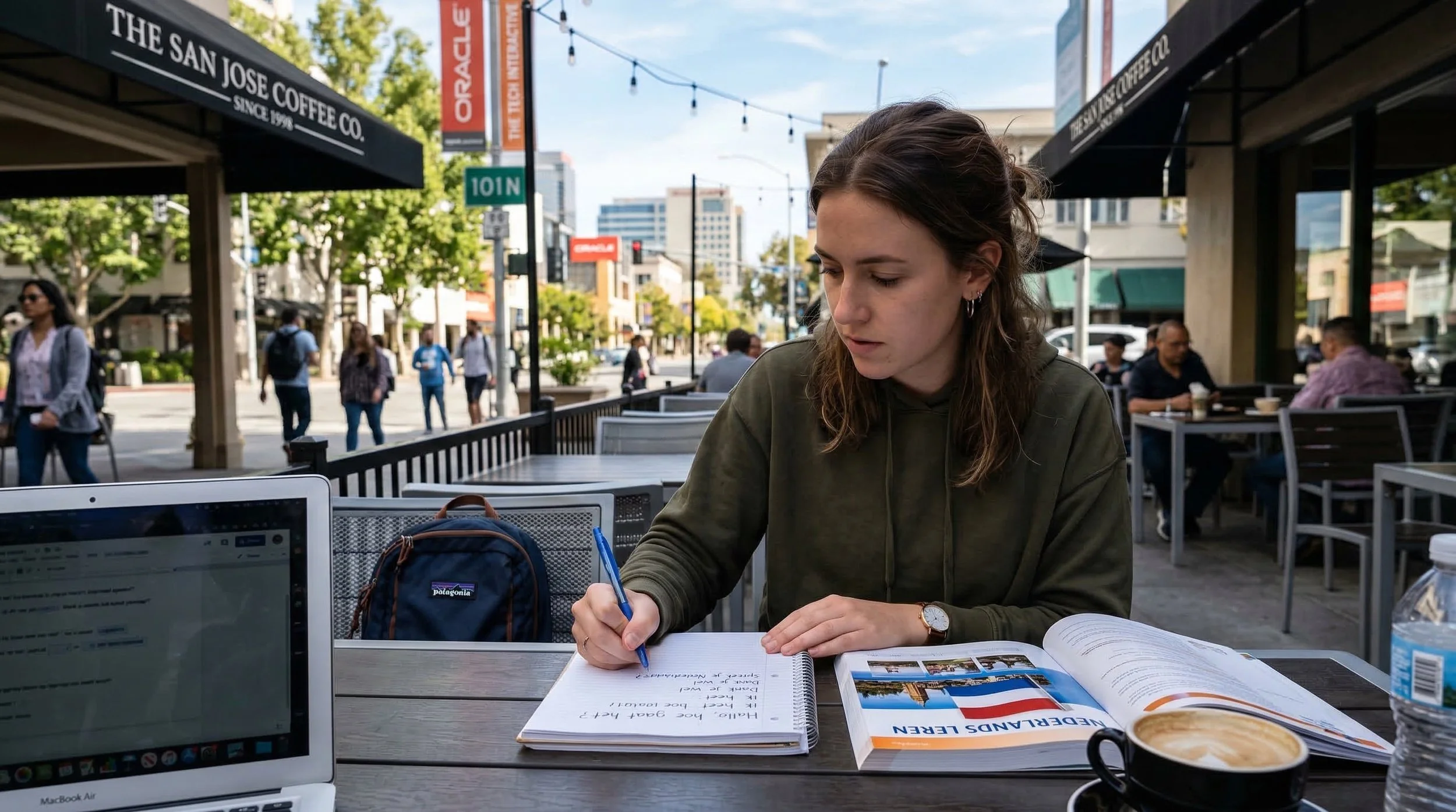
If you are living in San Jose and thinking about moving to the Netherlands—or you regularly work with Dutch colleagues, clients, or partners—learning Dutch is one of the smartest professional investments you can make. From tech and startups to corporate roles and research, more and more Bay Area professionals are building careers that move back and forth between Silicon Valley and Dutch cities like Amsterdam, Rotterdam, and Eindhoven. Dutch classes give you a structured way to prepare long before your plane takes off.
This article walks you through why Dutch is strategically useful, who should consider taking Dutch classes in San Jose, what to look for in a course, which options are available locally and online, and how to choose the right program for your goals. You will also find practical tips, realistic timelines, and a dedicated section that connects this topic to Dutch courses offered by Polyglottist Language Academy.
1. Why Learn Dutch in San Jose?
Growing ties between Silicon Valley and the Netherlands
The Bay Area and the Netherlands are more connected than they might appear at first glance. The Netherlands has positioned itself as one of Europe’s most innovation‑friendly environments, with strong ecosystems in high tech, semiconductors, clean energy, logistics, and fintech. Many Dutch companies have offices, partners, investors, or clients in Silicon Valley, and a significant number of US companies maintain European headquarters or important branches in Dutch cities.
For San Jose professionals, that means Dutch is not just a “nice extra” but an advantage in real-world business contexts. Whether you work in software, hardware, UX, data, or product, there is a decent chance you’ll collaborate with Dutch teams or consider a role in the Netherlands at some point in your career. Speaking even basic Dutch can make you stand out in international hiring pools, show commitment to the market, and make business travel or relocation far smoother.
Why professionals relocate to Dutch cities
Many Bay Area professionals choose to relocate to the Netherlands for:
High quality of life: Excellent public transport, bike-friendly cities, work–life balance, and strong social services.
Central European location: Quick travel to other EU markets and major capitals.
Tech and startup ecosystem: Amsterdam, Rotterdam, Utrecht, and especially the Brainport region around Eindhoven have a booming tech scene and strong links with universities and research institutes.
English-friendly environment: You can operate in English from day one while gradually building your Dutch.
Because English is widely spoken, some people underestimate the value of learning Dutch. In reality, speaking the local language helps you integrate faster, navigate bureaucracy with less stress, and build relationships beyond the international expat bubble.
Benefits of learning Dutch before moving
Starting Dutch classes in San Jose before relocating gives you several concrete advantages:
Smoother integration: When you arrive already knowing basic phrases, you can handle supermarket interactions, public transportation, and simple appointments without relying on others.
Better housing and bureaucracy experience: You will better understand rental contracts, letters from your gemeente (city hall), and basic government forms. Even if they are in Dutch, you can recognize key words and concepts.
Stronger professional profile: Demonstrating that you invested time in the language shows employers you are serious about staying, integrating, and understanding local culture.
Confidence and independence: You won’t feel like a tourist in your new home. You will be able to introduce yourself, chat with neighbors, and understand basic workplace small talk.
In short, learning Dutch while still in San Jose puts you on a faster track both socially and professionally once you land in the Netherlands.
2. Who Should Take Dutch Classes?
Dutch is a relatively small language globally, but in the right context it becomes extremely valuable. The following groups, in particular, stand to benefit from Dutch classes in San Jose or through live online programs.
Beginners with no prior knowledge
If you are a complete beginner, a structured beginner course is the best way to start. A good beginner course:
Introduces the sound system and pronunciation from day one.
Provides everyday phrases you can use immediately.
Builds a foundation in basic grammar so you avoid fossilizing errors from self-study alone.
You do not need any background in languages or linguistics. Dutch shares many words and structures with English and German, so many learners are pleasantly surprised by how recognizable parts of the language feel once they get going.
Professionals relocating for work
If you have a signed contract or a strong prospect of relocating to a Dutch city, Dutch classes become an essential part of your relocation plan. For you, a course that balances general Dutch with work-related topics is ideal.
You might need to:
Talk about your role, team, and projects in basic Dutch.
Understand common office phrases and informal chat at work.
Navigate HR emails, intranet pages, or internal communication that may partly appear in Dutch.
Even if your job will be fully in English, Dutch skills show effort, respect for local colleagues, and a long-term perspective.
Expats preparing for life in the Netherlands
If you already know you’ll be moving—for a partner’s job, for studies, or for a lifestyle change—Dutch lessons can make the emotional side of relocation much easier. Big transitions are less overwhelming when you feel you can participate in everyday life from the very beginning.
Dutch classes can help you:
Talk to neighbors, parents at school, or people in local clubs.
Ask for help in shops, at the pharmacy, or at city hall.
Decode written notices in apartment buildings or public spaces.
Students or partners of relocating professionals
If your spouse or partner is moving to the Netherlands for work, it is just as important for you to have tools for building an independent life. Dutch classes give you confidence to handle day-to-day needs while your partner is busy with work.
Students heading to Dutch universities or exchange semesters will also benefit from early language exposure. Even if your program is in English, knowing some Dutch helps with integration, student housing, and making local friends.
3. What to Look for in a Good Dutch Class
Once you’ve decided to learn Dutch in San Jose or online, the next step is choosing the right course. Not all classes are created equal.
Structured curriculum (A1–B2 levels)
Look for courses that clearly indicate levels using the CEFR system (A1, A2, B1, B2). This allows you to:
Select the right entry level (complete beginner or false beginner).
Track your progress over time.
Compare programs more easily.
For relocating professionals, knowing your approximate level can also help when employers ask about language skills or when you consider taking future Dutch exams.
Small group vs. private lessons
Both formats have advantages:
Small group classes:
More affordable than private lessons.
Provide peer interaction and opportunities to practice conversation with different people.
Help build a sense of community, which can motivate you to stick with the course.
Private lessons:
Fully tailored to your goals (for example, focusing on your industry or relocation plans).
More flexible in scheduling, ideal for busy professionals with irregular hours.
Allow you to progress faster if you can dedicate the time and budget.
A good compromise for many learners is a small group course supplemented with occasional private sessions to work on specific needs.
Native vs. experienced instructors
Native speakers can provide authentic pronunciation, natural expressions, and rich cultural insights. However, what matters most is not only nativeness but also teaching experience, especially with English-speaking adults. An excellent teacher:
Understands typical mistakes English speakers make in Dutch.
Can explain pronunciation and grammar in clear, simple terms.
Uses practical, relevant examples tied to real-life situations.
When you evaluate Dutch classes, look for teachers who combine language expertise with experience teaching adults at beginner and intermediate levels.
Focus on speaking vs. grammar
You will need both speaking skills and grammar knowledge, but different courses may lean more heavily in one direction. For relocation purposes, you want a course that:
Prioritizes speaking and listening, especially in the early stages.
Uses grammar as a tool to communicate, not as an abstract theory focus.
Encourages you to speak in every class, even if you make mistakes.
Overly grammar-heavy courses can leave you understanding rules but unable to comfortably hold a simple conversation.
Flexibility (online vs. in-person)
San Jose professionals often work long hours and may travel frequently. Flexible formats matter:
In-person classes can be great if you enjoy a classroom environment and face-to-face interaction.
Live online classes allow you to join from home, office, or even on business trips with a stable internet connection.
Some programs offer hybrid options or recordings to review missed sessions.
Decide how much travel time you are willing to invest and whether you prefer the energy of a physical classroom or the convenience of logging in from anywhere.
4. Types of Dutch Classes Available in San Jose
Even though Dutch is a smaller language than Spanish or Mandarin, you still have several learning formats available from San Jose.
In-person group classes
Truly local, adult-focused in-person Dutch groups are limited, but you may find:
Language schools that arrange a Dutch class in San Jose when there is enough demand.
Community language programs or cultural schools oriented primarily toward Dutch families in the Bay Area, where some adult learning may be possible.
If you strongly prefer in-person learning, you may need to be flexible with timing or travel occasionally to other Bay Area locations for specific courses.
Online live classes
For many San Jose learners, online live Dutch classes are the most practical solution. Live online programs:
Meet at set times (for example, one or two evenings per week).
Offer small groups and real-time interaction with a teacher and classmates.
Can be joined from anywhere in the USA, making them ideal if you travel.
This format is particularly attractive for tech and corporate professionals with busy schedules, as you can attend from home in the evenings without commuting.
Private tutoring
Private tutoring can happen either in-person or online. Options include:
Teachers who come to your home or office in the San Jose area.
Online tutors who meet with you via video call at flexible times.
Custom small groups where you and your partner, colleague, or friend learn together.
Private lessons are ideal if you have a tight relocation timeline, need tailored business Dutch, or want to focus intensely on specific skills such as speaking or exam preparation.
Self-paced courses
Self-paced options include:
Apps with basic vocabulary and phrases.
Pre-recorded video courses you can watch anytime.
Online platforms with interactive exercises.
While these tools can be valuable supplements, they rarely provide enough speaking practice on their own. For most adults, the best results come from treating self-paced tools as an extra resource alongside a structured live course.
5. Local and Online Options for San Jose Learners
Because Dutch is a niche language in the US, and especially in the South Bay, you’ll likely combine local providers with strong online options. The good news is that from San Jose you can reach a wide range of teachers and programs.
Here are common paths learners take:
Using language training companies operating in San Jose that can arrange in-person or online Dutch lessons for individuals and corporate clients.
Joining international or Netherlands-based online schools that specialize in Dutch and offer live small-group classes.
Working with independent Dutch tutors in the Bay Area who also teach online, which lets you switch between in-person and remote sessions if needed.
For many professionals, particularly those in tech and related industries, a high-quality online program becomes their primary “Dutch classes San Jose” solution, because it fits their schedule and doesn’t require a commute after a long workday.
6. Spotlight: Dutch Classes with Polyglottist Language Academy
Polyglottist Language Academy offers Dutch classes that are especially well-suited to English-speaking adults in the Bay Area, including San Jose. Their approach is shaped by the needs of professionals who are busy, ambitious, and often planning relocation or close collaboration with Dutch companies.
Small, interactive groups
Polyglottist typically keeps its online Dutch groups small, which ensures:
Plenty of speaking time in each session.
Personalized feedback from the instructor.
A supportive environment where beginners feel comfortable trying out new sounds and structures.
This is particularly important in Dutch, where pronunciation can feel intimidating at first. In a smaller class, you have more opportunities to repeat words, ask questions, and receive adjustment on the spot.
Practical speaking focus
The Dutch curriculum at Polyglottist focuses heavily on practical communication for real-life situations. Beginner courses cover:
Introducing yourself and your work.
Asking for information and directions.
Ordering food and drinks.
Talking about housing, transport, and everyday routines.
Grammar is taught in a clear, accessible way, but always in service of speaking and understanding. You don’t need to be “a grammar person” to benefit from the lessons.
Flexible scheduling for professionals
Courses are designed to work around typical Bay Area working patterns. That means:
Evening classes that you can attend after work.
Weekly sessions that keep you progressing without overwhelming your schedule.
Online access from San Jose, from other parts of the Bay Area, and from anywhere in the USA.
If you travel often, online classes allow you to continue attending from your hotel or temporary location, as long as you have a stable internet connection.
Accessible from San Jose and beyond
Polyglottist’s Dutch classes are fully online live courses, so you can join from your home or office in San Jose without commuting. This makes them an efficient choice if:
You want a structured course specifically designed for English-speaking adults.
You’re planning to relocate to the Netherlands within the next 6–18 months.
You prefer a focused program rather than browsing random online resources.
You can learn more and see current Dutch course offerings, schedules, and levels on their website here:
Dutch classes at Polyglottist Language Academy
7. What You’ll Learn as a Beginner
In a well-designed beginner course (A1 and early A2 levels), you can expect to build a solid foundation in four main areas: conversation, grammar, pronunciation, and culture.
Basic conversation skills
By the end of a solid beginner course, you should be able to:
Greet people and introduce yourself.
Talk about where you are from, what you do, and why you are learning Dutch.
Ask simple questions in shops, cafés, and public transport.
Describe your daily routine and immediate plans.
This level of Dutch is more than enough to handle many daily interactions, especially when combined with English as a backup.
Essential grammar
You do not need to be a grammar expert to benefit from these key building blocks:
Sentence structure in main clauses (typical word order).
Present tense of common verbs and basic past tense forms.
Question formation, including yes/no and information questions.
Gender, articles, and plurals for common nouns.
Your teacher will help you understand patterns so you can apply them to new words rather than memorizing every sentence by heart.
Pronunciation challenges
Dutch pronunciation poses some specific challenges for English speakers, especially:
The “g” and “ch” sounds, which are produced further back in the mouth.
Vowel combinations like “ui,” “eu,” “ij,” and “oe.”
The different rhythm and intonation of Dutch sentences.
In a good class, you will practice these systematically, often with focused exercises and short repetition drills. Your goal is not perfection but clear, understandable speech.
Cultural insights
Language and culture are deeply connected. As a beginner, you’ll also learn:
Dutch directness: how it shows up in meetings, feedback, and everyday conversations.
Informal vs. formal address: when to use “je/jij” versus “u.”
Typical social expectations around punctuality, invitations, and workplace communication.
These insights are particularly valuable for professionals preparing to join Dutch teams, where communication style and expectations can differ from what you are used to in the US.
8. Common Challenges for English Speakers
When English speakers learn Dutch, they tend to hit similar roadblocks. Understanding them in advance can help you approach your course with realistic expectations.
Pronunciation of “g” and “ui”
The Dutch “g” and “ch” are often described as “harsh” or “throaty.” They require you to engage the back of your tongue and produce a friction sound closer to the soft palate. The diphthong “ui” has no exact equivalent in English, so it takes time to get used to.
These sounds are best learned with:
Clear explanation of mouth positioning.
Slow, exaggerated repetition at first.
Short, frequent practice sessions rather than occasional attempts.
Word order
Dutch word order in main clauses can feel familiar, but subordinate clauses often send verbs to the end of the sentence. This is not intuitive for most English speakers and leads to sentences that “sound English” but are not Dutch.
Regular exposure to example sentences, plus speaking practice where the teacher gently corrects and rephrases, helps train your instinct for more natural Dutch word order.
False friends
Dutch and English share many similar words, but they do not always mean the same thing. Some Dutch words look like English but carry a different meaning, which can lead to misunderstandings. A thoughtful teacher will point these out as you go so you can avoid embarrassing mix-ups.
9. How Long It Takes to Learn Dutch
One of the most common questions learners ask is, “How long will it take until I can actually use Dutch?” The answer depends on your goals, your previous language experience, and how many hours per week you can dedicate to study.
Typical timelines by level
For a busy professional combining classes with moderate self-study, rough timelines might look like this:
A1 (basic beginner):
Around 60–100 hours of guided instruction plus homework.
Often 2–3 months in a semi-intensive course, or longer in a once-weekly course.
A2 (elementary):
Another 100–150 hours of study and practice after A1.
Many learners reach this level within 6–12 months if they are consistent.
B1 (lower intermediate):
Several hundred hours of total learning time.
Typically reached after a year or more of steady study, depending on how intensive the program is.
These are broad estimates, not rigid rules. Some learners progress faster; others move slower and prefer a more relaxed pace.
The role of consistency
More important than pure speed is consistency. You’ll make far more progress with:
2–3 hours per week of class plus 1–2 hours of homework, every week, for several months, than with a brief burst of intensive study followed by long breaks.
A steady rhythm allows your brain to gradually internalize vocabulary, patterns, and sounds. Think of Dutch as a “long-term project” that you integrate into your life rather than a short sprint.
10. Tips for Faster Progress
If you want to get the most out of your Dutch classes in San Jose or online, there are practical strategies you can apply from day one.
Combine classes with daily exposure
Your live class is the backbone of your learning. To accelerate progress, surround yourself with short, daily doses of Dutch:
Watch short Dutch videos or news clips with subtitles.
Listen to Dutch podcasts or radio while commuting or doing chores.
Follow Dutch social media accounts to see casual language use.
Even 10–15 minutes a day adds up quickly.
Practice with native speakers
Try to use your Dutch outside of class:
Speak with Dutch colleagues, if you have them, even if only for greetings and small talk at first.
Join online language exchange platforms and look for Dutch speakers who want to practice English.
Attend Dutch or international meetups if any are available in the Bay Area.
Real conversations will expose you to different accents, speeds, and styles of speech.
Avoid over-reliance on English
It’s tempting to stay in the comfort of English, especially in a country where nearly everyone speaks it. However, you will progress faster if you deliberately limit English in certain contexts:
Switch your phone or some apps to Dutch.
Use Dutch subtitles when watching Dutch content.
Challenge yourself to think and write short notes in Dutch.
You don’t need to ban English altogether—just create pockets in your day where Dutch is the default.
11. FAQs About Dutch Classes in San Jose
Do I really need Dutch if everyone in the Netherlands speaks English?
Strictly speaking, you can survive with English alone in many Dutch cities, especially in international workplaces. However, learning Dutch dramatically improves your integration, your relationships with locals, and your sense of belonging. It also makes bureaucracy, housing, and daily errands less stressful.
Can I start learning Dutch if I only speak English and no other foreign languages?
Absolutely. English speakers are actually in a good position to learn Dutch, because the two languages share a lot of vocabulary and similar structures. A good beginner course assumes no prior language-learning experience.
How many hours per week should I plan for?
For most busy adults, 2–3 hours of class per week plus 1–3 hours of self-study (homework, revision, and media) is a realistic and effective rhythm. If you have a tight relocation deadline, you might choose a more intensive schedule.
Are online Dutch classes as effective as in-person ones?
Yes, especially for motivated adults. Live online classes with small groups and interactive lessons can be just as effective as in-person instruction. For many San Jose professionals, they are actually more practical because they eliminate commuting and make it easier to attend regularly.
When should I start learning Dutch if I plan to move next year?
Starting 6–12 months before your move is ideal. It allows enough time to build a solid A1 or even A2 foundation, so you arrive in the Netherlands ready to use Dutch in everyday life. But even a few months of study is far better than nothing.
12. Call to Action: Your Next Step
If you are serious about relocating to the Netherlands or deepening your collaboration with Dutch teams, the most powerful step you can take now is to enroll in a structured Dutch course. Self-study apps can be helpful, but they rarely provide enough speaking practice or accountability on their own.
If you want an option designed specifically for English-speaking adults in the Bay Area, including relocating professionals, consider exploring the Dutch classes offered by Polyglottist Language Academy.
You can learn more or sign up here:
Dutch classes at Polyglottist Language Academy
13. More Dutch Articles to Explore
Best Dutch Classes In Los Angeles For Adults Planning A Move To The Netherlands
Where To Learn Dutch In San Francisco Before Moving To The Netherlands
Learn Dutch Online In New York: Practical Classes For Busy Professionals
Learn Dutch In San Diego: Online Classes For Expats And Professionals
Learn Dutch In Seattle: Small-Group Online Classes For All Levels
Dutch Classes In Los Angeles: Learn The Language Of The Netherlands Online