
10 Traditional Russian Dishes Every American Should Try at Least Once
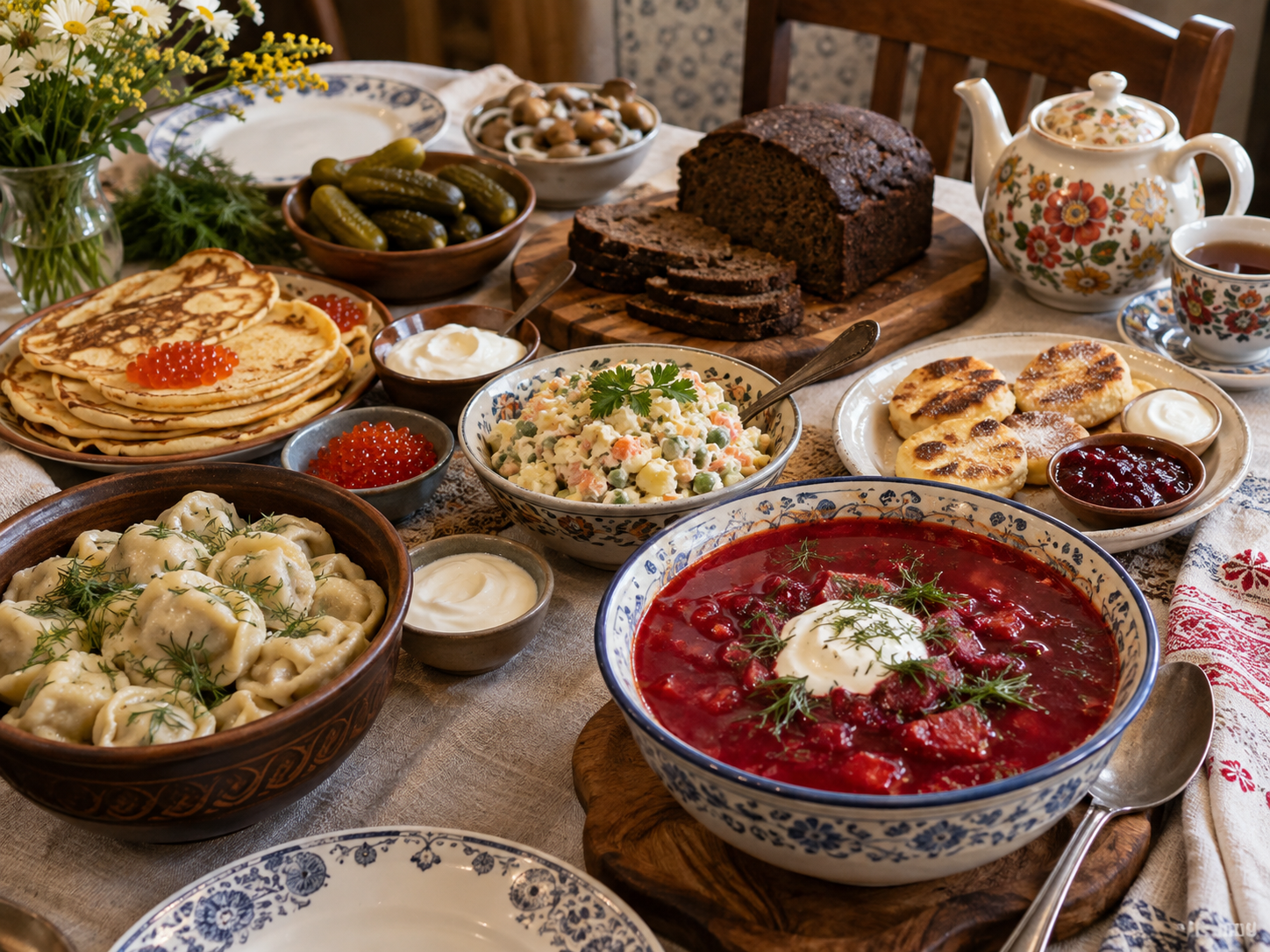
Russian food is often reduced abroad to three ideas: potatoes, vodka, and something involving beets. That picture misses what actually makes the cuisine distinctive—sourness, fermentation, mushrooms, grains, broths, preserved vegetables, dill, dairy, pastry, and foods designed for long winters and large tables.
The ten dishes below are not a claim that every Russian eats the same food. They are a practical introduction to flavors and formats that recur across Russian home cooking and restaurant menus.
1. Borscht — борщ
Borscht is the dish Americans usually recognize, though its history belongs broadly to Eastern Europe and is especially associated with Ukrainian cuisine as well as Russian culinary life.
In Russian homes and restaurants, versions vary widely. Beet gives the soup color and sweetness, while cabbage, potato, carrot, meat broth, tomato, and other ingredients build the base. A spoonful of sour cream changes both texture and acidity.
If your only experience is canned “beet soup,” try a fresh bowl before deciding whether you like borscht.
2. Shchi — щи
Shchi is cabbage soup and one of the oldest staples of Russian cooking. It may use fresh cabbage or sauerkraut, creating very different levels of sourness.
The flavor is less dramatic than borscht but deeply representative of home cooking. Sour cream, herbs, and dark bread complete the meal.
3. Pelmeni — пельмени
Pelmeni are small dumplings filled most commonly with seasoned meat. They are boiled and served with butter, sour cream, vinegar, mustard, or broth depending on preference.
An American diner may compare them to ravioli or potstickers, but the dough, filling, and serving style give them their own identity. Freezing large batches also made pelmeni practical winter food.
4. Blini — блины
Russian blini are thin pancakes closer to crêpes than to thick American breakfast pancakes. They can be wrapped around cottage cheese, meat, mushrooms, or fish, or served with jam, honey, sour cream, or caviar.
During Maslenitsa they become especially prominent, but people eat them year-round.
5. Beef Stroganoff — бефстроганов
The international version of beef Stroganoff has traveled far from Russia, but trying a Russian-style preparation is still worthwhile. Thin pieces of beef are cooked in a rich sauce often built with sour cream and served with potatoes, noodles, or other sides.
The dish reflects the cosmopolitan aristocratic cooking of imperial Russia as much as peasant tradition.
6. Olivier salad — салат Оливье
If you visit a Russian New Year table, Olivier may matter more than almost anything else. The salad usually combines potatoes, carrots, eggs, peas, pickles, mayonnaise, and meat or sausage, though families argue endlessly about details.
To an American it can look like potato salad with extra ingredients. Culturally, however, it is holiday memory in a bowl.
7. Herring under a fur coat — селёдка под шубой
The name sounds comic because it is: “herring under a fur coat.” Layers of salted herring, potatoes, carrots, beets, onion, mayonnaise, and sometimes egg create a dramatic purple-red salad.
The combination can seem strange on paper. In practice, salty fish, sweet beet, earthy vegetables, and creamy mayonnaise balance each other surprisingly well.
8. Buckwheat porridge — гречка
Buckwheat is one of the foods foreign visitors often underestimate because it does not look festive. Russians eat гречка as a side dish, breakfast, or simple meal.
The flavor is nutty and stronger than rice. It pairs especially well with mushrooms, meat, butter, or gravy. Trying it helps explain ordinary Russian eating better than another elaborate restaurant dish would.
9. Pirozhki — пирожки
Pirozhki are small baked or fried pastries with savory or sweet fillings. Cabbage, potato, meat, mushroom, egg and green onion, or fruit are common possibilities.
They are portable, adaptable, and deeply associated with home baking and casual food. Do not confuse пирожки with пироги—larger pies.
10. Syrniki — сырники
Syrniki are small pancakes made from творог, a fresh farmer’s-cheese-like dairy product. They are usually pan-fried and served with sour cream, jam, honey, or berries.
The texture is tender and slightly tangy. Americans who expect a flour pancake are often surprised by how much of the structure comes from the cheese.
What ties these foods together?
Not one ingredient. Russian cuisine makes more sense through techniques and flavor habits: sour cream softens soups and pancakes; fermentation and pickling create acidity; dough wraps fillings; grains make durable everyday food; vegetables that store well become winter staples.
Season also matters. New Year food is not the same as summer dacha food. A bowl of cold окрошка belongs to hot weather in a way that pelmeni and cabbage soup belong naturally to winter.
Trying these dishes with the Russian names attached also turns food into vocabulary. Суп, сметана, тесто, начинка, каша, солёный, кислый, сладкий begin to describe real tastes rather than flashcards.
Polyglottist Language Academy’s Russian classes often use food as a natural conversation topic because it lets beginners practice cases, preferences, quantities, and cultural vocabulary at the same time.
A good introduction to Russian food should include celebration dishes and plain weekday dishes. Olivier tells you something about New Year. Grechka tells you something about Tuesday night. You need both to understand how people actually eat.