
The Dark Beauty of Russian Novels: 7 Books That Will Haunt You
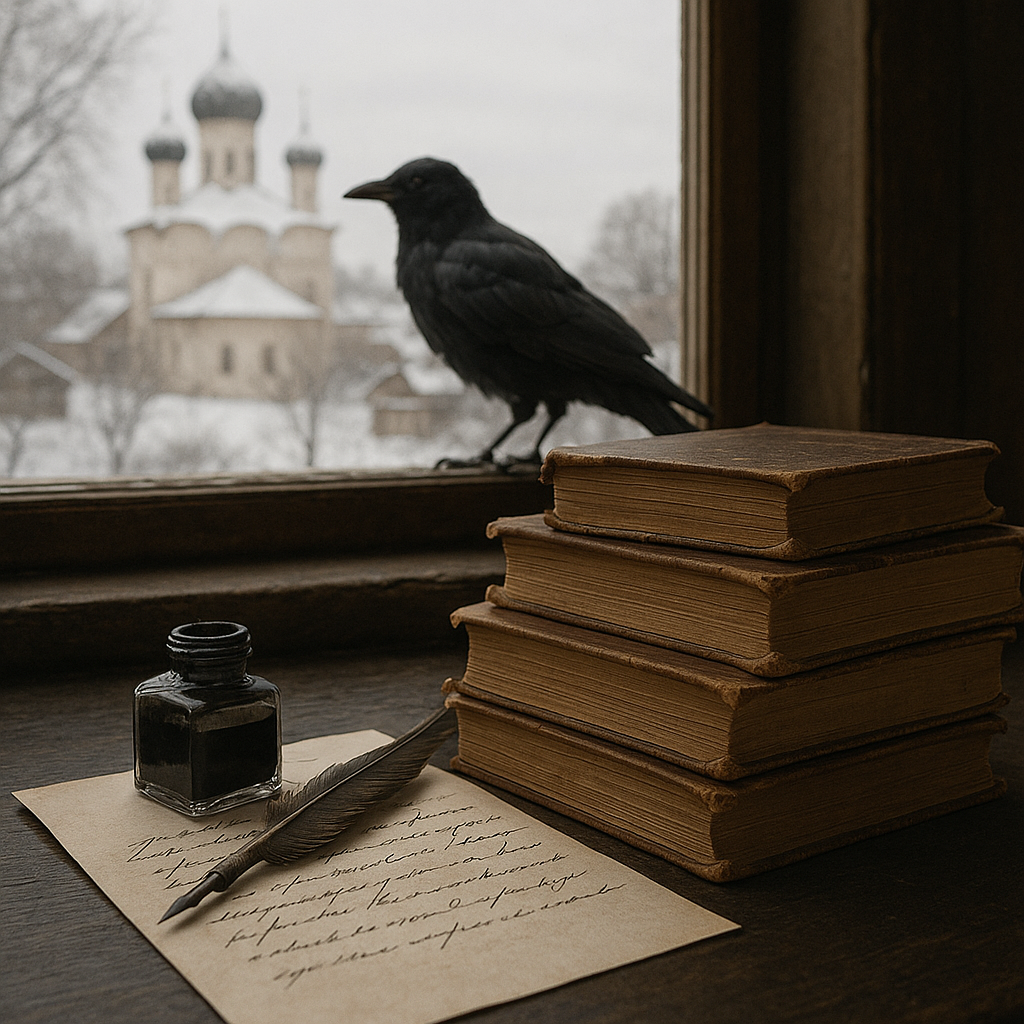
There’s something about Russian literature that lingers—like footsteps behind you in the snow, or a strange dream you can’t quite forget. Unlike the polished optimism of many Western narratives, Russian novels revel in discomfort, wrestle with despair, and confront the contradictions of human nature with unflinching honesty. These stories don’t just entertain—they challenge, disturb, and leave you changed.
You don’t read a Russian novel the way you read a beach read or a bestseller. You endure it. You live through it. It seeps into your bones. The weather is cold, the lives are hard, and the souls are in crisis—but what emerges from the bleakness is not cynicism. It’s something closer to moral fire. Russian authors don’t shy away from asking life’s biggest, most uncomfortable questions. What does it mean to live with integrity? Is love ever truly selfless? Can suffering lead to redemption—or does it only destroy?
In these novels, the personal and political blur. An act of kindness is rarely just that; it’s a gesture weighted with history, religion, class, and metaphysical implications. The characters don’t just speak—they confess, rant, plead, and philosophize. And when they love, it’s never casual. It’s obsession or nothing. Even minor side characters seem to carry the burden of the universe on their shoulders.
Russian literature doesn’t give us answers so much as it gives us mirrors—strange, cracked, sometimes grotesque mirrors, in which we glimpse parts of ourselves we may not want to see. This literature dares to ask: what happens when everything we believe in falls apart? How do we make meaning when life itself is stripped bare?
It’s easy to think of Russian novels as grim, but they are also saturated with beauty—the kind of beauty that emerges not despite the darkness, but because of it. Whether it’s the quiet dignity of a dying man in Tolstoy’s The Death of Ivan Ilyich, the moral torment of Raskolnikov in Crime and Punishment, or the surreal dance of the devil across Stalinist Moscow in The Master and Margarita, these works don’t just haunt you—they awaken you. They force you to sit with what is unbearable and ask what it means to be human in a world that often defies sense.
For those willing to surrender to their power, here are seven Russian novels that will not only haunt you—but follow you, whispering truths in your ear long after the final page is turned.
1. Crime and Punishment by Fyodor Dostoevsky
No list of haunting Russian novels would be complete without Crime and Punishment, a psychological masterpiece that turns the reader into a reluctant accomplice in a murder. Dostoevsky doesn’t simply ask “What if someone killed a pawnbroker?”—he asks why, and more disturbingly, whether the killer could justify it.
At the center is Raskolnikov, a poverty-stricken ex-student in St. Petersburg who believes himself above the law, above morality, above the trembling masses. But after the murder, his conscience unravels him. The haunting comes not from supernatural forces but from the relentless tug of guilt, shame, and existential dread. As readers, we’re dragged into Raskolnikov’s feverish paranoia, where every glance, every conversation, every silent street is thick with moral implication.
This novel doesn’t offer a clean resolution or the redemption arc we might expect in modern fiction. Instead, it leaves you staring into the abyss—and recognizing something uncomfortably familiar staring back.
2. The Master and Margarita by Mikhail Bulgakov
If Crime and Punishment is a descent into guilt, The Master and Margarita is a fever dream soaked in satire, spiritual torment, and inexplicable magic. Written under Stalin’s regime but not published in full until decades later, this novel is a dazzling, multi-layered narrative that moves between Soviet Moscow, biblical Jerusalem, and the devil’s surreal escapades in both.
At its center is a tormented writer—the Master—who burns his novel after being crushed by state censorship. His lover, Margarita, is willing to strike a Faustian bargain to save him. Then there’s Woland, a mysterious foreign “consultant” (read: Satan) whose demonic entourage wreaks poetic chaos across Moscow.
The darkness of this novel isn’t just in its grim portrayal of totalitarian fear; it’s in the spiritual questions it raises: What is truth when truth is punished? What happens to beauty in a world without forgiveness? You’ll laugh, gasp, and shiver in equal measure—and you’ll never think of black cats the same way again.
3. The Death of Ivan Ilyich by Leo Tolstoy
This is perhaps the most honest book ever written about dying. In fewer than 100 pages, Tolstoy achieves what most writers fail to do in a lifetime: he confronts the terror of death head-on, without euphemism, distraction, or sentimentality.
Ivan Ilyich is a perfectly ordinary man. He’s climbed the bureaucratic ladder, bought the right furniture, married the right woman, and lived what society would call a “successful” life. But when a mysterious illness begins to gnaw at him, the illusion crumbles. What begins as discomfort spirals into a metaphysical crisis: Has he lived well? Does anything he built matter? What comes next?
This novella is quiet but devastating. It haunts not through spectacle but through intimacy. It forces readers to question their own lives, values, and mortality. If you read it at the right (or wrong) moment, it may change your life.
4. We by Yevgeny Zamyatin
Written in 1921 and banned in the Soviet Union for decades, We is the original dystopia—a novel that inspired Orwell’s 1984 and Huxley’s Brave New World. But We is more than just a political cautionary tale. It’s a deeply unsettling meditation on control, desire, and the frightening allure of mathematical perfection.
The novel is set in the One State, a sterile, glass-encased society where emotions are outlawed, privacy is nonexistent, and even love is a form of rebellion. Its protagonist, D-503, begins the novel as a proud engineer of the state’s great space project. But after a chance encounter with the enigmatic I-330, he begins to unravel—psychologically, sexually, and spiritually.
Zamyatin’s prose is jagged and hallucinatory, mirroring D-503’s mental collapse. The haunting here lies in the realization that utopia, when pursued at the cost of freedom, becomes indistinguishable from hell.
5. A Hero of Our Time by Mikhail Lermontov
Published in 1840, this novel predates Dostoevsky but anticipates much of the Russian literary obsession with alienation, nihilism, and existential angst. Pechorin, the protagonist, is a Byronic antihero: brilliant, cynical, seductive, and deeply self-destructive. He toys with lives as if they were games, unable—or unwilling—to connect with others in any meaningful way.
What makes this novel haunting is how contemporary it feels. Pechorin could be a man on Tinder today, ghosting people out of boredom or fear of feeling too much. His emotional detachment is both seductive and repulsive—a mirror of our modern malaise.
Lermontov weaves together travel diary, psychological portrait, and philosophical meditation. The mountains of the Caucasus loom in the background like fate itself, silent and indifferent to the human drama playing out below.
6. Life and Fate by Vasily Grossman
This epic novel, often described as the Soviet War and Peace, is a brutal, breathtaking account of the Battle of Stalingrad and the ideological nightmares of both Nazism and Stalinism. Grossman, who was once a war correspondent and initially supported the Soviet regime, wrote this book as an act of moral rebellion. It was so controversial that the KGB confiscated the manuscript—and the typewriter ribbon.
This isn’t a feel-good war story. It’s a study in human resilience under monstrous systems. Scientists compromise their integrity to survive. Mothers lose sons. Prisoners in gulags and concentration camps reflect on the same philosophical questions. Yet amid the darkness, there are flickers of compassion, love, and truth.
Reading Life and Fate is like holding your breath for 900 pages. It will exhaust you—and awaken something in you that you may not have realized was dormant.
7. The Possessed (Demons) by Fyodor Dostoevsky
Also translated as The Devils or Demons, this prophetic novel captures the political and spiritual chaos that would eventually erupt into the Russian Revolution. Dostoevsky draws from a real-life murder committed by radical intellectuals to construct a searing indictment of nihilism, extremism, and the terrifying power of ideas.
This book is less about plot and more about ideological possession. Characters don’t just act—they are gripped by beliefs so intense that they become vessels for destruction. At the center is Stavrogin, one of the most enigmatic figures in Russian literature: charismatic, indifferent, and hauntingly empty.
Reading The Possessed is like watching a forest catch fire in slow motion. You see the sparks—youthful idealism, philosophical debate—but by the end, everything is ash. It’s not just a novel; it’s a warning.
Frequently Asked Questions (FAQ)
Why are Russian novels so dark?
Russian history has been marked by war, oppression, exile, poverty, and spiritual struggle. These realities shaped a literature that doesn’t shy away from suffering. Russian authors see suffering as a path to truth—perhaps even to redemption. The darkness isn't gratuitous; it’s where the light tries to break through.
Are these novels hard to read for beginners?
Some can be dense, especially Dostoevsky or Tolstoy, but they’re deeply rewarding. Start with shorter works like The Death of Ivan Ilyich or A Hero of Our Time, then gradually tackle longer novels. Reading with a teacher or in a language class can also help clarify complex themes and cultural references.
Do I have to read them in Russian to appreciate them?
Not at all. Many excellent translations exist (notably by Pevear and Volokhonsky for Dostoevsky and Tolstoy). However, reading even a few passages in the original Russian can reveal poetic rhythms, subtleties of tone, and cultural nuance that translations may miss. If you’re learning Russian, these books can be powerful motivators.
Which of these books is best to start with?
For newcomers to Russian literature, Crime and Punishment offers gripping psychological drama and a clear moral conflict. If you prefer shorter reads, The Death of Ivan Ilyich is concise but emotionally shattering. If you like surrealism and satire, try The Master and Margarita.
A Final Word: Learn the Language Behind the Literature
The haunting power of these books lies not only in their stories, but in the language itself. Russian is uniquely suited to expressing subtle shades of emotion, moral tension, and spiritual yearning. Learning Russian can unlock deeper levels of meaning and appreciation—not just in literature, but in how you see the world.
At Polyglottist Language Academy, we offer immersive, culturally rich Russian classes designed for readers, travelers, and thinkers like you. Whether you’re just starting out or already reading Chekhov in the original, we’ll help you connect with the language—and the soul behind it.
👉 Ready to dive into Russian? Sign up for a class today.
Want to explore more about Russian language and culture?
Check out our full collection of articles on the Polyglottist Language Academy Blog, where we dive into everything from why fluent Russian isn’t fast Russian to how to survive a Russian toast and what it’s like to be the only foreigner in a Russian dacha community. Whether you're curious about grammar tips, cultural faux pas, or how Russians navigate public space, our blog offers fresh, engaging insights to support your learning journey.