
Train Station French: Real-Life Phrases You’ll Actually Use
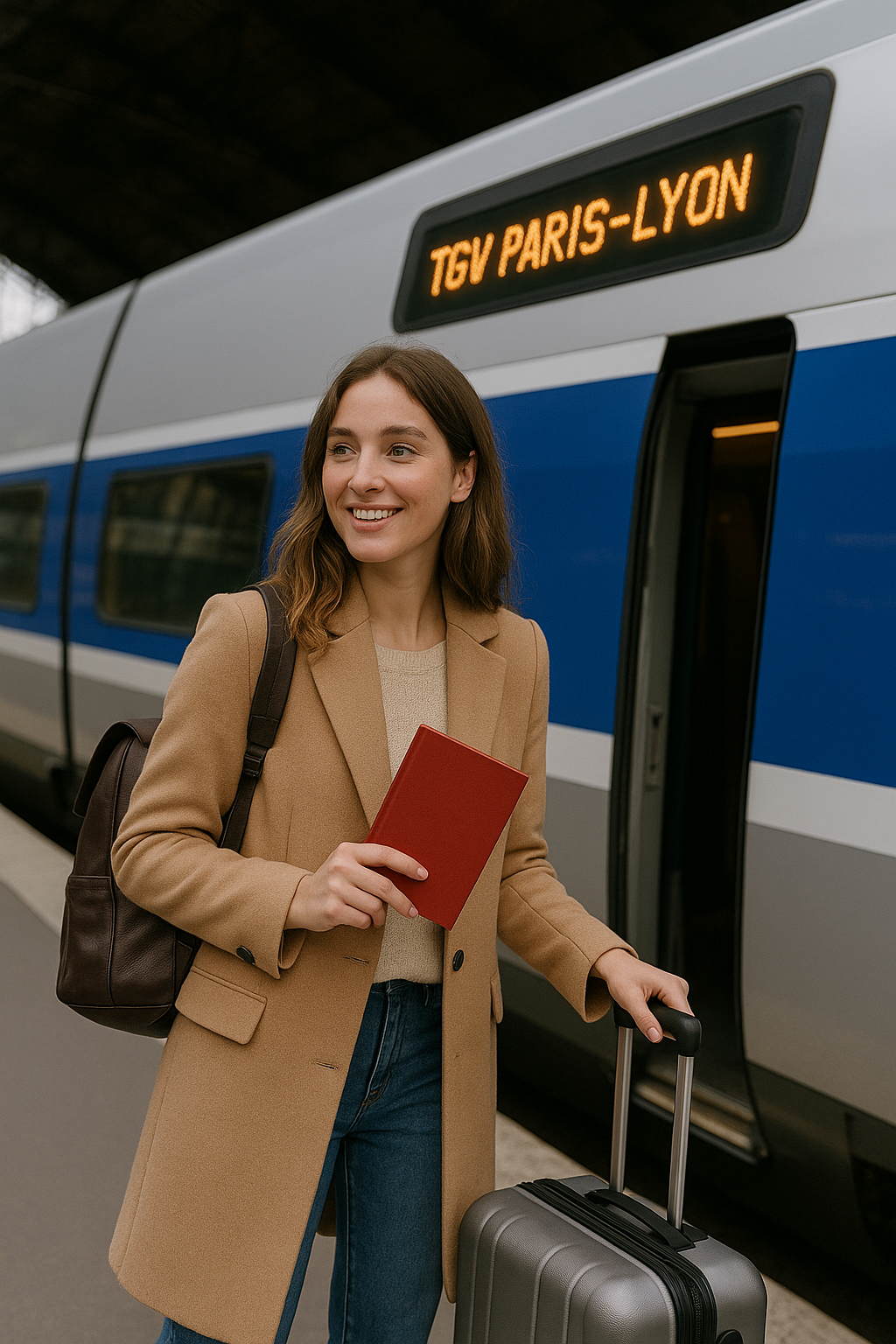
There’s a special energy at a French train station that’s hard to replicate anywhere else: the rhythmic clatter of luggage wheels across the platform, the low murmur of travelers consulting timetables, the sudden crescendo of the loudspeaker announcing arrivals and departures in rapid-fire French. Whether you’re heading for a quick weekend getaway or embarking on a grand tour of France, chances are, your journey will involve a train station. And while the signs, ticket machines, and apps might offer some English translations, there’s no substitute for knowing the right French words and phrases to navigate this quintessential part of French life.
Because here’s the thing: French train stations are not just places to catch a train—they’re bustling microcosms of French culture, complete with their own etiquette, vocabulary, and sometimes-unexpected challenges. Maybe your train is delayed, your platform changes at the last minute, or the ticket machine inexplicably refuses your card. Or maybe you simply want to buy a coffee before your departure but don’t know how to ask whether you have time before the train leaves. In those moments, being able to speak even a little French can transform your travel experience from stressful to smooth.
Yet so many phrasebooks and language courses teach overly formal or impractical vocabulary that no one actually uses. You don’t need to be reciting perfect textbook sentences—you just need practical, real-life phrases that help you get your ticket, find your platform, handle last-minute changes, and keep your journey on track.
In this article, we’re going to arm you with exactly that: real-life French you’ll actually use at the train station. From buying a ticket to asking about delays, finding your way around, and handling unexpected situations, you’ll learn how to communicate confidently—and maybe even enjoy the adventure of travel a little more. Because train travel in France is one of the best ways to see the country—and speaking the language makes it even better.
Why French Train Stations Are Unique
The Hub of Everyday Life
Unlike in some countries where trains are mostly for tourists, train travel is an essential part of daily life for many French people. Commuters, students, business travelers, and vacationers all converge at the gare (station), making it a dynamic, bustling space.
Speed and Precision
French rail systems like the TGV are famous for their speed. But with speed comes the pressure to move quickly—especially when announcements are made rapidly in French. A little language knowledge goes a long way.
Regional Differences
Signage and announcements sometimes vary across regions:
In Alsace, you might hear German alongside French.
In the south, strong regional accents can influence pronunciation.
The Importance of Manners
French politeness rules still apply. A simple bonjour before speaking to an employee can transform your interaction.
Essential Vocabulary
la gare → train station
le quai → platform
le guichet → ticket counter
la machine à billets → ticket machine
un billet → a ticket
un aller simple → one-way ticket
un aller-retour → round-trip ticket
la SNCF → France’s national railway
la TGV → high-speed train
le TER → regional train
la correspondance → connection/transfer
un horaire → schedule
le départ → departure
l’arrivée → arrival
retardé → delayed
annulé → cancelled
la voie → track/platform number
composter le billet → to validate the ticket
contrôleur/contrôleuse → ticket inspector
Buying a Ticket
Let’s tackle the first step: getting your ticket.
At the Ticket Counter
Polite Greeting
Always start with:
Bonjour, Madame / Monsieur.
Asking for a Ticket
Je voudrais un billet pour Paris, s’il vous plaît.
I’d like a ticket to Paris, please.
Specifying One-Way or Return
C’est un aller simple ou un aller-retour ?
Is it one-way or round-trip?
Un aller simple. → One-way.
Un aller-retour. → Round-trip.
Asking About Prices
Combien coûte un billet pour Marseille ?
How much is a ticket to Marseille?
Choosing Class
En première ou en seconde classe ?
First or second class?
En seconde, s’il vous plaît. → Second class, please.
Asking for Times
À quelle heure part le prochain train pour Lyon ?
What time does the next train to Lyon leave?
Checking for Reductions
If you’re under 26 or over 60, you might qualify for discounts.
Est-ce qu’il y a un tarif réduit ?
Is there a reduced fare?
Using the Ticket Machine
Starting the Process
Touchez l’écran pour commencer.
Touch the screen to start.
Key Phrases You’ll See:
Choisir la destination → Choose destination
Sélectionner le billet → Select ticket
Paiement → Payment
Carte bancaire seulement → Card payment only
Retirer le billet → Collect the ticket
Asking for Help
Excusez-moi, je n’arrive pas à utiliser la machine.
Excuse me, I can’t manage to use the machine.
Finding Your Platform
Checking the Big Screen
The board lists:
Heure → Time
Destination → Destination
Train n° → Train number
Voie → Track number
Asking Where Your Train Leaves
Le train pour Bordeaux, c’est voie combien ?
Which platform is the train for Bordeaux?
Asking About Changes
Est-ce que la voie a changé ?
Has the platform changed?
Validating Your Ticket
For regional trains (TER), you must validate your paper ticket before boarding:
Où est la machine pour composter mon billet ?
Where’s the machine to validate my ticket?
On the Platform
Asking Someone
Excusez-moi, c’est bien ici pour le train pour Dijon ?
Excuse me, is this the right place for the train to Dijon?
Confirming a Train
C’est le train pour Avignon, n’est-ce pas ?
This is the train for Avignon, right?
On the Train
Finding Your Seat
Excusez-moi, c’est ma place.
Excuse me, that’s my seat.
Asking for Information
À quelle heure arrive-t-on à Nice ?
What time do we arrive in Nice?
Talking to the Ticket Inspector
Voilà mon billet.
Here’s my ticket.
Explaining Lost Tickets
J’ai perdu mon billet.
I’ve lost my ticket.
Handling Problems
Delays
Le train a du retard ?
Is the train delayed?
Cancellations
Le train est annulé ?
Is the train cancelled?
Missed Connections
J’ai raté ma correspondance.
I missed my connection.
Refunds
Puis-je être remboursé(e) ?
Can I get a refund?
Asking for Help
Never hesitate to ask:
Pouvez-vous m’aider, s’il vous plaît ?
Can you help me, please?
Useful Survival Phrases
Je ne comprends pas. → I don’t understand.
Pouvez-vous parler plus lentement ? → Can you speak more slowly?
Je suis étranger(étrangère). → I’m a foreigner.
C’est ma première fois en France. → It’s my first time in France.
Real-Life Dialogues
Buying a Ticket
Voyageur: Bonjour, je voudrais un aller-retour pour Tours, s’il vous plaît.
Agent: À quelle heure souhaitez-vous partir ?
Voyageur: Vers dix heures.
Agent: En première ou en seconde classe ?
Voyageur: En seconde, merci.
Asking About a Delay
Voyageur: Excusez-moi, le train pour Lille est en retard ?
Agent: Oui, il a vingt minutes de retard.
On the Platform
Voyageur: Excusez-moi, c’est ici pour le train pour Grenoble ?
Voyageur 2: Oui, c’est voie 7.
Insider Tips for French Train Travel
✅ Always arrive early.
Platforms sometimes change at the last minute.
✅ Bring small change.
Toilets in stations often require coins.
✅ Check for strikes.
French rail strikes (grèves) happen regularly. Check the SNCF website or ask:
Il y a une grève aujourd’hui ?
✅ Listen to announcements.
Important updates may only be in French.
✅ Validate your ticket.
Especially on TER trains. Fines can be steep.
FAQs
Q: Do all French trains require seat reservations?
A: No. TGVs usually require reservations. TER regional trains don’t.
Q: Can I use English at the train station?
A: In big stations, many staff speak some English. But knowing basic French phrases helps tremendously.
Q: How early should I arrive?
A: For TGVs, arrive at least 20-30 minutes early, especially with luggage.
Q: What if I miss my train?
A: Go to the ticket counter. They’ll help rebook you if possible.
Q: Do I need to validate TGV tickets?
A: No. Your seat is reserved. Only regional tickets need validation.
Q: How do I know my platform?
A: Check the big departure screens labeled Départs.
Q: Are announcements only in French?
A: Often, yes—especially outside tourist hubs.
Q: Can I buy tickets online?
A: Absolutely! SNCF Connect or Trainline are popular options.
At Polyglottist Language Academy, we believe real fluency comes from mastering the language you truly need—and there’s no better example than French train travel. Our courses go beyond textbooks, teaching you the practical phrases, listening skills, and cultural insights to navigate real-life situations like train stations with confidence and ease. Whether you’re preparing for an unforgettable French adventure or aiming to improve your conversational skills, we’re here to help you speak French naturally and fearlessly.
Ready to make your next French train journey smoother—and maybe even enjoyable? Sign up for French classes today!
Check Out Our Other Blog Articles
Explore more secrets to speaking real, authentic French:
How Learning French Changes Your Personality And Way Of Thinking
Is Parisian French The “Best” French? A Deep Dive Into Regional Accents And Attitudes
How To Keep Your French Alive If You’re Not In A Francophone Country
When French Gets Philosophical: How To Talk About Life, Love, And Meaning
The Secret French Grammar Structures That Sound Instantly Native
French For Abstract Thinkers: Expressing Complex Ideas Like A Native
Why Fluent French Isn’t Perfect French—And Why That’s A Good Thing
A Crash Course In “French Filler Words” (Eh Bien, Tu Vois, Genre...)
What Learning French Teaches You About English (Yes, Really!)