
French Word Order Tricks to Instantly Sound Smarter
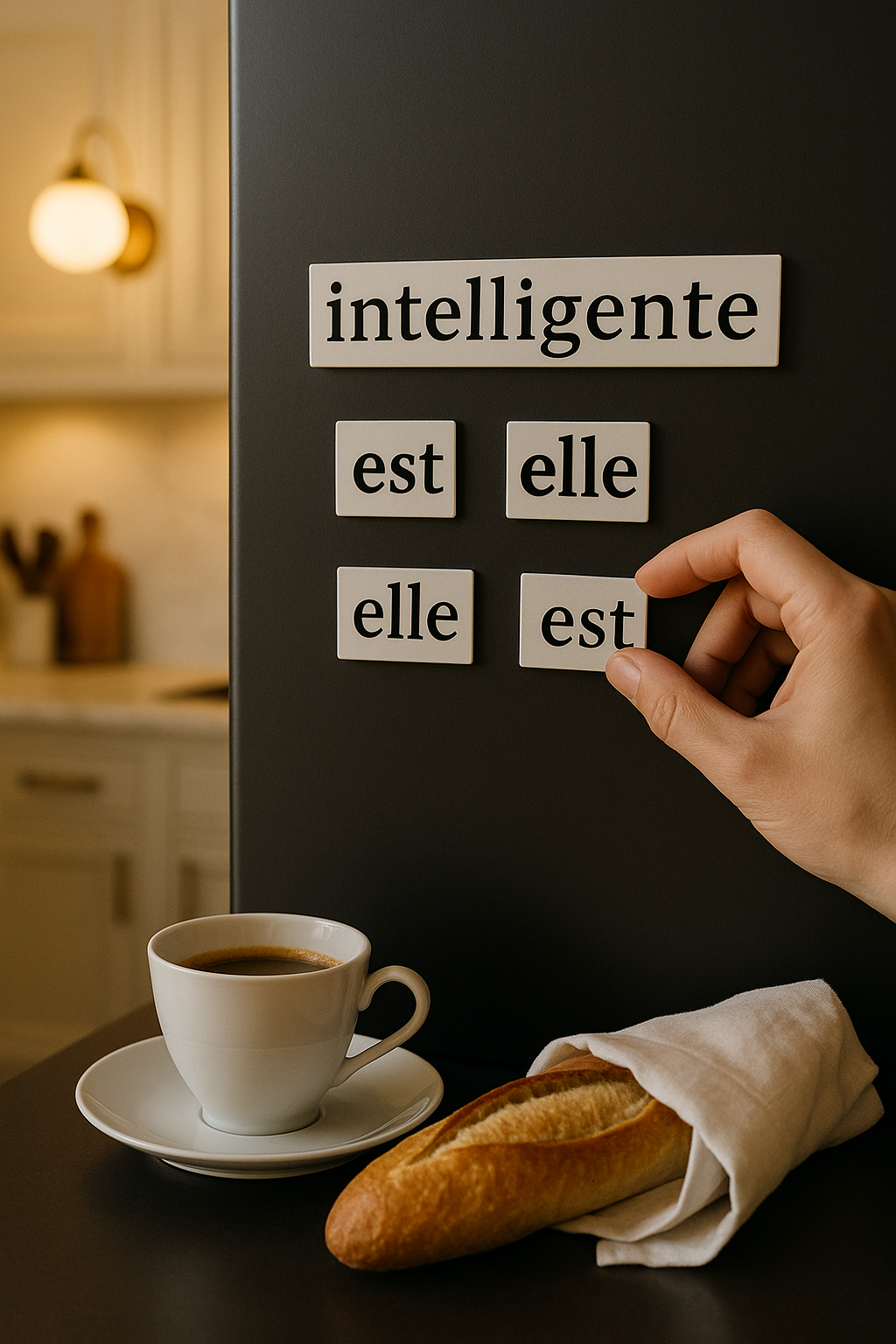
One of the greatest mysteries for French learners is that even when they know all the right words, their sentences sometimes sound, well… a little off. The vocabulary might be perfect, the grammar correct, yet something still reveals that they’re thinking in English and translating, rather than truly speaking French. That mysterious something is often word order—the subtle ways French arranges its sentences to create emphasis, elegance, and natural rhythm. Because in French, it’s not just what you say—it’s how you say it, and that often comes down to where you place the words.
French is a language with a fairly strict underlying sentence structure—typically Subject-Verb-Object—but it’s also astonishingly flexible in how it arranges elements like pronouns, adverbs, adjectives, and entire clauses. Native speakers effortlessly shuffle words to emphasize a point, sound more refined, or simply follow the melodic cadence of the language. Meanwhile, learners stick to textbook structures, afraid to experiment—and the result can be speech that’s technically correct but unmistakably foreign.
Here’s the good news: mastering a few key word-order tricks can dramatically elevate your French. These are the little shifts that make you sound not only fluent, but intelligent and sophisticated—like someone who truly thinks in French. They’re not about showing off complicated grammar; they’re about speaking the way real French people speak: naturally, fluidly, and with just the right touch of nuance.
In this article, we’re going to explore the secrets of French word order—the elegant rearrangements that make your speech sparkle and help you blend seamlessly into conversations. Whether you’re writing, speaking, or simply aiming to understand French more deeply, these tips will help you transform your language from solid to superb. Because sounding smarter in French isn’t about using big words—it’s about knowing exactly where to put them.
Why Word Order Matters in French
Rhythm and Flow
French is a musical language. Its word order affects the rhythm and flow of speech. Rearranging sentences creates:
Emphasis
Contrast
Elegance
Clarity and Precision
Word order helps clarify meaning. For example, moving an adverb changes focus:
Je vois souvent Paul. → I often see Paul.
Souvent, je vois Paul. → Often, I see Paul.
Same words, different emphasis.
Sounding Natural
A native’s speech often relies on structures that textbooks barely mention, like fronting, dislocation, and inversion. Learning these tricks makes you sound authentically French.
The Basic French Word Order: SVO
French typically follows a Subject-Verb-Object order:
Marie aime le chocolat. → Marie loves chocolate.
But once you’re comfortable, you can start shifting elements for style and nuance.
Trick #1: Fronting for Emphasis
French frequently moves words or phrases to the front of a sentence to highlight them.
Example:
Ce livre, je l’adore.
This book, I love it.
Instead of:
J’adore ce livre.
I love this book.
Why Fronting Feels Smart
Shows comfort with advanced structures.
Creates elegance and stylistic flair.
Mimics native speech patterns.
Use it to emphasize:
Objects
Adverbs
Time expressions
More Examples:
Hier, j’ai vu Paul. → Yesterday, I saw Paul.
Cette idée, elle est brillante. → That idea, it’s brilliant.
Trick #2: Dislocation and Pronoun Reinforcement
French often repeats nouns as pronouns for clarity and flow. This is called dislocation.
Example:
Le film, je l’ai vu hier.
The film, I saw it yesterday.
This pattern might seem redundant to English speakers, but it’s natural in French.
Why Dislocation Works
Avoids ambiguity.
Breaks longer sentences into manageable chunks.
Sounds conversational.
More Examples:
Paul, il est parti. → Paul, he left.
Les enfants, ils jouent dehors. → The children, they’re playing outside.
Trick #3: Postponing the Subject for Impact
In French, placing the subject after the verb can create a dramatic, elegant effect, especially in writing or formal speech.
Example:
Est arrivé Pierre. → Pierre has arrived.
Instead of:
Pierre est arrivé. → Pierre has arrived.
When to Use It
Literary writing
News headlines
Dramatic storytelling
More Examples:
Viennent ensuite les résultats. → Next come the results.
Surgit soudain un problème. → Suddenly, a problem arises.
Trick #4: Moving Adverbs Around
Adverbs in French are flexible. Moving them changes nuance and emphasis.
Standard:
Je comprends parfaitement. → I understand perfectly.
Fronted for emphasis:
Parfaitement, je comprends. → Perfectly, I understand.
Common Adverbs for Fronting:
Souvent → often
Toujours → always
Rarement → rarely
Certainement → certainly
More Examples:
Jamais je n’ai vu ça. → Never have I seen that.
Peut-être viendra-t-il demain. → Perhaps he will come tomorrow.
Trick #5: Inversion for Questions and Style
Inversion flips the verb and subject, adding elegance and sometimes formality.
Standard question:
Est-ce que tu viens ? → Are you coming?
Inverted:
Viens-tu ? → Are you coming?
Why Inversion Feels Smart
Used in literature, journalism, and formal speech.
Adds variety to your sentence structures.
Sounds polished and sophisticated.
Inversion in Statements:
Peut-être viendra-t-il demain. → Perhaps he will come tomorrow.
Trick #6: Ne Explétif
For truly advanced speakers, the ne explétif adds elegance to certain subordinate clauses, though it doesn’t negate the sentence.
Example:
Je crains qu’il ne vienne. → I fear that he might come.
This “ne” has no negative meaning; it’s purely stylistic.
When to Use It
After verbs of fear (craindre, avoir peur)
After expressions of doubt or prevention
More Examples:
Il empêche qu’on ne parle. → He prevents people from speaking.
Je doute qu’il ne soit prêt. → I doubt that he’s ready.
Trick #7: Emphasizing With “C’est… que”
French uses “c’est… que” to highlight a specific element in a sentence.
Example:
C’est Marie qui a gagné. → It’s Marie who won.
Instead of:
Marie a gagné. → Marie won.
Why It Sounds Smart
Shows nuance.
Adds emphasis and drama.
Mirrors how natives speak.
More Examples:
C’est hier qu’il est parti. → It was yesterday that he left.
C’est toi que j’attendais. → It’s you I was waiting for.
Trick #8: Position of Object Pronouns
French places object pronouns before the verb, unlike English.
Je le vois. → I see him.
In compound tenses:
Je l’ai vu. → I saw him.
Why It’s Important
Mixing up pronoun placement is a classic learner’s mistake.
Mastering it makes your speech smoother and more native-like.
More Examples:
Elle me le donne. → She gives it to me.
Nous les avons vus. → We saw them.
Trick #9: Negative Placement
In French, negation surrounds the verb:
Je ne sais pas. → I don’t know.
But with compound tenses, it wraps around the auxiliary:
Je n’ai pas compris. → I didn’t understand.
Partial Negation for Nuance
Instead of blunt negation:
Je ne veux pas. → I don’t want to.
Use:
Je ne voudrais pas. → I wouldn’t want to.
Je ne pense pas que… → I don’t think that…
Trick #10: Relative Clause Flexibility
French uses relative clauses to avoid repetition:
Le livre que j’ai acheté est intéressant. → The book (that) I bought is interesting.
Shifting clauses can create more natural flow and variety.
Why It Feels Advanced
Helps avoid repetitive sentence structures.
Adds sophistication to writing and speech.
More Examples:
La ville où j’habite est belle. → The city where I live is beautiful.
La personne dont je parle est ici. → The person I’m talking about is here.
Putting It All Together
Let’s transform a simple sentence step by step:
Original:
J’ai vu Paul hier. → I saw Paul yesterday.
Fronting:
Hier, j’ai vu Paul.
Dislocation:
Paul, je l’ai vu hier.
C’est… que emphasis:
C’est Paul que j’ai vu hier.
Inversion (formal):
Ai-je vu Paul hier ? (question)
Each variation adds nuance, emphasis, or elegance.
Why Mastering Word Order Makes You Sound Smarter
Authenticity: You’ll sound like a native speaker.
Elegance: French values style and rhythm.
Clarity: Emphasis helps you convey subtle shades of meaning.
Confidence: Variety in structures gives you linguistic flexibility.
How to Practice
Read French Newspapers: Notice sentence structures.
Listen to Native Speech: Pay attention to word order shifts.
Rewrite Sentences: Transform basic sentences into advanced forms.
Shadowing Exercises: Mimic native rhythm and phrasing.
Common Mistakes to Avoid
🚫 Literal English Order
English: I see him often.
French: Je le vois souvent. (not Je vois souvent lui.)
🚫 Forgetting Dislocation
Correct: Le livre, je l’adore.
Incorrect: Je adore le livre. (should be J’adore le livre.)
🚫 Misplacing Negation
Correct: Je ne le vois pas.
Incorrect: Je vois pas le.
🚫 Overusing Inversion
In casual speech, stick to est-ce que or rising intonation for questions.
FAQs
Q: Is French word order always flexible?
A: Not entirely. Certain structures (like pronouns before verbs) are fixed. Others, like adverb placement, are flexible.
Q: Should beginners try these tricks?
A: Start slowly. Master basic SVO first, then experiment with small changes.
Q: Are these tricks used in writing or speech?
A: Both! Some, like postposed subjects, are more literary, while others (like dislocation) are very common in speech.
Q: Why do native speakers rearrange sentences so often?
A: For emphasis, rhythm, or to avoid repetition.
Q: Is inversion necessary in questions?
A: No. In casual speech, est-ce que or rising intonation is enough.
Q: Do these tricks apply to formal and informal French?
A: Many do. However, inversion and postposed subjects are more formal.
Q: Can rearranging sentences sound unnatural?
A: Yes—if overdone. Use these tricks selectively for emphasis or style.
Q: Is it okay to stick to simple sentences?
A: Absolutely. Clear, simple French is always better than complicated mistakes.
At Polyglottist Language Academy, we believe that learning French isn’t just about memorizing vocabulary—it’s about understanding how the language breathes and flows. Our courses are designed to help you master these elegant word order tricks so you can speak French with confidence, clarity, and style. Whether you’re aiming for conversation, professional communication, or simply the joy of sounding truly fluent, we’re here to help you every step of the way.
Ready to speak French with the grace and sophistication of a native? Sign up for French classes today!
Check Out Our Other Blog Articles
Explore more secrets to speaking authentic French:
How Learning French Changes Your Personality And Way Of Thinking
Is Parisian French The “Best” French? A Deep Dive Into Regional Accents And Attitudes
How To Keep Your French Alive If You’re Not In A Francophone Country
When French Gets Philosophical: How To Talk About Life, Love, And Meaning
The Secret French Grammar Structures That Sound Instantly Native
French For Abstract Thinkers: Expressing Complex Ideas Like A Native
Why Fluent French Isn’t Perfect French—And Why That’s A Good Thing
A Crash Course In “French Filler Words” (Eh Bien, Tu Vois, Genre...)
What Learning French Teaches You About English (Yes, Really!)