
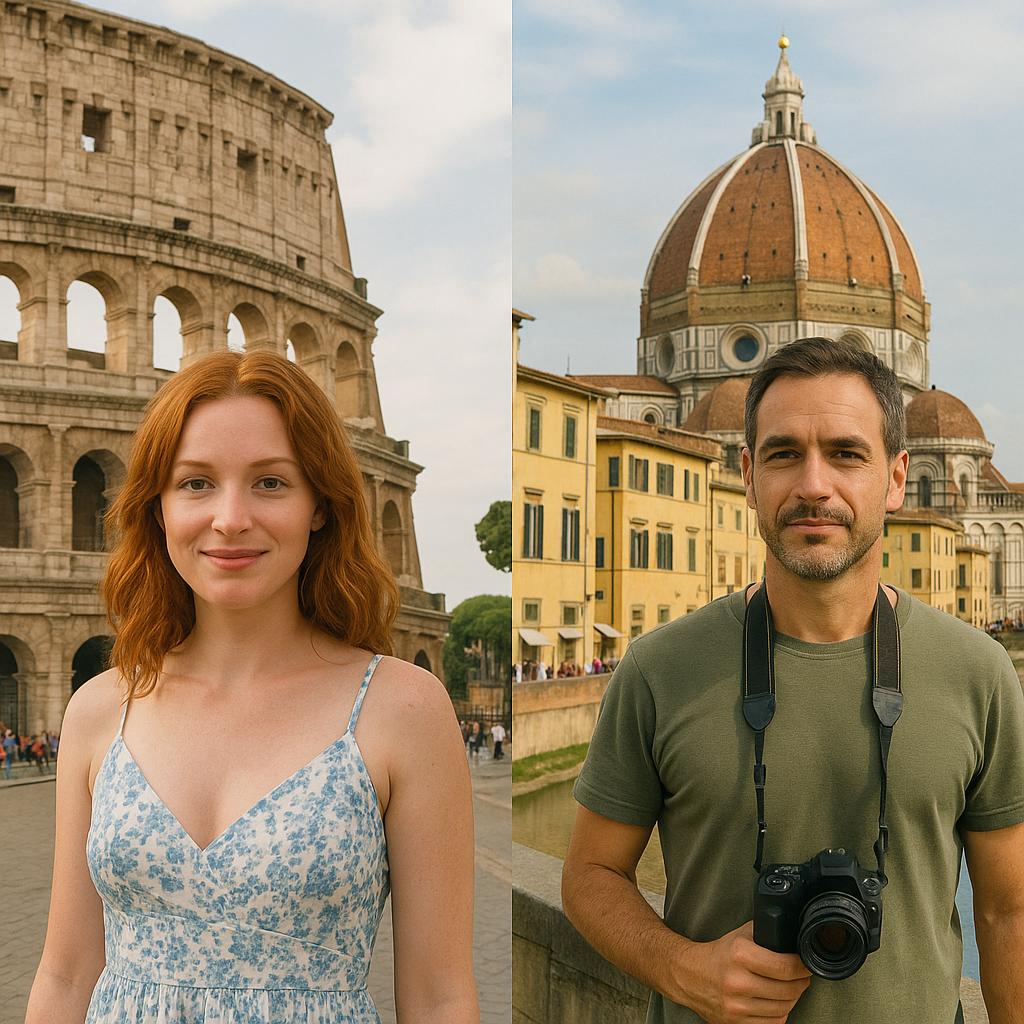
Introduction: Florence or Rome—Where Should You Go to Master Italian?
It’s a dream many language learners share: sipping an espresso in a cobblestoned piazza, ordering gelato with ease, and chatting in fluid Italian with locals who smile in approval at your growing fluency. But the question that stumps many is—where should you live if you want to truly immerse yourself in the Italian language?
For most, the choice comes down to Florence or Rome. Both cities are bursting with beauty, history, culture, and language learning opportunities—but they offer very different environments, accents, lifestyles, and rhythms of daily life. If your goal is not just to live in Italy, but to truly learn Italian, then the city you choose matters more than you think.
Florence, the cradle of the Renaissance and home of Dante, is often praised for its elegant Italian, manageable size, and slower pace. Rome, the bustling capital, offers a vibrant urban experience, endless historical layers, and the chance to dive deep into both modern and traditional Italian life.
So which one is better for language immersion? The answer depends on what kind of learner—and person—you are.
In this article, we’ll break down the differences between Florence and Rome in terms of language, lifestyle, accents, cost, cultural experience, and community, to help you make the most informed choice possible. By the end, you’ll know which city aligns best with your Italian learning goals—and your heart.
Part I: The Language Itself—Florentine Italian vs. Romanesco
Florence: The “Purest” Italian?
Florence holds a unique place in Italian linguistic history. The modern standard Italian you learn in textbooks is largely based on Tuscan dialect, and particularly the variety spoken in and around Florence. That’s no accident: literary giants like Dante, Petrarch, and Boccaccio wrote in Florentine, and their influence helped establish it as the model for modern Italian.
What this means for learners:
Clear pronunciation
Neutral vocabulary
A useful accent to model
Florentines speak relatively slowly and clearly, making it a great place for beginners or intermediate students to hear and absorb standard Italian.
Rome: Lively Language with a Twist
Roman Italian is infused with Romanesco, a local dialect rich in slang, idiomatic expressions, and humor. While modern Romans speak standard Italian, many still retain a strong accent and incorporate local phrases into everyday speech.
What this means for learners:
Exposure to real, modern spoken Italian
Faster speech, more casual tone
You’ll need to adjust your ear
For more advanced learners, Rome offers the challenge of natural Italian, the kind that textbooks don’t prepare you for—but real life does.
Part II: Daily Immersion—Size, Pace, and Interaction
Florence: Intimate and Walkable
Florence is a compact, walkable city. You can live in the historic center, go to your classes, do your grocery shopping, and stop for a cappuccino all on foot. Locals are often more patient with foreigners, and you’re more likely to develop familiarity with shopkeepers and neighbors.
Pros:
Easier to integrate into daily life
Fewer English speakers than in major capitals
More space to practice in a supportive environment
Cons:
Smaller population = fewer Italian-speaking events and meetups
Risk of staying inside an “expat bubble,” especially during tourist season
Rome: Fast-Paced and Full of Possibility
Rome is big, bold, and buzzing. As the capital, it draws people from all over Italy and the world. Public transportation is extensive, and neighborhoods vary widely in terms of vibe and language exposure.
Pros:
Immense cultural offerings: lectures, concerts, exhibitions—all in Italian
More varied vocabulary and accents (great for advanced learners)
Endless opportunities for spontaneous interaction with locals
Cons:
Many Romans speak English, especially in tourist zones
The urban pace can be overwhelming for beginners
Harder to find a consistent community if you don’t know where to look
Part III: The Accent and Local Expression
Florence’s Accent: Polished and Textbook-Friendly
Florence’s accent is close to standard Italian, making it easier to follow. Locals tend to speak clearly and with less regional inflection, which helps when you’re trying to fine-tune your own pronunciation.
Typical expressions you might hear:
“Che bello!” – How beautiful!
“Dove vai?” – Where are you going?
You’re less likely to encounter slang unless you're around younger people, which means you’ll build a strong grammatical foundation.
Roman Accent: Full of Charm, Sass, and Speed
The Roman accent drops final vowels, shortens words, and has a melodic rhythm that can be hard to catch at first. You’ll hear:
“Ao!” – A Roman exclamation that can mean anything from “Hey!” to “Come on!”
“Mica è vero.” – “That’s not true,” with a Roman twist
“’Na pizza” instead of “una pizza”
It’s playful, expressive, and deeply tied to the culture—great for those who want to speak like real Italians, not just read like them.
Part IV: Language Schools and Learning Communities
Florence: Tailored Language Programs
Florence has long been a destination for language learners and art students, which means it has a high concentration of Italian language schools, from intensive immersion programs to small conversational classes. Many schools partner with cooking workshops, art history tours, or host language exchanges with locals.
Top Florence language perks:
Language schools are often located in beautiful, historic buildings
Programs emphasize culture and classical Italian
Easier to find one-on-one tutors or semi-private groups
Rome: More Options, More Diversity
In Rome, the diversity of institutions is broader. You’ll find everything from university-affiliated programs to evening classes to local “biblioteche” that host free Italian conversation circles. You’ll also meet other serious students, professionals, and even journalists learning Italian for work.
Top Rome language perks:
Broader variety of class times and themes
Easy to practice Italian in real-world situations: markets, events, protests, exhibitions
Rich media scene: film, radio, and print all in Italian
Part V: Cost of Living and Lifestyle for Language Learners
Florence: Cheaper, But Still Chic
While Florence isn’t cheap, it’s generally more affordable than Rome, especially for housing. Many language learners rent shared apartments or stay with local families.
Cost snapshot:
Shared apartment: €500–700/month
Meal out: €10–15
Language school: €150–300/week
Florence’s slower pace also means more time to study, fewer distractions, and a more relaxed lifestyle.
Rome: Bigger Budget, Bigger Payoff
Rome is more expensive, but also offers more jobs, internships, and paid teaching gigs for foreigners. If you’re combining language study with a working holiday or university exchange, this could make a difference.
Cost snapshot:
Shared apartment: €600–900/month
Meal out: €12–20
Language school: €150–500/week, depending on intensity
The city’s energy is addictive—there’s always something to do, eat, or explore, which can help make your language journey unforgettable.
FAQs: Choosing Between Florence and Rome
Q: Which city is better for total beginners in Italian?
Florence is generally more beginner-friendly due to its clear accent and slower pace of life.
Q: I want to sound as “standard” Italian as possible. Where should I go?
Florence. The Tuscan accent is closest to standard Italian and widely understood.
Q: Which city has more locals willing to speak with me in Italian?
Florence, especially outside of tourist season. Romans tend to switch to English if they think you’re struggling.
Q: Can I work while studying Italian in either city?
Yes, but Rome offers more opportunities, especially in international companies or media.
Q: Is it easier to make Italian friends in one city over the other?
Florence’s smaller size makes it easier to build close connections. Rome has more social opportunities, but it may take longer to feel integrated.
Q: I love history, art, and culture—where should I go?
Both cities are packed with history. Florence offers a Renaissance atmosphere, while Rome delivers a broader scope—Roman Empire to modern politics.
Q: Which city has a stronger academic presence for Italian studies?
Rome, due to its universities and research institutions. But Florence has excellent specialized schools for language and culture.
Q: Can I switch between the two during my stay?
Absolutely! Many students start in Florence and then move to Rome for more advanced immersion.
Ready to Learn Italian Wherever You Are?
At Polyglottist Language Academy, we bring the heart of Italy to your screen. Whether you’re preparing for a move to Florence, dreaming of Rome’s urban energy, or just starting your Italian journey from home, our small online classes (3–6 students) offer immersive, engaging lessons tailored to your level and goals.
With native-speaking instructors and real-life Italian conversation practice, you’ll be ready to make the most of your time in either city—and beyond.
👉 Start learning Italian with us today at Polyglottist Language Academy.
Check Out More Language & Culture Articles:
Using “Piacere” Correctly In Italian (It’s Not Just ‘To Like’)
Aperitivo, Passeggiata & More: Everyday Italian Culture Through Language
From Opera To Espresso: Explore Italian With Classes In Oakland
Grammar Hacks To Learn Italian Faster (With Fewer Flashcards)
How To Ask Questions In Italian: Grammar, Tone, And Intuition