
The Mandarin You Must Know Before Visiting a Chinese Market
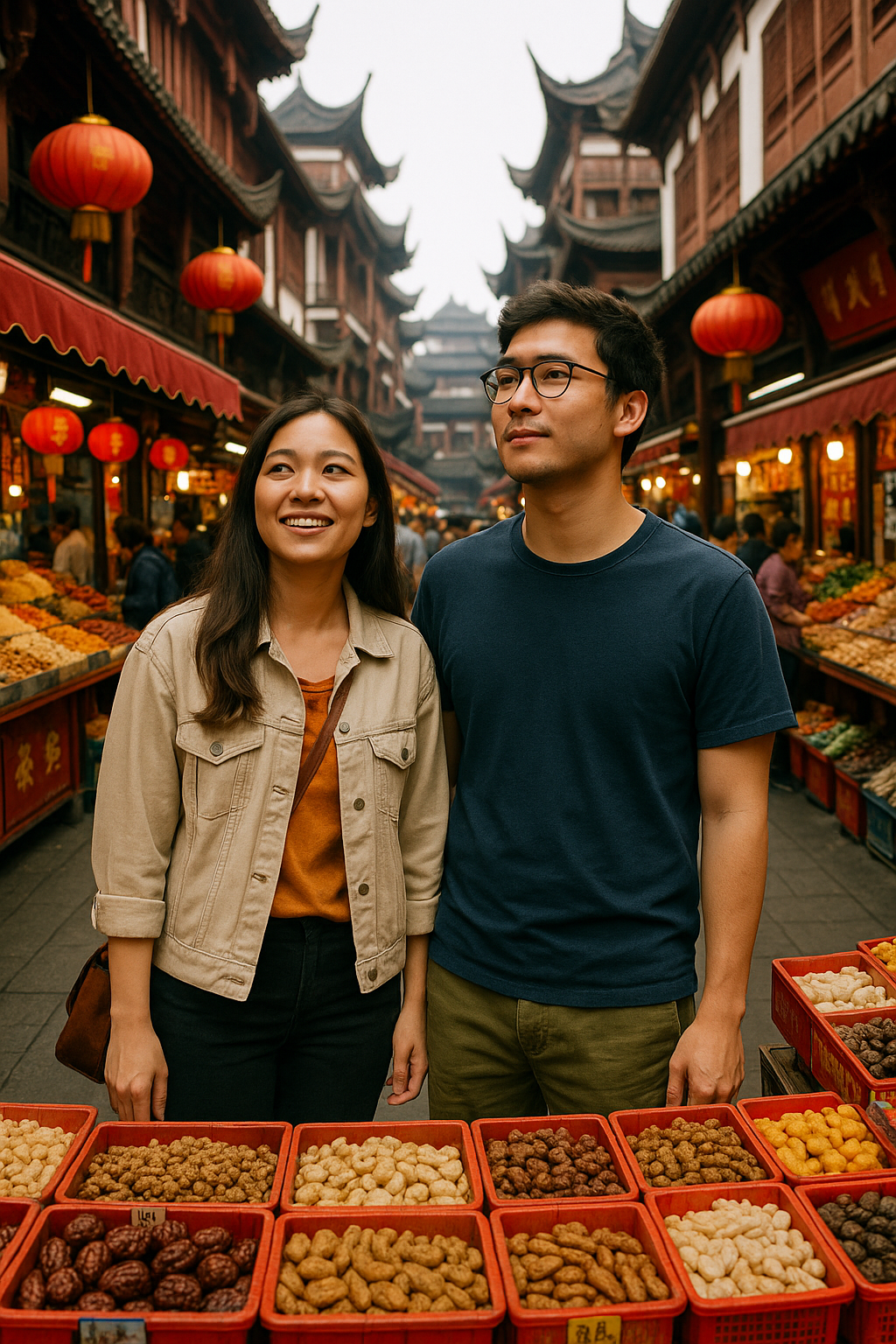
Your guide to bargaining, browsing, and buying with confidence
🧺 Introduction: China’s Markets Are a Feast for the Senses—But You’ll Need the Right Words to Fully Enjoy Them
If you've ever wandered through a Chinese market—whether it's a bustling morning wet market in Chengdu, a lantern-lit night market in Taipei, or a back alley filled with sizzling snacks in Shanghai—you know they’re not just places to shop. They’re living, breathing slices of daily Chinese life.
You’ll find everything from live fish and exotic fruits to fake Gucci bags, hand-carved souvenirs, and piping hot dumplings steaming on bamboo trays. The sounds of haggling, the smell of spices, and the jostle of the crowd create an unforgettable sensory experience.
But while markets in China are vibrant and thrilling, they can also be overwhelming for non-Mandarin speakers. The prices aren’t always marked. The rules of haggling are different. And you may find that a smile alone won’t get you very far when you're trying to buy a pound of lychees or negotiate for a teapot.
That’s why learning a few essential Mandarin phrases before you go can make your experience not just easier, but waymore rewarding. Speaking even basic Mandarin shows respect, builds trust, and often leads to better deals—and even better interactions.
In this guide, we’ll give you the must-know Mandarin words and phrases to shop confidently at any Chinese market, along with cultural tips to help you navigate like a local.
🗣️ Essential Mandarin Phrases for the Market
1. 多少钱?(Duō shǎo qián?) – “How much is it?”
This is the single most important question you'll ask. Use it with a friendly tone and point to the item you're interested in.
2. 可以便宜一点吗?(Kěyǐ piányi yìdiǎn ma?) – “Can it be a little cheaper?”
This is your go-to bargaining phrase. In many markets, bargaining is expected, and asking politely can open the door to a much better price.
3. 太贵了!(Tài guì le!) – “That’s too expensive!”
A classic phrase in any Chinese market. Say it with a smile to signal you’re ready to haggle.
4. 我不要,谢谢。(Wǒ bú yào, xièxie.) – “I don’t want it, thank you.”
A polite way to turn down persistent sellers. Works great when someone is following you around with products you didn’t ask for.
5. 我看看。(Wǒ kànkan.) – “I’m just looking.”
Sometimes you just want to browse. This phrase helps you set boundaries while staying polite.
6. 这个,那个 (Zhè ge, nà ge) – “This one, that one”
These simple words help you point and refer to items if you don’t know the name. Very handy in crowded stalls.
7. 有没有…?(Yǒu méiyǒu…?) – “Do you have...?”
Insert any item name after this. Example: “有没有苹果?” – “Do you have apples?”
8. 一斤 (yì jīn) – Half a kilo
China uses the 斤 (jīn) system in markets. One 斤 is about 500 grams. Know this word to ask for quantities of fruit, vegetables, or meat.
9. 我不要塑料袋 (Wǒ bú yào sùliào dài) – “I don’t need a plastic bag”
If you’re going green or already have your tote, this phrase is helpful—and appreciated.
10. 给我这个吧 (Gěi wǒ zhège ba) – “I’ll take this one”
When you’re ready to buy, this phrase seals the deal. Just hand over the money and smile.
🧠 Cultural Tips for Shopping at a Chinese Market
Always bring cash or mobile pay (WeChat/Alipay)
Some vendors don’t accept foreign cards. Cash is still king in traditional markets.Start with a smile
Many sellers warm up quickly if you start politely—even more so if you try a little Mandarin.Don’t feel bad about walking away
In markets where haggling is normal, walking away can lead to lower offers. It’s all part of the game.Use gestures
When in doubt, point, hold up fingers, or use your phone’s calculator to negotiate numbers.Early birds get the best produce
If you’re shopping for fruits, veggies, or meat, go early when everything is freshest.
❓ FAQ: Chinese Markets and Language Tips
Q: Do I really need to speak Mandarin to shop at a Chinese market?
A: Not absolutely—but knowing even 5–10 key phrases makes the experience smoother, more fun, and helps build goodwill with vendors.
Q: Is bargaining always appropriate?
A: Not in supermarkets or malls, but in open-air markets and tourist stalls, bargaining is often expected.
Q: Can I use a translation app?
A: Yes! Apps like Pleco and Google Translate are great, but speaking even a little Mandarin shows effort and earns respect.
Q: What if I can’t read the signs?
A: Ask the seller out loud or use your phone’s photo-translate feature. Or just say “这个多少钱?” and point!
Q: How can I tell if the price is fair?
A: Observe what others are paying. Often, the first price offered is higher than the final selling price, especially for foreigners.
🈶 Want to Go from Pointing to Speaking?
Shopping at a market is one of the most authentic ways to experience Chinese culture—but it’s even better when you can do it in Mandarin.
At Polyglottist Language Academy, we don’t just teach vocabulary. We teach you how to use Mandarin in real-world situations—whether that’s buying mangoes in Kunming, bargaining for tea in Hangzhou, or just chatting with a friendly vendor.
📍 Our small-group and private classes are available online and in person in Berkeley, Oakland, San Francisco, and San Jose.
🧾 Taught by expert instructors, our lessons focus on practical language you’ll actually use.
👉 Join a Mandarin class today and turn every shopping trip into a confident cultural exchange.
📚 Keep Exploring: More Mandarin & Culture Guides
What To Expect In Your First Adult Mandarin Class (And Why You’ll Love It)
How Mandarin Can Boost Your Career In The Bay Area Tech And Business Scene
Why Learning Mandarin As An Adult Is More Doable Than You Think
From Dumplings To Dialogues: How To Speak Mandarin At Bay Area Restaurants
Best Mandarin Classes For Busy Professionals In The Bay Area