
How Studying Mandarin Helped Me Connect with Locals in Beijing
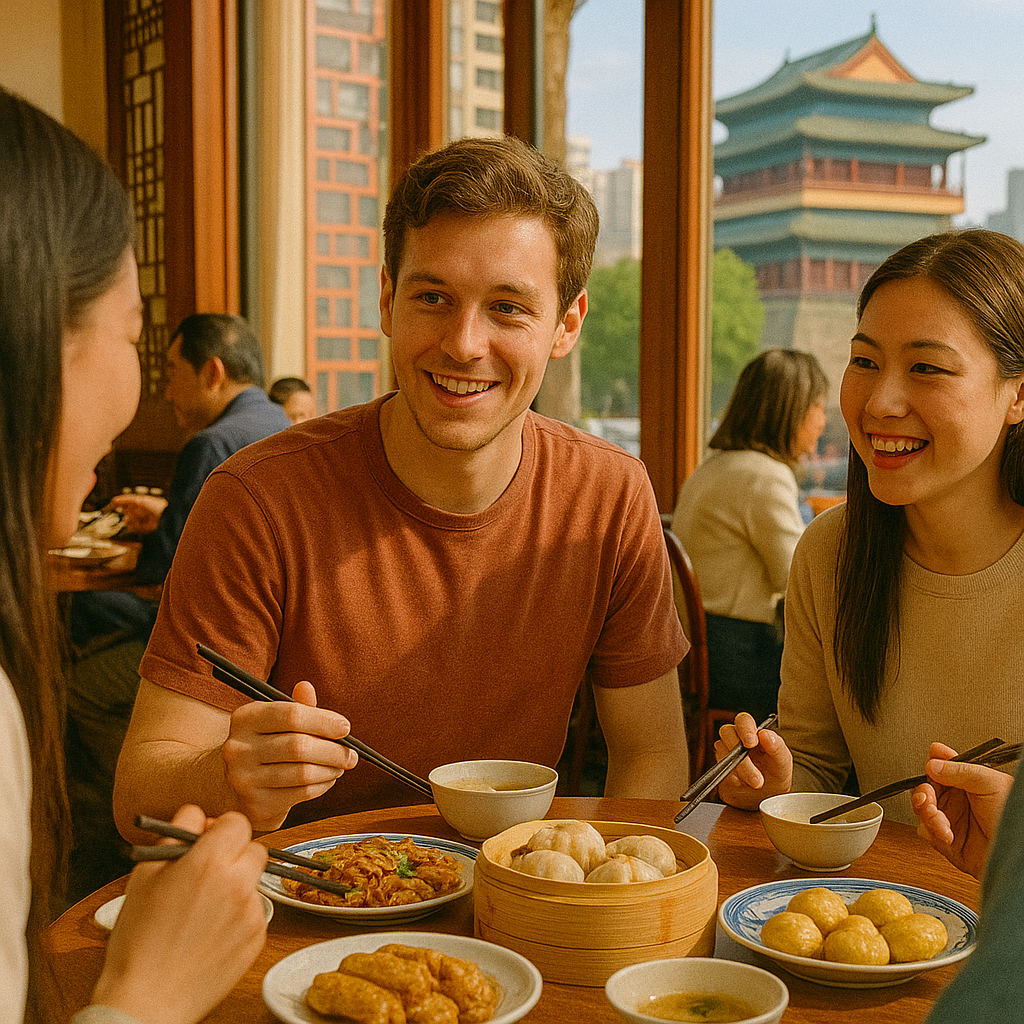
When I first stepped off the plane at Beijing Capital Airport, I was ready to be amazed. I’d read all the travel blogs, bookmarked the best places to eat dumplings, and practiced my “nǐ hǎo” (你好) more times than I could count. But I quickly realized something: while I was prepared for sightseeing, I wasn’t fully prepared for connecting.
In Beijing, everything was vibrant, fast-paced, and unfamiliar—but it was also warm and full of life. And yet, like many travelers who don’t speak the local language, I found myself stuck behind a glass wall. I was there, but not in it. Until one afternoon at a small tea shop in the hutongs, when I haltingly ordered in Mandarin and the woman behind the counter broke into a wide smile.
That was the moment everything changed.
It wasn’t perfect Mandarin. It wasn’t even grammatically correct. But it was mine—and it was enough to open a door. From that point on, the more Mandarin I used, the more open, generous, and curious Beijingers became. I went from being a tourist to being a welcomed guest. And I realized: language isn’t just a tool for travel—it’s the key to human connection.
In this article, I want to share how studying Mandarin completely transformed my experience in Beijing—from small interactions in restaurants to surprising conversations in parks and bookstores. Whether you’re planning a trip or already learning the language, I hope this inspires you to embrace the messy, magical journey of speaking Mandarin in real life.
Learning the Basics Paid Off (Big Time)
Before going to Beijing, I took a beginner Mandarin class. We focused on essentials—greetings, food vocabulary, numbers, and basic sentence structure. I didn’t feel fluent by any means, but even that foundation made an enormous difference.
Being able to:
Say “Excuse me, how much is this?”
Understand directions like “Go straight, then turn left”
Order local favorites like “yī fèn jiǎozi” (一份饺子 — one serving of dumplings)
made everyday life smoother—and way more fun.
▶ Language tip: Locals appreciate effort. Even saying just a few words in Mandarin—even if your tones are off—often leads to friendlier service, helpful advice, and even the occasional compliment on your pronunciation.
Real Conversations (and Surprising Friendships)
One morning in Jingshan Park, I practiced reading a poem on a park sign. An elderly man noticed and asked, “Nǐ shì xuéshēng ma?” (你是学生吗? – “Are you a student?”). That question led to a 15-minute conversation, mostly in Mandarin, partially in hand gestures and laughter. He told me about growing up in Beijing, his favorite authors, and how important it is to preserve cultural traditions.
That never would’ve happened if I hadn’t studied Mandarin.
These little conversations—at book markets, in taxis, or while ordering jiān bǐng (savory Chinese crepes)—weren’t just language practice. They were moments of human connection. People shared their lives, their stories, and their humor, just because I made the effort to meet them halfway.
Mandarin Broke the Ice (Even When I Made Mistakes)
Let’s be clear: I made mistakes. Lots of them.
I once asked for sugar (táng, 糖) and accidentally said soup (tāng, 汤). The server looked confused until we both laughed it off. Another time, I confused the word for cheap (piányi, 便宜) with fat (pàng, 胖) while complimenting a vendor’s food—whoops.
But the beauty of trying is that people usually respond with kindness, not judgment. In fact, my willingness to try, fail, and laugh about it made interactions feel more authentic. People offered corrections, encouraged me, and often shared extra phrases to help me out.
Cultural Doors That Opened Through Language
Speaking Mandarin didn’t just help with practical stuff. It helped me understand China. Through language, I noticed how people use phrases like 慢慢来 (mànmàn lái — take your time) and 不好意思 (bù hǎo yìsi — sorry to trouble you) to express politeness and care. I picked up on subtle cues, like how people give compliments or show hospitality.
I realized that Mandarin isn’t just a set of words—it’s a reflection of Chinese values: respect, humility, connection, and nuance. And being able to speak it—however imperfectly—helped me participate in that world, not just observe it.
FAQs: Using Mandarin as a Traveler in Beijing
❓ Do I need to speak fluent Mandarin to get around in Beijing?
No, but having basic phrases and some listening comprehension makes a big difference. English signage and speakers exist, but not everywhere.
❓ What are the most useful phrases to know?
Start with greetings (你好, 再见), numbers, common food items, and phrases like “How much is this?” (多少钱?), “Where is...?” (在哪儿?), and “I don’t understand” (我听不懂).
❓ Will locals be annoyed by my poor pronunciation?
Not at all. Most people appreciate any effort to speak Mandarin. You’ll often be met with encouragement and smiles.
❓ Is Beijing a good place to practice standard Mandarin?
Yes! Beijing is the source of Standard Mandarin (普通话), though locals add an “-r” sound to some words. It’s an excellent city for language immersion.
❓ Can I learn enough Mandarin before my trip to have real conversations?
Absolutely. Even 2–3 months of classes can give you a strong foundation. Focus on speaking and listening, and use every opportunity to practice once you're there.
Start Your Mandarin Journey With Us
At Polyglottist Language Academy, we believe language is about connection, not perfection. Our Mandarin classes are designed to help you speak confidently, understand culture deeply, and connect with people meaningfully—whether you're preparing for a trip to Beijing or dreaming of making Mandarin part of your life.
📍We offer online and in-person Mandarin classes in Berkeley, San Francisco, Oakland, San Jose, and beyond.
🧳 Planning a trip soon? Let us help you get ready.
👉 Sign up today and start turning words into real-world experiences.
Explore More from Our Blog:
Here are more articles to help you build your Mandarin skills and cultural confidence:
What To Expect In Your First Adult Mandarin Class (And Why You’ll Love It)
How Mandarin Can Boost Your Career In The Bay Area Tech And Business Scene
Why Learning Mandarin As An Adult Is More Doable Than You Think
From Dumplings To Dialogues: How To Speak Mandarin At Bay Area Restaurants
Best Mandarin Classes For Busy Professionals In The Bay Area