
Why Ordering Dumplings in Mandarin Feels Like a Superpower
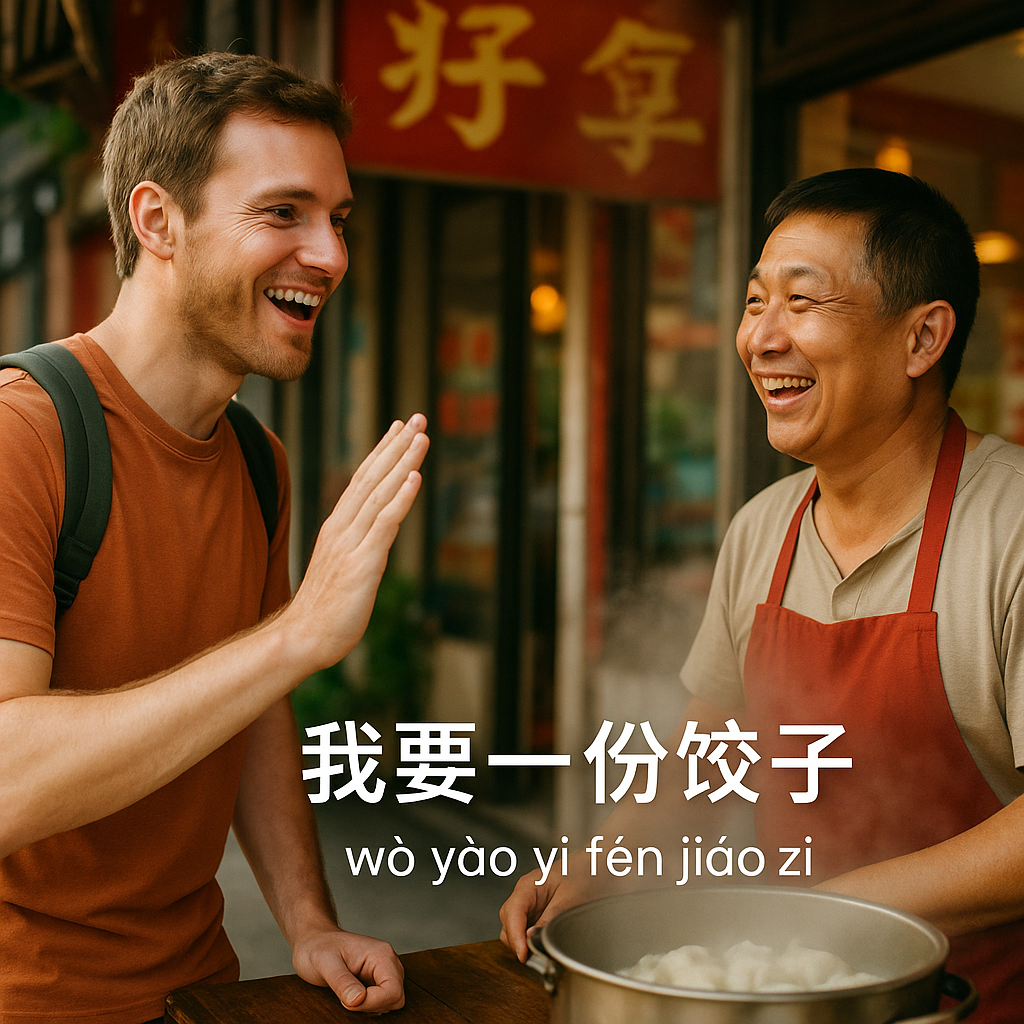
Imagine this: you step into a bustling Beijing dumpling shop. The scent of sizzling pork and scallion fills the air, and the din of families laughing, friends chatting, and steamers clattering surrounds you. You glance at the menu—characters you’ve seen countless times in textbooks—and boldly tell the server in Mandarin exactly what you want: “我要一笼三鲜水饺,再来一碗酸辣汤,谢谢!” (Wǒ yào yī lóng sān xiān shuǐjiǎo, zài lái yī wǎn suān là tāng, xièxie!). The server beams, repeats your order clearly, and commends your pronunciation. Moments later, a steaming bamboo basket arrives at your table, dumplings glistening with flavor. Around you, other diners watch in admiration: you’ve just unlocked a kind of culinary superpower.
Ordering dumplings in Mandarin isn’t just about pointing and hoping for the best. It’s about mastering tones and vocabulary that transform a simple meal into an act of cultural connection. Suddenly, you’re not a tourist struggling with translation apps—you’re an active participant in one of China’s most beloved culinary traditions. You notice how locals nod appreciatively, how they guide you toward their favorite fillings, and how they share insider tips on the perfect dipping sauce. In that moment, every hour you spent drilling tones and memorizing characters pays off in instant confidence and genuine human exchange.
In this article, we’ll dive deep into why ordering dumplings in Mandarin feels like a superpower—and how you can harness that power for your own travel, study, or culinary adventures. We’ll cover:
The Cultural Magic of Dumplings: Why these little pockets of joy hold centuries of history and meaning.
Essential Vocabulary & Phrases: The must-know words—from fillings and styles to sizing and sauces.
Perfecting Pronunciation & Tones: Tips to navigate Mandarin’s tonal terrain so your dumpling order comes out crystal clear.
Ordering Strategies: How to handle menus with confidence, ask for recommendations, and even customize your meal.
Dumpling Etiquette & Rituals: The unspoken rules around sharing, dipping, and toasting with baijiu.
Real-Life Success Stories: Travelers and learners who turned a simple order into a doorway to friendship.
Practice Exercises: Creative drills you can do solo or with a partner to drill dumpling dialogues.
Beyond Dumplings: How these skills transfer to wider Mandarin fluency and cultural immersion.
By the end, you’ll see that ordering dumplings in Mandarin is far more than a party trick—it’s a gateway to deeper understanding, richer experiences, and memories that linger long after the last dumpling is gone. Ready to make your next dumpling order feel like a superpower unleashed? Let’s dig in.
1. The Cultural Magic of Dumplings
Dumplings (饺子, jiǎozi) have been a cornerstone of Chinese cuisine for over two millennia, believed to have been invented during the Eastern Han Dynasty. Shaped like ancient gold ingots, they symbolize wealth and prosperity—hence their prominence on Lunar New Year tables. But beyond festive occasions, dumplings are a daily delight, available in countless varieties and variations across China’s regions.
Northern vs. Southern Styles: In Beijing and Shandong, you’ll find thin, tender wrappers with juicy pork-and-chive fillings. Head south to Canton, and you’ll encounter shrimp dumplings (虾饺, xiā jiǎo) with translucent skins. In Sichuan, mapo-spiced dumplings (麻婆饺子, mápó jiǎozi) bring a numbing-hot twist.
Texture and Technique: Some shops hand-pinch wrappers for that perfect chew; others machine-press for uniformity. Steamed (蒸, zhēng), boiled (水煮, shuǐzhǔ), pan-fried (锅贴, guōtiē), and soup-wrapped (汤包, tāngbāo) dumplings each offer unique mouthfeels.
Filling Creativity: Beyond pork and cabbage, adventurous eaters try lamb with cumin, duck with scallions, or vegan options like mushroom-and-tofu.
This rich dumpling tapestry makes ordering in Mandarin an act of exploration. By naming your preferred style—“锅贴” vs. “水饺”—and specifying fillings—“三鲜” (pork, shrimp, and leek) vs. “三鲜” vs. “三鲜饺子”—you directly shape your culinary experience. You’re not at the whim of translation apps; you’re in control, guiding your taste buds through centuries of flavor tradition.
2. Essential Vocabulary & Phrases
To wield your ordering superpower, arm yourself with these core terms:
Chinese Pinyin English
饺子 jiǎozi dumpling
包子 bāozi steamed bun
汤包 / 小笼包 tāngbāo / xiǎolóngbāo soup dumpling
锅贴 guōtiēpan- fried dumpling
水饺 shuǐjiǎo boiled dumpling
一笼 yī lóngone basket/bamboo steamer
一份 yī fènone portion
三鲜 sān xiānthree delicacies (pork, shrimp, leek)
猪肉 zhūròu pork
牛肉 niúròu beef
羊肉 yángròu lamb
素 sù vegetarian
辣 là spicy
不辣 / 少辣 bù là / shǎo lànot spicy / less spicy
酱油 jiàngyóu soy sauce
醋 cù vinegar
辣椒油 làjiāo yóu chili oil
芝麻酱 zhīma jiàng sesame paste
Key Phrases:
Ordering a basket:
“我要一笼锅贴。”
(Wǒ yào yī lóng guōtiē.)
“I’d like one basket of pan-fried dumplings.”Specifying filling:
“一份羊肉水饺。”
(Yī fèn yángròu shuǐjiǎo.)
“One portion of lamb boiled dumplings.”Adjusting spice:
“不要辣,谢谢。”
(Bù yào là, xièxie.)
“No spice, thank you.”Asking for dipping sauce:
“请给我酱油和醋。”
(Qǐng gěi wǒ jiàngyóu hé cù.)
“Please give me soy sauce and vinegar.”
Memorize these building blocks, and you can mix-and-match any combination: vegetarian soup dumplings with extra chili oil, beef potstickers with sesame paste, or triple-delicacy boiled dumplings with soy-and-vinegar dipping. The possibilities—and your confidence—are endless.
3. Perfecting Pronunciation & Tones
Mandarin’s four tones can make or break your order. A misplaced tone might turn “牛肉” (niúròu, beef) into “妞肉” (niūròu, “girl meat”—not appetizing!). Here’s how to stay on target:
Tone Pair Drills
Practice common two-syllable combinations:牛(2) + 肉(4) = niú ròu (rising + falling)
三(1) + 鲜(1) = sān xiān (high + high)
水(3) + 饺(3) = shuǐ jiǎo (dipping + dipping)
Minimal Pair Challenges
Drill words that differ only by tone:麻 (má, hemp) vs. 马 (mǎ, horse) vs. 码 (mǎ, code) vs. 骂 (mà, scold)
汤 (tāng, soup) vs. 糖 (táng, sugar)
Audio Shadowing
Record native speakers ordering dumplings—YouTube reviews, foodie vlogs—and repeat immediately after them, matching pitch and rhythm.Feedback Loop
Use apps like Pleco or HelloTalk to get instant corrections. Record your own voice and compare waveforms if you’re ambitious.
Master these exercises daily—even five minutes makes a huge difference. Clear tones ensure your server hears “三鲜锅贴” instead of “三鲜果贴,” keeping you firmly in the realm of deliciousness.
4. Ordering Strategies for Every Scenario
4.1 From Menu to Mouth
Point-and-Confirm: If the menu has pinyin or pictures, point while speaking the name aloud: “这个,是三鲜水饺吗?”
Ask for Recommendations: “你们最受欢迎的饺子是哪种?” (Nǐmen zuì shòu huānyíng de jiǎozi shì nǎ zhǒng?) “Which dumplings are most popular here?”
Customize with Confidence: “可以多放一点醋吗?” (Kěyǐ duō fàng yīdiǎn cù ma?) “Could you please add more vinegar?”
4.2 Handling Group Orders
In a group, ordering can get hectic. Delegate roles:
One speaker: Learner places the order, others confirm details.
Clarifier: One asks follow-up questions: “这盘有几只饺子?” (How many dumplings are in this plate?)
Sauce manager: Someone handles dipping sauce requests: “可以要几碟辣椒油吗?” (May we have a few plates of chili oil?)
4.3 Taking it to the Next Level
Ask about preparation: “这饺子是现包的吗?” (Are these dumplings freshly made?)
Inquire about specials: “今天有什么特色饺子?” (What special dumplings do you have today?)
Express appreciation: “谢谢你,这里太好吃了!” (Xièxie nǐ, zhèlǐ tài hǎochī le!) “Thank you, this is so delicious!”
These strategies turn ordering into an engaging dialogue, showcasing your Mandarin skills and inviting servers to share their expertise. You’ll leave with full bellies—and new friends.
5. Dumpling Etiquette & Rituals
Ordering dumplings isn’t just transactional; it’s a mini-ceremony steeped in etiquette:
Sharing is Caring: Dumplings arrive in shared baskets or plates—use chopsticks to transfer portions to everyone’s personal plate before eating. Avoid eating directly from the communal dish.
Dipping Dynamics: The classic ratio is three parts vinegar to one part soy sauce, plus chili oil or sesame paste on the side. Customize at your own risk, but respect local taste preferences.
Toasting Tradition: In many regions, dumplings pair with baijiu (白酒), a strong clear spirit. A light toast—“干杯” (gānbēi)—followed by a small sip is customary. Lower your glass slightly when toasting elders as a sign of respect.
Thanking and Leaving: After the meal, a simple “谢了” (xièle) or more formally “谢谢招待” (xièxie zhāodài, thank you for the hospitality) goes a long way.
By observing these rituals, you honor the cultural heritage behind dumplings and demonstrate that your Mandarin skills come from a place of genuine respect.
6. Real-Life Success Stories
6.1 Anna’s Adventure in Xi’an
Anna, a study-abroad student from Germany, arrived in Xi’an craving authentic dumplings. On her first attempt, she nervously blurted “我要饺子!” without specifying filling—she received a mixed basket and learned to refine her order. By week three, she confidently said, “我要一份羊肉泡馍饺子,少油多醋。” The vendor applauded her clarity and invited her to try a new, off-menu flavor—cumin lamb dumplings—free of charge. That spontaneous interaction became her favorite Xi’an memory.
6.2 Mike’s Market Mastery in Chengdu
Business traveler Mike faced a crowded Chengdu night market. Without Mandarin skills, he’d have clung to bottled water. Instead, he practiced “来一份三鲜锅贴,再来点儿花生米。” The vendor, impressed, threw in complimentary peanuts and taught him the local slang for super-spicy: “麻辣得很!” Mike returned nightly, becoming a regular and even helped translate orders for other tourists.
6.3 Liu Wei’s Language Exchange Leap
Liu Wei, a Chinese-American learner, used dumpling ordering as her weekly language exchange theme. Each Meetup, she’d bring new vocabulary: regional dumpling names, slang for “super delicious,” and questions about texture. By month two, she hosted an “order-off” competition where pairs raced to order the most complex combinations. That playful approach cemented her fluency and expanded her social circle.
These stories illustrate how ordering dumplings—far from a mundane task—becomes a catalyst for deeper cultural immersion and personal growth.
7. Practice Exercises: Drills to Build Your Superpower
7.1 Role-Play Scenarios
Solo Drill: Record yourself ordering three different dumpling types, varying fillings and spice levels. Play back and self-correct.
Partner Exercise: One person is the server with a mock menu; the other practices ordering and follow-up questions.
Group Challenge: Each participant orders for the group, then everyone votes on clarity and politeness.
7.2 Flashcard Frenzy
Create flashcards with:
Front: “Lamb pan-fried dumplings, less spicy”
Back: “羊肉少辣锅贴 (yángròu shǎo là guōtiē)”
Include audio clips of native pronunciation if possible.
7.3 Menu Translation
Find an online dumpling shop menu, translate ten items into English, then back into Mandarin. Compare your translations to the original and note differences.
7.4 Cultural Reflection Journals
After each practice session or real-world order, jot down:
What vocabulary you used.
Any mistakes and corrections.
Server’s reaction—did they smile? Repeat back? Offer extras?
Review weekly to track progress and set new goals.
8. Beyond Dumplings: Expanding Your Mandarin Superpowers
The skills you develop ordering dumplings transfer directly to countless other scenarios:
Night market snacks: “来份臭豆腐,不要太辣。” (Stinky tofu, not too spicy.)
Breakfast joints: “请给我一碗豆浆和两笼小笼包。” (One bowl of soy milk and two baskets of soup dumplings.)
Street-side BBQ: “这些羊肉串要五串。” (Five lamb skewers, please.)
Each new culinary conquest reinforces your tones, vocabulary, and confidence. Before long, you’re not just a dumpling-ordering superhero—you’re a fearless Mandarin communicator ready for any menu, street vendor, or café conversation.
Frequently Asked Questions
I’m a complete beginner—can I really order dumplings in Mandarin?
Absolutely! Start with “我要一笼饺子” and gradually add fillings and spice preferences. Servers are patient and often help you refine your order.What if my tones are terrible?
Focus first on clarity: speak slowly, enunciate, and use context (pointing, gestures). Over time, refine tones with audio shadowing and feedback apps.How many phrases do I need to memorize?
A core set of 20–30 phrases covers most dumpling orders. Pair that with basic numbers (一 to 十) and you’re ready for anything.Can I use translation apps instead?
Apps work in a pinch, but they slow down interaction and miss cultural nuances. A few memorized phrases win respect and speed up service.What regional variations should I know?
In northern China, “饺子” generally means boiled dumplings; in the south, “饺子” can refer to various styles. Ask “这是哪种饺子?” if unsure.Is it rude to customize my order?
Not at all! Chinese diners often specify fillings, spice levels, and extra sauces. Polite customization shows you care about taste.How can I practice ordering if I’m not in China?
Try local Chinese restaurants or dumpling-making classes. Role-play with friends or tutors to simulate real orders.What’s the best way to remember dipping sauce names?
Pair the sauce with its taste in your mind: 酱油 (jiàngyóu) tastes salty; 醋 (cù) is sour; 辣椒油 (làjiāo yóu) brings heat. Visual flashcards help.
At Polyglottist Language Academy, we transform your Mandarin learning from rote drills into real-world superpowers.
Ready to turn every dumpling order into a conversation starter?
👉 Sign up for our Mandarin classes and unleash your inner dining superhero!
Explore More on Our Blog
What To Expect In Your First Adult Mandarin Class (And Why You’ll Love It)
How Mandarin Can Boost Your Career In The Bay Area Tech And Business Scene
Why Learning Mandarin As An Adult Is More Doable Than You Think
From Dumplings To Dialogues: How To Speak Mandarin At Bay Area Restaurants
Best Mandarin Classes For Busy Professionals In The Bay Area