
How to Order Like a Local at a Chinese Restaurant
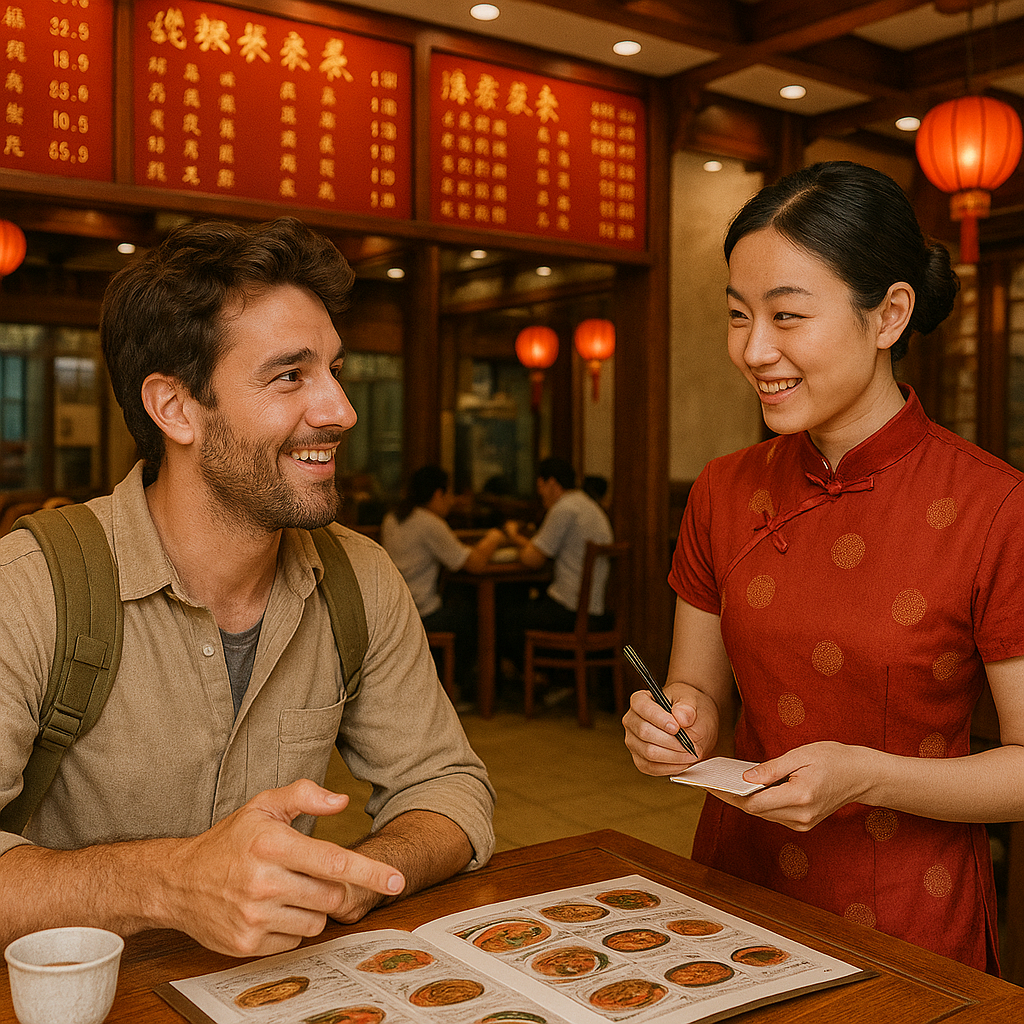
A Crash Course in Dining with Confidence, Respect, and Delicious Results
🥢 Introduction: What Ordering Food Teaches You About a Culture
There are few better ways to connect with another culture than by sitting down at a table and sharing a meal. In China, food isn’t just nourishment—it’s philosophy, medicine, art, and most of all, a communal ritual. Ordering food in a Chinese restaurant isn’t merely a task—it’s a social experience, a subtle negotiation of group tastes, etiquette, and unspoken cultural cues.
And if you’ve ever stared helplessly at a Chinese menu, unsure of what or how to order, you’re not alone. Whether you’re in Shanghai, San Francisco, or a hole-in-the-wall spot in Chengdu, ordering like a local can feel like trying to join a secret club whose rules are written in characters you don’t yet understand.
But here’s the good news: once you learn those rules, your dining experience transforms. You won’t just be filling your stomach—you’ll be understanding China.
This article is your ultimate guide to ordering like a pro in a Chinese restaurant. Whether you're dining in China, living abroad, or just trying to impress your Chinese friends at a local spot, we’ll show you how to approach the menu, what to say, what not to do, and how to unlock dishes you never knew existed. We’ll also sprinkle in essential Mandarin phrases, cultural insights, and the social nuances that make Chinese dining both fascinating and unforgettable.
Let’s dig in.
🍽️ The Mindset: Eating in China Is a Shared Experience
One of the first things to understand is that Chinese dining is communal. You don’t order one dish per person. Instead, the group collaborates to create a multi-dish feast, usually consisting of:
A mix of meat, vegetables, and tofu dishes
At least one cold dish (凉菜 liángcài) to start
One or two signature or regional specialties
A soup (汤 tāng) or hotpot (火锅 huǒguō) to bring people together
Rice (米饭 mǐfàn) or noodles (面 miàn) at the end of the meal—not the beginning
This shared approach reflects key Chinese values: harmony, balance, and collective enjoyment.
Pro Tip:
The number of dishes usually equals the number of diners plus one. So for a table of four, order five dishes.
📖 Understanding the Menu: Beyond Sweet and Sour Pork
A Chinese menu can be overwhelming—hundreds of characters, no photos, and dishes you may not recognize. But once you understand how it’s structured, it gets easier.
Common Sections:
热菜 (rècài) – Hot Dishes
凉菜 (liángcài) – Cold Dishes
主食 (zhǔshí) – Staples like rice, noodles, buns
汤 (tāng) – Soups
海鲜 (hǎixiān) – Seafood
素菜 (sùcài) – Vegetarian Dishes
特色菜 (tèsè cài) – House Specials
小吃 (xiǎochī) – Snacks or street food-style plates
If you’re not sure what something is, don’t be shy—locals ask questions, too. Ask the waiter what’s popular (推荐的菜 tuījiàn de cài) or what’s especially good today.
🧾 How to Order: Step-by-Step
1. Ask for the Menu
Say: 请给我菜单 (qǐng gěi wǒ càidān) – “Please give me the menu.”
2. Collaborate on What to Eat
If dining with Chinese friends, let the host or the oldest person at the table take the lead. Don’t argue over what to order—suggest preferences politely.
Say:
我不吃辣 (wǒ bù chī là) – “I don’t eat spicy food.”
我吃素 (wǒ chī sù) – “I’m vegetarian.”
有没有不含花生的菜?(yǒu méiyǒu bù hán huāshēng de cài?) – “Do you have dishes without peanuts?”
3. Place the Order
Tell the waiter how many people: 我们有四位 (wǒmen yǒu sì wèi) – “We are four people.”
Then say: 我们点菜了 (wǒmen diǎn cài le) – “We’re ready to order.”
Point to the menu or say the name of the dish:
我们要一个宫保鸡丁 (wǒmen yào yī gè gōng bǎo jī dīng) – “We’ll have one Kung Pao chicken.”
再来一个青菜 (zài lái yī gè qīngcài) – “And one more vegetable dish.”
4. Special Requests
少放盐 (shǎo fàng yán) – “Less salt”
不要味精 (bù yào wèijīng) – “No MSG”
不要太辣 (bù yào tài là) – “Not too spicy”
🥟 Must-Know Dishes by Region
Here are local favorites that locals love but tourists often overlook:
🇸🇾 Sichuan (四川):
水煮鱼 (shuǐ zhǔ yú) – Spicy boiled fish
鱼香肉丝 (yú xiāng ròu sī) – Fish-fragrant shredded pork
🇨🇳 Beijing (北京):
北京烤鸭 (běijīng kǎoyā) – Peking Duck
炸酱面 (zhá jiàng miàn) – Noodles with soybean paste
🇬🇮 Guangdong / Cantonese (广东):
白切鸡 (bái qiē jī) – Poached chicken
虾饺 (xiā jiǎo) – Shrimp dumplings (dim sum)
🇬🇽 Guangxi / Hunan (湖南):
剁椒鱼头 (duò jiāo yú tóu) – Fish head with chopped chili
腊肉炒菜 (là ròu chǎo cài) – Stir-fried vegetables with cured meat
🫖 Dining Etiquette: How Locals Behave at the Table
Don’t start eating until the host says 开动 (kāidòng) – “Let’s begin.”
Don’t take the last piece unless invited.
Always pour tea for others before yourself.
Use the “serving chopsticks” if provided.
Compliment the food often – 好吃极了!(hǎo chī jí le!) – “It’s delicious!”
🍻 Bonus: To Toast or Not to Toast?
Toasts are an essential part of Chinese dining, especially during formal meals.
The word is 干杯 (gān bēi) – “Cheers”
Lower your glass slightly when toasting someone older or of higher status
If someone toasts you, it’s polite to reciprocate
🙋♀️ FAQs: Ordering in Chinese Restaurants
Q: Is tipping expected in China?
A: No, tipping is not customary in mainland China, and may even be refused.
Q: What if there’s no English on the menu?
A: Use translation apps like Pleco or Google Translate’s camera feature—or better yet, learn the key dish names in Mandarin!
Q: Can I ask for substitutions or changes to a dish?
A: In big cities, yes. In smaller places, it’s less common. Ask politely, but be prepared for a “no.”
Q: What’s the deal with the tissue packs or napkin fees?
A: Many restaurants charge a small fee (1–2 RMB) for tissues. You’re not being scammed—it’s standard.
Q: What should I avoid doing?
A: Don’t stick chopsticks upright in rice—it resembles incense for the dead. Don’t tap your bowl with chopsticks either.
🎓 Learn Mandarin and Dine Like a Native
The key to a richer, more delicious experience at any Chinese restaurant? Speaking the language. Mandarin isn’t just about grammar—it’s about unlocking culture, context, and confidence.
At Polyglottist Language Academy, our small-group and private Mandarin classes will prepare you not only to order like a local, but to understand the deeper meaning of food, friendship, and conversation in Chinese culture.
📍 Join our classes online or in-person in Berkeley, Oakland, San Jose, Sacramento, Santa Rosa, Reno, and Portland.
👉 Click here to sign up for Mandarin classes today!
🧭 Explore More on the Polyglottist Blog
Check out these popular reads for more cultural insight and language tips:
What To Expect In Your First Adult Mandarin Class (And Why You’ll Love It)
How Mandarin Can Boost Your Career In The Bay Area Tech And Business Scene
Why Learning Mandarin As An Adult Is More Doable Than You Think
From Dumplings To Dialogues: How To Speak Mandarin At Bay Area Restaurants
Best Mandarin Classes For Busy Professionals In The Bay Area
Managing Language Anxiety: Psychological Strategies For Relaxation And Focus
Mastering Politeness Levels And Formality In Different Cultures
Building A Daily Language Routine: How Consistency Drives Fluency
Whether you’re exploring Beijing’s hutongs, digging into spicy Hunanese cuisine, or just trying to read the menu at your neighborhood Chinese joint, remember this: every bite tastes better when you understand the culture behind it.
让我们一起吃吧! (Let’s eat together!) 🥢🇨🇳