
Exploring the cultural, historical, and practical reasons behind the East–West flavor gap.
Introduction: The Chopsticks Don’t Lie—but the Dishes Might
You walk into a Chinese restaurant in your hometown. There’s General Tso’s Chicken, sweet and sour pork, egg rolls, crab rangoons. Everything tastes familiar, comforting, and undeniably “Chinese.” But then you go to China, sit down at a local restaurant, and find... none of those dishes on the menu. No fortune cookies either.
Even the fried rice tastes different. The sauces are lighter. The flavors are sharper, more complex, sometimes spicier, sometimes plainer. Suddenly, you realize something many travelers (and foodies) have wondered: Why does Chinese food taste so different abroad?
This isn’t just about missing ingredients or different spice levels. It’s about migration, adaptation, survival, cultural taste, and a whole lot of wok-fried improvisation. Chinese cuisine is one of the oldest and most widely exported food cultures in the world, but it’s also one of the most misunderstood—especially outside of China.
In this article, we’ll take a deep dive into why “Chinese food” in New York, London, or Melbourne often bears little resemblance to what’s served in Beijing, Chengdu, or Guangzhou. We’ll explore the historical roots of Chinese food abroad, the regional complexity of Chinese cuisine, the tastes and expectations of Western diners, and what happens when thousands of years of culinary tradition meet a new cultural context.
By the end of this article, you won’t just understand why Chinese food tastes different abroad—you’ll be able to explain it to your dinner guests with confidence and maybe even order like a pro at an authentic Chinese restaurant near you.
1. Chinese Cuisine: A Multiverse, Not a Monolith
Let’s begin with a basic truth: there is no single “Chinese food.” The culinary traditions of China are as diverse as its languages and landscapes.
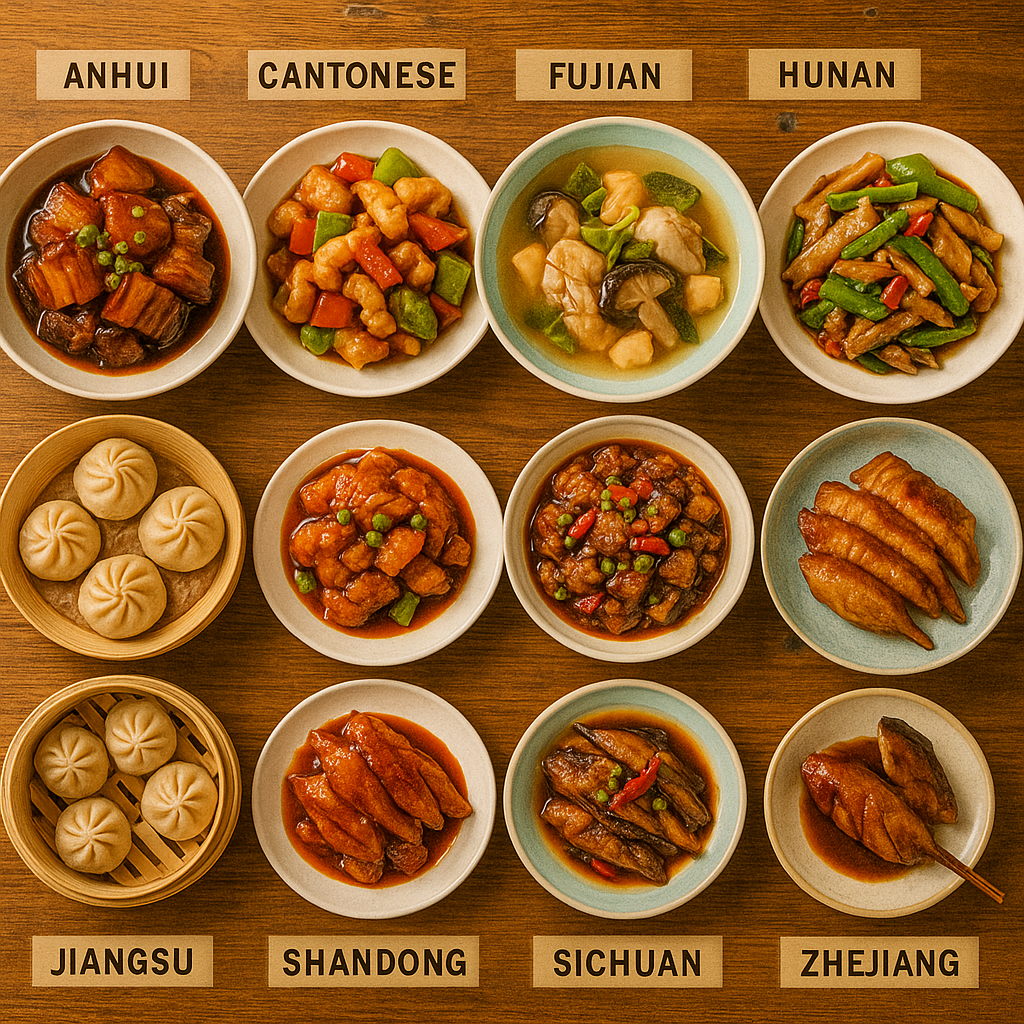
China’s cuisine is typically divided into Eight Great Cuisines:
Sichuan: spicy, numbing, aromatic (mapo tofu, hotpot)
Cantonese (Guangdong): fresh, lightly seasoned, focused on natural flavors (dim sum, steamed fish)
Shandong: hearty, northern flavors (braised seafood, soups)
Jiangsu: elegant, refined, often sweet (sweet and sour mandarin fish)
Zhejiang: mellow, soft, with a focus on fresh ingredients (West Lake vinegar fish)
Fujian: delicate, umami-rich, known for broths (Buddha Jumps Over the Wall)
Hunan: spicy and sour, similar to Sichuan but with less numbing flavor
Anhui: rustic, foraged ingredients, wild herbs, slow braises
Each of these cuisines has dozens of sub-regional styles. So when someone says, “I love Chinese food,” they could be talking about five-alarm Sichuan hotpot or a subtle Cantonese congee. The diversity is staggering—and most of it never makes it onto Western menus.
2. A History of Adaptation: How Chinese Food Traveled
Chinese immigration began in large numbers in the 19th century, especially to North America, Southeast Asia, and parts of Europe. But the immigrants who brought their food traditions with them didn’t always bring—or have access to—the same ingredients.
In the United States, early Chinese immigrants (many from Guangdong) had to cook for non-Chinese palates. They substituted bok choy with cabbage, used ketchup for tomato sauces, and sweetened dishes to appeal to American tastes. Soy sauce replaced fermented sauces. Frying became more common.
Thus, American-Chinese food was born: dishes like chop suey, egg foo young, and sweet-and-sour chicken were created to be affordable, appealing, and quick. These weren’t dishes brought from China—they were dishes inspired by Chinese cooking, invented abroad.
3. Taste Preferences: Sweet vs. Savory, Mild vs. Spicy
Chinese diners generally prefer:
Balance: salty, sour, sweet, bitter, and umami in one meal.
Texture variety: soft, chewy, crispy, slippery.
Seasonality and freshness: vegetables should be crisp, meat tender, seafood fresh.
Western diners often prioritize:
Sweetness and richness
Deep-frying and uniform textures
Predictability over unfamiliar or bitter ingredients (like bitter melon or fermented tofu)
This divergence in taste has a big impact. For example:
Real kung pao chicken is sharp, tangy, and peppery—not drowning in sweet brown sauce.
Egg rolls don’t really exist in China. Spring rolls do, but they’re thinner and more delicate.
In China, rice is typically eaten plain alongside complex main dishes—not fried and served as a main course.
4. Ingredients Matter: What’s Missing Abroad?
A typical Chinese pantry includes:
Dozens of soy sauces (light, dark, mushroom-flavored)
Fermented bean pastes, chili oils, Shaoxing wine
Fresh ingredients like lotus root, Chinese chives, and winter melon
Seafood varieties that aren’t widely available elsewhere
But when Chinese restaurants open abroad, they often have to work with what’s available—and affordable. For decades, that meant:
Replacing leafy greens with broccoli
Swapping out Sichuan peppercorns (banned in the U.S. until 2005)
Using sugar and cornstarch to bulk up sauces
This leads to heavier, sweeter dishes with fewer layers of flavor.
5. Restaurant Economics and Expectations
Chinese restaurants abroad often have to balance:
Keeping prices low to compete
Serving huge portions
Offering a “safe” menu that avoids more challenging textures (like jellyfish or chicken feet)
In contrast, in China:
Portions are often smaller and shared family-style
Restaurants often specialize in one type of cuisine (e.g., Lanzhou noodles, dim sum)
Diners expect to see seasonal changes in the menu
That’s why a restaurant in China might serve braised duck tongue in chili oil, while a “Chinese” restaurant abroad offers orange chicken with broccoli.
6. The Rise of Authentic Chinese Restaurants Abroad
The good news? Things are changing.
With increased immigration from across China—and a more adventurous generation of food lovers—authentic regional Chinese restaurants are opening in cities like New York, London, Vancouver, and Melbourne.
You’ll now find:
Xi’an Famous Foods serving cumin lamb noodles
Chengdu Taste with full Sichuan menus
Dongbei restaurants offering hearty northern stews and sauerkraut
Yunnan cafes serving rice noodles and pickled veggies
But for many diners, understanding the menu still requires curiosity—and ideally, a bit of Mandarin.
7. The Language Barrier: Lost in Translation
Some of the most delicious Chinese dishes sound strange—or even off-putting—when translated directly:
“Husband and wife lung slices” (夫妻肺片): a cold beef offal dish from Sichuan
“Ants climbing a tree” (蚂蚁上树): glass noodles with ground pork
“Fish fragrant eggplant” (鱼香茄子): has no fish, just a seasoning style from Sichuan
These names are poetic, humorous, or metaphorical in Chinese, but can seem unappetizing in English.
That’s one reason Chinese restaurants abroad often rename dishes to be more marketable—even if it means sacrificing authenticity.
8. The Culture of Eating in China vs. Abroad
In China:
Meals are communal: dishes are shared, eaten family-style
The table is full of variety: meat, fish, soup, tofu, vegetables, cold dishes
Dining out is social, not rushed
In many Western cultures:
Diners prefer personal portions
Meals are structured: appetizer, entrée, dessert
Dining is more individualized
These cultural norms affect not just how Chinese food is cooked, but how it’s served and experienced.
FAQs: Chinese Food at Home and Abroad
Is Chinese food in China healthier than abroad?
Generally, yes. It’s lighter, less oily, and more focused on balance and fresh ingredients. Many Westernized Chinese dishes are high in sugar and salt.
Why is orange chicken so popular abroad but not in China?
It was invented in the U.S. and caters to American preferences for sweet, tangy, fried dishes. It’s virtually unknown in China.
Do Chinese people eat fortune cookies?
Nope. Fortune cookies were invented in California, likely by Japanese-Americans. They’re not part of Chinese culinary tradition.
Why are Chinese dishes abroad so sweet?
Sugar appeals to Western palates and helps thicken sauces. Traditional Chinese cuisine uses sweetness more sparingly and often balances it with vinegar or chili.
How can I find authentic Chinese food abroad?
Look for regional specialties (e.g., “Sichuan,” “Dongbei,” “Yunnan”), menus with Chinese characters, and a majority-Chinese clientele. Ask for the “Chinese menu” if available.
Can I learn to cook real Chinese food at home?
Absolutely! Start with stir-fried greens, mapo tofu, or handmade dumplings. A good wok and a few pantry staples (soy sauce, Shaoxing wine, sesame oil) go a long way.
Is Chinese food always spicy?
Not at all. While Sichuan and Hunan cuisines are spicy, many others—like Cantonese and Zhejiang—are mild and delicate.
Should I learn some Mandarin to order more authentic dishes?
Yes! Even a few words can help you unlock hidden parts of the menu or communicate better with staff.
Want to Truly Taste China? Start with the Language
Understanding Chinese cuisine isn’t just about taste—it’s about context, culture, and language. When you learn Mandarin, you don’t just gain vocabulary—you gain access to centuries of culinary tradition, poetic dish names, cooking philosophies, and real conversations with chefs and locals.
At Polyglottist Language Academy, we offer Mandarin classes for food lovers, travelers, and curious learners—both online and in person. Whether you want to decipher a Chinese menu, understand regional flavors, or order street food in perfect tones, our experienced instructors will get you there.
👉 Sign up today and start your language and food journey together.
📚 Keep Exploring Chinese Language and Culture:
What To Expect In Your First Adult Mandarin Class (And Why You’ll Love It)
How Mandarin Can Boost Your Career In The Bay Area Tech And Business Scene
Why Learning Mandarin As An Adult Is More Doable Than You Think
From Dumplings To Dialogues: How To Speak Mandarin At Bay Area Restaurants
Best Mandarin Classes For Busy Professionals In The Bay Area