
Discover the cities that define China—through history, food, landscapes, and culture.
Introduction: China Is Not Just One Story—It’s a Thousand Cities in One Country
When most travelers think of China, a few iconic images come to mind: the Great Wall winding across mountain ridges, misty landscapes dotted with temples, and neon-lit mega-cities that feel like something out of a sci-fi movie. But the truth is, China is far more diverse, textured, and complex than any postcard can capture.
Spanning five time zones and encompassing over 1.4 billion people, China isn’t one culture—it’s many. Each region, each province, and each city brings something unique to the table: different dialects, cuisines, philosophies, and ways of life. The cities here are not just geographic locations—they’re living testaments to dynastic glory, revolutionary change, economic miracle, and cultural resilience.
So, if you're planning your first or fiftieth trip to China, this curated list of 10 must-visit cities will help you explore the country’s many faces—from ancient capitals to futuristic hubs, culinary heartlands to poetic escapes.
Whether you're a history buff, foodie, photographer, hiker, or just someone who wants to feel lost (in a good way) in translation—this list is your roadmap to discovering the real China, one city at a time.
Let’s get started.
1. Beijing (北京): The Heart of China’s Imperial Past and Political Present
As the capital of China for over 800 years, Beijing is the starting point for most travelers—and for good reason. Here, imperial grandeur meets political gravity.
What makes it unique:
Home to the Forbidden City, the world’s largest palace complex.
Climb the Great Wall at Mutianyu or Jinshanling.
Explore the narrow hutong alleyways and sip tea in traditional courtyards.
Witness the massive scale of Tiananmen Square and visit Mao’s Mausoleum.
🎭 Beijing is also the cultural capital: don’t miss a Peking opera performance or a dinner of authentic Peking duck.
2. Shanghai (上海): China’s Most Cosmopolitan and Futuristic City
If Beijing is the soul of China, Shanghai is its electric pulse. This is where East meets West in the most dramatic way.
What makes it unique:
The Bund: a riverfront lined with colonial architecture facing the sci-fi skyline of Pudong.
The French Concession: tree-lined streets, art deco buildings, trendy cafes.
Take a stroll in Yu Garden, a classical Chinese garden oasis.
Ride the world’s fastest commercial train: the Maglev from the airport.
🍸 Shanghai also boasts one of China’s most exciting food scenes, fusing global flavors with local staples like xiao long bao (soup dumplings).
3. Xi’an (西安): Where China’s History Begins
Once the starting point of the Silk Road, Xi’an is one of the oldest cities in China and was the capital of 13 dynasties.
What makes it unique:
Visit the world-famous Terracotta Warriors—thousands of life-sized clay soldiers buried with Emperor Qin Shi Huang.
Walk along the ancient city wall—the best preserved in China.
Explore the vibrant Muslim Quarter, where Arab-Chinese culture blends in a dazzling night market.
🕌 Xi’an gives you direct access to China’s ancient soul—with a touch of Middle Eastern influence that surprises many first-time visitors.
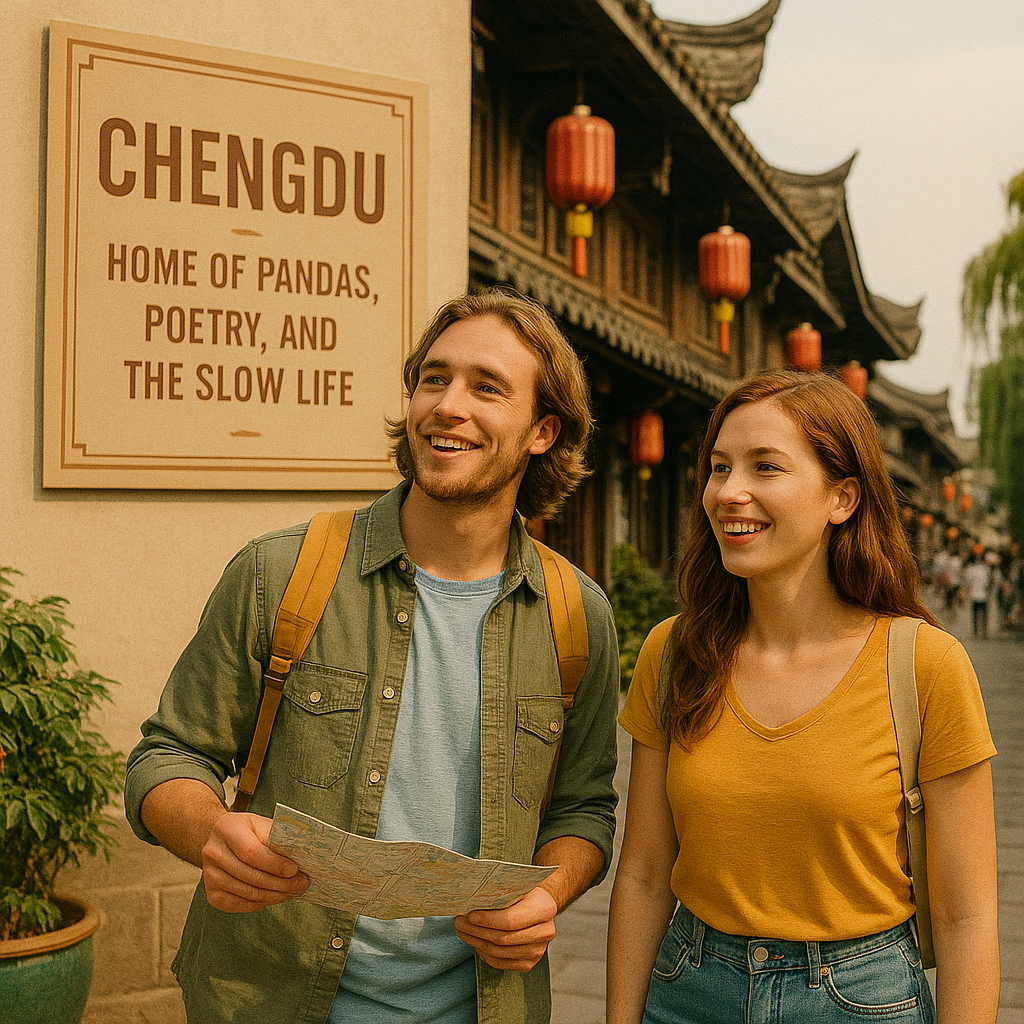
4. Chengdu (成都): Home of Pandas, Poetry, and the Slow Life
Welcome to Sichuan’s capital, where time slows down and everything tastes like chili oil.
What makes it unique:
Visit the Chengdu Research Base of Giant Panda Breeding.
Savor spicy hotpot, mapo tofu, and dan dan noodles.
Sip jasmine tea in traditional teahouses, some with live Sichuan opera performances.
Take a day trip to the Leshan Giant Buddha, the largest stone Buddha in the world.
🐼 Chengdu is also a UNESCO City of Gastronomy and the perfect place to appreciate the Chinese saying: “In Chengdu, people know how to enjoy life.”
5. Hangzhou (杭州): Where Heaven Meets Earth
Described by Marco Polo as “the most beautiful and magnificent city in the world,” Hangzhou is a poetic escape.
What makes it unique:
West Lake: paddleboats, pagodas, and willow-draped shorelines.
Longjing (Dragon Well) tea plantations: sip tea at the source.
Lingyin Temple: one of China’s most significant Buddhist temples.
Scenic cycling routes and historic walking paths abound.
🌿 Hangzhou is where you go to feel the beauty of Chinese landscape painting come to life.
6. Guilin & Yangshuo (桂林/阳朔): Nature at Its Most Surreal
These two cities in Guangxi Province often go together in travelers’ itineraries—and for good reason.
What makes them unique:
Karst mountains rising like dragon spines from the land.
Li River cruise from Guilin to Yangshuo—stunning beyond words.
Rock climbing, bamboo rafting, cycling through rice paddies.
Laid-back backpacker vibes in Yangshuo’s West Street.
🌄 If you’ve ever seen a Chinese landscape scroll painting—you’ve already seen Guilin.
7. Suzhou (苏州): Venice of the East
Located near Shanghai, Suzhou is famed for its classical gardens, stone bridges, and water canals.
What makes it unique:
Humble Administrator’s Garden and Lingering Garden—UNESCO treasures.
Silk museums and traditional weaving.
Ride a boat through canals in the old city.
Explore nearby Tongli or Zhouzhuang, preserved ancient water towns.
🧵 Suzhou blends elegance with history and gives you a glimpse of aristocratic life in imperial China.
8. Lhasa (拉萨): Spiritual Gateway to the Tibetan Plateau
At over 3,600 meters above sea level, Lhasa is not for the faint of heart—but it is unforgettable.
What makes it unique:
Potala Palace: the spiritual and political seat of Tibetan Buddhism.
Jokhang Temple and Barkhor Street: see pilgrims walking clockwise, spinning prayer wheels.
Surrounded by snow-capped peaks and ethereal silence.
🌌 A trip to Lhasa requires a special travel permit and a guided tour—but it’s a cultural experience like no other.
9. Kunming (昆明): The City of Eternal Spring
This Yunnan capital enjoys a mild climate year-round and is the gateway to some of China’s most diverse cultures.
What makes it unique:
Stone Forest: towering limestone formations outside the city.
Diverse ethnic minority culture—including Yi, Bai, and Hani groups.
Relaxed vibe, fresh produce, and legendary mushrooms.
🍄 Kunming is the perfect springboard to more adventurous destinations like Dali, Lijiang, and Shangri-La.
10. Harbin (哈尔滨): Ice and Architecture in China’s North
If you’ve never seen an ice palace lit with neon lights, you haven’t been to Harbin.
What makes it unique:
Harbin International Ice and Snow Festival: held every January and February.
Russian-inspired architecture: onion domes, Orthodox churches, and Art Nouveau facades.
Try local specialties like Russian sausages, pickled cabbage, and Harbin beer.
❄️ Harbin feels more like Moscow than Beijing, and it’s a wintry wonderland that’s unlike anywhere else in Asia.
FAQs: Visiting Cities in China
How many cities should I visit on my first trip to China?
Stick to 3–4 cities if you’re traveling for two weeks. Focus on depth over speed.
Is it easy to travel between cities in China?
Yes! China’s high-speed rail makes traveling between cities efficient and affordable.
Do I need to know Mandarin to visit these cities?
Not necessarily, but learning some basic phrases will greatly enhance your experience—especially in less touristy areas.
When is the best time to visit these cities?
Spring (April–May) and Fall (September–October) offer the best weather across most of China.
Which cities are best for food lovers?
Chengdu, Xi’an, and Shanghai are must-visits for their vibrant, unique, and unforgettable food scenes.
Are these cities safe for solo travelers?
Absolutely. China is generally very safe. Just use common sense and basic travel precautions.
How do I buy train tickets between cities?
Use apps like Trip.com or 12306. Book in advance during holidays or weekends.
Do I need a VPN in all these cities?
Yes, if you want to use Google, Instagram, or WhatsApp. Set up your VPN before you arrive in China.
Ready to Explore China?
If you're dreaming of jade mountains, ancient cities, fragrant food stalls, and poetic lakes, there’s no better time to start planning your journey across China’s legendary cities.
🌏 But why not go one step further and prepare with some Mandarin too?
At Polyglottist Language Academy, we offer engaging and practical Mandarin classes for travelers and language lovers alike. Whether you're looking to navigate city signs, chat with locals, or understand cultural nuances, our experienced native-speaking teachers will help you connect more deeply with the cities you visit.
👉 Sign up for our Mandarin classes today and travel with confidence.
📚 More Articles to Help You Explore China:
What To Expect In Your First Adult Mandarin Class (And Why You’ll Love It)
How Mandarin Can Boost Your Career In The Bay Area Tech And Business Scene
Why Learning Mandarin As An Adult Is More Doable Than You Think
From Dumplings To Dialogues: How To Speak Mandarin At Bay Area Restaurants
Best Mandarin Classes For Busy Professionals In The Bay Area