
Why Learning a Little Italian Makes Your Vacation Way Better
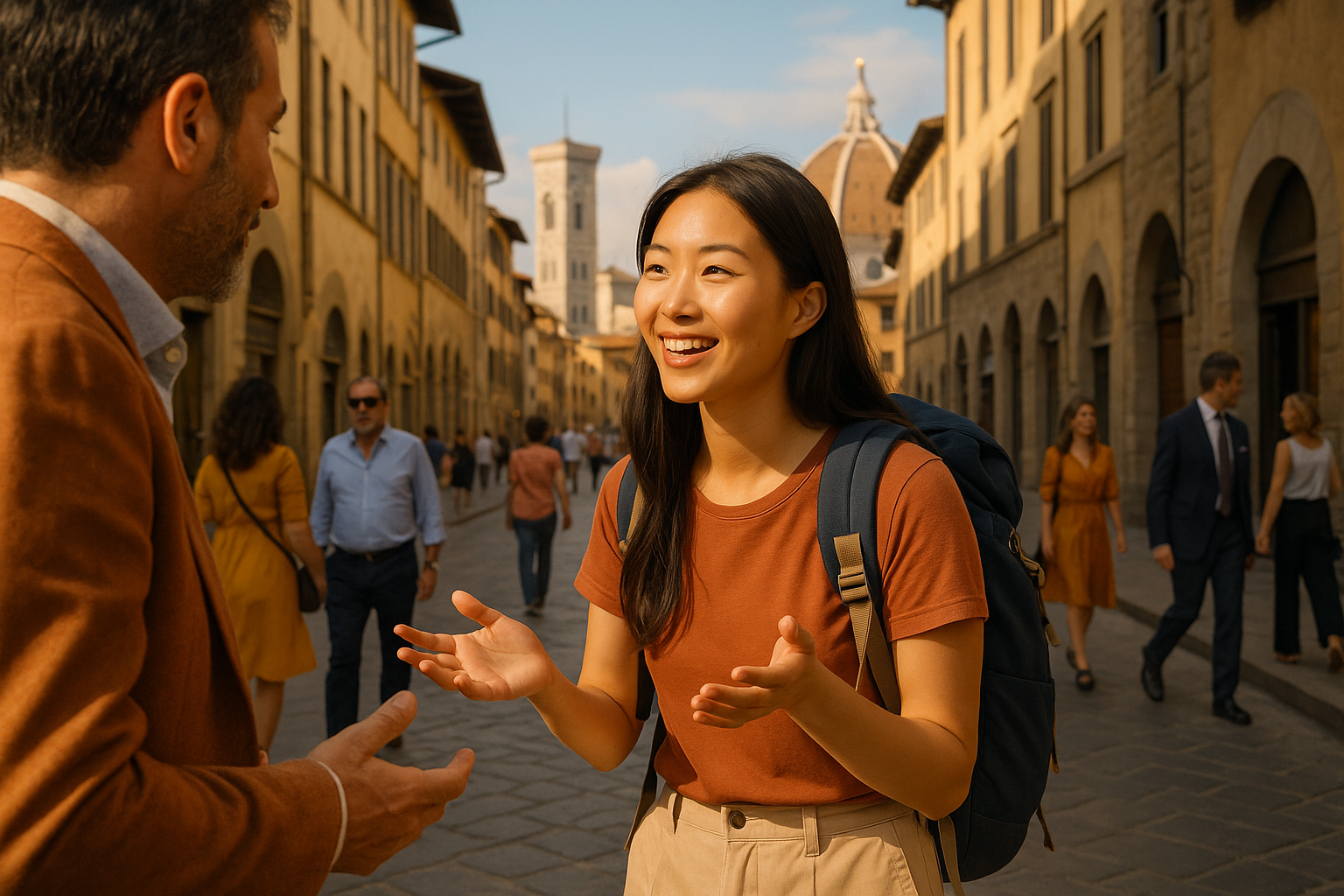
✈️ Introduction: The Italy of Your Dreams Starts With a “Ciao”
Everyone has an image of Italy in their mind—whether it’s sipping wine under the Tuscan sun, getting delightfully lost in Venice’s winding alleys, or tossing a coin into the Trevi Fountain with a hopeful heart. Maybe your dream includes standing awestruck in front of the Colosseum, browsing a bustling farmers’ market in Bologna, or catching golden light on the Amalfi Coast. Italy has a way of seducing travelers with its beauty, history, food, and charm.
But here’s something most people don’t realize until they get there: Italy is even better when you speak a little Italian.
It’s tempting to think you can get by with English—and in touristy areas, you often can. But travel isn’t just about getting by. It’s about connecting. It’s about going beyond the surface to feel something deeper and more meaningful. It’s not just about admiring a place. It’s about belonging, even if only for a few days.
Speaking even a few words of Italian transforms your experience from passive to personal. You move from “foreigner looking in” to “guest invited in.” Locals smile differently when you greet them in their own language. A simple “Buonasera” opens doors. A polite “Per favore” invites generosity. A curious “Cos’è questo?” gets you a story—and maybe a secret item off the menu.
We live in a world where everything is increasingly instant and digital—flights booked in seconds, guides downloaded on your phone, and translation apps always at hand. But there’s still something profoundly human about language. Real communication. A shared moment. A cultural bridge. When you speak a few words of Italian, you're not just learning vocabulary. You're learning to live the Italian rhythm: slower, warmer, more attuned to people and place.
And the best part? You don’t need to be fluent. You don’t need to conjugate seventeen tenses or recite Dante. You just need enough to say “hello,” ask for help, order a coffee, and thank someone. That alone can dramatically enrich your vacation—turning awkward moments into adventures, making interactions smoother, and leaving you with memories that feel more real.
If you're planning a trip to Italy—or even just dreaming of one—it’s worth preparing for more than the itinerary. Prepare for the experience. And if you’re in the San Francisco Bay Area—Berkeley, Oakland, San Jose, or San Francisco itself—you’re in luck. Polyglottist Language Academy offers travel-friendly, beginner-focused Italian classes designed to help you enjoy Italy, not just survive it.
Because learning a little Italian doesn’t just help with directions or menus. It changes the whole way you travel.
Let’s explore how.
🇮🇹 1. Italian Makes Travel Smoother (and Less Stressful)
When you're in Italy, signs, menus, and even ticket machines often aren’t in English—especially outside of big cities. A few key phrases can help you:
Buy train or bus tickets
Order in restaurants confidently
Check in at hotels
Ask for directions or help
Here’s the good news: Italian is a phonetic language. What you see is what you pronounce. That makes it easier than many people think.
By learning just the basics—like Dov’è il bagno? (Where is the bathroom?) or Quanto costa? (How much is it?)—you reduce anxiety and increase independence.
For travelers from the Bay Area who are used to high-speed convenience, that confidence boost can make all the difference abroad.
🍝 2. You’ll Eat (and Drink) Better
Italy takes food seriously. Every region has specialties, and menus are often handwritten and untranslated. Want to know whether pecorino is a cheese or a pasta topping? Curious whether cotto or crudo prosciutto fits your taste?
Knowing even a few food-related words gives you power and freedom when ordering. It helps you:
Avoid tourist traps
Understand regional dishes
Ask for substitutions or special requests
Pair wine with confidence
Imagine sitting at a small trattoria in Rome and confidently ordering “Un piatto di cacio e pepe e un bicchiere di vino rosso della casa, per favore.” You’re not just eating. You’re living the Italian way.
🤝 3. Italians Appreciate Your Effort
Italians are famously warm, but they’re even more welcoming when you try to speak their language. Even a clumsy “Mi scusi” (Excuse me) or “Parla inglese?” (Do you speak English?) breaks the ice.
Here’s why your effort matters:
You stand out from typical tourists
You show cultural respect
Locals become more eager to help you
You open the door to unexpected conversations and recommendations
A little Italian can earn you smiles, better service, and even surprise discounts. It’s a gateway to authentic human connection.
🎨 4. You’ll Connect Deeper with Italy’s Culture
Italy isn’t just a country—it’s a culture rich with art, history, and tradition. Language gives you access to it all.
Basic Italian helps you:
Understand museum signage
Catch more meaning in opera, music, and theater
Appreciate street signs and local customs
Dive deeper into heritage and history
And if you're exploring niche places like Bologna’s literary cafés, or Sicily’s ancient ruins, you’ll pick up far more than what’s written in your guidebook.
🧳 5. You’ll Travel Smarter and Save Money
Here’s something savvy travelers don’t always realize: language can help your wallet.
Knowing a little Italian lets you:
Avoid overpaying for taxis or meals
Negotiate at markets
Read local price lists
Understand public transit schedules
And if something goes wrong—like lost luggage or a medical emergency—your basic Italian could be a lifesaver.
Many Bay Area travelers are used to customer service on demand. In Italy, clear communication often means self-advocacy. A little language gives you that power.
🧠 6. Your Brain Will Thank You
Learning a language—even just a little—exercises memory, improves problem-solving, and boosts creativity.
Plus, it makes your trip feel more immersive. Instead of watching Italy go by like a movie, you’re in the story. You’re participating.
And when you come back home? You’ve learned a new skill you can keep building on.
🌉 7. You Can Start Learning Italian Right Here in the Bay Area
If you're in Berkeley, San Francisco, Oakland, or San Jose, you don’t have to wait until you land in Rome to get started.
At Polyglottist Language Academy, we offer friendly, practical Italian classes designed for travelers and curious learners. Our instructors help you:
Speak confidently from day one
Focus on real-life vocabulary
Practice useful travel scenarios
Learn in a supportive, small-group setting
Whether you're planning a romantic getaway, a solo adventure, or a family trip to Italy, we’ll help you feel ready—and excited.
👉 Click here to explore our Italian classes and sign up.
You’ll thank yourself when you step off the plane and feel ready.
❓FAQs: Learning Italian for Travel
Q1: How much Italian do I need to know before going to Italy?
Even 20–30 useful phrases can dramatically improve your trip. You don’t need fluency—just the basics.
Q2: Is Italian hard to learn?
Not at all. It’s one of the more approachable languages for English speakers due to its phonetic spelling and Latin roots.
Q3: Can I get by with English in Italy?
In major tourist areas, yes. But outside the big cities, English is less common—and locals appreciate even a small effort in Italian.
Q4: What are the best Italian phrases to learn for travel?
Start with greetings, directions, food phrases, and polite expressions like grazie (thank you), per favore (please), and scusi (excuse me).
Q5: Do you offer online Italian classes?
Yes! Polyglottist Language Academy offers both in-person classes in Berkeley and online courses for the whole San Francisco Bay Area.
Q6: How long does it take to learn basic Italian?
With 4–6 weeks of focused learning, most travelers can master a solid survival vocabulary.
Q7: Can kids or families learn together?
Absolutely. We offer beginner-friendly and travel-focused classes for all ages.
Q8: When should I start learning before my trip?
The earlier the better! But even starting a month or two before can make a huge difference.
📚 More Travel + Language Articles You’ll Love
✔What To Expect In Your First Italian Class: A Guide For Beginners
✔ Discover Italian Culture In The Bay Area: Food, Festivals, And Film Events
✔ Dating In Italy: What To Expect When Romance Meets Tradition
✔ Why Italian Is The Language Of Love: Phrases, Quotes, And Cultural Secrets
✔ How To Choose The Right Italian Class In Berkeley, SF, Or Oakland
✔ The Best Places In The Bay Area To Practice Your Italian (Outside The Classroom)
✔ Italian For Travelers: 20 Must-Know Phrases Before You Go
✔Why Learning Italian Can Change How You See The World
🔗 Visit Our Website to Learn More
📧 Questions? Email us at: info@polyglottistlanguageacademy.com
📍 Based in Berkeley and serving students across the Bay Area and beyond!