
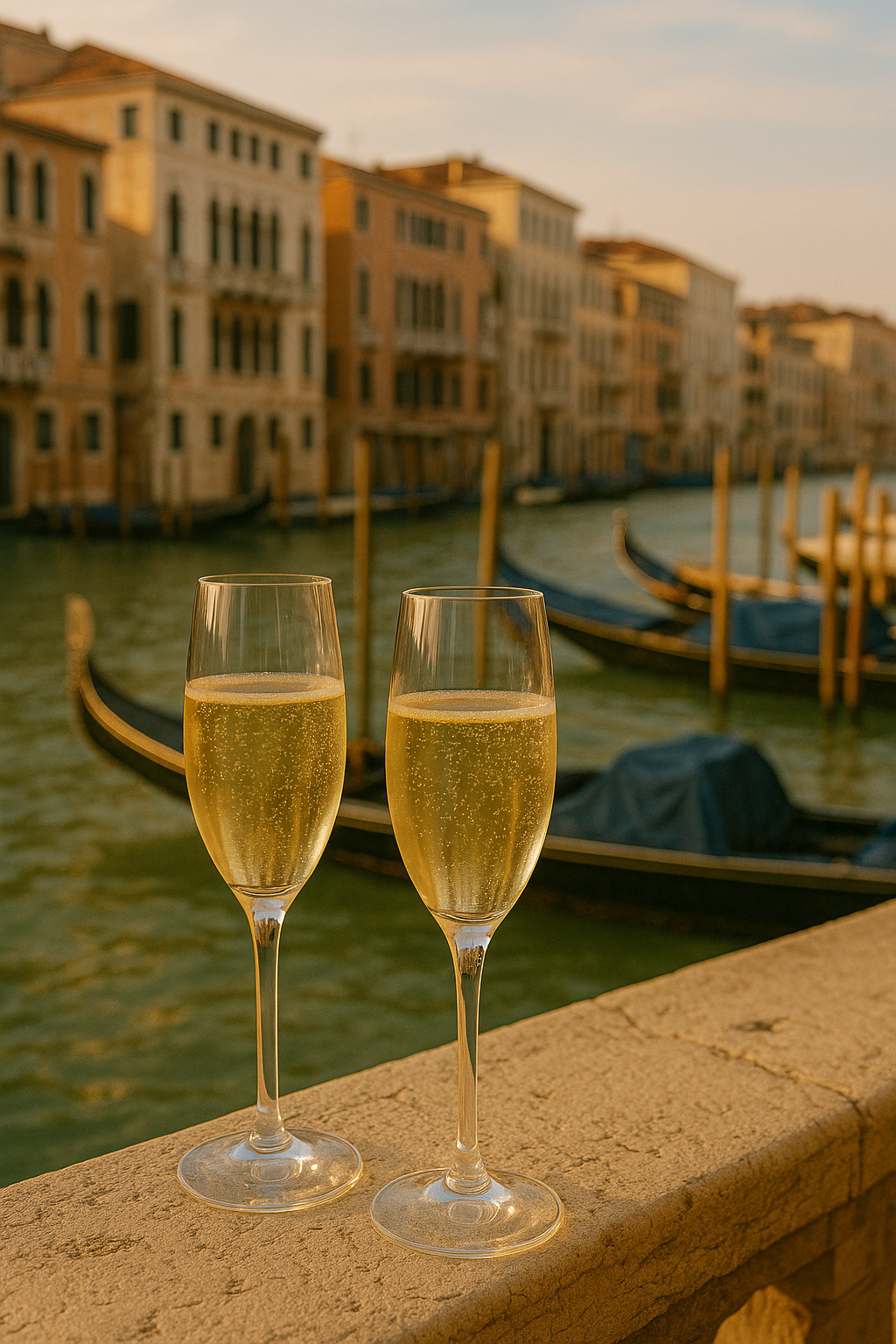
Explore the magic of Veneto—from Venice’s dreamy canals to Verona’s timeless love stories and the rolling Prosecco hills. Learn how knowing Italian deepens the experience with classes at Polyglottist Language Academy in Berkeley, San Francisco, Oakland, and San Jose.
🌍 Introduction: Where Fairytales Meet Vineyards
Italy isn’t one story—it’s a thousand. And no region tells a more cinematic, romantic, and delightfully varied tale than Veneto. Stretching from the snow-dusted peaks of the Dolomites to the sparkling Adriatic Sea, Veneto is where water meets art, where ancient cities flirt with the future, and where every hill seems to whisper a secret from centuries past.
For most travelers, Veneto starts with Venice—one of the most visited, photographed, and dreamt-about places on earth. And rightly so. But look beyond the gondolas, and you'll find more: the tragic beauty of Verona, immortalized by Shakespeare; the tranquil elegance of Vicenza’s Palladian villas; and the lush, rolling hills of Valdobbiadene and Conegliano, where Italy’s beloved Prosecco is born.
Veneto is a region that rewards curiosity. The more you explore, the more it gives. Hidden churches with jaw-dropping frescoes. Family-run osterias where the pasta is handmade and the wine is local. Side streets that lead to tiny bridges, forgotten statues, and the kind of quiet beauty that stops you in your tracks. It’s a region of layers, where Roman ruins meet Renaissance architecture, and where even the smallest village has a story to tell.
Every corner of Veneto seems to blend art, history, and nature in a uniquely effortless way. Cities like Padua and Treviso, often overlooked, are full of charm and authenticity. The locals take pride in their culture, their dialect, their food. And when you slow down enough to connect with them, you start to see Veneto not as a collection of beautiful stops on a map, but as a living, breathing cultural experience.
If you're planning a trip to Italy and want a region that offers history, romance, architecture, wine, and real Italian soul—all within a few hours' drive—Veneto is it. From romantic gondola rides to countryside wine tastings, from awe-inspiring cathedrals to peaceful mountain hikes, there's something here for every kind of traveler.
And here’s the secret sauce: your experience here will be infinitely deeper if you know even a little Italian. Just enough to chat with a local shopkeeper in Verona, order a glass of Prosecco like a native, or understand the backstory behind a fresco in a quiet church. Language is the bridge between sightseeing and belonging. A simple "Grazie" or "Buonasera" isn't just polite—it's a cultural invitation.
Speaking the language allows you to ask better questions, understand local humor, and appreciate regional traditions that never make it into guidebooks. It helps you travel not as a consumer of scenery but as a participant in daily life.
If you're in the San Francisco Bay Area—Berkeley, Oakland, San Jose, or San Francisco—your journey into Veneto's magic starts right here at Polyglottist Language Academy, where Italian classes prepare you not just for travel, but for connection.
Our classes focus on the kind of Italian that travelers actually need: ordering at a restaurant, navigating train stations, striking up a friendly conversation. We believe in building cultural fluency, not just vocabulary lists.
Ready to fall in love with Veneto? Let’s explore its treasures, town by town, sip by sip.
🛶 Venice: A Floating Dream That Feels Like a Secret
Venice isn’t just a destination—it’s a mood. A floating city built on 118 small islands, linked by canals and footbridges, Venice feels like a dream that shouldn’t logically exist. But it does, and its surreal beauty is matched by a depth of history and culture.
Highlights You Can’t Miss:
St. Mark’s Basilica: Golden mosaics, Byzantine architecture, and a view from the campanile that’s worth every step.
Doge’s Palace: The seat of Venetian power for centuries—gothic arches, hidden prisons, and the infamous Bridge of Sighs.
The Grand Canal: Hop on a vaporetto (water bus) or treat yourself to a gondola ride at sunset.
Rialto Market: A feast for the senses—and a chance to practice Italian phrases like “Quanto costa?”
But Venice is more than its main attractions. Take a turn off the well-worn paths and you’ll discover quiet canals lined with laundry-draped windows and tiny piazzas where children play soccer while grandparents sip espresso. The magic of Venice lies in its contrasts: it’s glamorous and worn, bustling and serene, timeless and constantly shifting with the tide.
Want to get even more out of Venice? Speak the language. With just a few Italian phrases, locals soften. You’re no longer another tourist taking a photo—you’re someone engaging with their culture. Say “Mi scusi” when brushing past in a tight alley, or “Avete un tavolo per due?” at a trattoria, and you’ll likely receive more than just good service—you’ll get a story, a smile, maybe even a secret menu tip.
And remember, the real Venice awakens at dawn and after dark. Take a stroll early in the morning or after sunset, and you’ll experience a quieter, more authentic version of the city—one that’s only enhanced by your ability to greet a local baker or ask a gondolier about his family’s trade.
💘 Verona: Romance and Ruins in a City Built for Lovers
You don’t need to be a Shakespeare fan to fall for Verona. Yes, it’s the home of Romeo and Juliet, but it’s also one of Italy’s most elegant small cities—full of piazzas, Roman ruins, and a soft, romantic light that makes you linger.
Top Things to See and Do:
Juliet’s House (Casa di Giulietta): A little touristy? Sure. But stand on the famous balcony and you’ll understand the charm.
Arena di Verona: Older than the Colosseum, still hosting opera performances under the stars.
Piazza delle Erbe: A lively square perfect for espresso, people-watching, and practicing your Italian.
Castelvecchio: A medieval fortress with a surprisingly stunning art collection.
Verona’s beauty is quieter than Venice’s but just as powerful. You feel it in the golden stone of the buildings, the murmuring of fountains, and the shadows that fall gently across cobbled lanes. This is a city made for walking—and for lovers of history and poetry.
Learning a few Italian phrases transforms your time here. Want to find the best local gelato? Ask “Qual è il vostro gusto più popolare?” Curious about a wine on the menu? Say “Mi può consigliare un vino della zona?” Locals will often light up at your effort to speak their language and may respond with generous suggestions or even a sample.
Verona is also a wonderful place to discover regional Italian. Venetians have their own way of speaking, with expressions and accents you won’t hear in textbooks. A bit of language knowledge lets you spot these differences, making your trip not only enjoyable but linguistically fascinating.
🥂 The Prosecco Hills: Sparkling Views and Bubbles to Match
Just an hour north of Venice, the gentle slopes of Valdobbiadene and Conegliano produce Italy’s favorite celebratory drink: Prosecco. This UNESCO World Heritage area is a dream of vineyard-covered hills, quaint villages, and family-run wineries.
Must-Dos for Wine Lovers:
Prosecco Road (Strada del Prosecco): A scenic route through wine country with plenty of stops for tastings.
Winery Tours: Many are small and family-owned—where you'll meet the vintner and hear stories passed down generations.
Local Bites: Pair your bubbly with cicchetti (small bites), cheeses, or local salumi.
The landscape here is as intoxicating as the wine. Rolling green hills meet perfect skies. Locals are proud of their traditions, and your experience becomes infinitely richer when you can engage with them. Ask questions in Italian, even simple ones like “Questo prosecco è secco o dolce?” and you’ll often find yourself in a passionate conversation about wine, family, and the region.
Prosecco country is less touristy than Venice, which makes it ideal for authentic experiences. But it also means less English is spoken, especially in smaller towns. Knowing a bit of Italian helps you book tours, understand tasting notes, and form real connections with winemakers.
And don’t skip the food. The Veneto region has incredible culinary offerings that pair perfectly with its wine. Try sarde in saor, baccalà mantecato, or fegato alla veneziana—and do it with confidence by asking for recommendations in Italian. It’s a region meant to be savored slowly, one sparkling glass at a time.
🏛️ Vicenza & Padua: Art, Architecture, and Intellectual Depth
Often skipped by hurried tourists, Vicenza and Padua are hidden gems that reward deeper curiosity and cultural engagement.
Vicenza: City of Architecture
Famed for its architecture, Vicenza is the city of Andrea Palladio, whose Renaissance villas inspired buildings around the world—including Thomas Jefferson’s Monticello. The city has a quiet, sophisticated charm. Its streets are lined with symmetrical facades, classical columns, and elegant arcades that whisper stories from the golden age of Italian humanism.
Teatro Olimpico: The world’s first indoor theater, with optical illusions and a stage like no other. This jewel of theatrical design combines Renaissance innovation with architectural magic.
Villa Rotonda: A Palladian masterpiece worth a short drive into the hills, often considered the blueprint of modern symmetry and grace. It's not just a villa—it's a philosophy in stone.
Vicenza invites slow travel. Sit in a sunlit piazza, order a cappuccino, and listen to the rhythm of daily life. Knowing Italian adds subtle depth—you’ll understand overheard conversations, appreciate a pun in a shop window, or follow the guide’s full explanation at Palladio’s monuments.
Padua (Padova): City of Scholars and Surprises
Padua boasts one of Europe’s oldest universities, where Galileo once taught and revolutionary ideas were born. But its scholarly roots are balanced with lively street culture, open-air markets, and youthful energy.
Scrovegni Chapel: Giotto’s groundbreaking frescoes changed the course of Western art. A must-see for art lovers, and even more moving when you understand the religious and narrative language used in the artwork.
Botanical Garden: A UNESCO site, it’s the oldest academic garden still in its original location and home to thousands of rare plants.
Caffè Pedrocchi: A historic coffee house known as the “café without doors”—open day and night during the Risorgimento. It’s a great place to sip a caffè corretto and imagine the intellectual debates that once rang through its marble halls.
With a little Italian, you can navigate museum labels, ask locals for food recommendations, and chat with students or vendors at the open-air markets. Padua is not a tourist show—it’s a lived-in, breathing city that invites you to participate.
🏔️ Dolomites & Lakes: Veneto’s Natural Majesty
Few visitors associate Veneto with the mountains, but the Dolomites in the northern edge of the region are among Europe’s most breathtaking landscapes. With jagged peaks, serene alpine lakes, and charming villages, it’s a world away from Venice’s canals—yet just a few hours apart.
Cortina d’Ampezzo: A glamorous ski resort town, host of international film and winter sports events. But even in summer, Cortina is stunning. Hike its scenic trails or ride the cable cars for panoramic views.
Lago di Misurina: A tranquil alpine lake often called “the pearl of the Dolomites.” Perfect for a picnic, reflection, or an afternoon paddle.
Tre Cime di Lavaredo: A trio of iconic mountain peaks offering some of the most awe-inspiring hikes in the Alps. Even casual walkers can enjoy well-marked trails with scenic refuges.
The mountain dialects and hospitality are rich here, and English is rare in many rural areas. Knowing Italian—even just basics—helps you reserve huts, ask for hiking advice, or order a hearty post-hike meal like polenta e funghi or canederli(bread dumplings).
The Dolomites also offer insight into Veneto’s layered identity—Austrian influences meet Italian tradition, and linguistic nuances abound. Language learners will appreciate this unique mix of dialects, accents, and cultural expressions.
✨ Why Learning Italian Enhances Your Veneto Trip
Veneto is full of places where English isn’t guaranteed. But more importantly, speaking Italian enriches your travel by:
Opening up authentic conversations that go beyond surface interactions
Deepening your cultural appreciation at museums, markets, and historic sites
Helping you navigate cities and rural areas with greater confidence
Making locals more welcoming and helpful—you’re not just a tourist, you’re a participant
Letting you understand menus, signs, regional dialects, and cultural references that guidebooks skip
Think of language as your passport to Italy’s soul. When you speak Italian, you notice more, feel more, and connect more. A little goes a long way. Even simple expressions like “Mi scusi,” “Vorrei,” or “Dove si trova…” break barriers and build bridges.
For travelers from the Bay Area—used to diversity, culture, and curiosity—learning Italian is a natural step. It opens doors, deepens travel, and gives you a lifelong skill to use again and again.
🌉 Take the First Step with Polyglottist Language Academy
If you're in Berkeley, San Francisco, Oakland, or San Jose, you don’t have to wait until you're in Italy to connect with its culture. At Polyglottist Language Academy, we offer Italian language classes for beginners, travelers, and curious minds alike.
Our classes are:
Taught by passionate, native-speaking instructors who understand Italian culture inside and out
Designed to be practical, fun, and culturally rich—no boring drills here
Available in person in Berkeley and online from anywhere in the Bay Area
Focused on real-life communication—ordering food, asking directions, having basic conversations
We also include cultural lessons: Italian customs, travel tips, food etiquette, and how to navigate Italy like a local. Whether you're preparing for a trip or just want to feel more connected to Italian heritage, we’re here to help.
👉 Click here to explore our Italian classes and enroll today.
Start your journey to Veneto with the confidence, connection, and charm that comes with speaking the language.
Explore More on Our Blog 📚
✔What To Expect In Your First Italian Class: A Guide For Beginners
✔ Discover Italian Culture In The Bay Area: Food, Festivals, And Film Events
✔ Dating In Italy: What To Expect When Romance Meets Tradition
✔ Why Italian Is The Language Of Love: Phrases, Quotes, And Cultural Secrets
✔ How To Choose The Right Italian Class In Berkeley, SF, Or Oakland
✔ The Best Places In The Bay Area To Practice Your Italian (Outside The Classroom)
✔ Italian For Travelers: 20 Must-Know Phrases Before You Go
✔Why Learning Italian Can Change How You See The World
🔗 Visit Our Website to Learn More
📧 Questions? Email us at: info@polyglottistlanguageacademy.com
📍 Based in Berkeley and serving students across the Bay Area and beyond!