
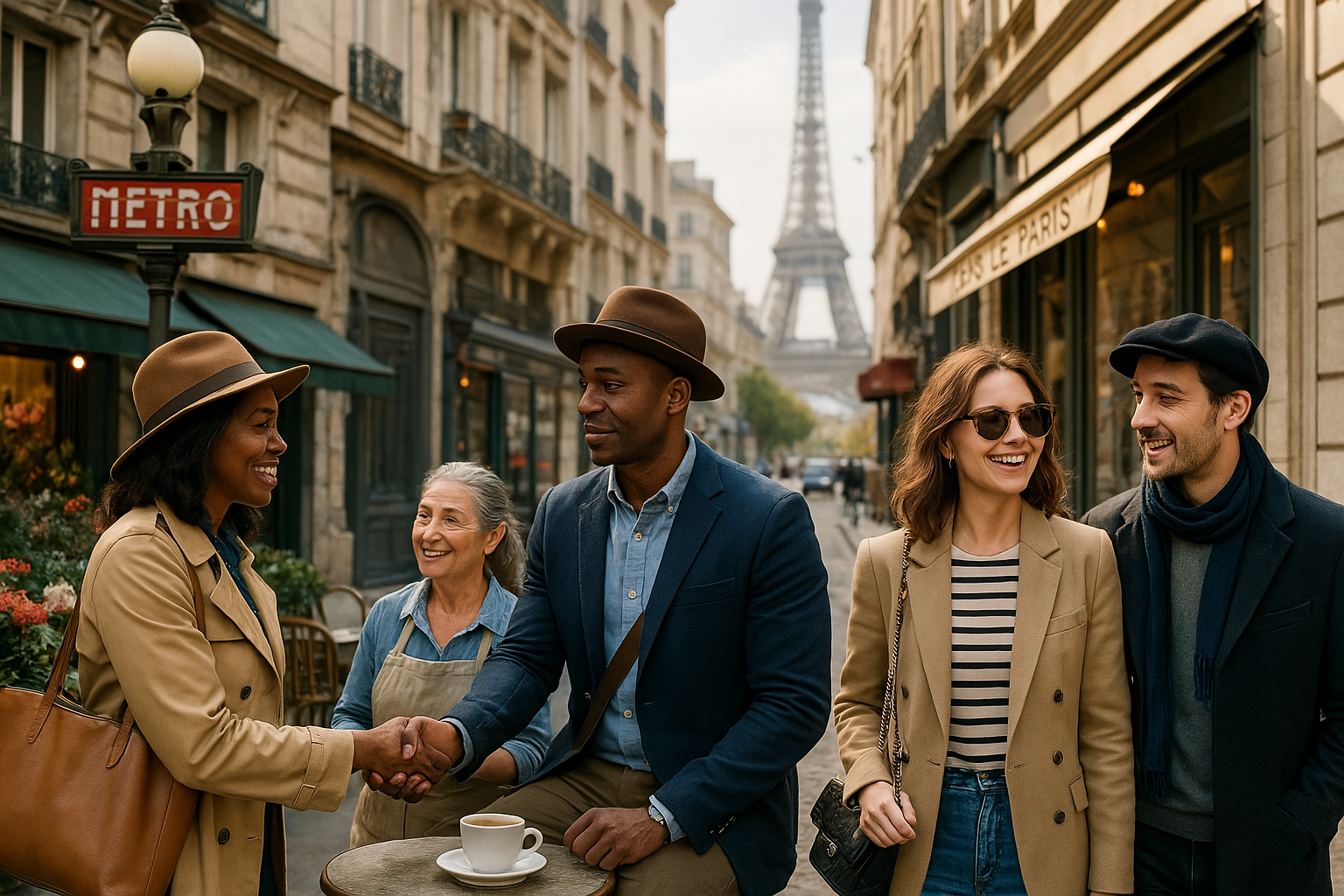
Your Practical Guide to Polite and Confident Interactions in France
You’ve booked the flight, brushed up on your French, and are ready to wander the cobbled streets of Paris, sip espresso in Montmartre, or explore the lavender fields of Provence. But before you hop off the plane, there's one essential part of French culture that can make or break your experience: etiquette.
French etiquette isn’t just a list of old-fashioned rules—it’s a deep-rooted part of everyday life. It affects how people greet each other, dine, dress, communicate, and even stand in line. For Americans, especially those from the more relaxed and informal culture of the Bay Area—think Berkeley coffee shops, Oakland art galleries, and the casual vibes of San Francisco’s Mission District—some French norms can seem surprisingly formal or even cold. But once you understand the logic behind these customs, everything begins to make sense.
Mastering French etiquette isn’t about being stiff or overly cautious. It’s about showing cultural awareness, building respect, and unlocking a more genuine experience—whether you’re chatting with a waiter, meeting your Airbnb host, or attending a dinner party. It can mean the difference between a warm welcome and a chilly reception.
In this in-depth guide, we’ll walk you through the essential dos and don’ts of French etiquette so you can explore France with confidence and connection. If you're preparing for a trip from Berkeley, Oakland, San Francisco—or anywhere in the Bay Area—this guide will help you navigate everyday interactions with grace, authenticity, and a little je ne sais quoi.
Let’s get started!
Why Etiquette Matters So Much in France
French society places a high value on civility and social norms. The idea of "la politesse" (politeness) is deeply embedded in everyday interactions—from how you enter a store to how you greet your neighbors. These rules aren’t about elitism; they’re about showing respect.
If you follow the basics of French etiquette, you’ll not only avoid awkward moments, but you’ll also win respect and open doors to deeper conversations. And if you're learning French here in the Bay Area—whether in Berkeley, Oakland, or San Francisco—understanding these customs makes everything you learn in class come to life.
1. The Art of the French Greeting: Bonjour or Bust
Always Say “Bonjour” (And Say It Right)
One of the biggest cultural missteps Americans make is failing to greet people properly. In France, not saying “bonjour” when entering a room, shop, café, or elevator is like barging in without knocking.
Say: Bonjour, Madame / Bonjour, Monsieur (until evening, then “Bonsoir”)
Say it even to strangers—especially service workers, cashiers, and receptionists.
It might feel overly formal at first, especially for those used to the laid-back style of the Bay Area. But think of it as pressing “start” on any social interaction.
What About La Bise?
Ah yes, the infamous French cheek kiss. Known as la bise, it’s common among friends and acquaintances—but not strangers. When in doubt:
In formal settings, go for a handshake.
Among friends or hosts, follow their lead. It’s usually two kisses—one on each cheek—but this varies by region.
In professional settings in urban areas like Paris, cheek kissing is less common than it used to be.
If you're unsure? A polite smile and a handshake go a long way.
2. “Vous” vs. “Tu”: Formality Is Not Just Polite, It’s Strategic
One of the trickiest parts of French etiquette for learners in Berkeley or San Francisco is mastering the formal and informal “you”: vous and tu.
Use “vous” with strangers, elders, or anyone in a position of authority.
Use “tu” only with friends, children, and peers—once it’s offered.
A premature “tu” can seem rude or overly familiar. When someone says, “On peut se tutoyer?” (Can we use “tu”?), they’re giving you permission to drop the formal tone. Don’t initiate it yourself unless you’re very sure.
3. Dining Etiquette: It’s All in the Details
Dining with French people is a social affair, not just a way to refuel. Whether you’re at a restaurant in Paris or invited to someone’s home, here’s how not to stand out for the wrong reasons:
General Dos and Don’ts
✅ Do keep your hands on the table—but not your elbows.
✅ Do wait for “Bon appétit!” before starting to eat.
✅ Do pass the bread directly to your neighbor.
❌ Don’t ask for ketchup unless it’s already on the table.
❌ Don’t split the bill in restaurants. One person usually pays.
At Someone’s Home
Bring a small gift—wine, chocolates, or flowers (avoid chrysanthemums).
Compliment the food. A simple “C’est délicieux !” works.
Don’t overstay your welcome. French dinners can be long, but they usually end without lingering too late.
Restaurant Manners
Don’t expect to be rushed—dining is slow and deliberate.
Waiters don’t hover. Ask for the check by saying “L’addition, s’il vous plaît.”
Don’t touch the cheese with your fingers when it’s passed around—use the knife.
4. Fashion and First Impressions
French people tend to dress more formally than Americans. Even in casual situations, looking “put together” matters. This isn’t about fashion snobbery—it’s about showing respect for others and yourself.
If you're visiting from Berkeley or Oakland, where comfort and casual vibes rule, just aim for one notch above what you’d wear at home.
Clean shoes are essential. (The French often notice them first!)
Athletic wear is for the gym, not the café.
Neutrals and good tailoring go a long way.
Tip: A scarf can instantly elevate your look—and it’s a French favorite.
5. Don’t Smile Too Much (Seriously)
This surprises many Americans: smiling too much can be seen as insincere in France. A smile is reserved for real amusement or genuine connection—not for softening every interaction.
Smile when it’s earned, not automatically.
A polite but neutral expression is perfectly respectful.
This can feel cold if you're used to constant friendliness, but it’s part of how trust is built.
6. Small Talk? Not Really.
In the U.S., small talk is a social lubricant. In France, it’s more about content than filler.
Don’t talk about your job right away; instead, ask about travel, art, food, books, or shared interests.
Avoid overly personal questions early on (salary, religion, politics—unless invited).
Debates are common and not seen as hostile—just don’t take it personally.
Pro tip: If you’re visiting museums or historical sites, having a few intelligent observations will go far.
7. Public Spaces: Volume Control, Please
The French value discretion and moderation in public. Whether you're on the Paris Metro or in a restaurant:
Speak at a lower volume than you would in San Francisco or Berkeley.
Don’t talk on speakerphone or play loud music.
Keep personal conversations quiet and private.
Respecting others’ space—even in crowded places—is part of being seen as well-mannered.
8. Tipping: Subtle but Appreciated
In France, tipping is not obligatory—servers are paid a full wage—but it’s still appreciated.
Round up the bill or leave €1–2 for good service in a café.
For more formal meals, 5–10% is nice but not required.
If you’re from the U.S., it might feel strange to tip less, but following local customs is more respectful than imposing your own.
9. Customer Service Is Different (And That’s Okay)
If you’re used to the “customer is always right” mindset from the U.S., French customer service might feel abrupt.
Don’t expect constant check-ins at restaurants.
Don’t wave your server over—make brief eye contact instead.
Be polite and patient. You’re more likely to get help if you begin with “Bonjour.”
The emphasis is on professionalism, not cheerfulness. Don’t take it personally.
10. Learn a Few Key Phrases
Nothing impresses like a well-placed French phrase—even if you’re not fluent.
Here are a few essentials for navigating French etiquette with confidence:
Bonjour / Bonsoir – Hello / Good evening
Excusez-moi – Excuse me
S’il vous plaît – Please
Merci beaucoup – Thank you very much
Je suis désolé(e) – I’m sorry
Est-ce que je peux...? – May I...?
Parlez-vous anglais ? – Do you speak English?
Even if you’re learning French in Berkeley, throwing in a few of these during your travels will earn you smiles and better service.
Final Thoughts: Respect, Confidence, and Curiosity
Navigating French etiquette doesn’t require being perfect—it just takes observation, a willingness to adapt, and a respectful attitude. If you're from the Bay Area and heading to France soon, your local habits may not always translate—but with these tips, you’ll blend in more gracefully.
Etiquette isn't about losing your identity—it's about showing cultural awareness and participating in the social dance of another country. And once you learn the steps? The French are some of the most gracious, witty, and interesting people to interact with.
Want to Learn More?
At Polyglottist Language Academy, we don’t just teach grammar and vocabulary—we teach culture, confidence, and how to truly connect in another language. Whether you live in Berkeley, Oakland, or San Francisco, we offer practical, conversation-based French classes to help you thrive in real-life situations.
👉 Explore our French classes now
Keep Reading: Learn More About French Language and Culture
Here are five of our most popular blog articles to dive deeper:
In-Person French Classes In Berkeley – Small Groups, Expert Instructors
French False Friends: Common Grammar Mistakes & How To Avoid Them
Mont-Saint-Michel In France: History, Tourism, And Travel Guide
Discover The Famous French Provinces And What Makes Them Unique
French Expressions With "Avoir": Idioms And Their Grammar Rules