
Wine vs. Tequila: A Cultural Journey Through Spanish and Latin Drinks
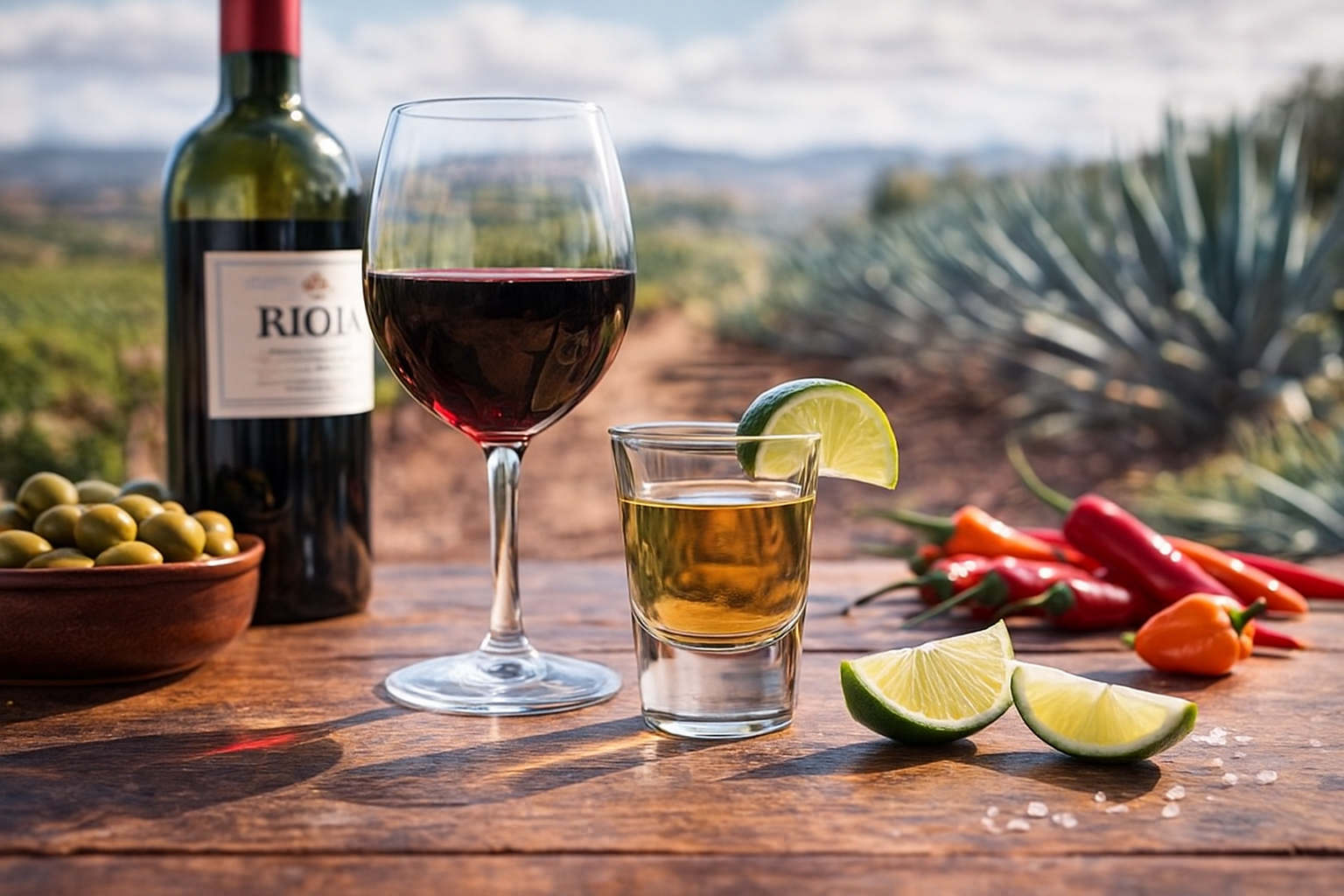
The story of wine and tequila is the story of two civilizations, two climates, two histories, and two distinct ways of understanding pleasure, celebration, identity, and everyday life. It is the story of Mediterranean vineyards shaped by thousands of years of tradition and volcanic agave fields sculpted by centuries of Indigenous knowledge. It is the story of Spanish refinement meeting Mexican intensity, of Old World ritual meeting New World fire, and of two drinks that—despite sharing the global stage—carry profoundly different cultural meanings. Wine and tequila don’t merely belong to Spain and Latin America; they reflect them, interpret them, and express what words alone cannot capture.
In Spain, wine flows through the centuries like a companion to daily meals, storytelling, and community. It is sipped slowly, thoughtfully, surrounded by tapas and laughter, infused with a sense of heritage that predates the Roman Empire and continues today in the bodegas of La Rioja, Ribera del Duero, and Priorat. Spanish wine is gentle but authoritative, rooted but expressive, ancient but alive—an emblem of Mediterranean rhythm and ritual.
Tequila, by contrast, feels like a spark—sudden, powerful, unmistakably Mexican. Born from the blue agave plant and shaped by Indigenous techniques refined over generations, tequila captures the energy of fiesta culture, the depth of Mexican spirituality, and the warmth of its people. It’s tied to folklore, to celebration, to the land itself. Where wine whispers, tequila roars; where wine invites contemplation, tequila invites connection.
This article takes you on a journey through both drinks—not through the lens of competition, but through culture, history, geography, identity, and the linguistic richness behind them. From Spanish vineyards to Mexican agave landscapes, from cellar-aged elegance to distilled intensity, we will explore how wine and tequila each tell a story of their people, their past, and their enduring place in the Spanish-speaking world.
1. ORIGINS: HOW TWO WORLDVIEWS CREATED TWO ICONIC DRINKS
1.1 Wine: A 3,000-year tradition in Iberia
Spain’s love affair with wine began long before it became a unified country. The Phoenicians brought viticulture to Iberia around 1100 BCE, followed by the Greeks and Romans—each civilization refining growing techniques, harvesting practices, and fermentation methods. By the time Spain reached the medieval era, wine was already a staple of daily life.
Wine became a cultural symbol because:
it was consumed in religious ceremonies,
it was a staple of monastic life,
it was essential for trade,
and it developed regional identities across the peninsula.
From Catalan cava to Andalusian sherry, Spanish wine evolved into a world of styles, terroirs, and traditions.
1.2 Tequila: Born from Indigenous wisdom
Long before the Spanish arrived in Mexico, Indigenous groups like the Aztecs and the Nahua people fermented the sap of the agave plant into a drink called pulque, used in:
celebrations,
rituals,
offerings to gods,
healing contexts.
When Spanish distillation techniques merged with Indigenous agave knowledge, tequila emerged—a drink that carries both ancient Indigenous identity and colonial-era transformation.
Tequila is not just an alcohol. It is:
a cultural symbol,
a national heritage product (Denominación de Origen),
a connection to the land and the people who cultivate it.
2. TERROIR: LANDSCAPES THAT SHAPE FLAVOR AND CULTURE
2.1 Spanish vineyards
Spain is one of the world’s largest wine producers, with landscapes that create incredible diversity:
dry plateaus
lush green valleys
volcanic islands
coastal Mediterranean zones
The climate, soil, and altitude create wines ranging from light and refreshing to deep and bold.
Spanish terroir teaches us:
land = identity,
each region expresses a different personality,
wine is a slow product shaped by time.
2.2 Mexican agave fields
Tequila terroir is dramatically different. The blue agave plant grows almost exclusively in:
Jalisco,
parts of Guanajuato,
Michoacán,
Nayarit,
and Tamaulipas.
The volcanic soil of the Tequila Valley, rich in minerals, shapes the distinctive flavor of agave. The plant absorbs the land for 7–10 years before harvest—a long, patient process that contrasts with tequila’s lively drinking culture.
Agave teaches us:
tradition requires time,
nature dictates when the plant is ready,
tequila is rooted in Indigenous agricultural wisdom.
3. PRODUCTION: AGING VS. DISTILLING, PATIENCE VS. FIRE
3.1 How wine is made
Wine production centers on:
grape cultivation,
fermentation,
aging,
blending,
and bottling.
The process is slow and artistic. The choices a winemaker makes—barrel material, fermentation length, grape blending—shape the final product.
Wine celebrates:
patience,
craftsmanship,
subtlety,
time.
3.2 How tequila is made
Tequila production is a blend of ancient and modern techniques:
Agave is harvested by the jimadores, skilled workers who cut the leaves by hand.
The piñas (agave hearts) are roasted or steamed.
The cooked agave is crushed to extract juice.
Yeast ferments the sugars.
The liquid is distilled—often twice.
It is aged (or not) depending on the type:
Blanco (0–2 months)
Reposado (2–12 months)
Añejo (1–3 years)
Extra Añejo (3+ years)
Tequila production reveals:
respect for the land,
Indigenous techniques,
intense labor,
and a deep connection between humans and plants.
4. CULTURAL MEANING: WHAT WINE AND TEQUILA REPRESENT
4.1 Wine in Spain: Tradition, community, and refinement
In Spain:
wine is part of meals,
part of celebrations,
part of conversation,
part of identity.
It evokes:
the sharing of tapas,
the rhythm of Mediterranean evenings,
the pride of local vineyards,
a slower, more intentional lifestyle.
Wine in Spain symbolizes:
heritage,
sophistication,
contemplation.
4.2 Tequila in Mexico: Spirit, fire, connection
Tequila, on the other hand, is tied deeply to:
fiesta culture,
Indigenous pride,
national identity.
Tequila is shared at:
weddings,
birthdays,
festivals,
gatherings with family and friends.
It symbolizes:
passion,
celebration,
resilience,
boldness.
While wine invites reflection, tequila invites emotional connection.
5. SOCIAL CONTEXT: HOW THESE DRINKS ARE ENJOYED
5.1 Wine in Spain
Wine is enjoyed slowly, often with food:
tapas culture encourages pairing,
meals are social,
conversations last for hours.
Wine belongs to:
long lunches,
sunset gatherings,
contemplative evenings.
5.2 Tequila in Mexico
Tequila’s drinking culture varies depending on the region, but traditionally:
it is sipped, not shot,
accompanied by citrus and salt,
shared in moments of bonding.
Modern party culture popularized “tequila shots,” but Mexicans know that true tequila is appreciated like fine wine: with intention.
6. LANGUAGE AND IDENTITY: THE WORDS BEHIND THE DRINKS
6.1 Spanish wine vocabulary
To speak about wine in Spanish, you learn words like:
vino tinto (red wine)
vino blanco (white wine)
cosecha (harvest)
bodega (winery or wine cellar)
añada (vintage)
uva tempranillo, garnacha, albariño
These terms deepen your connection to Spanish culture.
6.2 Mexican tequila vocabulary
Tequila comes with its own linguistic world:
agave azul (blue agave)
jimador (agave harvester)
piña (agave heart)
blanco, reposado, añejo, extra añejo
caballito (tall narrow sipping glass)
Learning these words is learning Mexican culture itself.
7. GASTRONOMY: WHAT WINE AND TEQUILA PAIR WITH
7.1 Spanish wine pairings
Wine in Spain is deeply integrated into the cuisine:
Rioja with chorizo
Albariño with seafood
Cava with tapas
Sherry with Iberian ham
Pairings reflect regional identity.
7.2 Mexican tequila pairings
Tequila pairs beautifully with:
carne asada
tacos al pastor
mole poblano
ceviche
esquites
Tequila complements spices, citrus, heat, and depth.
8. GLOBAL INFLUENCE: HOW WINE AND TEQUILA TRAVELED THE WORLD
8.1 Spanish wine worldwide
Spanish wines are internationally beloved for:
quality,
affordability,
diversity,
history.
They compete with French and Italian wines at a global level.
8.2 Tequila’s worldwide ascent
Tequila has become a global phenomenon through:
celebrity brands,
cocktail culture,
international export growth.
Yet authentic Mexican tequila remains tied to tradition, not trends.
FAQs
1. Is wine more “refined” than tequila?
Not necessarily—both drinks have centuries of craftsmanship and cultural meaning.
2. Do Mexicans really drink tequila as shots?
Traditionally, no. Tequila is sipped slowly.
3. Which drink is stronger?
Tequila generally has higher alcohol content than wine.
4. Which drink has older origins?
Wine is thousands of years old; tequila evolved from Indigenous agave traditions.
5. Are both drinks tied to their land?
Very much so—both wine grapes and agave require specific climates and soils.
6. Which is healthier?
Moderation is key for both. Wine has antioxidants; tequila has fewer sugars.
7. Can learning Spanish help you explore these drinks better?
Absolutely—vocabulary, culture, and regional identity are deeply tied to both.
8. Is mezcal the same as tequila?
No. Mezcal is made from various agave types; tequila only from blue agave.
LEARN SPANISH AND LATIN CULTURE WITH POLYGLOTTIST LANGUAGE ACADEMY
If reading about wine and tequila has inspired you to explore Spain, Mexico, Latin America, or the Spanish language itself, we’d love to support your journey.
At Polyglottist Language Academy, we offer:
engaging Spanish classes for all levels,
small group courses,
private lessons,
native instructors from across Latin America and Spain,
flexible online options,
and a warm community passionate about culture and language.
👉 Ready to begin your Spanish journey?
Sign up today and start learning with us!
MORE ARTICLES YOU’LL LOVE
Here are eight great reads to explore next: