
Latin America on a Plate: Iconic Dishes from 10 Countries
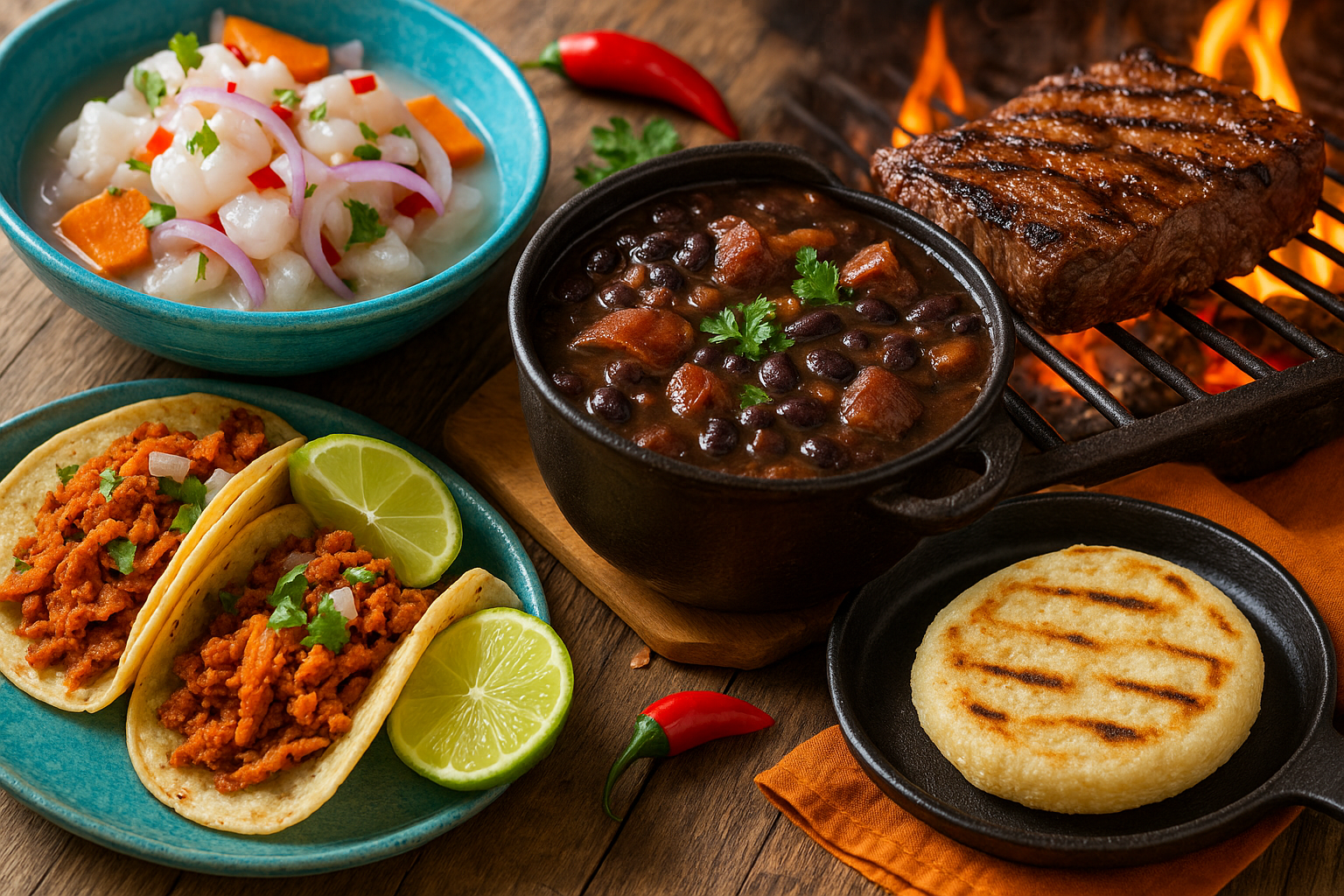
The flavors of Latin America tell a story that stretches across oceans, mountains, jungles, and centuries, weaving together Indigenous traditions, European influences, African heritage, migration, climate, agriculture, and the creativity of millions of home cooks who transformed everyday ingredients into dishes so iconic that they’ve become symbols of national identity, pride, comfort, and celebration across the continent.
Latin America is a region where food is far more than what you eat—it is how families stay connected, how communities remember their history, how stories are told, and how culture is passed from one generation to the next. It is a place where recipes are inherited like precious jewels, where every country insists its grandmother makes the best version of everything, and where a single dish can hold an entire nation’s emotional memory.
But beyond its warmth and emotional richness, Latin American cuisine is astonishingly diverse. There is no single “Latin American flavor,” because geography alone ensures massive variety: the Andes, the Amazon, the Caribbean Sea, the plains of Patagonia, the deserts of northern Mexico, the cloud forests of Central America, the coastal richness of Peru, and the fertile farmlands of Colombia all produce entirely different food cultures.
Each nation has its own iconic dishes, beloved not just within its borders but celebrated throughout the world. Some are centuries old and deeply traditional; others emerged from cultural blending and modern reinvention. All of them carry stories—about migration, colonization, Indigenous wisdom, festive rituals, street food culture, and the everyday pleasure of a home-cooked meal.
In this article, we will explore 10 countries and the signature dishes that define their culinary identity. These aren’t just recipes—they are edible windows into history, culture, and national character. From smoky Argentine grills to Peruvian ceviche, from Mexico’s layered moles to Brazil’s hearty feijoada, from Colombia’s arepas to Cuba’s ropa vieja, each dish tells you something important about the place it comes from.
Whether you’re a language learner, a traveler, a foodie, or someone who simply loves understanding cultures through their cuisine, this deep dive into Latin America’s most iconic dishes will enrich your appreciation of the region in surprising and delicious ways.
1. MEXICO: MOLE – A COMPLEX MASTERPIECE
Mexican cuisine is famously bold—spicy, colorful, ancient, and always layered with meaning. Nowhere is this complexity more visible than in mole, the legendary sauce that can contain dozens of ingredients and take hours (or even days) to prepare.
Why Mole Defines Mexico
Combines Indigenous, Spanish, and African influences
Represents community cooking and ritual celebration
Varies dramatically across regions (Puebla, Oaxaca, Guerrero, Veracruz…)
“Mole poblano” is the most famous version, a velvety sauce made with:
chocolate
dried chiles
nuts and seeds
tomatoes
cinnamon
cloves
garlic
onions
It is traditionally served over chicken or turkey, especially during celebrations like weddings, baptisms, and major holidays.
More Iconic Mexican Dishes
Tacos al pastor
Pozole
Tamales
Chilaquiles
But mole stands alone as the national symbol of culinary artistry, a dish that represents Mexico’s identity: bold, complex, and unforgettable.
2. PERU: CEVICHE – FRESHNESS, CITRUS, AND COASTAL PRIDE
Peruvian cuisine is world-renowned for its innovation and complexity, but ceviche remains its most iconic creation. Fresh fish marinated in lime juice, seasoned with onions, cilantro, and aji peppers—it’s simple but incredibly flavorful.
Why Ceviche Defines Peru
Reflects the importance of the Pacific Ocean
Highlights Peru’s unique citrus and pepper varieties
Represents the fusion of Indigenous techniques with global influences
Ceviche is more than a dish; it’s a cultural ritual. Families gather on hot weekends to prepare it together, chefs elevate it to haute cuisine, and it remains the emblem of Peruvian pride around the world.
Regional Variations
Ceviche clásico – the pure, traditional version
Ceviche mixto – with shrimp, squid, or octopus
Amazonian ceviche – featuring river fish and jungle peppers
Peru’s gastronomic reputation may include world-class restaurants, but ceviche remains the heart of the table.
3. BRAZIL: FEIJOADA – A NATIONAL CELEBRATION
In Brazil, feijoada is not just food—it is an event. A black bean stew cooked with pork ribs, sausages, smoked meats, and served with rice, farofa, and slices of orange.
Why Feijoada Defines Brazil
Combines Indigenous ingredients with African and Portuguese cooking techniques
Represents community, gathering, and sharing
Served everywhere from humble homes to upscale restaurants
Feijoada has a deep emotional meaning in Brazil, representing unity and multicultural heritage. Families traditionally eat it together on Wednesdays and Saturdays, turning the meal into an all-day celebration with music, conversation, and relaxation.
Other Brazilian Essentials
Pão de queijo
Moqueca (Bahian fish stew)
Brigadeiro
Coxinha
But feijoada stands as the dish of the Brazilian soul.
4. ARGENTINA: ASADO – GRILLING AS NATIONAL IDENTITY
If Brazil celebrates the stew pot, Argentina worships the grill. Asado, the country’s iconic barbecue tradition, is much more than grilled beef—it’s a social ritual steeped in pride, patience, and technique.
Why Asado Defines Argentina
Reflects gaucho traditions of the Pampas
Celebrates high-quality Argentine beef
Represents hospitality, masculinity, and community
An asado isn’t a meal: it’s an experience. The asador (grill master) tends the fire for hours, grilling:
short ribs (asado de tira)
flank steak (vacío)
sausages (chorizo, morcilla)
sweetbreads
Asado expresses Argentina’s identity: straightforward, bold, and social.
5. CHILE: PASTEL DE CHOCLO – CORN, HISTORY, AND HEART
Chile’s signature dish, pastel de choclo, is a comforting blend of Indigenous and Spanish culinary traditions. It’s a kind of corn pie made with ground beef, chicken, olives, hard-boiled eggs, and raisins, topped with a sweet corn purée.
Why Pastel de Choclo Defines Chile
Highlights the importance of corn in Mapuche culture
Combines sweet and savory in uniquely Chilean ways
Represents home cooking, summer gatherings, and national nostalgia
It is the kind of dish that transports Chileans back to their childhood kitchens.
6. COLOMBIA: AREPAS – SIMPLE, COMFORTING, AND EVERYWHERE
Colombia’s culinary identity is centered around arepas, round corn cakes that vary dramatically from region to region.
Why Arepas Define Colombia
Essential to daily life (breakfast, snacks, side dishes)
Reflect Colombia’s regional diversity
Affordable, accessible, and universally loved
You’ll find:
Arepas con queso (gooey and delicious)
Arepas antioqueñas (thin, flat, grilled)
Arepas de huevo (stuffed and fried on the Caribbean coast)
Arepas are the culinary glue of Colombian society.
7. VENEZUELA: PABELLÓN CRIOLLO – RICE, BEANS, AND IDENTITY
Venezuela’s national dish, pabellón criollo, brings together shredded beef, rice, black beans, and fried plantains—a vibrant plate that tells the story of the nation’s mixed heritage.
Why Pabellón Criollo Defines Venezuela
Celebrates Indigenous, African, and Spanish influences
Represents balance and comfort
A staple of Venezuelan home cooking
It’s a dish built on contrasts—sweet plantains, salty cheese, savory beef—reflecting Venezuela’s cultural mosaic.
8. CUBA: ROPA VIEJA – CARIBBEAN COMFORT WITH SPANISH ROOTS
Cuba’s most iconic dish, ropa vieja, features shredded beef stewed in tomatoes, peppers, and spices, typically served with rice, beans, and sweet plantains.
Why Ropa Vieja Defines Cuba
Blends Spanish cooking traditions with Caribbean flavors
Represents family gatherings and Sunday meals
Symbolizes resilience and resourcefulness
The name literally means “old clothes,” a humorous reference to the dish’s shredded texture.
9. PUERTO RICO: MOFONGO – GARLIC, PLANTAINS, AND BOLD FLAVORS
Puerto Rican cuisine is rich and distinctive, but mofongo stands as its undisputed icon. Mashed green plantains mixed with garlic and pork cracklings, served with shrimp, meat, or broth.
Why Mofongo Defines Puerto Rico
Highlights African influence on Puerto Rican cuisine
Uses local ingredients central to Caribbean cooking
Represents bold flavor and cultural expression
Mofongo is both rustic and refined, loved equally in food stalls and fine dining restaurants.
10. DOMINICAN REPUBLIC: LA BANDERA – A PATRIOTIC PLATE
The Dominican national dish, La Bandera, literally means “The Flag,” a plate whose colors represent the nation:
Red: stewed beans
White: rice
Blue: meat or chicken (symbolically representing the final color of the flag)
Why La Bandera Defines the Dominican Republic
Celebrates national pride
Reflects simple, home-cooked comfort
Emphasizes balance, tradition, and family life
Dominicans eat La Bandera almost daily—it is more than a dish, it is a lifestyle.
What These Dishes Reveal About Latin America
Across all ten countries, several themes emerge:
1. Deep cultural blending
Indigenous, African, European, and Asian influences intertwine everywhere.
2. Food as identity
Each dish is a miniature map of a nation’s history.
3. Community and family
Meals are social, emotional, and often ceremonial.
4. Geography shapes cuisine
Mountains, oceans, jungles, plains—each environment determines what grows and what people eat.
5. Emotional comfort
Latin American food is soulful, warm, generous, and full of love.
FAQs: Iconic Latin American Dishes
1. Are these dishes hard to prepare at home?
Some (like mole or feijoada) are time-intensive, but many Latin American dishes are accessible with the right ingredients.
2. Are ingredients easy to find outside Latin America?
Most large cities have Latin American grocery stores; some ingredients can also be substituted.
3. Are these dishes eaten daily or only on special occasions?
It varies—ceviche and asado are often weekend foods, while arepas and La Bandera are everyday staples.
4. What unites Latin American cuisines?
Plantains, corn, beans, rice, and peppers are common foundations, but each country interprets them uniquely.
5. Are Latin American cuisines spicy?
Some (like Mexican) embrace heat, while others (like Colombian or Argentine) use milder seasonings.
6. Which country is considered the top culinary destination?
Peru currently leads global rankings, but Mexico, Brazil, and Argentina also have internationally recognized cuisines.
7. What drink pairs well with these dishes?
Pisco sour (Peru), caipirinha (Brazil), mezcal (Mexico), and rum-based cocktails (Caribbean).
8. Can I experience authentic versions outside Latin America?
Yes—major cities worldwide have excellent Latin American restaurants, and many home cooks preserve traditional recipes abroad.
Ready to Explore Latin America Through Language and Culture?
At Polyglottist Language Academy, we offer vibrant, engaging classes in Spanish and Portuguese, helping you not only learn the language but also understand the culture, food, traditions, and history behind it.
Our classes are:
small-group
interactive
online and accessible
taught by experienced, passionate instructors
👉 Ready to start speaking Spanish or Portuguese—and explore the cultures behind these incredible dishes?
Sign up for our upcoming classes today!