
What’s the Secret Behind Authentic Paella?
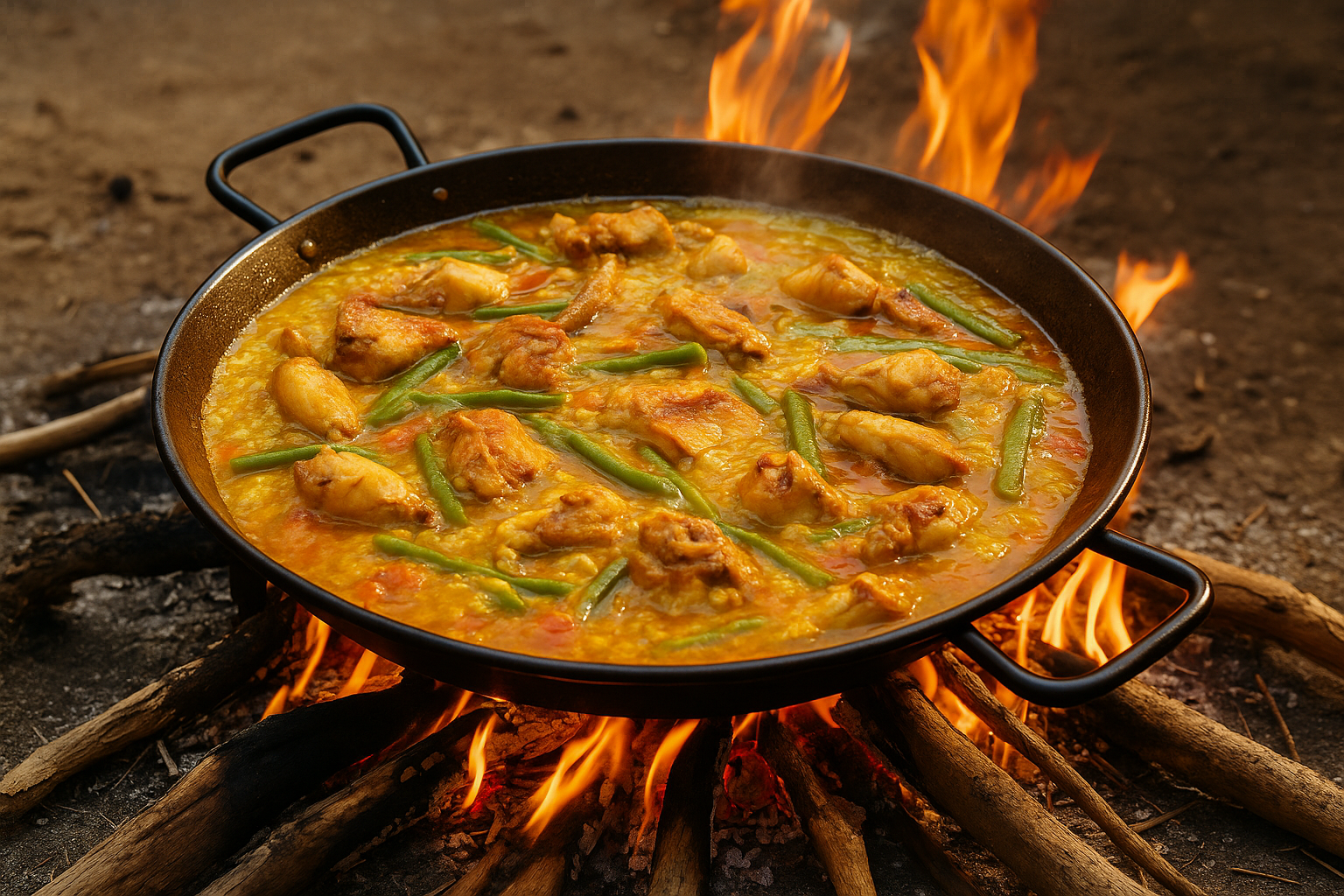
The story of authentic paella is the story of Spain itself—of farmers and fishermen, Moorish irrigation systems and Roman roads, family gatherings and village traditions, bustling Sunday afternoons and quiet Valencian orchards dotted with orange trees. The origins of paella reach deep into the soil and soul of Eastern Spain, where rice fields meet the Mediterranean breeze and where centuries of cultural exchange shaped one of the world’s most beloved dishes. Despite its global popularity, paella is often misunderstood abroad—improvised, altered, reinvented into countless variations that, while delicious, stray far from the spirit that defines true paella. And so the question remains: what is the real secret behind authentic paella?
The answer is not a single ingredient, nor a single technique. It is a philosophy—a way of respecting the land, the rice, the fire, the people, and the rhythm of cooking. Authentic paella is as much about how you cook as what you cook. It is about patience, local knowledge, the shape of the pan, the type of rice, the color of the broth, the slow reduction of liquid, and the final magic moment when the socarrat—the caramelized bottom layer—forms. It is a dish deeply rooted in Valencian identity, guarded fiercely yet shared generously, celebrated at festivals, prepared for milestones, and meant to be eaten communally from the same pan.
In this article, we will explore everything that makes paella authentic—from its agricultural origins to its culinary evolution, from the essential ingredients to the most common mistakes, from regional variations to the myths that have spread around the world. We will walk through fields of Bomba rice, smell saffron threads blooming in broth, listen to the crackle of the socarrat forming, and uncover why true paella is far more than seafood and yellow rice. And by the end, you will understand not only how to recognize a genuine paella—but why it matters.
1. THE TRUE ORIGINS OF PAELLA: A DISH OF THE LAND
1.1 Paella was born in Valencia—not Spain in general
While paella is beloved across Spain (and the world), it is fundamentally a Valencian dish. The word paella simply means “pan,” and the dish emerged from the rice-farming communities surrounding the Albufera lagoon outside the city of Valencia. Here, in the 15th and 16th centuries, rice cultivation expanded dramatically due to:
Moorish irrigation techniques
fertile wetlands
the warm Mediterranean climate
Valencian farmers created a rice-based dish cooked outdoors over a fire, made with ingredients they had on hand:
rabbit
chicken
snails
green beans
garrofó (a type of large white bean)
tomatoes
olive oil
This dish became what we now know as Paella Valenciana, the original form.
1.2 A dish connected to work, family, and celebration
Paella was traditionally cooked:
outdoors
for lunch
over orange-wood fires
in large pans shared by many people
It was a meal of community, reflection, and celebration. The secret was not luxury but resourcefulness.
1.3 Rice as the central character
Rice is the heart of the dish—not seafood, not meat.
The rice absorbs flavors without becoming heavy or mushy, and its texture reveals the quality of the cook.
Authentic paella is judged primarily by:
the texture of the grains
the quality of the broth
the socarrat
The rest is secondary.
2. THE MOST IMPORTANT SECRET: THE RIGHT RICE
2.1 Short-grain Valencian rice
The foundation of authentic paella is short-grain, absorbent rice, specifically:
Bomba
Calasparra
Senia
Albufera
These varieties absorb two to three times more liquid than long-grain rice while maintaining structure.
2.2 Why long-grain rice ruins paella
Long-grain rice:
cannot absorb enough broth
cooks unevenly
does not form socarrat
produces a pilaf or risotto texture
Authentic paella requires perfect separation of grains.
2.3 The rice-to-broth ratio
Valencians famously never stir their rice once it begins cooking. Instead, they rely on:
correct water ratios
pan size
precise heat control
The rice must be evenly spread in a thin layer to cook uniformly.
3. THE SOFRITO: LAYING THE FLAVOR FOUNDATION
3.1 What is sofrito?
Sofrito is a slow-cooked paste of:
tomatoes
onion (optional in Valencia)
garlic
olive oil
Valencians often argue about onions in paella, but the sofrito remains universally recognized as key to developing deep flavor.
3.2 The sofrito sets the color
A rich, caramelized sofrito creates:
a deep golden hue
concentrated flavor
natural sweetness
It is one of the secret weapons of a great paella.
4. SAFFRON: THE SOUL OF PAELLA
4.1 Real saffron vs. coloring powder
Authentic paella uses real saffron threads, toasted lightly and infused in warm broth before being added.
Many tourist restaurants skip saffron due to cost, using cheap “colorante” instead.
But saffron is essential because it adds:
aroma
depth
complexity
a warm golden hue
4.2 How to bloom saffron
To unlock saffron’s flavor:
Lightly toast threads in a dry pan.
Crush gently.
Add to warm (not boiling) broth.
This releases essential oils.
5. THE PAN: WHY SHAPE MATTERS
5.1 The paella pan = paella itself
A paella is named after the pan. The shape matters because:
heat must distribute evenly
rice must be cooked in a thin layer
evaporation must occur naturally
A deep pot cannot produce paella.
5.2 Handles, steel, and size
Traditional pans are:
carbon steel
very wide
shallow
built for open-fire cooking
Every added inch increases servings dramatically.
6. THE FIRE: THE UNSUNG HERO OF AUTHENTIC PAELLA
6.1 Wood fire vs. gas
Valencians still cook traditional paella over:
orange-wood fires
vine branches
citrus trimmings
These add smoky aromas and natural heat variation.
Gas is acceptable but cannot fully imitate wood.
6.2 Controlling heat = mastery
The fire must:
be strong at the beginning (to simmer broth)
lower at mid-point (to cook rice)
increase slightly at the end (to form socarrat)
This choreography is the real sign of a master cook.
7. THE FAMOUS SOCARRAT: THE CROWN JEWEL
7.1 What is socarrat?
The socarrat is the caramelized, crispy bottom layer of rice.
It is the sign of an authentic paella.
7.2 How socarrat forms
It appears naturally when:
the liquid evaporates
the heat rises
the pan is left undisturbed
It should be:
crisp
golden brown
never burned
7.3 Why socarrat matters
It represents:
skill
patience
perfect timing
Valencians often say that without socarrat, there is no paella.
8. THE TYPES OF AUTHENTIC PAELLA
8.1 Paella Valenciana (the original)
Ingredients include:
Bomba rice
chicken
rabbit
olive oil
green beans (ferraura)
garrofó beans
tomatoes
saffron
rosemary
snails (optional but traditional)
8.2 Seafood Paella
Born in coastal areas outside Valencia.
Includes:
mussels
shrimp
squid
monkfish
saffron broth
8.3 Mixed Paella (Paella Mixta)
Combines meat + seafood.
Not strictly traditional but widely popular.
8.4 Black Paella (Arroz Negro)
Made with:
squid ink
cuttlefish
garlic
broth
A dramatic, flavorful variation.
8.5 Fideuá
Noodle-based cousin of paella:
uses short noodles instead of rice
cooked in a similar pan
beloved in Catalonia
9. COMMON MYTHS ABOUT PAELLA
9.1 Myth: Paella must be yellow
False.
The yellow color comes from saffron—or cheap dyes used abroad.
Real paella can be:
golden
orange
even brownish
9.2 Myth: Paella is always seafood
Not true.
The original paella was meat-based.
9.3 Myth: Chorizo belongs in paella
Absolutely not.
(Ask any Valencian—they will have very strong feelings!)
10. WHY AUTHENTICITY MATTERS
Authenticity in paella is not about culinary snobbery.
It is about:
respecting a region’s heritage,
preserving agricultural traditions,
celebrating centuries-old craftsmanship,
and understanding the spirit behind the dish.
When you eat authentic paella, you connect with:
the farmers who grew the rice,
the cooks who tended the fire,
the communities who shared the pan,
and the history of Valencia.
It is a story in every bite.
FAQs
1. Where did paella originate?
Valencia, on Spain’s eastern coast.
2. What kind of rice is used in authentic paella?
Short-grain varieties like Bomba, Senia, or Calasparra.
3. Is seafood paella traditional?
Only in coastal regions. The original paella is Paella Valenciana.
4. Can I stir the rice?
No. Stirring destroys the texture and prevents socarrat.
5. What gives paella its color?
Saffron—not artificial dyes.
6. Can I make paella in a pot?
Not authentically. You need a wide, shallow paella pan.
7. What meat goes in Paella Valenciana?
Chicken, rabbit, and sometimes snails.
8. What is socarrat?
The crispy bottom layer—considered essential in authentic paella.
WANT TO LEARN SPANISH AND TALK ABOUT FOOD LIKE A LOCAL? JOIN POLYGLOTTIST LANGUAGE ACADEMY
Learning Spanish opens the door to a world of culinary traditions—from tapas to paella, sangria to asado.
If you’re inspired by Spain’s food culture and want to experience it more deeply, we would love to guide you.
At Polyglottist Language Academy, we offer:
immersive Spanish classes for all levels
small group lessons and private sessions
teachers from across Spain and Latin America
flexible online schedules
a supportive, friendly community
👉 Ready to start your Spanish journey?
Sign up today and learn the language behind Spain’s most iconic dishes!
MORE ARTICLES YOU MAY ENJOY
Here are eight other posts to explore from our language blog: