
Why Portugal Has One of the World’s Oldest Bookstores
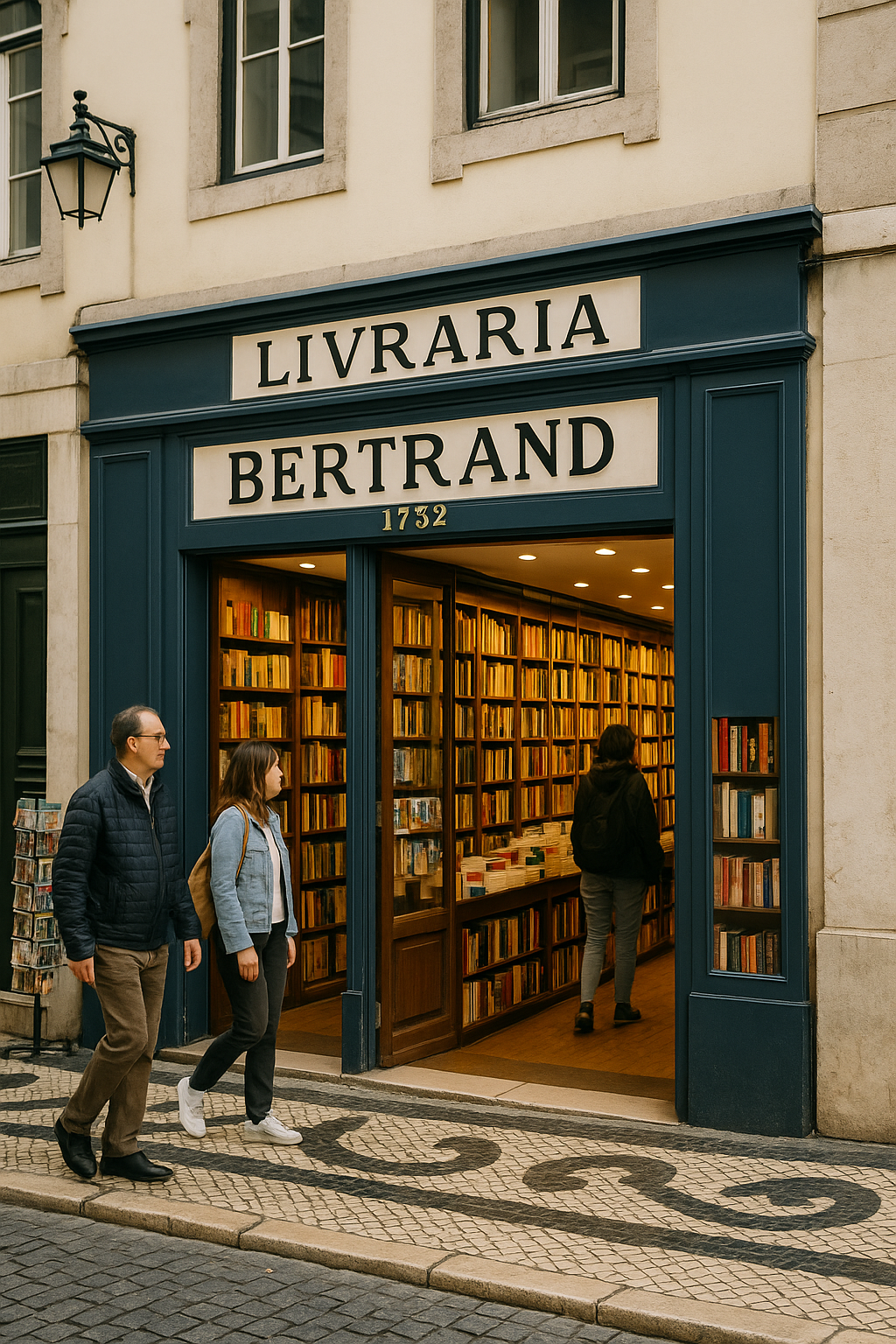
The story of how a small Atlantic nation became home to one of the world’s oldest continuously operating bookstores is a story that stretches far beyond bookshelves and bound pages. It is a narrative woven through centuries of exploration, cultural exchange, intellectual curiosity, political transformation, artistic expression, and a national identity shaped not only by the sea but by an enduring love of knowledge. Portugal, a country known for maritime discoveries, poetic saudade, and vibrant cities like Lisbon and Porto, has also safeguarded one of the world’s greatest literary treasures: Livraria Bertrand, founded in 1732 and officially recognized by Guinness World Records as the oldest operating bookstore in the world.
But why Portugal? Why did this particular country—smaller in size and population than many of its European neighbors—become the guardian of such a remarkable legacy? And what does it reveal about the nation’s intellectual and cultural DNA? The answer lies in the way Portugal has historically treated books, bookstores, ideas, and intellectuals, embracing them not just as commodities or conveniences but as vital pillars of cultural expression and national memory.
From the Age of Discoveries, which brought Portugal into contact with countless civilizations, to the golden years of Portuguese literature, to the resistance movements during dictatorship, and finally to the modern revival of reading culture in Lisbon’s buzzing literary districts, Portugal’s relationship with books has always been more than practical—it has been poetic, protective, and profoundly human. To understand why Bertrand still stands nearly 300 years later, we need to step inside the world of Portuguese literary culture and the history that shaped it.
This article will take you through the remarkable journey of Livraria Bertrand, the evolution of Portuguese book culture, the intellectual spirit of the nation, and why today—centuries after its founding—Portugal remains one of the world’s most unexpectedly beautiful destinations for book lovers.
1. THE BIRTH OF A BOOKSELLING LEGACY
1.1 Portugal in the early 18th century
In 1732, when Livraria Bertrand first opened its doors, Portugal was a country balancing tradition and transition. Lisbon was a bustling port city enriched by global trade from Africa, Asia, and Brazil. Intellectual movements like the Enlightenment were sweeping across Europe, sparking curiosity, debate, and a hunger for books.
The Portuguese elite, clergy, and educated middle class increasingly sought access to literature, science, philosophy, and foreign ideas. This created fertile ground for bookstores—not just as commercial spaces but as hubs of conversation, learning, and sociability.
1.2 The Bertrand brothers
Brothers Pedro Faure and João Faure Bertrand, of French origin, arrived in Lisbon with the ambition to create a bookshop that offered:
imported titles from across Europe
philosophical works
academic publications
literary and artistic materials
Their vision aligned perfectly with Lisbon’s intellectual awakening. Their bookstore quickly became a gathering place for scholars, poets, and thinkers.
But the true test of their enterprise would come a few decades later.
2. SURVIVING THE LISBON EARTHQUAKE OF 1755
One of the most catastrophic natural disasters in European history—the 1755 earthquake—destroyed much of Lisbon. It was followed by a tsunami and days-long fires. Tens of thousands died, and entire neighborhoods vanished. Cultural institutions, including libraries, archives, and bookstores, crumbled.
Livraria Bertrand was also destroyed.
And yet, this disaster became a turning point.
2.1 Rebuilding in Chiado
When Lisbon was rebuilt under the direction of the Marquis of Pombal, the Bertrand family seized the opportunity to reopen the bookstore in the Chiado district, which would become Lisbon’s artistic and literary heart over the next centuries.
This resilience—the decision to rebuild rather than give up—was crucial to Bertrand’s survival. Many businesses vanished after the earthquake; Bertrand became a symbol of intellectual continuity.
2.2 A literary neighborhood is born
Over the next decades, Chiado attracted writers, poets, philosophers, and international visitors. By the 19th century, it became the home of:
cafés frequented by intellectuals
theater houses
publishing houses
creative communities
Bertrand sat at the center of this ecosystem.
3. A MEETING PLACE FOR PORTUGAL’S GREATEST WRITERS
Livraria Bertrand became more than a bookstore—it became a salon, a cultural meeting point where the greatest minds of Portuguese literature gathered.
3.1 Almeida Garrett
The Romantic writer and politician often visited Bertrand, writing about the Lisbon literary scene in his works.
3.2 Eça de Queirós
Often compared to Balzac or Dickens, Eça spent countless afternoons in Chiado, and his novels mention the Lisbon of intellectual cafés and bookshops—a world in which Bertrand played a starring role.
3.3 Fernando Pessoa
While Pessoa is more associated with Café A Brasileira nearby, he lived and worked in the Chiado area and frequented Bertrand’s literary environment. Today, entire shelves in Bertrand are dedicated to his poetry and prose.
3.4 Cesário Verde, Ramalho Ortigão, Alexandre Herculano
The list goes on. Bertrand became a home for the literary arts, a crossroads for ideas, and a place where Portugal’s intellectual identity was carved out, chapter by chapter.
4. THE PORTUGUESE RELATIONSHIP WITH BOOKS AND LEARNING
To understand why Portugal kept the world’s oldest bookstore alive for nearly three centuries, we must understand the country’s deep connection to literature.
4.1 A seafaring nation with a scholarly heart
Portugal’s Golden Age discoveries brought not only spices and riches but knowledge—scientific, linguistic, cartographic. Portuguese navigators were readers, scholars, and record-keepers. Books were essential to:
navigation
astronomy
diplomacy
communication across cultures
4.2 Portugal’s print culture
Portugal’s first printing press was established in 1487, and early printing strongly supported:
religious publication
law and governance documents
Renaissance literature
early scientific works
By the 18th and 19th centuries, printing was robust enough to sustain bookstores like Bertrand.
4.3 The dictatorship years
During the Estado Novo dictatorship (1933–1974), censorship was widespread. Yet bookstores remained vital spaces for:
clandestine literature
political discussion
underground publishing
Bertrand persisted through all of this.
4.4 The modern revival
Post-1974, literacy and education surged. Portugal invested heavily in higher education, public libraries, and cultural institutions.
Today, bookstores are cherished, not replaced. Lisbon, Porto, and Coimbra are dotted with independent bookshops, each with its own soul.
5. THE BERTRAND EXPERIENCE TODAY
5.1 A living museum
Walking into Livraria Bertrand feels like entering a living, breathing museum. Its long corridors, wooden shelves, and warm lighting create an atmosphere of calm and contemplation.
5.2 The rooms named after authors
Bertrand organizes its rooms by literary figure, creating spaces like:
the Eça de Queirós room
the Fernando Pessoa room
the José Saramago section
Each room reflects the author’s influence on Portuguese culture.
5.3 The role of the bookstore chain
Today, Bertrand has expanded into a major bookstore chain across Portugal. But the Chiado location remains its crown jewel—an unbroken thread connecting 1732 to the present.
5.4 Literary events, readings, and book launches
Bertrand regularly hosts:
author talks
book signings
poetry readings
children’s programming
It is still very much a cultural hub.
6. WHY PORTUGAL PRESERVES ITS BOOKSTORES
6.1 A culture of cafés and conversation
Portugal has long embraced the café as a space for:
debate
reflection
artistic expression
This culture naturally overlaps with bookstores.
6.2 National pride in literary heritage
Portugal’s literary giants—Pessoa, Camões, Saramago—are national symbols.
6.3 Tourism with a cultural focus
Portugal attracts travelers who value:
heritage
architecture
craftsmanship
art
literature
This makes preserving old bookstores economically meaningful as well.
6.4 Government and community support
Cultural preservation grants, local support, and stable readership have helped Bertrand thrive where others may have failed.
7. OTHER INCREDIBLE BOOK DESTINATIONS IN PORTUGAL
While Bertrand is the star, Portugal has many literary gems:
7.1 Livraria Lello (Porto)
Often called the most beautiful bookstore in the world, with its stained glass, iconic staircase, and Neo-Gothic design.
7.2 Livraria Sá da Costa (Lisbon)
A vintage book lover’s paradise.
7.3 Livraria Ferin (Lisbon)
Another historic bookstore founded by French immigrants.
7.4 Coimbra University Library
Including the 18th-century Baroque masterpiece, the Biblioteca Joanina.
7.5 Póvoa de Varzim’s cultural scene
Home to literary festivals honoring José Régio.
These places enrich and reinforce Portuguese literary identity.
8. WHAT MAKES PORTUGAL A NATION OF READERS AND THINKERS?
The reasons are both historical and emotional:
A tradition of exploration and curiosity
The concept of saudade, which fuels poetic expression
A strong educational foundation
Respect for literature
A quieter lifestyle conducive to reading
Political history that made books symbols of freedom
Portugal reads not just for knowledge—but for soul.
FAQs
1. What is the world’s oldest bookstore?
Livraria Bertrand in Lisbon, founded in 1732.
2. Where is it located?
In the Chiado neighborhood, at Rua Garrett 73.
3. Is the bookstore still active?
Yes! It operates daily and is part of the larger Bertrand chain.
4. Can visitors buy books in English?
Absolutely. The store has a strong foreign-language selection.
5. Why did Bertrand survive so long?
Because of Portugal’s literary culture, strong community support, adaptability, and the persistence of the Bertrand family and successors.
6. Is Livraria Bertrand connected to Portuguese writers?
Yes—many historic authors frequented it, and rooms are named after literary giants.
7. What makes Chiado special?
It is the historic artistic and literary district of Lisbon.
8. Should I visit Bertrand when in Lisbon?
Without question—it’s a cultural landmark for book lovers.
✨ START YOUR PORTUGUESE JOURNEY WITH POLYGLOTTIST LANGUAGE ACADEMY
Reading about Portugal’s literary history is inspiring—but speaking the language opens the door to an entirely new world of culture, travel, and meaningful experiences. Whether you want to read Portuguese literature in the original, visit Lisbon confidently, or simply bring a piece of Portuguese culture into your life, we’re here to guide you.
At Polyglottist Language Academy, we offer:
Portuguese classes for all levels
Small groups and private lessons
Flexible online options
A warm, supportive community of learners
👉 Ready to begin? Sign up today and start speaking Portuguese with us!
MORE ARTICLES YOU’LL LOVE
Here are eight more articles from our language blog: