
Why Spaniards Eat Dinner at 10 PM (and Love It)
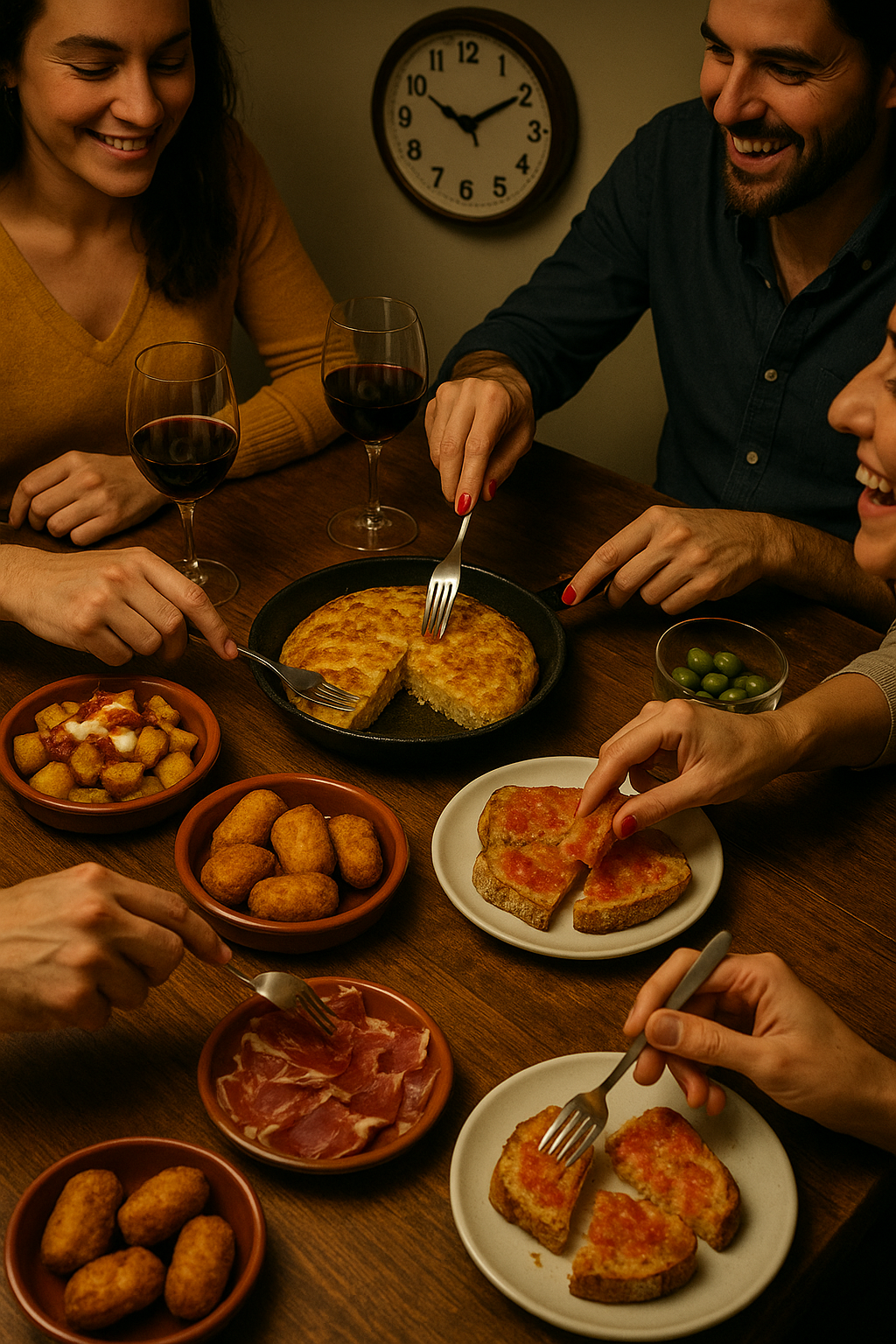
The rhythms of Spanish life unfold with a kind of unhurried confidence that can feel both bewildering and enchanting to outsiders, and few traditions illustrate this better than the famously late Spanish dinner hour—a daily ritual that begins long after many other cultures have already washed their dishes, turned off the lights, and settled into bed, yet feels completely natural to Spaniards who stroll into restaurants at 10:00 pm with no sense of hurry, no apology, and certainly no awareness that the rest of the world might consider this “too late” to be eating a full meal.
Spain’s late dinners have fascinated travelers for decades: tourists peer into lively plazas at hours that, back home, would be reserved for winding down; newcomers join Spaniards at a restaurant at 9:30 pm and are surprised to find the place still empty; and language learners who study abroad recall the confusion of arriving at host families’ homes at 7:00 pm only to be met with polite smiles and the gentle explanation: “Dinner? Oh no, no… that’s far too early.”
But the story behind Spain’s famously delayed mealtimes is not just about food. It’s about history, climate, geography, social life, family habits, work culture, and a national philosophy that favors connection over rushing, pleasure over structure, and community over the clock. Understanding why Spaniards eat dinner at 10 pm means understanding the way Spanish people live, bond, work, and enjoy life. It means understanding that dinner has never been just about sustenance — in Spain, dinner is an event.
In this article, we’ll dig into the real reasons Spaniards eat late, separating myth from reality and exploring the cultural, historical, and emotional meaning behind this beloved tradition. Whether you’re planning a trip to Spain, learning Spanish, or simply curious about cultural differences, this deep dive will help you see the country’s daily rhythms not as unusual quirks but as meaningful reflections of a worldview.
And who knows? By the end, you may find yourself wishing that your own meals happened a little later — and a lot more joyfully.
1. It All Starts With the Sun: Spain’s Time Zone Was Not Always Spain’s Time Zone
One of the most surprising explanations for Spain’s late dinner time is also the most practical: Spain is in the “wrong” time zone.
Geographically, Spain aligns with Portugal and the UK.
Logically, Spain should be in GMT, like Lisbon and London.
But in 1940, during World War II, Spain shifted to Central European Time (CET) to align symbolically with Nazi Germany.
The change was supposed to be temporary. It never changed back.
The result?
Spanish solar time is roughly one hour earlier than the clock shows. So when the official time is 10 pm, the body feels like it’s 9 pm.
Does this fully explain the late dinners?
Not entirely — but it certainly helps.
Even today, movements exist in Spain advocating a return to the “correct” time zone, arguing it would improve productivity and family life. However, Spaniards themselves often shrug at the idea. After all, their habits have adapted beautifully to the late sunsets and the evening sociability that comes with them.
2. The Spanish Workday Is Structured Differently
The typical Spanish workday includes:
A later start
A longer midday break (in some regions)
A later end of the workday
While the traditional siesta has disappeared from many cities, the rhythm remains slower and more segmented than in Northern Europe or the US. Many people don’t finish work until 7 or even 8 pm, which naturally pushes dinnertime later.
A typical modern Spanish weekday might look like this:
Breakfast: 7:30–9:00 am
Second breakfast (yes, this is real): 11:00 am — a small sandwich or coffee
Lunch: 2:00–3:30 pm (the biggest meal of the day)
Merienda (afternoon snack): 5:30–7:00 pm
Dinner: 9:30–11:00 pm
When you observe this structure, dinner at 10 pm begins to seem perfectly logical: lunch is large, snacks happen late, and the day ends later than in many other cultures.
3. Climate Matters: Eating Late Keeps You Cool and Comfortable
In much of Spain — especially in the south — the heat can be intense. Historically:
Working in the early afternoon was impractical.
Eating a heavy lunch at 2 pm was a way to rest during the hottest period.
People waited until the cooler night air to gather, walk, socialize, and eat again.
Even though air-conditioning is now widespread, the cultural habits shaped by centuries of warm afternoons remain.
This helps explain why summer dinners can stretch to midnight or even later, with entire families — toddlers included — strolling through plazas long after tourists have gone to bed.
In Spain, late-night life is not a “party culture.”
It’s simply life.
4. Spanish Culture Prioritizes Social Eating
For Spaniards, dinner is not a private moment. It’s not a rushed “let’s eat quickly and move on.” It’s a communal activity — a time to connect with others after the demands of the day.
A 10 pm dinner in Spain is about:
Spending time with family
Catching up with friends
Sharing plates (tapas)
Relaxed conversation
No stress, no rush
Spanish restaurants expect that diners will stay for hours. Servers never hover, never push you to leave, and never drop the bill prematurely.
Eating late is simply the natural outcome of a culture where socializing is woven into every part of daily life.
5. The Big Lunch Changes Everything
In many English-speaking countries, lunch is light — a salad, a sandwich, something quick between meetings.
In Spain?
Lunch (la comida) is the main meal.
It often includes:
Multiple courses
Bread
Wine
Coffee
Dessert
When you eat a multi-course meal at 3 pm, you are simply not hungry again until 9 or 10 pm.
This “late dinner” isn’t late — it’s simply the correct chronological distance from lunch.
6. Spain Is a Nighttime Country
Life in Spain begins at night.
Streets fill up after 8 pm.
Families go for evening walks called la sobremesa after big meals.
Kids play outside until late.
Restaurants unlock their doors at 8:30 or 9 pm.
Social events start at 10 pm, not end at 10 pm.
This is not considered unusual. Spanish life is oriented around the evening because the climate, work patterns, and culture make the night more comfortable and more enjoyable.
Other countries rise with the sun. Spain rises with the moon.
7. Historical Factors That Kept Schedules Late
Spanish daily rhythms were shaped over centuries by:
Agricultural work patterns
Heat-adaptive schedules
Catholic feast-day traditions
Evening gatherings in town squares
Mediterranean shared-meal culture
The combination created a culture where evenings — not daytime — became the center of social life.
8. The Emotional Meaning of Late Dinner
Perhaps the most beautiful part of Spain’s late dinners is their emotional symbolism. Eating late reflects a broader philosophy about how Spaniards approach life:
1. Don’t rush.
Food takes time. Conversation takes time. Relationships take time.
2. Enjoy the moment.
Meals are meant to be lived slowly and absorbed fully.
3. Be with people.
Dinner is never a solitary act. It’s a celebration of community.
4. Savor, don’t schedule.
Life cannot be reduced to strict rules and productivity charts.
5. Live in harmony with the world around you.
Heat, sunlight, seasons, social needs — Spain adapts to them, not the other way around.
Eating at 10 pm isn’t a quirk.
It’s a worldview.
9. How Travelers Should Adapt
If you visit Spain, plan for the late dinner schedule — but don’t worry, you won’t starve.
Here’s what you can expect:
Restaurants open at 8 pm, but locals won’t arrive until 9:30.
Tapas bars serve food throughout the day — perfect for tourists bridging the time gap.
Lunch menus (menús del día) are served from 1:30–4:00 pm.
Bakeries and cafés help you survive with merienda snacks.
And if you stay long enough, your body will adjust. In fact, most travelers eventually grow to love the Spanish schedule because it feels balanced, relaxed, and pleasantly indulgent.
10. Should Spain Change Its Mealtimes?
Every few years, public debate resurfaces about:
Returning to GMT
Shortening the workday
Eating dinner earlier
But many Spaniards resist these proposed changes. They argue that their rhythms are not dysfunctional — they simply differ from those of Northern Europe.
There is pride in this difference.
Spain’s schedule reflects the climate, the culture, and the heart of Mediterranean life. Even if official time changes one day, habits will probably remain the same.
Dinner at 10 pm is here to stay — because Spaniards love it.
FAQs: Why Spaniards Eat Dinner So Late
1. Do Spaniards always eat dinner at 10 pm?
Not always, but it’s common. Dinner typically ranges from 9 pm to 11 pm depending on region and season.
2. Is the late dinner only for adults?
No — children also eat late. Spanish family life happens in the evenings.
3. What time do Spaniards wake up if they eat so late?
Generally between 7:30–8:30 am. Spaniards adjust naturally.
4. Is the siesta still a thing?
In big cities, the traditional siesta break has faded, but the long lunch break remains common.
5. Do Spaniards eat healthier by eating late?
Health impacts vary, but what matters is consistent routine, and Spaniards have a consistent schedule.
6. Why are restaurants empty at 8 pm?
Because locals consider 8 pm “too early.” Restaurants may open then, but the real crowd arrives after 9:30.
7. Do tourists need to eat dinner at 10 pm?
You don’t have to, but if you want to blend in with local culture, it’s worth trying once!
8. What do Spaniards eat for dinner?
Dinner is usually lighter:
Tortilla española
Salad
Grilled fish
Croquetas
Jamón
Light tapas
Lunch remains the main meal of the day.
Learn Spanish and Spanish Culture with Polyglottist Language Academy
If you loved this deep dive into Spanish culture, imagine how much more you’ll enjoy learning the language itself with our Spanish classes at Polyglottist Language Academy.
Our school offers:
Small-group Spanish classes
Private lessons
Online sessions for flexible schedules
Culturally immersive teaching
Beginner through advanced levels
Whether you're planning a trip to Spain, reconnecting with your heritage, or expanding your professional skills, we can help you gain confidence, fluency, and cultural understanding.
👉 Ready to start speaking Spanish the way real Spaniards do? Sign up today at Polyglottist Language Academy.