
Caribbean Spanish Demystified: How to Understand Fast Speech
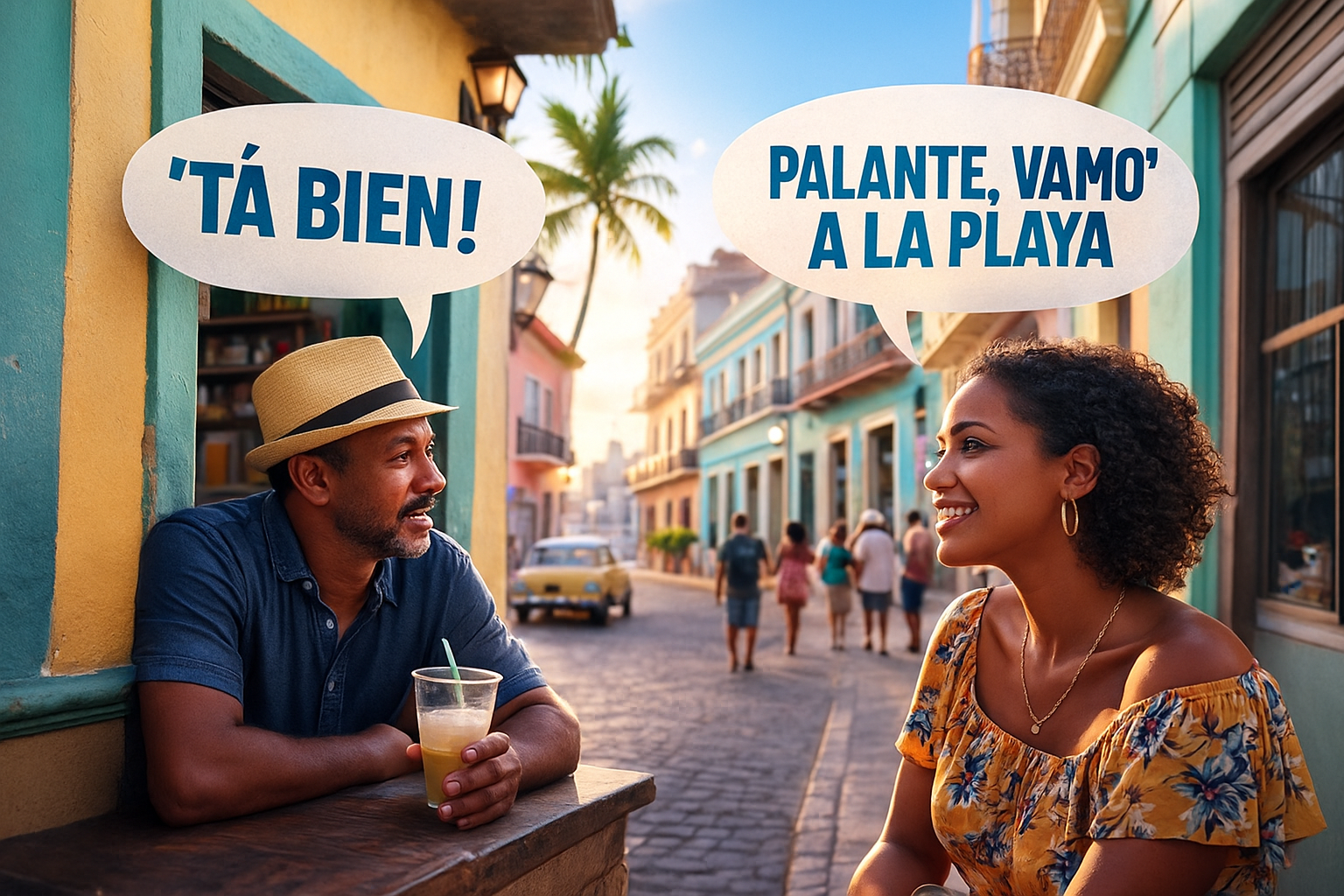
The first thing most learners experience when they hear a Puerto Rican chatting with a Dominican taxi driver or a Cuban grandmother calling from the kitchen is the shocking realization that Spanish—your familiar, friendly Spanish—has somehow transformed into a rapid-fire cascade of syllables that seem to melt into each other, glide past your ears, and vanish before you’ve even identified a single verb. Caribbean Spanish doesn’t just move; it dances, it improvises, it syncopates like a salsa line that refuses to slow down just because you studied the simple past last week. Yet beneath that musical speed and those famously dropped consonants lies a remarkably logical system—one that becomes not only understandable but deeply lovable once you know what you’re listening for.
Understanding Caribbean Spanish isn’t about memorizing long vocabulary lists or practicing grammar drills until your eyes glaze over. It’s about entering a linguistic world shaped by history, geography, rhythm, and culture. This Spanish was born in port cities, in Afro-Caribbean communities, in markets, on plantations, and in musical traditions where clarity didn’t depend on pronouncing every letter but on feeling the beat. It evolved through centuries of contact with West African languages, indigenous Taíno words, English influence from nearby islands, and rapid urban speech patterns. So the moment you “get” how Caribbean Spanish works, a whole new linguistic universe opens up—one that vibrates with energy, humor, and expression.
If you’ve ever felt intimidated by Caribbean Spanish—or worse, assumed you’d never understand it—you’re not alone. Many learners, including intermediate and even advanced students, confess the same fear: “It sounds so fast. I can’t hear the words. I don’t recognize anything.” But the truth is this: Caribbean Spanish is not inherently harder. It’s just different. It follows its own internal logic, one that can be learned step by step, pattern by pattern, sound by sound.
This article is your complete guide to decoding, understanding, and appreciating Caribbean Spanish—especially the fast speech you hear in Puerto Rico, Cuba, the Dominican Republic, coastal Colombia, coastal Venezuela, and Panama. Whether you're preparing for travel, listening to salsa songs, watching reggaetón interviews, or talking with friends from the islands, you’ll walk away with a clear roadmap to understanding what once felt impossible.
Let’s dive into the rhythm.
1. Why Does Caribbean Spanish Sound So Fast?
Caribbean Spanish is famous for its speed, but what learners hear as “fast” is actually a combination of predictable linguistic features:
1.1. Consonant Reduction (Especially S-dropping)
This is the hallmark of Caribbean Spanish.
¿Cómo estás? → ¿Cómo etá?
Los amigos → Lo amigo
Más o menos → Má o meno
What seems like “speed” is often simply fewer consonants.
1.2. Final Consonants Become Soft or Aspirated
Instead of disappearing, consonants often turn into a breathy h-sound.
Estas → Ehtah
Nosotros → Nosotroh
Buscar → Buccáh
This softening makes speech smoother and quicker.
1.3. Vowel Stretching
Removing some consonants creates longer, smoother vowels.
Puerto Rico may sound like Pue’to Rico or Pué’to Rico
The vowels carry more weight.
1.4. Rhythm Over Precision
Caribbean Spanish prioritizes flow. Speakers keep a consistent rhythm instead of slowing down for clarity, giving it that musical feel.
1.5. English and African Influences
Rapid speech, clipped consonants, and tonal patterns reflect influences from:
West African languages
English (especially in Puerto Rico and coastal areas)
These create a unique cadence unfamiliar to learners used to textbook Spanish.
2. The Key Sound Patterns You Must Know
Understanding Caribbean Spanish becomes dramatically easier once you learn the major sound patterns that shape it.
2.1. The Famous “S-dropping”
Probably the most noticeable feature.
Es → Eh
Más → Má
Las casas → La’ casa’
It affects:
✔ Plurals
✔ Verb endings
✔ Articles
✔ Pronouns
✔ Prepositions (e.g., tras → trá)
Why it matters:
Once you train your ear to ignore or reinterpret missing S’s, everything becomes clearer.
2.2. D-dropping (Especially in –ado Words)
This happens throughout the Spanish-speaking world, but it’s extremely strong in the Caribbean.
Cansado → Cansao
Pescado → Pescao
He comprado → He comprao
2.3. “R” Turning into “L” (Lateralization)
Especially common in Puerto Rico and Dominican Republic.
Puerto → Puelto
Color → Colol
Comer → Comel
It’s rhythmic, natural, and predictable.
2.4. “R” Turning into a Soft “H” or Disappearing
Cuban and Dominican speech often softens or drops R’s.
Trabajar → Trabajáh / Trabajá'
Comer → Comeh
Amor → Amoh
2.5. Y/LL Becoming “SH” or “CH”
A feature especially associated with Puerto Rico and parts of the Dominican Republic.
Yo → Sho
Lluvia → Shuvia
Llamar → Shamar
2.6. Fast Verb Contractions
Just like English speakers say “gonna” or “I’ll,” Caribbean speakers compress verbs:
Voy a ir → Voi’ a ir
Voy para allá → Vo’ pa’llá
Tú sabes → Tú sabe / Tú sæ
Estoy → Tói / ‘Toy
And of course:
¿Qué tú haces? → ¿Qué tu hacé? / ¿Qué tu hace?
Once you learn these shortcuts, everything becomes recognizable.
3. Grammar Features That Help You Decode Fast Speech
Sound changes are only half the puzzle. Caribbean Spanish also includes unique grammar patterns that make it feel different from standard Latin American Spanish.
3.1. Widespread Use of “Tú + Very Direct Questions”
Caribbean Spanish loves using tú even in situations involving respect.
Instead of:
¿Qué haces tú?
You’ll hear:
¿Qué tú haces?
This structure is extremely common in:
✔ Puerto Rico
✔ DR
✔ Cuba
Once you expect it, it feels totally natural.
3.2. “Pa’” for “Para” (Almost Always)
You will almost never hear the full word para.
Voy para allá. → Vo’ pa’llá.
Esto es para ti. → Eto e’ pa ti.
This one shortcut alone drastically increases listening comprehension.
3.3. Personalized Caribbean Vocabulary
Words you’ll hear constantly:
guagua = bus (Cuba, DR)
china = orange (PR)
chévere = cool
parquear instead of estacionar
fajarse = to fight
jevo/jeva = boyfriend/girlfriend (DR, PR)
pana = friend
zafacón = trash can (PR)
Knowing the lexicon gives you confidence to keep up.
4. How to Train Your Ear to Understand Caribbean Spanish
Learning to hear the Caribbean is an active process. Here’s a clear, structured method.
4.1. Learn the Sound Map (Not the Vocabulary)
Most confusion comes from mis-hearing sounds.
Spend your first week mastering:
S-dropping
R > L
D-dropping
Pa’
'Toy
Sho for yo
Once your brain expects these, everything improves.
4.2. Listen to Slower Caribbean Speech First
Start with:
✔ Podcasts
✔ Interviews
✔ News programs
✔ YouTubers who speak clearly
Good choices:
Radio Ambulante Caribbean episodes
Puerto Rican news anchors (very standard)
Dominicans in educational videos
Vlogs from Cuba (slower than music interviews)
4.3. Use Music—but Smartly
Caribbean music is fast. Start with:
Salsa interviews
Slow bachata songs
Acoustic versions of reggaetón
Cuban son (clear diction)
Transcribe 10–20 seconds per day.
4.4. Watch Interviews Instead of Movies
Interviews expose you to:
✔ Real pacing
✔ Slang
✔ Consonant dropping
✔ Natural question forms
Search for:
“entrevista Puerto Rico”
“entrevista dominicana”
“entrevista cubana”
4.5. Practice Shadowing
Choose 5–10 seconds and repeat exactly:
same speed
same rhythm
same consonant dropping
Shadowing rewires your accent perception.
4.6. Practice Minimal Pairs
Training your ear for Caribbean differences:
color → colol
puerto → puelto
más → má
This improves comprehension more than vocabulary study.
4.7. Build Your Caribbean Vocabulary
Pick 20–40 words common in PR, DR, CU. Many appear daily in speech, music, and pop culture.
4.8. Have Short Conversations With Caribbean Speakers
Even 5-minute chats train your ear better than 2 hours of passive listening.
5. The Culture Behind the Speed
Caribbean Spanish isn’t “fast for no reason.” Its characteristics reflect its history.
5.1. African Rhythmic Influence
West African tonal, syllabic, and rhythmic patterns influence:
stress
speed
intonation
syllable reduction
This gives Caribbean Spanish its vibrant musicality.
5.2. Port City Linguistics
Ports = languages mixing quickly. Speech naturally becomes:
✔ faster
✔ more economical
✔ more adaptive
✔ more expressive
5.3. English Contact
Especially in Puerto Rico and coastal Caribbean regions.
parkear
janguear (hang out)
zipper
troca
bregar
These make the language feel different from standard Latin American Spanish.
5.4. Humor & Expressiveness
Caribbean Spanish is deeply expressive—tones rise and fall dramatically, facial expression accompanies speech, and intonation adds meaning. The sound is only half the message.
6. Region-by-Region Breakdown
Puerto Rico
Key features:
R → L strongly (puelto, amol)
Sho for yo
Fast pa’ + contractions
Many English borrowings
Rising and falling intonation
Dominican Republic
Key features:
Fastest overall
Final consonant loss
Plural S often removed
Tú + verb inversion (¿Qué tú haces?)
Strong slang culture
Cuba
Key features:
S and R dropping
Very soft consonants
Smooth, musical rhythm
Strong African influence
Caribbean Colombia (Coast)
Key features:
S-weakening
Very melodic
Clear intonation
Less lateralization than PR/DR
Caribbean Venezuela
Key features:
Similar to Colombia
Clearer than DR
Very warm, expressive accent
7. How Long Does It Take to Understand It Well?
Most motivated learners can feel comfortable with Caribbean Spanish in:
2–3 weeks of daily listening
6–8 weeks of structured practice
3–6 months to feel fluent in conversation
The same way you trained your ear to understand Argentine Spanish, Andalusian Spanish, or Mexican slang, you can train it to understand Caribbean Spanish too.
8. Practical Exercises You Can Do Every Day
8.1. Turn every “para” into “pa’.”
Say it out loud. Your brain adapts.
8.2. Listen to 30 seconds of Dominican Spanish daily.
Make it a challenge.
8.3. Shadow Puerto Rican YouTubers.
8.4. Practice S-dropping while reading aloud.
8.5. Repeat “Estoy → ‘toy” until it feels normal.
8.6. Write messages using local vocabulary.
9. Final Tips for Confidence
Don’t try to catch every letter—listen for meaning.
Expect words to be shorter.
Anticipate the accent patterns.
Focus on vowels—they're your anchor.
Remember: speed is an illusion. It's just sound changes.
Don’t get discouraged: even native Mexicans struggle at first!
Caribbean Spanish may sound wild, fast, and unpredictable, but once you understand the patterns, you’ll begin to hear it as one of the most musical and playful versions of the language.
FAQs About Caribbean Spanish
1. Is Caribbean Spanish the fastest Spanish in the world?
Yes, it is considered one of the fastest, though parts of southern Spain and Chile are also extremely rapid.
2. Why do Caribbean speakers drop consonants?
It’s a natural linguistic evolution influenced by rhythm, African languages, and port-city speech dynamics.
3. Is it harder to learn than other dialects?
Not harder—just different. Once you learn the common sound patterns, it becomes very understandable.
4. Should beginners start with Caribbean Spanish?
If you want! But most learners find it easier once they have a basic foundation in Spanish.
5. Why do Puerto Ricans say “sho” instead of “yo”?
This sound shift (yeísmo rehilado) is simply a natural regional pronunciation pattern.
6. Which Caribbean accent is the clearest?
Many learners find Cuban Spanish the clearest, followed by coastal Colombia and Venezuela.
7. Will learning Caribbean Spanish make me sound “too informal”?
No—dialects aren’t informal or formal. They’re simply regional varieties of the same language.
8. Can I understand reggaetón lyrics if I learn Caribbean Spanish?
Absolutely! In fact, learning Caribbean sound patterns makes reggaetón much easier to understand.
Ready to Master Caribbean Spanish? Learn with Us at Polyglottist Language Academy
If you want to understand Caribbean Spanish fast, nothing beats learning with real instructors who can guide your listening, correct your pronunciation, and give you practice with authentic speech.
At Polyglottist Language Academy, we offer:
✔ Spanish classes for beginners, intermediate, and advanced learners
✔ Private lessons tailored to Caribbean Spanish
✔ Conversation-focused classes
✔ Cultural workshops
✔ Online and in-person courses in the Bay Area
If you’re serious about mastering Spanish—including its fastest, most musical varieties—join us today and transform your fluency.
👉 Sign up now for Spanish classes at Polyglottist Language Academy
Your future Spanish-speaking self will thank you.