
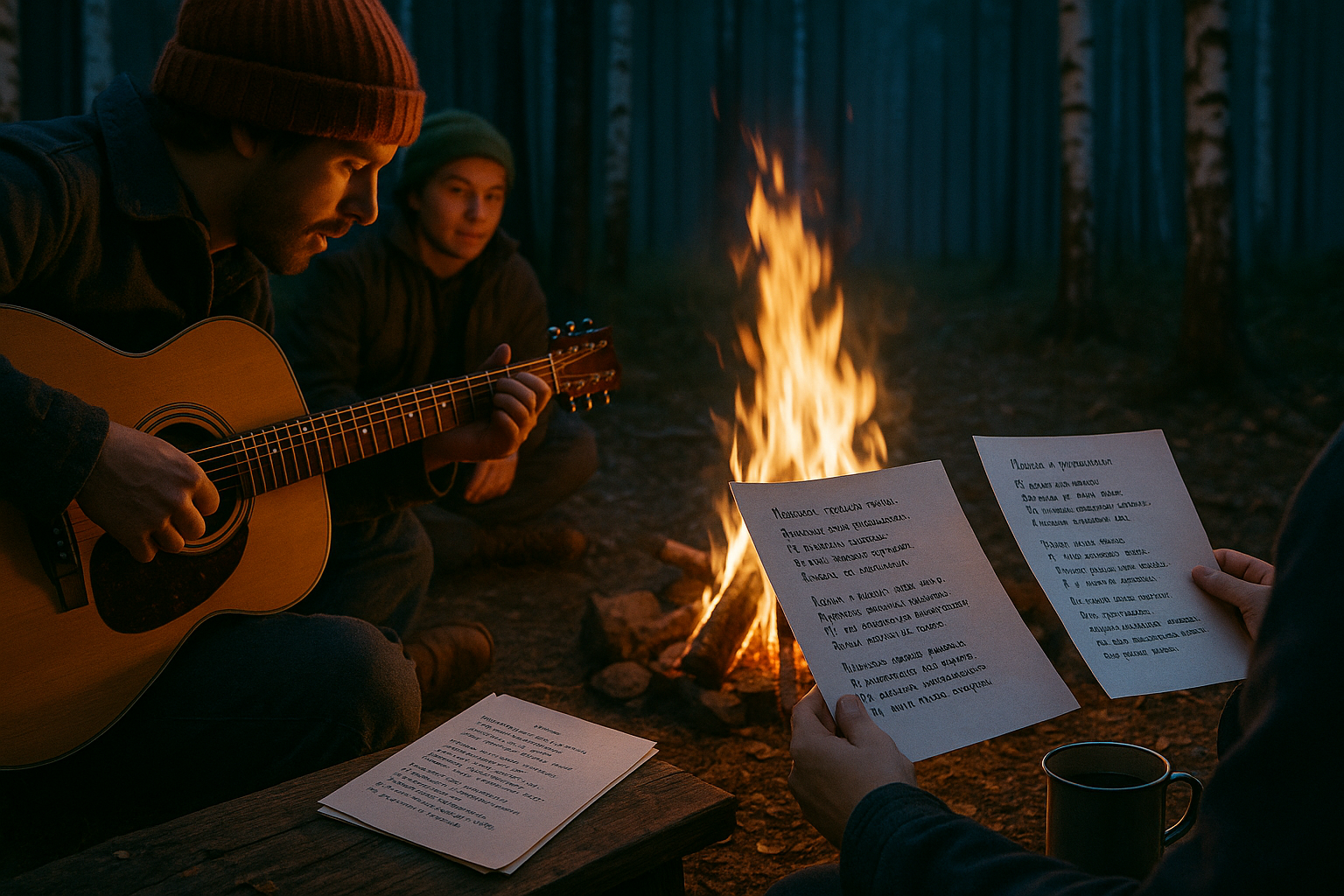
Music has always been one of humanity’s purest ways of expressing emotions, and in Russia—a country whose culture is marked by poetry, melancholy, and a deep love of language—song lyrics hold a special place in the hearts of listeners. From folk ballads carried across snowy landscapes to Soviet-era bard songs strummed on battered guitars, from tender love songs to powerful anthems of change, Russian lyrics are more than just words set to melody; they are windows into the soul of a nation. For learners of Russian, exploring these lyrics provides not only an unforgettable cultural journey but also a language-learning experience that feels alive, emotional, and deeply personal.
Unlike casual conversation or textbook examples, lyrics often distill emotions into sharp, striking images. A single Russian verse can carry layers of meaning that would take entire paragraphs to unpack in English. The structure of the Russian language—with its cases, rich verb system, and ability to condense thought into compact phrases—gives songwriters a unique set of tools. This is why many Russian songs feel almost like poetry even when sung on a street corner with nothing more than a guitar.
For Western learners, the challenge lies in translation. How do you capture the soul of a Russian lyric in English without losing its rhythm, its wordplay, its untranslatable nuances? While no translation can be perfect, even approximate versions allow non-Russian speakers to taste the depth and beauty of these songs. And for students learning the language, comparing the Russian original to an English translation is one of the most rewarding exercises—you see grammar in action, discover new idioms, and experience how culture shapes expression.
In this article, we’ll dive into some of the most beautiful Russian lyrics, unpack their themes, and provide translations that allow learners and music lovers alike to appreciate their richness. Along the way, we’ll explore the cultural context behind these songs, showing how Russian music reflects love, loss, resilience, humor, and the eternal search for meaning. By the end, you’ll see why music should be an essential part of your Russian learning journey—and maybe even find yourself humming along to a tune in Cyrillic.
Why Russian Lyrics Resonate
Russian music is infused with a particular sense of depth, sincerity, and intensity. Where pop music in other cultures might skim the surface with catchy refrains, Russian lyrics often plunge directly into the complexities of life:
The bittersweet nature of love.
The weight of memory and nostalgia.
The resilience of the human spirit in difficult times.
The beauty of fleeting moments—rain, sunsets, a passing glance.
This intensity reflects not only the Russian temperament but also the history of a nation where hardship and joy often exist side by side. To listen to Russian lyrics is to hear echoes of history, philosophy, and an enduring love for language itself.
Folk Roots and the Power of Simplicity
Many Russian songs trace their lineage to folk traditions—simple, repetitive structures that carry profound emotional weight. Folk lyrics often describe nature, love, or parting, but beneath their simplicity lies a philosophy of life that speaks universally.
For example, in traditional songs:
A river may represent the passage of time.
A birch tree may symbolize purity or resilience.
A snowy road may reflect both hardship and destiny.
These symbols appear again and again in modern lyrics, reminding listeners of their cultural roots.
Soviet-Era Bard Songs: Lyrics as Protest and Poetry
During the Soviet era, official state-approved music often dominated the airwaves, but parallel to this existed the bard movement—poet-singers like Vladimir Vysotsky, Bulat Okudzhava, and later Alexander Galich. Armed with guitars and sharp words, these artists wrote songs that spoke to the struggles, ironies, and resilience of everyday Soviet life.
Their lyrics were passed hand-to-hand on homemade recordings, blending wit, sorrow, and biting social commentary. For Russian learners, bard songs provide extraordinary insight into how humor, irony, and double meaning worked in a culture that lived under censorship.
Modern Russian Music: Poetic and Playful
In the post-Soviet world, Russian music diversified—rock bands like Kino and DDT, pop artists, and contemporary indie musicians have all contributed to a wide landscape of lyricism. Some songs retain the heavy, reflective tone of tradition, while others embrace humor, playfulness, or experimentation with language.
For learners, this means an endless variety of material to explore—whether you prefer heartfelt ballads or clever wordplay.
Examples of Beautiful Russian Lyrics
(Note: The original Russian lyrics are excerpted in part, followed by an English translation that captures their essence. These translations are not word-for-word but aim to preserve the poetic meaning. To respect copyright, I will share excerpts and analysis rather than entire copyrighted works.)
1. Vladimir Vysotsky – Songs of Honesty and Irony
Vysotsky’s gravelly voice and raw delivery made his lyrics unforgettable. A recurring theme is resilience in the face of hardship.
Russian (excerpt): “Лучше гор могут быть только горы, на которых ещё не бывал.”
Translation: “The only thing better than mountains are the mountains I have yet to climb.”
This line captures both literal and metaphorical longing—the eternal human drive for challenge, discovery, and growth.
2. Bulat Okudzhava – Gentle Wisdom
Okudzhava’s lyrics are softer, filled with warmth and gentle melancholy.
Russian (excerpt): “Возьмёмся за руки, друзья, чтоб не пропасть поодиночке.”
Translation: “Let us hold hands, my friends, so that we do not perish alone.”
This lyric reflects solidarity, a theme deeply resonant in Russian culture.
3. Kino – Viktor Tsoi and the Sound of Change
The rock band Kino became a voice of a generation in the late Soviet years.
Russian (excerpt): “Перемен требуют наши сердца.”
Translation: “Our hearts demand change.”
This refrain became an anthem of youth rebellion and remains iconic in Russian music history.
4. Zemfira – Modern Poetic Pop
Zemfira’s lyrics are intimate, often exploring love, vulnerability, and self-expression.
Russian (excerpt): “Ты — моё море.”
Translation: “You are my sea.”
Simple yet profound, this line exemplifies the ability of Russian lyrics to condense vast emotion into a few words.
How Lyrics Help Russian Learners
Vocabulary Expansion – Songs introduce idioms and words rarely found in textbooks.
Listening Skills – Melody helps reinforce pronunciation and rhythm.
Cultural Understanding – Lyrics reveal values, humor, and perspectives.
Memory Boost – Music makes words stick more easily than rote memorization.
For Seattle, Berkeley, or anywhere else—listening to Russian lyrics is a portable, engaging way to immerse yourself in the language daily.
Practical Tips for Learning Russian Through Lyrics
Start with slower ballads for clarity.
Read the lyrics in Cyrillic before listening.
Compare translations to grasp nuance.
Sing along to practice pronunciation.
Focus on one song per week to internalize grammar and vocabulary.
FAQs: Russian Lyrics and Language Learning
1. Are Russian lyrics harder to understand than spoken Russian?
Often, yes, because lyrics may be poetic or metaphorical. But with practice, they provide rich learning material.
2. Can I use Russian lyrics to practice grammar?
Absolutely. You’ll see cases, aspects, and verb conjugations in real use.
3. Do Russians value lyrics as much as melody?
Yes—lyrics are often the centerpiece of Russian songs, especially bard and rock traditions.
4. How do I avoid getting lost in metaphors?
Use translations as a guide, but don’t worry about capturing every word. Focus on themes and repeated lines.
5. Which Russian artists should beginners start with?
Okudzhava for clarity, Zemfira for modern pop, and Kino for iconic, straightforward lyrics.
6. Can singing along improve my pronunciation?
Yes—mimicking rhythm and melody helps with stress patterns and natural flow.
7. Do Russian schools teach songs as literature?
Often yes—many lyrics are considered poetry in their own right.
8. How can I integrate lyrics into my study routine?
Pick one song weekly, learn it by heart, and discuss it with a teacher or fellow learner.
Conclusion: Singing Your Way into the Russian Soul
The most beautiful Russian lyrics are more than entertainment—they are condensed poetry, cultural documents, and emotional experiences. They speak to the Russian soul with honesty, depth, and an intensity that resonates far beyond borders. For language learners, they offer an irresistible combination of vocabulary, grammar, and authentic cultural immersion.
At Polyglottist Language Academy, we believe that mastering a language means more than memorizing rules—it means living it through music, art, and real human connection. Our Russian classes weave culture and language together, so students don’t just learn how to speak Russian, but how to feel it. If you’re ready to bring the beauty of Russian lyrics into your own learning journey, sign up for our classes today and discover how music can accelerate your fluency.
And if this article inspired you, don’t miss our other posts for deeper dives into Russian language and culture: