
Italian Coffee Culture Explained: What to Say (and What Never to Do)
Introduction: More Than Just a Drink—The Ritual of Italian Coffee
To the uninitiated, it might just look like a quick espresso at the bar. But to an Italian, ordering a coffee is a daily ritual, a statement of identity, a form of communication—and above all, a moment to pause and savor life. Italian coffee culture is less about the beverage itself and more about how, when, where, and why it’s consumed.
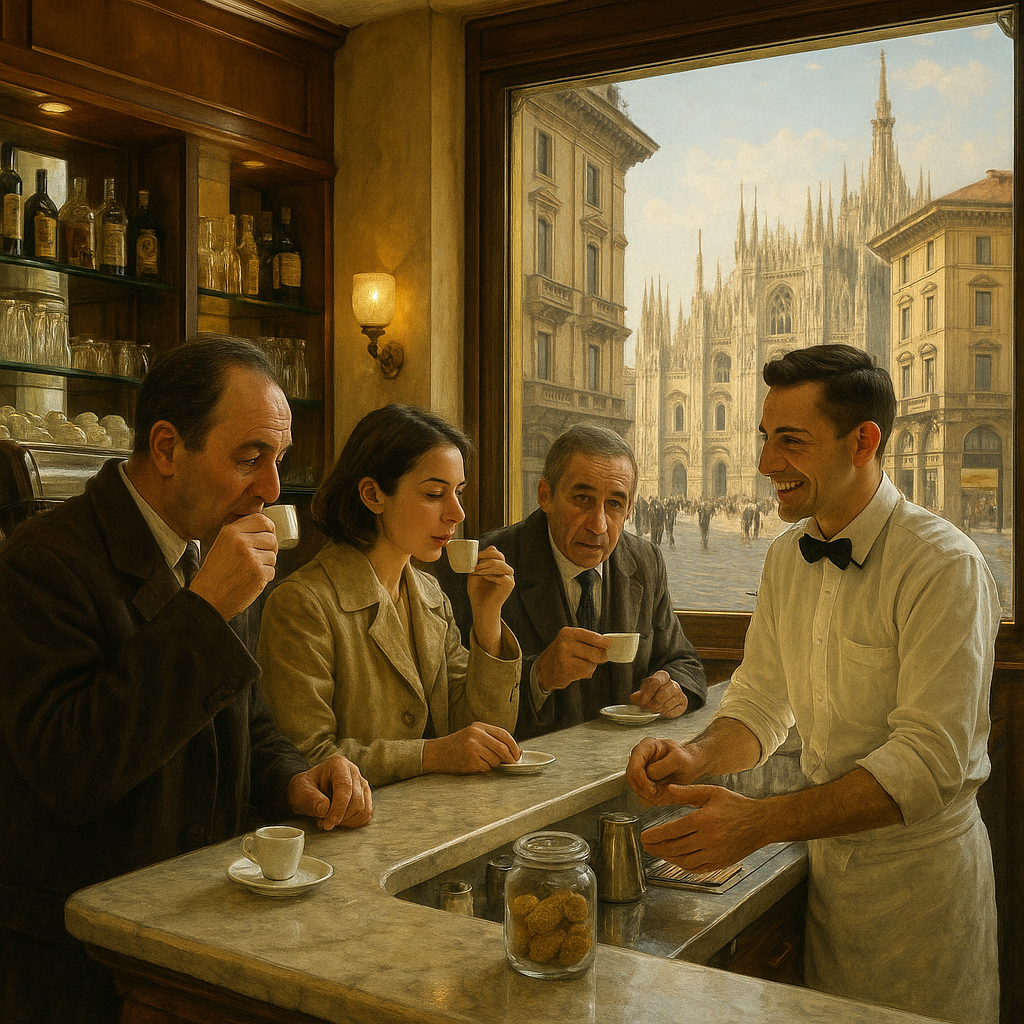
Stroll into a café in Rome, Milan, or Naples and you’ll notice something right away: no one is ordering triple caramel macchiatos in cardboard cups. No one’s sipping through a straw. And almost no one is sitting at a table with a laptop. Instead, you’ll find people standing at the bar, exchanging a few words with the barista, knocking back a tiny espresso, and moving on with their day—unhurried but efficient.
In Italy, coffee isn’t just about caffeine. It’s a deeply rooted cultural institution, wrapped in centuries of tradition, etiquette, and unspoken social rules. There’s a rhythm to it. A vocabulary. Even a sense of pride in knowing what to order—and when.
This is where things get tricky for tourists or new Italian learners. What do you say when you walk in? Should you sit down or stand? Why does no one order a cappuccino after 11 a.m.? And is it ever okay to ask for a latte?
In this guide, we’ll demystify the wonderful, aromatic world of Italian coffee culture. You’ll learn not only what to say and how to order like a local, but also what never to do if you want to blend in. From pronunciation to politeness, we’ll take you through everything you need to know to enjoy Italian coffee the Italian way.
Grab a (small, ceramic) cup—your journey into Italy’s beloved ritual begins here.
Part I: The Basics of Italian Coffee Culture
1. Italians Don’t “Go for Coffee”—They “Take” It
The expression is “prendere un caffè” (to take a coffee), not “have” or “drink.” The idea is that coffee is quick, efficient, and powerful. It’s not a lounging experience—it’s a brief, satisfying pause.
2. Coffee = Espresso (By Default)
If you order un caffè, you’ll be given an espresso. There’s no need to say “espresso” unless you're trying to emphasize it to a tourist. It’s small, served in a porcelain cup, and downed in 1–3 sips.
3. The Bar Is Where It’s At
In Italy, the café is called un bar—not to be confused with a bar that serves alcohol. Locals usually drink their coffee standing at the counter, and you’ll often pay less for it than if you sit at a table.
Part II: What to Say When You Order
At the Bar
“Un caffè, per favore.” – One espresso, please.
“Un cappuccino, grazie.” – A cappuccino, thank you.
“Un macchiato caldo.” – Espresso with a little steamed milk.
“Un caffè lungo.” – A slightly diluted espresso.
“Un caffè ristretto.” – A stronger, more concentrated espresso.
🗣️ Pro Tip: Want to sound even more natural? Drop the subject and go with:
“Un caffè, grazie.” (No need to say “I would like…”)
If You Want to Pay First
Sometimes you pay before ordering, especially in busy urban cafés:
“Pago prima?” – Should I pay first?
Part III: What Never to Do (If You Want to Blend In)
❌ Never Order a “Latte”
In Italian, latte just means milk. If you walk in and ask for one, you’ll literally get a glass of cold milk. Instead, say:
“Un caffè latte.” – Espresso with steamed milk in a larger cup.
But even then, it’s a very breakfast drink. Speaking of which…
❌ Don’t Order Cappuccino After 11 a.m.
This is probably the most famous Italian coffee taboo. Cappuccino is considered a breakfast drink—pair it with a cornetto (croissant), and you’re golden. But after that? You’ll get some funny looks.
Want milk after lunch? Try “un caffè macchiato.”
❌ Don’t Expect a Giant Cup
Forget Venti sizes. Italian coffees are small but mighty. If you need something to sip longer, you can ask for:
“Un caffè americano.” – An espresso with extra hot water.
But even then, it’s not quite the same.
Part IV: Coffee With a Twist—Variations You’ll Love
☕ Macchiato
An espresso “stained” with a bit of milk. You can order:
Macchiato caldo – with hot milk
Macchiato freddo – with cold milk
☕ Caffè corretto
An espresso “corrected” with a splash of liquor—usually grappa or sambuca. Often taken after a big lunch.
☕ Marocchino
Espresso with a dusting of cocoa and milk foam—popular in northern Italy.
☕ Caffè shakerato
A summer treat: espresso shaken with sugar and ice, served cold in a cocktail glass.
Part V: Coffee Etiquette—Little Things That Matter
➤ Don’t Linger at the Bar
Unless you’ve ordered food and taken a table, coffee is a fast ritual. Drink it in a few sips and go.
➤ Say Hello and Goodbye
Even if you’re just grabbing a quick espresso, it’s polite to say:
“Buongiorno” or “Buonasera” upon entering
“Grazie, arrivederci” when you leave
Politeness counts—and locals appreciate it when visitors take the time to greet and thank.
➤ Pay Attention to Price Differences
It’s cheaper to stand than to sit. The “prezzo al banco” (price at the bar) is different from “prezzo al tavolo” (price at a table).
Part VI: Regional Differences to Watch For
Italy’s coffee habits vary subtly from north to south:
Naples: Home of some of Italy’s strongest espresso. Often served with a glass of water and consumed very hot.
Milan: You’ll see more macchiato caldo and stylish cafés with modern twists.
Rome: Expect a no-nonsense approach and very fast bar service.
Wherever you are, the best way to learn? Watch the locals.
Part VII: How Coffee Reflects Italian Life
Coffee in Italy is more than a drink—it reflects deeper values:
Ritual: Italians thrive on routine. Taking a morning coffee at your neighborhood bar is sacred.
Community: The barista often knows your name, your drink, your story.
Simplicity: The coffee itself is simple, strong, and unadulterated. It’s not about whipped cream or ten add-ins—it’s about quality and tradition.
Pace: Life may be chaotic, but the coffee moment is calm, brief, and grounding.
FAQs: Italian Coffee Culture
Q: Can I take my coffee to go?
Yes, but it’s not typical. If you ask for “da portare via”, you’ll get a strange look—but they’ll usually accommodate.
Q: Is tipping expected?
Not really. If you sit at a table for a long time, rounding up is polite, but tipping at the bar is rare.
Q: Can I sit with just a coffee?
Yes, but expect to pay more. Some cafés may prefer you order food if you’re taking up space during peak hours.
Q: What time do Italians drink coffee?
All day—but the type changes. Cappuccino in the morning, espresso the rest of the day. No milky drinks after lunch!
Q: How do you say “Can I have a coffee to go?” in Italian?
“Un caffè da portare via, per favore.”
Q: Can I customize my order?
A little. But don't expect options like oat milk, caramel drizzle, or 2% foam. Keep it simple.
Want to Learn More About Italian Language and Culture?
At Polyglottist Language Academy, we don’t just teach you how to conjugate verbs—we help you live the language. Our Italian classes go beyond grammar and vocabulary to explore the rhythms, customs, and everyday habits of real Italian life. Like what to say in a coffee bar. Or how to greet your neighbors. Or how to sound more like a local and less like a tourist.
Whether you’re planning a trip to Florence, moving to Rome, or simply in love with Italy’s beauty, our small group online and in-person classes (3–6 students) will help you speak confidently, naturally, and culturally correctly.
👉 Sign up for our Italian classes today and experience language the way it’s meant to be lived.