
How to Explain Problems in French (From Leaky Faucets to Broken Phones)
Introduction: Why French Learners Need More Than Just Polite Phrases
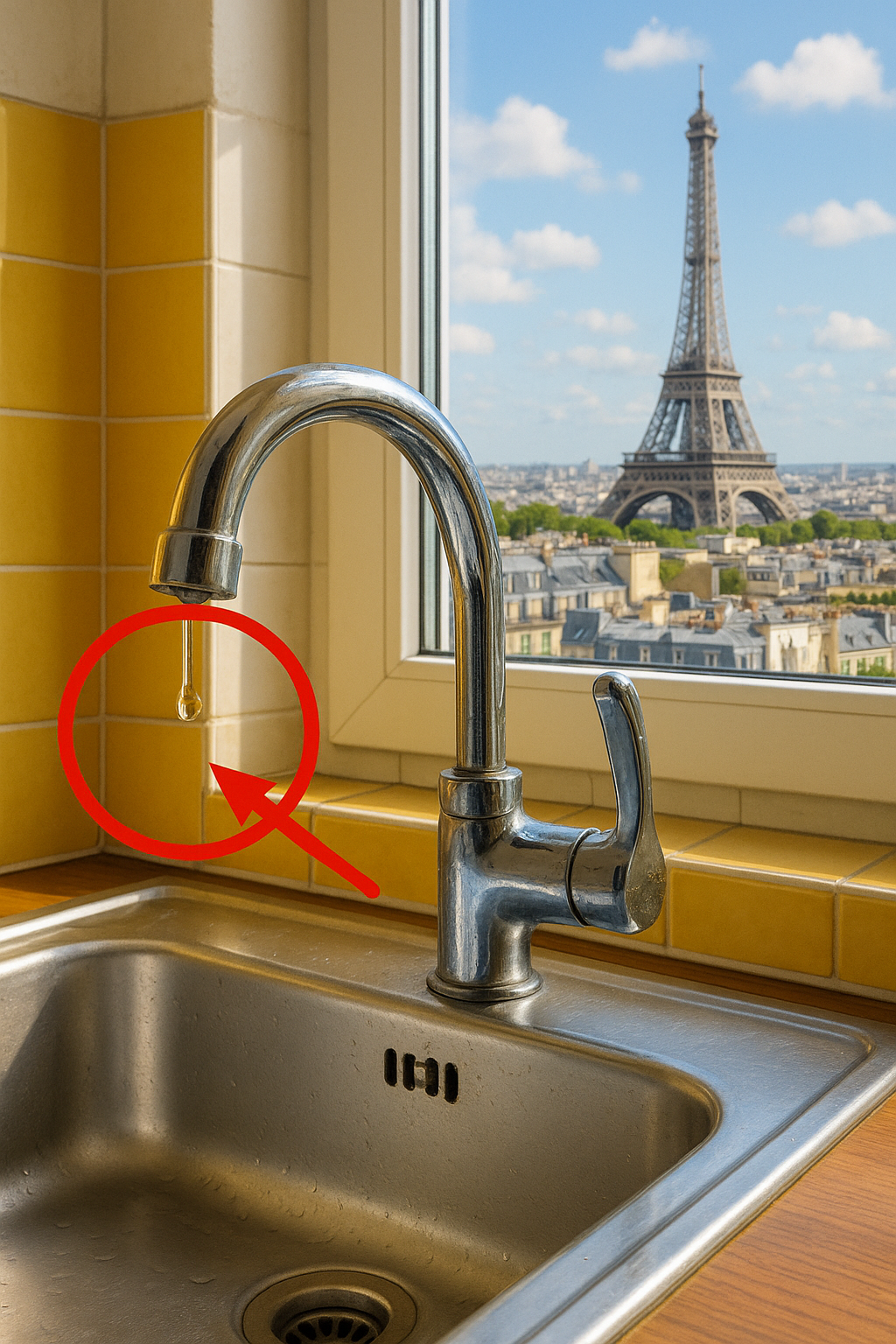
Imagine this: You're living in a charming Paris apartment. The windows open onto a leafy courtyard, your boulangerie is just downstairs—and your faucet won’t stop dripping. You call the landlord. You’ve prepared your “bonjour” and “merci,” but when they ask, “Quel est le problème exactement ?”, you freeze.
Or maybe you're in a hotel in Lyon and your phone charger isn’t working. The front desk is helpful—but you’re not sure how to say “outlet” or “plug” or even “My phone won’t charge.”
If you’ve studied French in a classroom, you’ve probably learned how to say where you're from, what you like to eat, and maybe how to ask for directions. But have you learned how to say:
There’s mold in the bathroom
The heating isn’t working
My phone screen cracked
I dropped my keys down the elevator shaft?
Probably not. And yet, this is the kind of language you’ll need the most if you live, work, or travel in a French-speaking country.
Learning how to explain problems in French—clearly, calmly, and effectively—is a superpower. It means you can:
Deal with landlords, hotel staff, or Airbnb hosts
Get help at phone repair shops or train stations
Navigate healthcare or bureaucratic issues
Stand up for yourself when something goes wrong
In this article, we’ll guide you through the essential vocabulary, sentence structures, and real-life scenarios that will help you explain problems in French like a pro. From leaky faucets to lost luggage, you’ll learn the words and phrases you need to communicate what’s wrong—without sounding helpless or confused.
Part I: The Key Vocabulary of Complaints and Problems
🔧 Common Verbs You'll Need
Casser – to break
Tomber en panne – to break down
Goutter – to drip
Déborder – to overflow
Manquer – to be missing
Fonctionner – to function
Ne pas marcher – to not work
Être bloqué(e) – to be stuck
Examples:
Le robinet est cassé. – The faucet is broken.
La machine à laver ne fonctionne pas. – The washing machine doesn’t work.
Le lavabo déborde. – The sink is overflowing.
🛠 Nouns You’ll Be Glad You Know
Le robinet – faucet
La prise – power outlet
Le chargeur – charger
L’écran – screen
La serrure – lock
La fuite – leak
Le tuyau – pipe
Le chauffage – heating
Le congélateur – freezer
La lumière – light
Examples:
Il y a une fuite d’eau sous l’évier. – There’s a water leak under the sink.
La prise ne fonctionne pas. – The outlet doesn’t work.
Mon écran est fissuré. – My screen is cracked.
Part II: How to Start the Conversation Politely
Even when things go wrong, politeness is your best ally in France.
Use Polite Openers
Excusez-moi, j’ai un petit souci. – Excuse me, I have a small issue.
Je me permets de vous déranger… – Sorry to bother you…
Je voudrais signaler un problème. – I’d like to report a problem.
Explain Calmly
Il semble que… – It seems that…
Je crois qu’il y a un problème avec… – I think there’s a problem with…
Quelque chose ne va pas avec… – Something isn’t right with…
Part III: Common Problem Scenarios (and What to Say)
1. 🛁 In the Bathroom
Le robinet goutte toute la nuit. – The faucet drips all night.
L’eau ne s’écoule pas. – The water isn’t draining.
Il y a de la moisissure sur le mur. – There’s mold on the wall.
La chasse d’eau ne marche plus. – The toilet won’t flush.
2. 🏠 In the Apartment or Hotel Room
Il fait trop froid, le chauffage ne fonctionne pas. – It’s too cold, the heating isn’t working.
Les volets sont coincés. – The shutters are stuck.
La serrure est cassée. – The lock is broken.
Il y a beaucoup de bruit pendant la nuit. – It’s very noisy at night.
3. 📱 With Phones and Electronics
Mon téléphone ne charge plus. – My phone won’t charge anymore.
Le chargeur ne rentre pas dans la prise. – The charger won’t fit in the socket.
L’écran est fissuré. – The screen is cracked.
Je crois que j’ai effacé tous mes fichiers. – I think I deleted all my files.
4. 🚗 Car Rentals and Transportation
La voiture ne démarre pas. – The car won’t start.
Le pneu est à plat. – The tire is flat.
J’ai perdu les clés. – I lost the keys.
Il y a une rayure sur la carrosserie. – There’s a scratch on the bodywork.
5. 🧳 At the Airport or Train Station
Ma valise est endommagée. – My suitcase is damaged.
Je crois que mes bagages ont été perdus. – I think my luggage has been lost.
Le train est en retard ? – Is the train late?
Je n’ai pas reçu mon billet par email. – I didn’t receive my ticket by email.
Part IV: How to Make Requests for Help
Once you’ve explained the problem, you’ll want to request a solution.
Useful Phrases:
Est-ce que vous pouvez venir voir ? – Can you come take a look?
Pouvez-vous m’aider ? – Can you help me?
C’est possible de réparer ça aujourd’hui ? – Is it possible to fix this today?
Quand est-ce que le technicien peut venir ? – When can the technician come?
💡 Tip: Keep calm and keep your tone light. Even if you’re frustrated, a smile and polite French will get you further than anger.
Part V: Sample Dialogues
🛠 At the Reception Desk (Hotel)
You:
Bonjour, excusez-moi. Il y a un problème dans ma chambre.
Clerk:
Quel genre de problème ?
You:
Le robinet de la salle de bain fuit, et il y a de l’eau partout.
Clerk:
D’accord, on va envoyer quelqu’un tout de suite.
📱 At a Phone Repair Shop
You:
Bonjour, j’ai un problème avec mon téléphone. Il ne charge plus.
Technician:
Vous avez essayé un autre câble ?
You:
Oui, j’ai essayé plusieurs chargeurs, mais rien ne marche.
Technician:
D’accord, laissez-moi regarder.
Part VI: What to Say When You’re Not Sure What’s Wrong
Sometimes you don’t have the vocabulary to name the problem exactly. That’s okay—describe what’s happening.
Useful Phrases:
Je ne sais pas ce qui se passe, mais… – I don’t know what’s happening, but…
Il y a quelque chose d’étrange avec… – There’s something strange with…
Ça ne fonctionne pas comme d’habitude. – It’s not working like usual.
Part VII: Regional Nuances and Cultural Tips
France vs. Quebec
In Québec, some vocabulary is different:
Prise becomes prise de courant or even plug (borrowed from English)
Cellulaire instead of téléphone portable
Brisé instead of cassé (for broken)
But the tone of politeness and directness is the same: friendly, clear, not too demanding.
FAQs About Explaining Problems in French
Q: What’s the difference between “cassé” and “en panne”?
A: Cassé means physically broken. En panne means malfunctioning (like an engine or device).
Q: How do I say “It’s urgent”?
A: C’est urgent. You can also say J’ai besoin d’aide rapidement – I need help quickly.
Q: What if I don’t know the exact word for something?
A: Describe it! For example:
La chose que j’utilise pour… – The thing I use for...
Un objet qui fait… – An object that does...
Q: How can I practice this kind of vocabulary?
A: Role play with a tutor, describe household problems to yourself in French, or watch repair videos with French subtitles.
Q: Can I just speak English if it’s an emergency?
A: Yes—but starting in French will often get you more help, faster. Even a basic explanation shows effort and earns goodwill.
Get Confident in Real-World French with Polyglottist
At Polyglottist Language Academy, we teach more than textbook French—we teach real-life French.
Whether you’re studying for travel, work, or just practical fluency, our courses help you speak with confidence, fix real-world problems, and handle unexpected situations like a native.
Our live online and in-person French classes in Berkeley, Oakland, San Francisco, San Jose, and beyond are designed for adult learners, travelers, and expats who want usable, everyday French.
✅ Native-speaking instructors
✅ Small groups (3–6 learners)
✅ Conversation-focused curriculum
✅ Practical vocabulary you’ll use every day
👉 Check out our classes and enroll today.
You Might Also Like…
Continue your practical French journey with these articles:
How To Learn French Before (Or After) You Move: Language Tips For Expats
How Much Does It Cost To Live In France? Budgeting By Region
Cultural Faux Pas To Avoid In France (That Locals Won’t Tell You About)
What Americans Find Most Surprising About France (And How To Prepare)
Renting An Apartment In France: A Step-By-Step Guide For Expats
🧰 You don’t need to be fluent to solve real-life problems in French.
You just need the right words, a calm tone, and a little practice.
Learn them all with Polyglottist—and turn every challenge into a confidence boost. 🇫🇷