
How to Break the Habit of Overusing “Très” in French
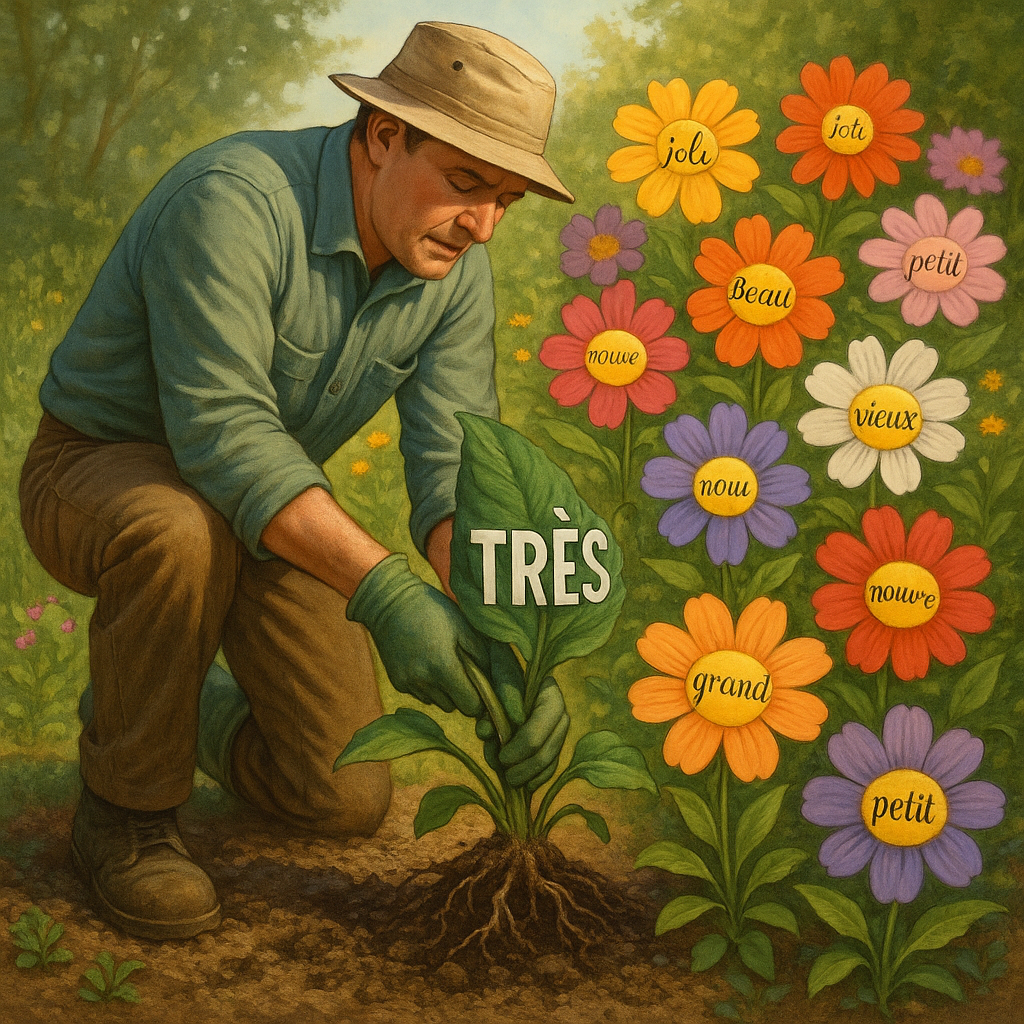
Introduction: Why “Très” Isn’t Always Très Bien
Every French learner has done it: you want to sound expressive, so you reach for your go-to adverb—très. It's easy, it's familiar, and it works with just about every adjective you’ve learned.
Très bien
Très fatigué
Très intéressant
Très content
Très joli
But after a while, everything becomes très... too much.
If you’re relying on très to express emphasis in nearly every sentence, you're not alone. It’s one of the first intensifiers taught in French class, and it feels like a safe linguistic crutch. But native French speakers don’t overuse très—and neither should you.
In fact, one of the quickest ways to sound flat, repetitive, or non-native in French is to say très all the time. It’s the equivalent of saying “very” in every sentence in English:
I’m very happy.
It’s very nice.
He’s very funny.
She’s very smart.
That’s very bad.
It’s not incorrect—but it’s boring. And worse, it can flatten your expression when French is anything but flat.
French is a language of nuance, color, and rhythm. There are dozens of beautiful, punchy, poetic ways to express intensity without repeating très like a broken record. Whether you're aiming to speak like a Parisian or just want to sound more expressive and natural, it's time to move beyond très.
This article will show you how.
We’ll cover:
Why très is overused—and when it’s actually appropriate
Better, more vibrant alternatives to très
Colorful idioms and intensifiers used by native French speakers
How to upgrade your adjectives and verbs for richer expression
Tips for practicing more dynamic French in your writing and speech
By the end, you’ll have the tools to stop leaning on très and start sounding like the engaging, nuanced French speaker you want to be.
Let’s dive in.
Part 1: The Problem with “Très”
What’s wrong with using très?
Technically, nothing. Très is grammatically correct, widely understood, and perfectly acceptable. But here’s why it’s overused—and why it holds you back:
It becomes repetitive.
Native French speakers don’t use très as often as learners do. Hearing très in every other sentence can sound clunky or overly simplistic.It lacks nuance.
French has an incredibly rich vocabulary. Replacing très bon with délicieux, for instance, adds style, tone, and specificity.It’s a missed opportunity.
When you rely on one structure, you don’t challenge your brain to grow. Variety is the engine of fluency.
Part 2: Stronger Alternatives to “Très + Adjective”
Here are some elegant and powerful words you can use instead of très + adjective combinations:
Très + AdjectiveBetter Alternativetrès bon (very good)excellent, délicieuxtrès froid (very cold)glacialtrès chaud (very hot)brûlant, torridetrès fatigué (very tired)épuisé, crevé (slang)très content (very happy)ravi, enchantétrès beau (very beautiful)magnifique, superbetrès triste (very sad)dévasté, accablétrès facile (very easy)simple, évidenttrès difficile (very hard)ardu, complexe
✨ Try memorizing a few new alternatives each week. They’ll give your vocabulary depth and dimension.
Part 3: Intensifiers to Use Instead of “Très”
French has many adverbs that work as more expressive alternatives to très.
Common Adverbs You Can Use:
Tellement – so much, so [adjective]
Je suis tellement fatigué.Vraiment – really
C’est vraiment sympa ici.Carrément – totally, downright (colloquial)
C’est carrément fou !Trop – too (can mean “super” in casual speech)
Il est trop cool !Affreusement – terribly (negative intensifier)
C’est affreusement cher.Énormément – enormously, a lot
Merci énormément !Complètement – completely
Je suis complètement perdu.Absolument – absolutely
C’est absolument nécessaire.
💡 Remember: tone and register matter. Trop is great in casual conversation, but not for a formal letter.
Part 4: Use a Stronger Verb Instead
Sometimes the problem isn’t très—it’s the weak verb you’re trying to boost.
Instead of saying:
Il est très fatigué → say Il s’est épuisé.
Elle est très contente → say Elle rayonne de bonheur.
C’est très intéressant → say Ça me passionne.
By choosing richer, more precise verbs, you elevate your French instantly.
Part 5: Express Intensity with Figurative Language
French is full of idioms and expressions that convey emotion and emphasis better than just adding très.
Some colorful expressions:
Il fait un froid de canard. – It’s freezing (literally: a duck’s cold)
Je suis mort de fatigue. – I’m dead tired
Elle est aux anges. – She’s over the moon
C’est un monde fou. – It’s a crazy world
Il a une faim de loup. – He’s starving (like a wolf)
Using these expressions helps you sound more native and feel the language, not just speak it.
Part 6: Practice Techniques to Break the “Très” Habit
1. Record Yourself Speaking
Say a few sentences on a topic (your day, your opinion, etc.) and count how many times très pops up. Try again, replacing it with better alternatives.
2. Write Sentences with Substitutions
Take basic très phrases and rewrite them three ways using:
A stronger adjective
An intensifying adverb
A vivid idiom
3. Create a “No Très” Challenge
Spend a week speaking or writing in French without using très at all. You’ll force your brain to get creative—and you’ll be amazed at how much you learn.
4. Learn 5 New Adjectives per Week
Gradually expand your toolbox. Start with themes: emotions, food, weather, etc.
5. Watch and Mimic Native French
Watch a French TV show or YouTube vlog. Notice when they use très and when they don’t. Imitate how they express excitement, frustration, or enthusiasm.
FAQs: Saying More Than “Très” in French
Q: Is it wrong to use très?
A: Not at all! Très is completely correct—it’s just overused by learners. Mixing it with other options improves fluency and style.
Q: What’s the best alternative to très bien?
A: Try super, génial, excellent, formidable, or chouette depending on the context.
Q: How do native French speakers actually speak in casual conversation?
A: They often use trop, vraiment, or even skip intensifiers altogether and let tone and context carry the meaning.
Q: Can I use tellement and trop interchangeably?
A: Sometimes, especially informally. But trop can mean “too much,” so don’t overuse it in formal writing.
Q: How do I stop myself from saying très automatically?
A: Pause and think of one stronger word. Over time, it becomes second nature.
Q: Is this really something native speakers notice?
A: Yes! Overusing très makes your speech sound basic and textbooky. Using richer expressions shows cultural fluency and sophistication.
Want to Sound More Natural in French?
At Polyglottist Language Academy, we help students go beyond memorizing rules—and start speaking with style, clarity, and personality.
Our expert instructors will help you:
Replace très with more expressive alternatives
Learn real spoken French, not just textbook phrases
Build vocabulary that makes your speech more dynamic
Understand the tone, rhythm, and nuance of native French
Whether you're in Berkeley, San Francisco, Oakland, San Jose, or learning online from anywhere—we’ve got the class for you.
👥 Small group classes (3–6 students)
🧑🏫 Live instruction by expert French teachers
🎯 Conversation-based curriculum
🗣 Real-life topics for confident speaking
👉 Explore our French classes and sign up today.
You Might Also Like…
If you enjoyed this, explore more articles designed to elevate your French:
Why Learning French In Berkeley, Oakland, Or San Francisco Is Easier Than You Think
Why Taking In-Person French Classes Beats Any App—Especially In The Bay Area
Fluency Vs. Accuracy: Which Should You Aim For First In French?
From Paris To Provence: Regional Differences Every Traveler Should Know
The Confidence Gap: Why Adults Struggle To Speak French (And How To Fix It)
🎙 Your French doesn’t have to be “très basic.”
With better words, richer patterns, and a bit of practice, it can be vraiment magnifique.
Let Polyglottist help you say exactly what you mean—without saying très every time. 🇫🇷