
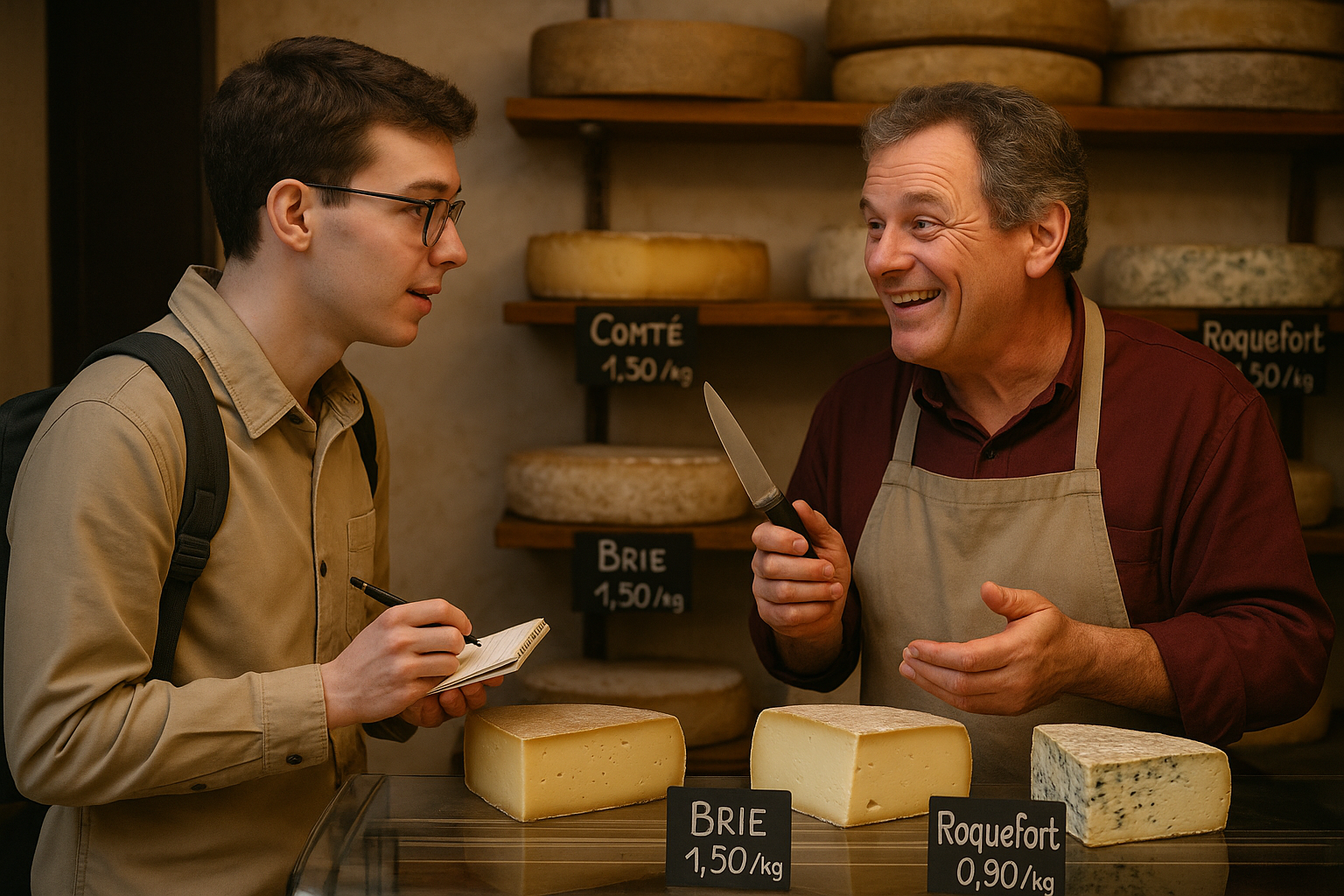
There’s a particular kind of exhilaration—and sometimes sheer terror—that comes from stepping into a bustling Parisian café, a stylish boutique, or even a tiny neighborhood bakery and knowing that the next few minutes will be your ultimate test of real-life French skills. Suddenly, all the vocabulary lists and grammar drills fade into the background as you stand face-to-face with a barista, shopkeeper, or cashier who greets you briskly with a rapid-fire “Bonjour, je peux vous aider ?” And at that moment, you realize that speaking French isn’t just about forming perfect sentences—it’s about navigating a cultural dance of politeness, efficiency, and small talk that makes customer service interactions uniquely French.
For many language learners, it’s precisely these everyday encounters—ordering a coffee, trying on clothes, asking about a refund—that provoke the most anxiety. Unlike scripted dialogues in textbooks, real customer service exchanges are unscripted, fast-paced, and full of variables: the vocabulary changes from one shop to the next, staff may speak quickly or mumble, and the polite formulas that smooth over these transactions can be surprisingly complex. Worse still, speaking English right away can sometimes be met with a frosty look, leaving you feeling even more like an outsider.
But here’s the good news: mastering French for customer service situations doesn’t require flawless grammar or a native accent. What it does require is knowing a core set of practical phrases, polite expressions, and cultural do’s and don’ts that help you manage these moments with grace and confidence. Once you’ve learned the right formulas, these interactions become not only easier but also deeply rewarding, giving you a sense of belonging and independence in French-speaking environments.
In this article, we’re going to equip you with the essential language you need to thrive in French customer service situations—from cafés and bakeries to clothing stores and pharmacies. We’ll cover polite greetings, key questions, responses for different scenarios, and cultural insights that will help you avoid misunderstandings and connect more authentically with French people in everyday life.
Because being able to order a coffee, ask for help, or resolve a problem in French isn’t just a language skill—it’s a passport to experiencing France like a local.
Why Customer Service Situations Matter
Everyday Necessity
Whether you’re traveling, living abroad, or simply visiting France for a few days, you’ll inevitably:
✅ Buy food
✅ Ask for prices
✅ Handle payments
✅ Request assistance
✅ Manage mistakes or complaints
Language in Action
Customer service situations are:
Brief but intense
Full of set phrases and formulas
Excellent practice for listening comprehension
Cultural Connection
Mastering these interactions helps you:
Avoid looking like a confused tourist
Show respect for local culture
Build confidence in using French
The Golden Rule: Politeness First
Start Every Interaction with Bonjour
A simple Bonjour is non-negotiable. Without it, you risk appearing rude.
Correct: Bonjour, Madame/Monsieur.
Incorrect: Excuse me, where is…? (without greeting)
Add Madame, Monsieur, or Mademoiselle
Always address people politely:
Madame → adult woman
Monsieur → man
Mademoiselle → younger woman (though some prefer Madame)
Smile and Maintain a Friendly Tone
Even if you’re nervous, a smile softens the exchange.
Essential French for Cafés and Restaurants
Entering a Café
Bonjour, une table pour deux, s’il vous plaît.
Hello, a table for two, please.
Ordering
Je voudrais un café crème, s’il vous plaît.
I’d like a coffee with milk, please.
Asking About the Menu
Qu’est-ce que vous me conseillez ?
What do you recommend?
Asking for the Bill
L’addition, s’il vous plaît.
The bill, please.
Or casually:
On peut régler, s’il vous plaît ?
Can we pay, please?
Special Requests
Sans sucre, s’il vous plaît.
Without sugar, please.
Est-ce que c’est végétarien ?
Is it vegetarian?
Complimenting the Meal
C’était délicieux, merci !
It was delicious, thank you!
Essential French for Bakeries and Pastry Shops
Greeting
Bonjour, Madame/Monsieur.
Asking for Items
Je voudrais une baguette, s’il vous plaît.
I’d like a baguette, please.
Quantity
Je prendrai deux croissants.
I’ll take two croissants.
Asking for Freshness
Elles sont fraîches, les chouquettes ?
Are the chouquettes fresh?
Confirming Price
Ça fait combien ?
How much is it?
Essential French for Grocery Stores
Asking Where Items Are
Où se trouve le sucre, s’il vous plaît ?
Where’s the sugar, please?
Asking for Help
Excusez-moi, vous pouvez m’aider ?
Excuse me, can you help me?
Clarifying Packaging
Vous les avez en paquet plus petit ?
Do you have these in a smaller pack?
Asking for a Bag
Je peux avoir un sac, s’il vous plaît ?
Can I have a bag, please?
Essential French for Clothing Stores
Trying On Clothes
Je peux l’essayer ?
Can I try it on?
Asking for Another Size
Vous l’avez en taille au-dessus ?
Do you have it in a size up?
Vous l’avez en taille en-dessous ?
Do you have it in a size down?
Asking About Colors
Vous l’avez en bleu ?
Do you have it in blue?
Complimenting an Item
C’est très joli !
It’s very pretty!
Asking About Refunds
Est-ce que je peux l’échanger si ça ne va pas ?
Can I exchange it if it doesn’t fit?
Est-ce que je peux être remboursé(e) ?
Can I get a refund?
Essential French for Pharmacies
Explaining Symptoms
J’ai mal à la gorge.
My throat hurts.
Je suis enrhumé(e).
I have a cold.
Asking for Recommendations
Qu’est-ce que vous me conseillez ?
What do you recommend?
Checking for Prescription
Est-ce qu’il faut une ordonnance ?
Do I need a prescription?
Asking for Generic Medications
Vous avez le générique ?
Do you have the generic version?
Essential French for Customer Service Problems
Explaining a Problem
Il y a une erreur sur la note.
There’s a mistake on the bill.
Ce produit est défectueux.
This product is defective.
Requesting a Solution
Qu’est-ce qu’on peut faire ?
What can we do?
Je souhaiterais un remboursement.
I’d like a refund.
Staying Polite
Even when frustrated:
Excusez-moi, mais…
Excuse me, but…
Je comprends, mais…
I understand, but…
Essential Courtesy Phrases
Merci beaucoup. → Thank you very much.
Avec plaisir. → With pleasure.
Pas de souci. → No problem.
Bonne journée ! → Have a good day!
Bonne soirée ! → Have a good evening!
À bientôt ! → See you soon!
Cultural Insights for Customer Service in France
Service May Seem Brisk
French customer service can appear:
Less chatty than in English-speaking countries
Efficient rather than effusively friendly
It’s not rudeness—it’s cultural style.
Wait to Be Acknowledged
Don’t jump into questions immediately. Let staff greet you first.
Small Talk Is Minimal
French service focuses on:
Efficiency
Politeness
Avoid Overly Familiar Phrases
In customer service situations, stay polite:
Stick with “vous,” not “tu.”
Use polite requests, not commands.
Don’t Expect Smiles for Everything
Politeness is shown in language, not always in facial expressions.
Example Dialogues
Café
Client: Bonjour, je voudrais un espresso, s’il vous plaît.
Serveur: Bien sûr, sur place ou à emporter ?
Client: Sur place, merci.
Clothing Store
Client: Bonjour, je peux essayer ce pantalon ?
Vendeuse: Bien sûr, la cabine est là-bas.
Bakery
Client: Bonjour, une baguette tradition, s’il vous plaît.
Boulangère: Voilà, autre chose ?
Client: Non merci, ça sera tout.
Pharmacy
Client: Bonjour, j’ai mal à la gorge.
Pharmacienne: Vous avez de la fièvre ?
Client: Non, juste mal à la gorge.
How to Practice Customer Service French
✅ Watch French YouTube videos about shopping or dining.
✅ Role-play with a partner or tutor.
✅ Practice reading menus or product descriptions.
✅ Listen for polite phrases in French films.
✅ Record yourself practicing dialogues.
Why Learning Customer Service Phrases Boosts Confidence
✅ Helps you handle real-life situations.
✅ Prevents embarrassing misunderstandings.
✅ Makes you feel less like a tourist.
✅ Deepens your cultural experience.
✅ Connects you with locals in meaningful ways.
FAQs
Q: Is it rude if I speak English in French shops?
A: Not rude, but trying French first is polite and appreciated.
Q: Should I always say “vous” in shops?
A: Yes. Stick with “vous” unless someone explicitly invites you to use “tu.”
Q: Is “Bonjour” really that important?
A: Absolutely! It’s essential in French culture.
Q: Do French cashiers expect small talk?
A: Not really. Keep it polite and brief.
Q: What if I don’t understand what the staff says?
A: Politely ask:
Pouvez-vous répéter plus lentement, s’il vous plaît ?
Can you repeat more slowly, please?
Q: Can I pay with a credit card everywhere?
A: Most places accept cards, but small shops might prefer cash for small amounts.
Q: Do I tip in cafés and restaurants?
A: Service is included, but leaving small change is appreciated.
Q: What’s the best way to learn these phrases?
A: Practice them out loud, use them during travels, and join interactive lessons.
At Polyglottist Language Academy, we believe that speaking French beautifully is about more than just words—it’s about confidently navigating real-life situations like ordering coffee, shopping, or resolving problems. Our courses go beyond textbooks, teaching you authentic phrases, cultural insights, and practical skills so you can thrive in French-speaking environments.
Ready to handle customer service situations like a local? Sign up for French classes!
Check Out Our Other Blog Articles
Explore more secrets to speaking authentic French:
How Learning French Changes Your Personality And Way Of Thinking
Is Parisian French The “Best” French? A Deep Dive Into Regional Accents And Attitudes
How To Keep Your French Alive If You’re Not In A Francophone Country
When French Gets Philosophical: How To Talk About Life, Love, And Meaning
The Secret French Grammar Structures That Sound Instantly Native
French For Abstract Thinkers: Expressing Complex Ideas Like A Native
Why Fluent French Isn’t Perfect French—And Why That’s A Good Thing
A Crash Course In “French Filler Words” (Eh Bien, Tu Vois, Genre...)
What Learning French Teaches You About English (Yes, Really!)