
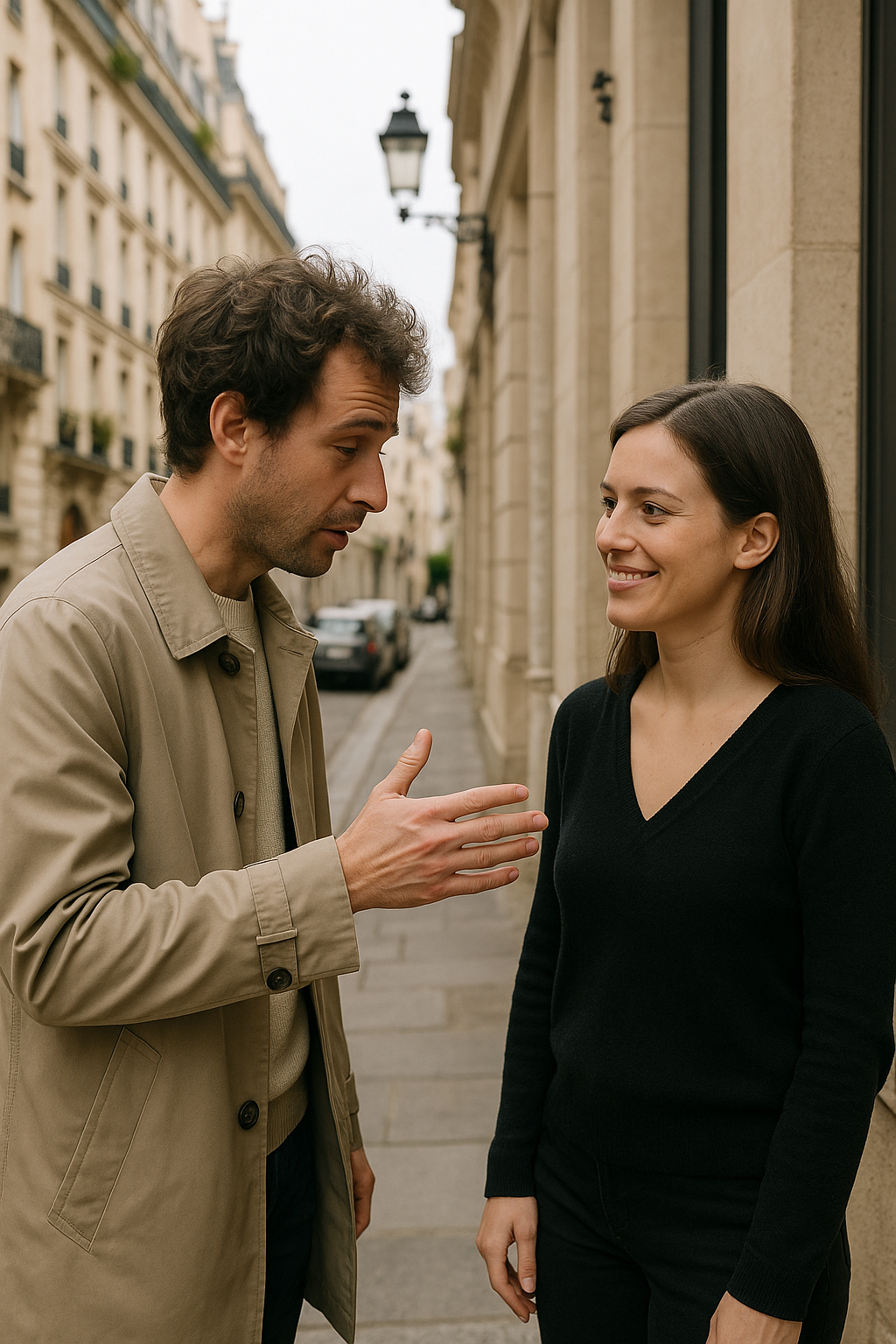
Few moments in life test your language skills quite like having to say you’re sorry. Whether you’ve accidentally bumped into someone on the Métro, sent an email with the wrong attachment to a client, arrived late to a dinner party, or simply need to acknowledge a mistake, apologizing is one of those universal human necessities that instantly exposes the limits of your vocabulary and cultural knowledge. And when it comes to French, a language famous for its social nuance and finely-tuned registers of politeness, knowing how to apologize appropriately can feel like walking a tightrope between sounding stiffly formal or hopelessly casual.
Many learners stick to a single go-to phrase like désolé or pardon, hoping it will fit every situation. Yet native French speakers wield a much richer range of apologies, choosing words, tone, and phrasing carefully depending on context, relationships, and even regional habits. What might work perfectly when squeezing past someone in a shop could sound curt in an email to your boss—or overly stiff among friends. And let’s not forget cultural differences: the French style of apology often feels less effusive than English “I’m so, so sorry!” yet remains deeply sincere when done right.
The good news is that learning how to apologize naturally in French isn’t about memorizing dozens of complex phrases—it’s about understanding which words fit which moments, and how to adjust your register so you sound authentic and respectful without being over the top. In other words, it’s about hitting that sweet spot between trop formel and trop familier.
In this article, we’ll break down the delicate art of apologizing in French, revealing the key expressions, cultural insights, and practical tips you need to navigate everything from minor slip-ups to serious blunders. Because being able to say “I’m sorry” well isn’t just good manners—it’s one of the true hallmarks of fluency and cultural competence. So let’s help you master it, once and for all.
Why Apologizing in French Feels Tricky
1. Register Matters
French has multiple levels of formality:
Casual → Friends, family
Neutral → Strangers, colleagues
Formal → Business, authority figures
Using a casual phrase in a formal situation can feel rude. Being too formal among friends can sound stiff or insincere.
2. Different Words, Different Weights
Pardon → quick, casual
Désolé(e) → slightly more emotional
Excusez-moi → polite, neutral
Je vous prie de m’excuser → formal, written
Choosing the wrong one can change the tone dramatically.
3. Cultural Attitudes
French people typically:
Apologize briefly rather than excessively.
Avoid over-apologizing (seen as insincere or lacking confidence).
Prefer specific apologies over vague “I’m sorry.”
Quick Guide to Core French Apologies
Pardon
Use when:
Squeezing past someone
Lightly bumping someone
Asking someone to repeat
Examples:
Pardon, je ne vous avais pas vu.
Sorry, I didn’t see you.
Pardon, vous pouvez répéter ?
Sorry, can you repeat?
Tone: Very casual, neutral, polite
Excusez-moi
Use when:
Getting attention
Minor inconveniences
Slightly more formal situations
Examples:
Excusez-moi, où est la gare ?
Excuse me, where’s the train station?
Excusez-moi, je suis en retard.
Excuse me, I’m late.
Tone: Polite and respectful
Désolé(e)
Use when:
Expressing genuine regret
Mistakes that affect someone else
Examples:
Je suis désolée, j’ai oublié notre rendez-vous.
I’m sorry, I forgot our meeting.
Tone: More emotional, personal
Je m’excuse
Use with caution. Native speakers often prefer:
Excusez-moi (to others)
Je vous prie de m’excuser (formal)
Je m’excuse can sound like “I’m excusing myself” rather than seeking forgiveness.
Je vous prie de m’excuser
Use when:
Formal emails
Official contexts
Examples:
Je vous prie de m’excuser pour ce retard.
Please accept my apologies for this delay.
Tone: Very formal
Toutes mes excuses
Use when:
Offering a sincere, significant apology
Examples:
Toutes mes excuses pour ce malentendu.
My sincerest apologies for this misunderstanding.
Tone: Formal, sincere
How to Apologize Without Being Too Formal
For Everyday Situations
Use Pardon or Excusez-moi for small slip-ups.
Keep it short and polite.
Example:
Pardon, je ne voulais pas vous déranger.
Sorry, I didn’t mean to disturb you.
Among Friends
Use désolé(e) casually.
Keep it simple.
Example:
Désolé, j’ai oublié de t’appeler.
Sorry, I forgot to call you.
In Professional Contexts
Use polite but neutral expressions.
Avoid emotional apologies unless necessary.
Example:
Excusez-moi pour le retard.
Sorry for the delay.
Or more formal:
Je vous prie de m’excuser pour cette erreur.
For Bigger Mistakes
Be specific.
Acknowledge the impact.
Example:
Je suis vraiment désolée d’avoir oublié notre rendez-vous.
I’m truly sorry for forgetting our meeting.
How to Avoid Sounding Too Casual
🚫 Don’t rely only on pardon in professional settings.
✅ Use excusez-moi or more formal phrases.
🚫 Avoid slang expressions like désolé mec in business emails.
✅ Keep language polite and neutral.
🚫 Don’t apologize excessively.
✅ One sincere apology is enough.
When to Add an Explanation
French speakers often explain briefly why they’re apologizing:
Je suis désolée, j’ai eu un contretemps.
I’m sorry, something came up.
Excusez-moi, je me suis trompé de numéro.
Sorry, I dialed the wrong number.
How to Apologize in Writing
Emails and letters often require more formal expressions:
Je vous prie de m’excuser pour la gêne occasionnée.
Please accept my apologies for the inconvenience.
Or:
Toutes mes excuses pour cette erreur.
Apologies Paired With Requests
French often pairs apologies with polite requests:
Excusez-moi de vous déranger, mais…
Sorry to bother you, but…
Pardon, est-ce que vous pouvez m’aider ?
Sorry, can you help me?
Apologies for Interruptions
Excusez-moi, je peux poser une question ?
Excuse me, can I ask a question?
Désolée de vous couper, mais…
Sorry to cut you off, but…
Softening Apologies With Fillers
Euh… → Um…
Ben… → Well…
Alors… → So…
Example:
Euh… désolé, mais je crois que vous avez tort.
Um… sorry, but I think you’re mistaken.
Common Apology Scenarios
Bumping Into Someone
Pardon !
Or:
Excusez-moi, je ne vous avais pas vu.
Arriving Late
Désolé(e) du retard.
Or:
Excusez-moi, j’ai eu un problème de transport.
Forgetting Something
Je suis vraiment désolé(e), j’ai complètement oublié.
Interrupting Someone
Excusez-moi de vous interrompre, mais…
Making a Mistake
Toutes mes excuses, je me suis trompé(e).
Regional Variations
In some regions, people use:
Pardonnez-moi → Very formal, often literary.
Mille excuses ! → Stronger, dramatic.
When Apologies Are Not Needed
French culture values self-confidence. Over-apologizing can feel awkward. Don’t apologize for:
Having an opinion
Small delays in casual settings
Asking questions
Example Dialogues
Casual Apology
Sophie: Désolée, je suis en retard.
Paul: Pas grave ! T’inquiète pas.
Polite Professional Apology
Mme Martin: Je vous prie de m’excuser pour cette erreur.
Monsieur Dupont: Ce n’est pas grave, ça peut arriver.
Asking for Help
Voyageur: Excusez-moi, où est la gare ?
Passant: C’est tout droit, puis à gauche.
FAQs
Q: Is “Je m’excuse” correct?
A: It’s grammatically correct but less common. Prefer Excusez-moi or Je vous prie de m’excuser.
Q: Can I say “Pardon” in formal situations?
A: It’s acceptable for small slip-ups but sounds less formal than Excusez-moi.
Q: Is “désolé” formal or casual?
A: It’s versatile but slightly more emotional. Suitable for both contexts depending on tone.
Q: Should I apologize a lot in French?
A: No. French speakers typically keep apologies brief and sincere.
Q: What’s the most polite way to apologize in writing?
A: Je vous prie de m’excuser or Toutes mes excuses.
Q: Is “mille excuses” common?
A: It’s dramatic and emphatic. Use sparingly.
Q: Do French people apologize differently from English speakers?
A: Often, yes. French apologies are less effusive but still sincere.
Q: Can I combine “désolé” and “excusez-moi”?
A: Yes, for emphasis:
Désolé, excusez-moi, je ne voulais pas déranger.
At Polyglottist Language Academy, we believe mastering a language means mastering its subtleties—and few things are more subtle (or more essential) than knowing how to apologize with the right tone and register. Our French courses go beyond grammar rules, helping you navigate real-life situations with confidence, diplomacy, and the authentic language that native speakers actually use. Whether you’re handling business interactions or simply living life in French, we’re here to help you speak with poise and precision.
Ready to speak French naturally—even when you have to say you’re sorry? Sign up for our French classes!
Check Out Our Other Blog Articles
Explore more secrets to speaking authentic French:
How Learning French Changes Your Personality And Way Of Thinking
Is Parisian French The “Best” French? A Deep Dive Into Regional Accents And Attitudes
How To Keep Your French Alive If You’re Not In A Francophone Country
When French Gets Philosophical: How To Talk About Life, Love, And Meaning
The Secret French Grammar Structures That Sound Instantly Native
French For Abstract Thinkers: Expressing Complex Ideas Like A Native
Why Fluent French Isn’t Perfect French—And Why That’s A Good Thing
A Crash Course In “French Filler Words” (Eh Bien, Tu Vois, Genre...)
What Learning French Teaches You About English (Yes, Really!)