
What to Say in French When You’re Lost (Literally and Linguistically)
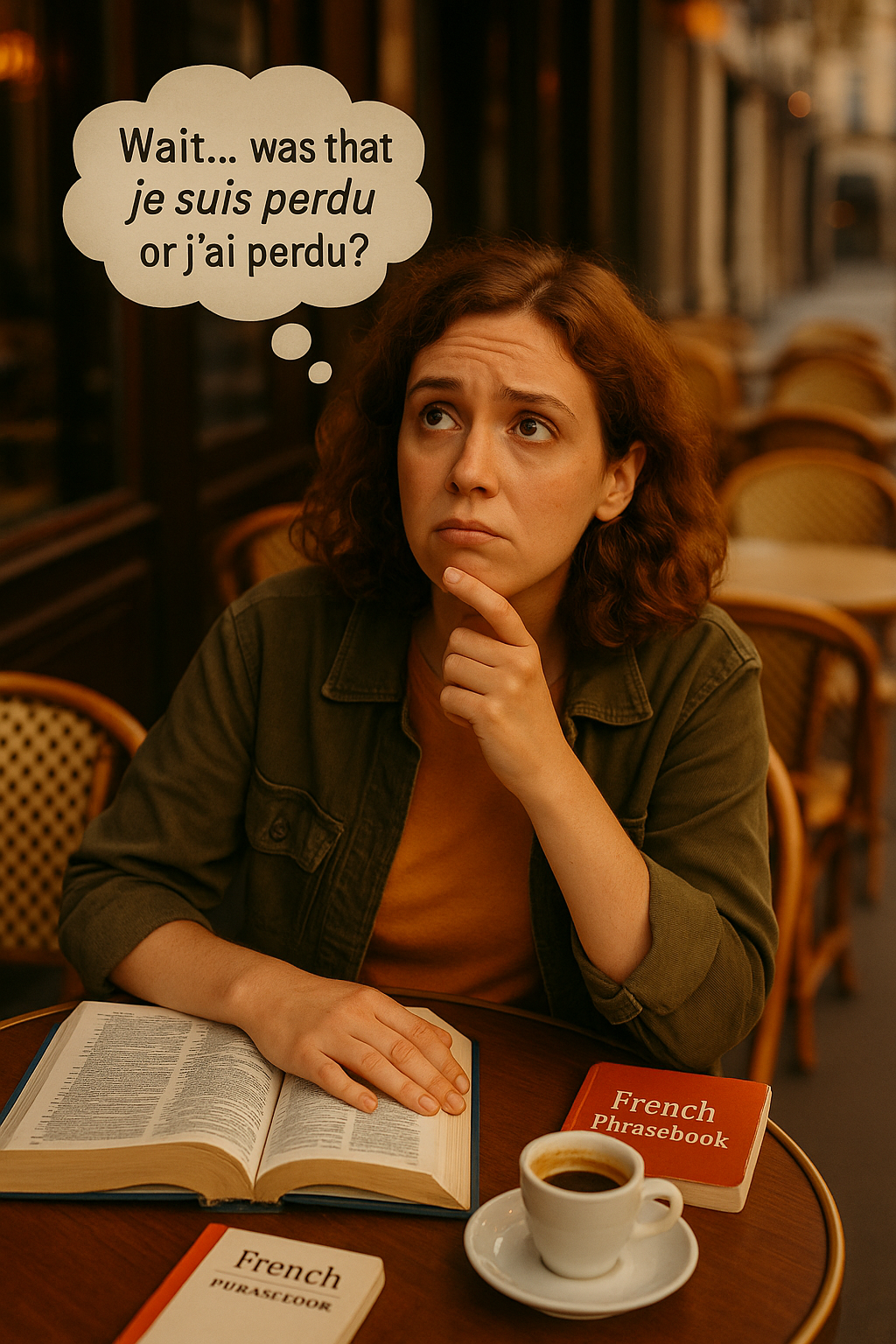
There’s a unique kind of panic that rises in your chest when you’re standing on a cobblestone street somewhere in France, glancing helplessly at a map—or worse, realizing you have no signal on your phone—and trying to figure out which way to turn. Equally unnerving is the feeling of getting lost mid-sentence, stuck between verb conjugations and a sea of unfamiliar vocabulary while the person you’re speaking with waits for you to finish. Being lost, whether physically or linguistically, is one of those universal travel experiences that can make your heart race and your palms sweat. But here’s the thing: being lost doesn’t have to be a disaster—it can be an opportunity. Because every moment of confusion is also a moment to connect, to practice your language skills, and to navigate your way into deeper cultural experiences.
In France, asking for help, directions, or clarification isn’t just about the words you say—it’s also about how you say them. The French language has a wealth of polite, precise phrases that can rescue you when you’re geographically misplaced or fumbling for words. Knowing how to admit you’re lost, ask for help, and clarify misunderstandings isn’t only practical—it’s essential for transforming stressful moments into successful, even pleasant interactions. The right expressions can open doors, elicit kindness from strangers, and keep conversations flowing even when your vocabulary runs dry.
In this article, we’re going to dive into what to say in French when you’re lost—both in terms of finding your way around a city and in navigating a conversation when your linguistic compass goes haywire. We’ll explore essential phrases, cultural tips, and practical strategies so you can handle these inevitable moments with grace, confidence, and even a touch of humor. Because the truth is, getting a little lost is part of the adventure—and knowing what to say makes it a whole lot less scary.
Part 1: When You’re Literally Lost
Essential Phrases for Asking Directions
Let’s start with the practical reality of being physically lost. Whether you’re wandering Paris, Lyon, or a small Provençal village, these phrases will be lifesavers.
1. Excusez-moi…
Translation: Excuse me…
Use this to politely get someone’s attention.
Excusez-moi, Madame/Monsieur…
2. Je suis un peu perdu(e).
Translation: I’m a bit lost.
Perdu → masculine
Perdue → feminine
Example:
Excusez-moi, je suis un peu perdue. Pouvez-vous m’aider ?
Excuse me, I’m a bit lost. Can you help me?
3. Pouvez-vous m’indiquer… ?
Translation: Can you show/tell me…?
Pouvez-vous m’indiquer où est la gare ?
Can you tell me where the train station is?
4. Où se trouve… ?
Translation: Where is… ?
Où se trouve la rue Victor Hugo ?
Where is Victor Hugo Street?
5. Comment aller à… ?
Translation: How do I get to… ?
Comment aller à la cathédrale ?
How do I get to the cathedral?
6. Est-ce loin ?
Translation: Is it far?
Est-ce loin, la poste ?
Is the post office far?
7. C’est à combien de minutes à pied ?
Translation: How many minutes on foot?
C’est à combien de minutes à pied, la plage ?
How many minutes on foot is the beach?
8. Je cherche…
Translation: I’m looking for…
Je cherche l’office de tourisme.
I’m looking for the tourist office.
9. Est-ce que c’est par ici ?
Translation: Is it around here?
Est-ce que c’est par ici, le musée ?
Is the museum around here?
10. Pouvez-vous me montrer sur la carte ?
Translation: Can you show me on the map?
Pouvez-vous me montrer sur la carte où nous sommes ?
Can you show me on the map where we are?
Useful Vocabulary
tout droit → straight ahead
à gauche → to the left
à droite → to the right
au coin → at the corner
près de → near
loin de → far from
la rue → street
l’avenue → avenue
la place → square/plaza
la gare → train station
l’arrêt de bus → bus stop
How to Listen to Directions
French people might answer quickly. Key words to catch:
Vous continuez tout droit. → Keep going straight.
Prenez la première à gauche. → Take the first left.
C’est au bout de la rue. → It’s at the end of the street.
Cultural Tips for Asking Directions
✅ Always greet first
Start with Bonjour, Madame/Monsieur. Never launch into a question coldly.
✅ Use polite forms
Pouvez-vous… (Can you…)
S’il vous plaît (Please)
✅ Don’t be afraid to ask again
If you didn’t understand:
Pardon, vous pouvez répéter plus lentement ?
Sorry, could you repeat more slowly?
✅ Expect gestures
French people often point, wave their arms, or use the whole street as a visual aid. Watch carefully!
Part 2: When You’re Linguistically Lost
Being lost linguistically is a different kind of panic. You’re mid-sentence, suddenly blanking on vocabulary, or lost in someone’s rapid-fire French. Let’s make those moments easier.
Admitting You Don’t Understand
1. Pardon ?
Translation: Sorry?
Simple and polite.
Pardon ? Je n’ai pas compris.
2. Je ne comprends pas.
Translation: I don’t understand.
Clear and honest.
Je suis désolé(e), je ne comprends pas.
3. Pouvez-vous répéter, s’il vous plaît ?
Translation: Can you repeat, please?
4. Parlez plus lentement, s’il vous plaît.
Translation: Speak more slowly, please.
5. Qu’est-ce que ça veut dire… ?
Translation: What does … mean?
Qu’est-ce que ça veut dire “arrondissement” ?
6. Je cherche le mot…
Translation: I’m looking for the word…
Je cherche le mot pour “train station.”
7. Comment dit-on … en français ?
Translation: How do you say … in French?
Comment dit-on “ticket” en français ?
8. Je suis un peu perdu(e).
Translation: I’m a bit lost.
Yes, it works linguistically too!
Je suis un peu perdue. Pouvez-vous m’expliquer ?
When You Forget a Word
Instead of freezing, try:
C’est comme… → It’s like…
C’est un truc où… → It’s a thing where…
On l’utilise pour… → You use it for…
Example:
C’est un truc où on met la nourriture… ah, un frigo !
It’s a thing where you put food… oh, a fridge!
Keeping Conversation Flowing
Use filler words to buy time:
Euh… → Um…
Ben… → Well…
Alors… → So…
Voyons… → Let’s see…
These make you sound natural while thinking.
Staying Calm Under Pressure
Remember:
French people are usually patient with learners.
Humor helps! A smile goes a long way.
Every conversation is practice.
Common Mistakes to Avoid
🚫 Saying nothing
Instead, ask for clarification or repeat what you understood.
🚫 Panicking if corrected
Corrections are normal and helpful.
🚫 Translating literally
Sometimes idioms don’t translate. Ask:
Ça se dit comme ça ?
Do you say it like that?
Example Dialogue: Lost in the City
Traveler: Bonjour, Madame. Excusez-moi, je suis un peu perdu.
Local: Pas de problème. Vous cherchez quoi ?
Traveler: Je cherche la gare. C’est loin ?
Local: Non, ce n’est pas loin. Vous allez tout droit, puis à gauche.
Traveler: Merci beaucoup ! Pouvez-vous me montrer sur la carte ?
Local: Bien sûr. Voilà !
Example Dialogue: Lost in Conversation
Local: Alors, tu connais bien le quartier ?
Traveler: Euh… pardon, je ne comprends pas “quartier.”
Local: Ah, “quartier,” c’est une partie de la ville.
Traveler: Ah, d’accord ! Merci. Je suis encore un peu perdue parfois…
Local: Pas de souci, tu parles déjà très bien français !
Why Getting Lost is Good for Learning
Forces you to speak
Helps you learn practical vocabulary
Builds confidence
Connects you with people
Getting lost—literally or linguistically—often leads to the best stories and memories.
FAQs
Q: Is it rude to admit I’m lost in French?
A: Not at all! It’s polite to ask for help. People appreciate the effort.
Q: Will French people help me if I’m lost?
A: Usually yes. Especially if you greet politely and use basic French.
Q: What should I do if someone speaks too fast?
A: Politely ask:
Pouvez-vous parler plus lentement, s’il vous plaît ?
Q: Is it okay to mix French and English?
A: Yes, if you’re stuck. Many people understand some English, but always start in French if possible.
Q: Can I use gestures if I forget a word?
A: Absolutely! Gestures often help communication.
Q: Should I use “perdu” or “perdue”?
A: Perdu is masculine. Perdue is feminine.
Q: Is it common to ask strangers for directions in France?
A: Very common. Markets, train stations, and streets are all places where people ask for help.
Q: Will people correct my French?
A: Sometimes, and that’s helpful! Don’t take it personally.
At Polyglottist Language Academy, we believe that learning French isn’t just about grammar—it’s about real-life situations like finding your way through a city or a conversation. Our courses teach you the practical language and cultural insights you need to navigate French-speaking environments confidently, even when you’re feeling a bit lost. Whether you’re preparing for travel or deepening your skills, we’re here to help you speak French naturally and fearlessly.
Ready to turn moments of confusion into confident conversations? Sign up for French classes!
Check Out Our Other Blog Articles
Dive deeper into French language and culture:
How Learning French Changes Your Personality And Way Of Thinking
Is Parisian French The “Best” French? A Deep Dive Into Regional Accents And Attitudes
How To Keep Your French Alive If You’re Not In A Francophone Country
When French Gets Philosophical: How To Talk About Life, Love, And Meaning
The Secret French Grammar Structures That Sound Instantly Native
French For Abstract Thinkers: Expressing Complex Ideas Like A Native
Why Fluent French Isn’t Perfect French—And Why That’s A Good Thing
A Crash Course In “French Filler Words” (Eh Bien, Tu Vois, Genre...)
What Learning French Teaches You About English (Yes, Really!)