
The Hidden Power of French Prepositions (And Why They’re Hard to Translate)
Introduction
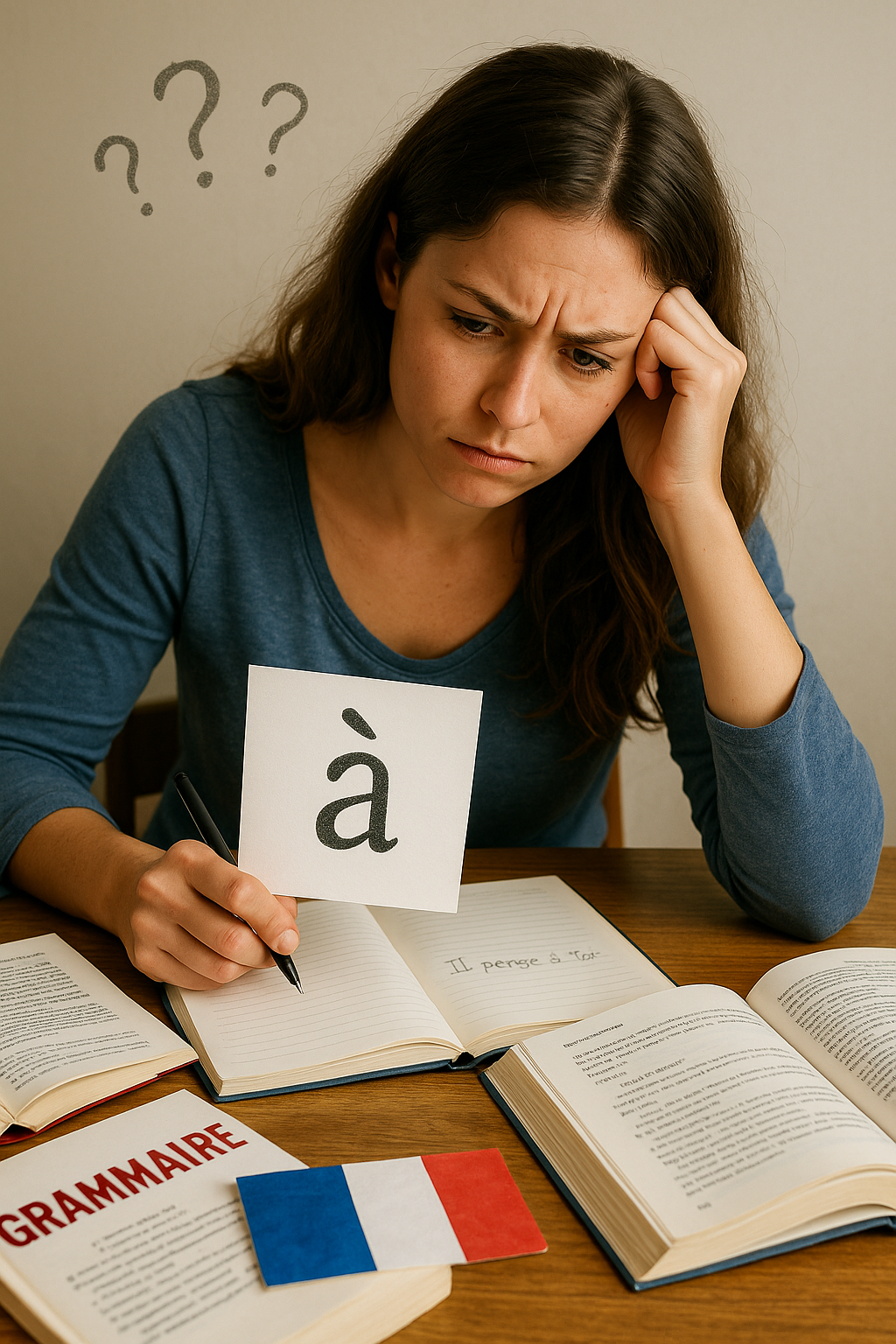
Few things in the French language have the mysterious power to confuse, frustrate, and sometimes completely derail even advanced learners quite like prepositions—a tiny category of words whose impact on meaning is far bigger than their modest size suggests. At first glance, they seem harmless, the kind of small connecting words that shouldn’t cause too much trouble. After all, how hard can it be to handle little words like à, de, dans, sur, chez, or en? But as anyone who has tried to translate them knows, these words often carry shades of meaning that simply refuse to map neatly onto their English counterparts, leaving learners scratching their heads over phrases that somehow feel right in French but look absurd in literal translation.
It’s easy to underestimate just how essential prepositions are to French fluency. They don’t just indicate physical location or direction—they reveal subtle relationships between people, things, and abstract ideas. They set the tone of formality, distinguish between figurative and literal meanings, and shape entire grammatical constructions like infinitive verbs and relative clauses. The difference between par and pour, or dans and en, is sometimes the difference between sounding perfectly fluent and uttering something a native speaker finds baffling or unintentionally hilarious.
So why are French prepositions so tricky to master? One major reason is that their meaning is highly context-dependent and deeply intertwined with how French people conceptualize space, time, and relationships. They often don’t align with the direct, one-to-one translation logic learners expect, because they’re rooted in cultural and linguistic patterns that have evolved over centuries. In other words, the key to understanding French prepositions isn’t just memorizing translations—it’s about learning to think like a French speaker.
In this article, we’ll uncover the hidden power of French prepositions, exploring why they’re hard to translate, how they shape meaning, and the most common pitfalls to avoid. We’ll break down essential prepositions, examine tricky pairs, and offer strategies for mastering them so you can speak with confidence and nuance. Because once you unlock the secrets of French prepositions, you’re not just learning new words—you’re stepping into the heart of how the French language works.
Why Prepositions Matter So Much
Prepositions in any language serve as the glue that connects nouns, verbs, and pronouns, providing essential information about relationships, direction, time, and more. But in French, they often carry:
Emotional or cultural nuances
Idiomatic meanings
Grammatical triggers (like verb constructions)
This makes prepositions critical for sounding natural and precise.
Consider how different these sentences feel in French:
Je pense à toi. → I’m thinking of you.
Je pense de toi. → I’m giving my opinion about you.
The preposition alone changes the entire meaning.
Why They’re Hard to Translate
Here’s why direct translation often fails:
Cultural Logic
French speakers often conceptualize relationships differently. For example:Je suis chez moi → I’m at home.
(Literally: I’m “at the house of me.”)
One Preposition, Many Meanings
“En” can mean:In → Je suis en France.
By (means) → Je voyage en train.
Made of → Une robe en soie.
Different Verbal Constructions
Some verbs simply demand certain prepositions:Essayer de faire quelque chose → To try to do something
Aider à faire quelque chose → To help to do something
Deep Dive into Key French Prepositions
Let’s explore some essential prepositions and why they’re tricky.
À
Perhaps the most versatile preposition in French, à can express:
Location:
Je suis à Paris. → I’m in Paris.
Time:
Le film commence à 20h. → The film starts at 8 PM.
Direction:
Je vais à la plage. → I’m going to the beach.
Manner:
Fait à la main → Made by hand.
Purpose:
Une machine à laver → A washing machine.
Tricky Point: À often combines with definite articles:
à + le = au
à + les = aux
Je vais au cinéma. → I’m going to the cinema.
De
De can signal:
Possession:
Le livre de Marie → Marie’s book
Origin:
Je viens de Lyon. → I’m from Lyon.
Contents:
Un verre de vin → A glass of wine
Cause:
Mourir de faim → To die of hunger
Tricky Point: Like à, de contracts:
de + le = du
de + les = des
Le toit du musée → The roof of the museum
En vs. Dans
Both mean “in,” but are not interchangeable:
En often signals:
Countries (feminine or starting with a vowel):
Je suis en Italie.
Duration of time:
Je le ferai en deux jours. → I’ll do it in two days (i.e. how long it takes).
Materials:
Une robe en soie → A silk dress.
Means of transport:
Voyager en train → Travel by train.
Dans:
Physical location:
Le livre est dans le sac. → The book is in the bag.
Future timing:
Je partirai dans deux jours. → I’ll leave in two days (i.e. from now).
Chez
This one baffles many learners because it has no true English equivalent.
Someone’s home:
Je suis chez Paul. → I’m at Paul’s house.
Business establishment:
Je vais chez le médecin. → I’m going to the doctor’s.
“Within the work of” (artists, philosophers):
Chez Sartre, la liberté est essentielle. → In Sartre’s work, freedom is essential.
Par vs. Pour
A classic learner dilemma:
Pour implies purpose, destination, or benefit:
C’est un cadeau pour toi. → It’s a gift for you.
Je pars pour la France. → I’m leaving for France.
Par often implies means, manner, or through:
Passer par la rue → Go through the street.
Envoyer par avion → Send by plane.
Other Tricky Prepositions
Sous → under
Sur → on
Avec → with
Sans → without
Vers → toward
Selon → according to
Contre → against
Each can be literal or idiomatic:
Il est contre cette idée. → He’s against this idea.
Être contre un mur. → To be against a wall.
The Danger of Literal Translation
Many errors stem from translating word-for-word:
“Interested in” → intéressé par NOT intéressé dans
“To think about” → penser à NOT penser de (unless giving an opinion)
Wrong:
Je suis intéressé dans l’art.
Right:
Je suis intéressé par l’art.
Prepositions and Verb Patterns
Many French verbs “demand” specific prepositions before infinitives:
apprendre à faire → to learn to do
arrêter de faire → to stop doing
commencer à faire → to start doing
décider de faire → to decide to do
This is often memorization:
Il a décidé de partir.
Elle apprend à chanter.
Tips to Master French Prepositions
1. Learn Phrases, Not Words
Instead of memorizing single words, learn prepositions in context:
penser à quelqu’un → to think of someone
rêver de quelque chose → to dream of something
2. Pay Attention to Collocations
French words often “cling” to specific prepositions. Examples:
dépendre de
se souvenir de
participer à
hésiter à
3. Listen and Imitate
Native speakers often “feel” which prepositions are right because of repeated exposure. Listen for patterns in:
French podcasts
Movies
Songs
Conversations
4. Write and Get Feedback
Practice writing sentences using new prepositions, then ask a teacher or language partner to check them.
5. Don’t Be Afraid to Ask
If in doubt, ask:
On dit “intéressé par” ou “intéressé de”?
French speakers will often help clarify.
Why Prepositions Are Your Secret Weapon
Once you master French prepositions:
Your speech sounds natural.
Your writing gains precision.
You avoid embarrassing mix-ups.
You better understand native conversations.
They’re small words—but they’re your passport to speaking French with subtlety and sophistication.
FAQs
Q: Are French prepositions always used the same way as in English?
A: Not at all. Many prepositions have broader or narrower meanings than in English and often depend on idiomatic usage.
Q: Why is “chez” so hard to translate?
A: “Chez” reflects a concept of “someone’s place” or “sphere.” English doesn’t have a single word that covers all its uses.
Q: Should I translate prepositions word-for-word?
A: No. Always check how verbs or phrases naturally combine with prepositions in French.
Q: How can I memorize prepositions?
A: Learn them as part of phrases rather than isolated words.
Q: Are prepositions the same in all French-speaking countries?
A: Largely yes, but regional expressions can vary. Canadian French has some unique usages.
Q: Is there a rule for choosing “à” or “de”?
A: Unfortunately, not one simple rule—it’s often tied to the specific verb or phrase.
Q: Can I rely on Google Translate for prepositions?
A: Be cautious. Machine translation often mishandles prepositions because it lacks context.
Q: Are prepositions hard even for native French speakers?
A: Sometimes! Prepositions can be tricky in writing, especially for formal texts.
At Polyglottist Language Academy, we believe that mastering French prepositions unlocks a higher level of fluency and confidence. Our courses go beyond textbooks to teach real-life usage, helping you grasp subtle differences and avoid common mistakes. Whether you’re a beginner eager to build solid foundations or an advanced speaker refining your finesse, our experienced teachers will guide you through the fascinating world of French prepositions—and so much more.
Ready to speak French with precision and ease? Sign up for French classes and let’s conquer the mysteries of French prepositions together!
Check Out Our Other Blog Articles
For more insights into mastering French, check out these articles on our blog:
How Learning French Changes Your Personality And Way Of Thinking
Is Parisian French The “Best” French? A Deep Dive Into Regional Accents And Attitudes
How To Keep Your French Alive If You’re Not In A Francophone Country
When French Gets Philosophical: How To Talk About Life, Love, And Meaning
The Secret French Grammar Structures That Sound Instantly Native
French For Abstract Thinkers: Expressing Complex Ideas Like A Native
Why Fluent French Isn’t Perfect French—And Why That’s A Good Thing
A Crash Course In “French Filler Words” (Eh Bien, Tu Vois, Genre...)
What Learning French Teaches You About English (Yes, Really!)