
Introduction
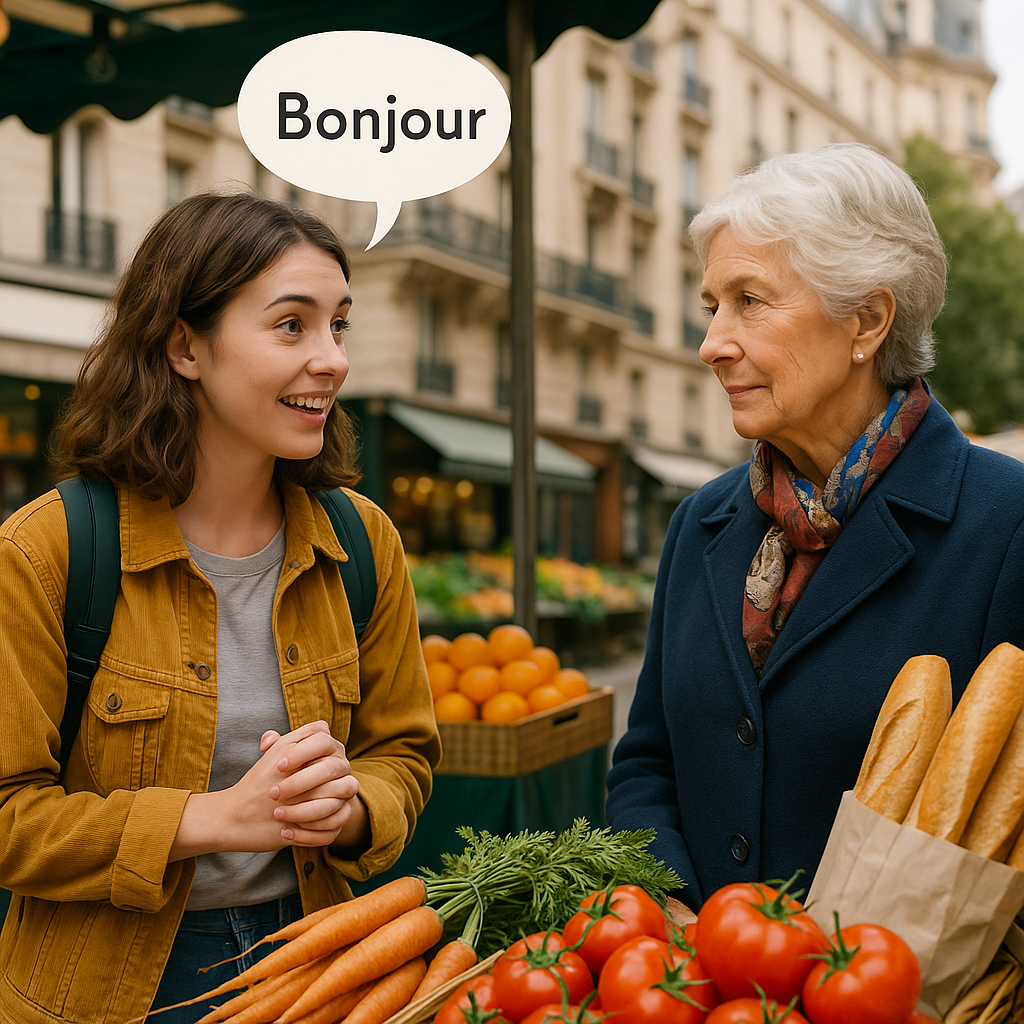
There’s a unique thrill—and sometimes a spike of panic—that comes with opening your mouth to speak French to a complete stranger, especially if that stranger is French. It’s one thing to practice dialogues in the safety of a classroom or chat with language partners online; it’s quite another to navigate the fast-paced, subtle, and often unspoken rules that shape real-life French conversation. The stakes can feel high, and the possibility of a faux pas looms large, leaving many learners second-guessing themselves before they even say, “Bonjour.”
The truth is that your very first conversation with a French stranger can set the tone for how you feel about speaking French moving forward—whether it becomes an empowering moment that fuels your motivation, or a cringe-worthy memory you’d rather forget. But here’s the good news: much of what makes these interactions go well has less to do with your grammar and vocabulary, and much more to do with understanding French social norms, polite formulas, and the rhythm of how strangers talk to each other.
In France, casual conversations with strangers can be delightfully spontaneous yet governed by subtle codes. There’s a certain balance between warmth and reserve, humor and formality, directness and politeness. Knowing how to navigate these unwritten rules can turn you from a shy foreigner into a charming conversationalist who’s welcomed into the delightful dance of French social life.
Whether you’re planning a trip to Paris, studying abroad, relocating for work, or simply want to feel confident chatting with French speakers in your own city, understanding the do’s and don’ts of talking to French strangers is a game-changer. In this article, we’ll unpack the practical, cultural, and psychological strategies you need to make your first conversation smooth, pleasant, and, who knows—maybe even the beginning of a new friendship.
So take a deep breath, channel your inner Francophile, and let’s explore how to ace your first conversation with a French stranger.
DO: Start with “Bonjour” — Always
In France, “Bonjour” isn’t just a greeting; it’s an essential social ritual. Failing to say it is often seen as rude or abrupt, even in casual contexts.
When to say it: Entering a shop, approaching someone for directions, joining a line—always start with “Bonjour.”
Why it matters: It signals respect and politeness. Without it, your question or comment may fall on cold ears.
Pro Tip: After 6 or 7 PM, switch to “Bonsoir.” Time-specific greetings are taken seriously in France!
DON’T: Launch Straight Into a Question Without Greeting
Imagine a stranger walking up to you and blurting out, “Where’s the bathroom?” without so much as a hello. It would feel abrupt, right? It’s the same in France. Politeness is non-negotiable.
Wrong:
Où est la gare?
Right:
Bonjour, excusez-moi, où est la gare, s’il vous plaît?
Always buffer your question with a polite opening.
DO: Use “Excusez-moi” and “S’il vous plaît”
French conversations with strangers rely heavily on polite markers. “Excusez-moi” signals that you’re about to intrude, and “s’il vous plaît” softens requests.
“Excusez-moi” = Excuse me
“S’il vous plaît” = Please
Example:
Bonjour, excusez-moi, où est le métro, s’il vous plaît?
These small words go a long way toward making you sound polite and respectful.
DON’T: Use “Tu” Instead of “Vous”
In your first conversation with a stranger, “vous” is the default. It shows respect and maintains social distance. Using “tu” too soon can come off as presumptuous or even rude.
Stick to “vous” unless:
The other person invites you to use “tu.”
You’re speaking to a child or teen.
You’re in an ultra-casual context (even then, be cautious).
Example:
Correct: Vous pouvez m’aider?
Incorrect: Tu peux m’aider?
DO: Speak Simply and Clearly
If it’s your first conversation, avoid overly complex sentences. French people appreciate clarity, especially if they sense you’re a learner.
Instead of:
Je me demandais si par hasard vous sauriez m’indiquer où se trouve la librairie la plus proche, car je suis nouveau dans ce quartier…
Try:
Bonjour, excusez-moi. Où est la librairie la plus proche, s’il vous plaît?
Keep it simple. You’ll reduce misunderstandings and feel more confident.
DON’T: Panic Over Mistakes
No matter how well you prepare, mistakes will happen. The good news? Most French people are patient and often charmed by foreigners making an effort. It’s okay to stumble.
Instead of freezing, try:
“Pardon, je ne parle pas bien français.”
“Pouvez-vous répéter, s’il vous plaît ?”
“Comment dit-on… en français ?”
These phrases keep the conversation moving and show your willingness to learn.
DO: Prepare Useful Phrases
A few go-to phrases can be lifesavers in spontaneous encounters:
Je suis désolé(e), je ne parle pas bien français. (I’m sorry, I don’t speak French well.)
Pouvez-vous répéter, s’il vous plaît ? (Can you repeat that, please?)
Parlez-vous anglais ? (Do you speak English?)
Merci beaucoup. (Thank you very much.)
Having these in your back pocket builds confidence.
DON’T: Over-Apologize or Be Excessively Self-Critical
Many learners start every sentence with “Sorry, my French is terrible.” While humility is endearing, excessive self-deprecation can create awkwardness. French people appreciate confidence—even if your language skills aren’t perfect.
Instead, smile and proceed with your best effort.
DO: Observe Body Language and Social Cues
French people tend to keep more personal space than Americans, and small touches like a light shoulder pat are not as common among strangers.
Maintain polite distance.
Avoid loud or overly enthusiastic gestures until you sense comfort.
Notice if someone seems rushed or uninterested.
If a person gives short answers or looks away, politely conclude:
Merci beaucoup, bonne journée !
DON’T: Expect Small Talk to Mirror Anglo Cultures
Small talk exists in France, but it’s less superficial than in some other cultures. A French stranger might not chat at length about the weather or ask personal questions right away. Topics like politics, money, or personal salary are best avoided in first encounters.
Safe small talk topics:
Local recommendations
Food
Cultural events
Art or architecture
DO: Close the Conversation Politely
If you’re ending the conversation, add a polite farewell:
Bonne journée ! (Have a good day!)
Au revoir ! (Goodbye!)
Merci beaucoup, au revoir ! (Thanks a lot, goodbye!)
This signals that the interaction is over and leaves a positive impression.
DON’T: Be Discouraged if Responses Are Brief
Sometimes French people keep conversations with strangers short. Don’t take it personally. It’s not rudeness—it’s cultural reserve. Especially in big cities like Paris, brevity is the norm.
DO: Embrace Cultural Curiosity
Showing curiosity about French life and culture can open doors. People appreciate it when foreigners take an interest in their country. A polite comment about architecture, a pastry in a bakery, or a question about a local custom can lead to a warmer conversation.
Example:
Ces croissants ont l’air délicieux ! C’est votre boulangerie préférée ?
DON’T: Forget Your Manners Under Stress
If you’re lost, running late, or anxious, it’s easy to slip into abruptness. Take a second to breathe and remember:
Bonjour first
Polite phrases
Calm tone
Good manners often get you better help—and sometimes even a friendly smile.
The Magic of Small Moments
Your first conversation with a French stranger may feel intimidating, but it’s often the doorway to real cultural connection. The more you practice, the more natural it becomes. Soon, “Bonjour” will roll off your tongue effortlessly, and you’ll be laughing over small jokes with people you once thought were distant.
In France, these seemingly small interactions—buying bread, asking directions, commenting on a café’s décor—are threads in the rich tapestry of everyday life. They remind us that language is not just words but human connection. And who knows? That stranger you greet today might become the friend you visit the next time you’re in France.
FAQs
Q: Is it rude to ask someone if they speak English?
A: Not at all, but ask politely after greeting them. For example: Bonjour, excusez-moi, parlez-vous anglais ?
Q: Should I always use “vous” even if I’m young?
A: Yes, with strangers. Age doesn’t change the rules—“vous” is standard until invited to switch to “tu.”
Q: Do French people mind speaking slowly for foreigners?
A: Most will slow down if you ask politely. Try: Pouvez-vous parler plus lentement, s’il vous plaît ?
Q: Are there places where it’s more acceptable to chat with strangers?
A: Markets, cafés, small shops, and local events are great for casual conversation. People tend to be less receptive on busy streets or in the Metro.
Q: What should I do if someone seems annoyed?
A: Politely say Merci beaucoup, bonne journée ! and leave. Don’t take it personally.
Q: Is small talk less common in France?
A: Yes, especially with strangers. Conversations often stay brief unless there’s a shared context or purpose.
Q: Do French people find accents charming or annoying?
A: Mostly charming! A foreign accent can be an icebreaker. French people usually appreciate the effort.
Q: Should I try humor in my first conversation?
A: Be cautious. Humor can be subtle and cultural. Stick to polite conversation until you sense the other person’s style.
At Polyglottist Language Academy, we understand how nerve-wracking those first conversations can be. That’s why our French classes go beyond grammar and vocabulary, teaching you the cultural cues, politeness formulas, and real-life phrases you need to feel confident chatting with native speakers—even complete strangers. Whether you’re preparing for travel, work, or simply the joy of speaking French, our experienced instructors are here to help you bridge the gap between textbook French and real-life conversations.
Ready to transform your French from shy phrases to genuine connections? Sign up for French classes and start speaking French with confidence, one conversation at a time.
Check Out Our Other Blog Articles
Curious to keep learning? Explore more tips and cultural insights on our blog:
How Learning French Changes Your Personality And Way Of Thinking
Is Parisian French The “Best” French? A Deep Dive Into Regional Accents And Attitudes
How To Keep Your French Alive If You’re Not In A Francophone Country
When French Gets Philosophical: How To Talk About Life, Love, And Meaning
The Secret French Grammar Structures That Sound Instantly Native
French For Abstract Thinkers: Expressing Complex Ideas Like A Native
Why Fluent French Isn’t Perfect French—And Why That’s A Good Thing
A Crash Course In “French Filler Words” (Eh Bien, Tu Vois, Genre...)
What Learning French Teaches You About English (Yes, Really!)