
The Role of Family in Chinese Culture: A Look at Filial Piety
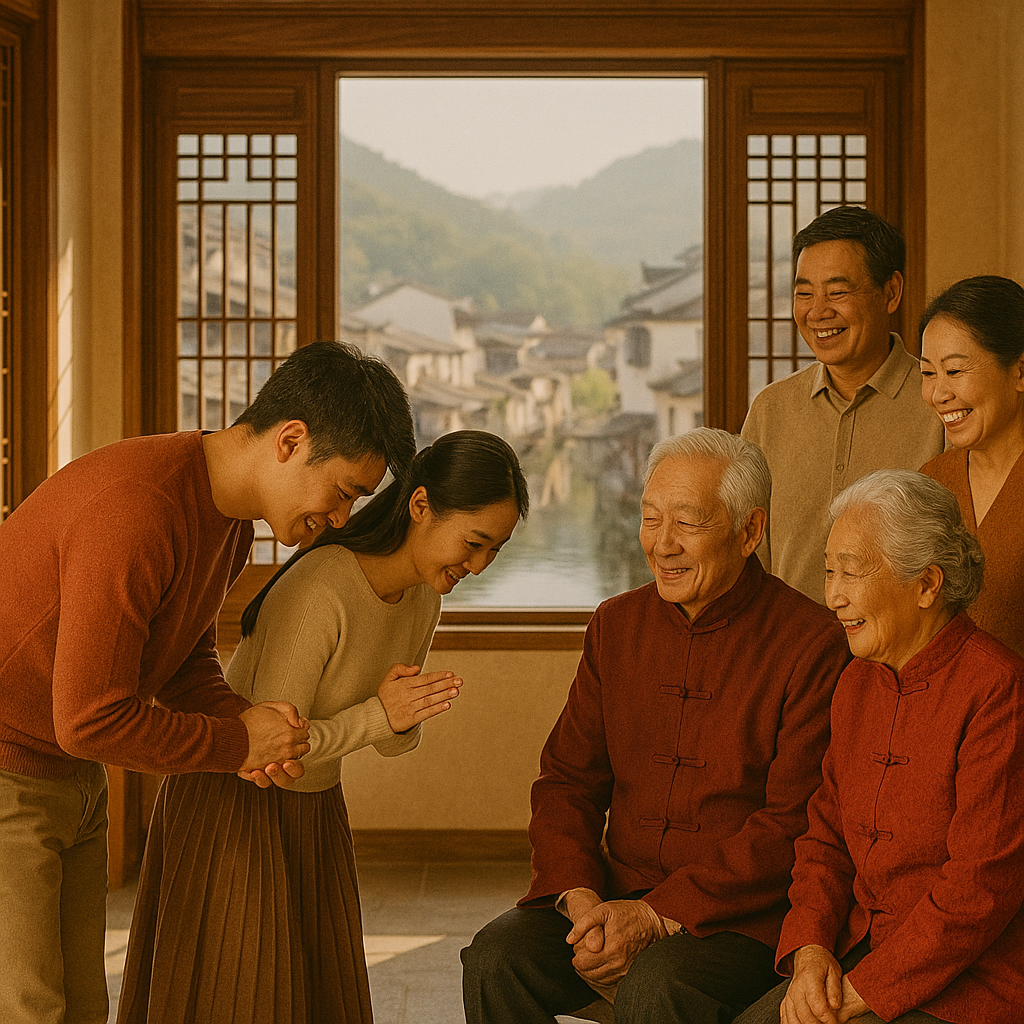
Why honoring your parents is more than a virtue in Chinese society—it’s a way of life.
Family First: Understanding the Heart of Chinese Culture
When you begin learning Mandarin, you quickly realize something profound—so much of the language is shaped by relationships. The way you refer to your parents, siblings, elders, or even in-laws isn’t just a matter of vocabulary—it’s a window into how deeply rooted family is in Chinese culture.
At the core of this value system is a powerful concept called filial piety (孝, xiào). It’s not a phrase most Western learners grow up hearing, but in China, it’s one of the oldest, most respected principles guiding behavior, social structure, and identity.
From Confucian philosophy to modern family dinners, the idea of honoring one’s parents and ancestors is central to what it means to be a good person in Chinese society. Children are taught to respect, obey, and care for their elders—not just out of politeness, but out of deep moral obligation. And this isn’t limited to parents—it often extends to grandparents, great-uncles, and sometimes even distant relatives.
If you’re learning Mandarin or preparing to spend time in a Chinese-speaking country, understanding filial piety will give you important cultural insight. In this article, we’ll explore the role of family in Chinese life, how filial piety shapes language and customs, and what it means in everyday interactions.
1. What Is Filial Piety (孝, xiào)?
Filial piety is the Confucian virtue of showing respect, care, and loyalty to one’s parents, elders, and ancestors. It’s not just about being nice—it’s a moral duty that forms the foundation of personal ethics and social harmony in Chinese philosophy.
The idea dates back thousands of years and was formalized in classic Confucian texts like The Analects and The Classic of Filial Piety. According to these teachings, if everyone fulfills their role within the family—especially the younger generation toward the older—the entire society becomes more stable and virtuous.
In practice, this includes:
Obeying your parents’ wishes, even as an adult
Living near or with elderly parents to care for them
Consulting family before making major decisions
Honoring ancestors with rituals or offerings
Avoiding actions that would bring shame to the family name
In modern China, Taiwan, and other Mandarin-speaking societies, filial piety remains a core value, even as family structures evolve.
2. How Filial Piety Shows Up in Daily Life
While the concept might sound abstract, filial piety is visible in daily interactions:
Language: There are numerous specific words in Mandarin for older and younger family members. For example, different terms exist for an older vs. younger brother (哥哥 gēge vs. 弟弟 dìdi), or a mother’s father (外公 wàigōng) vs. a father’s father (爷爷 yéye).
Living arrangements: It’s common for adult children to live with or near their parents, especially if the parents are elderly.
Career choices: Some people choose jobs or cities based on proximity to their family.
Gifts and holidays: Major holidays like Chinese New Year (春节 Chūnjié) are centered on returning home, giving gifts, and honoring ancestors.
Respectful behavior: Children are taught not to interrupt elders, to use polite language, and to avoid contradicting parents in public.
3. Filial Piety in the Language You Learn
Mandarin learners quickly encounter the linguistic reflections of filial values:
Titles are everything. It’s common to address older people by relational terms like 叔叔 (shūshu – uncle) or 阿姨(āyí – aunt) even if they’re not biologically related.
Family comes first in sentences. In introductions or descriptions, people often list their family members before talking about themselves.
Apologies include reference to family. Phrases like “对不起给你添麻烦了” (I’m sorry to trouble you) reflect a respect for others’ time and well-being—an extension of familial humility.
Understanding these nuances helps Mandarin learners go beyond “correct grammar” and speak in a way that aligns with Chinese cultural values.
4. Is Filial Piety Still Relevant Today?
While modern life has brought changes—such as more individualism, urban migration, and global mobility—filial piety continues to shape expectations and choices.
In fact, China’s laws reflect this value. The Elderly Rights Law (2013) encourages adult children to visit and support their aging parents or face legal consequences. Though rarely enforced, it illustrates how deeply ingrained the concept remains.
At the same time, young people today may reinterpret filial piety to fit new contexts: choosing to support their parents emotionally instead of just financially, or helping them explore new experiences in retirement rather than expecting them to live quietly at home.
FAQs: Family and Filial Piety in Chinese Culture
Q: What does "filial piety" mean in simple terms?
A: It means showing respect, care, and obedience toward your parents and elders.
Q: Is filial piety only about obeying parents?
A: No—it also includes taking care of them in old age, honoring their memory, and making decisions that reflect well on the family.
Q: How does it compare to Western family values?
A: Many cultures value family, but in Chinese culture, the obligations are often stronger, more formalized, and lifelong.
Q: Is filial piety practiced the same way in all Chinese-speaking regions?
A: The core values are shared across Mainland China, Taiwan, Singapore, and other communities—but expressions may vary slightly by region and generation.
Q: Do young people still believe in filial piety?
A: Yes, though interpretations evolve. Many younger Chinese express filial piety through emotional closeness and life decisions, rather than strict obedience.
Q: How can I show respect when visiting a Chinese family?
A: Greet elders first, use polite titles, bring a small gift, and avoid sitting or eating before being invited.
Learn Mandarin with Cultural Depth
At Polyglottist Language Academy, we believe learning a language means learning the culture behind the words. Our Mandarin courses don’t just teach vocabulary and grammar—we help you understand the values, etiquette, and family dynamics that shape real communication in Chinese.
👨🏫 Small group and private Mandarin classes
🌐 Online and in-person options in the Bay Area
🎓 Beginner to advanced levels
📅 Flexible scheduling for adults and teens
🧧 Lessons that include cultural context, family terms, and real-life conversation
👉 Click here to explore our Mandarin classes and sign up today!
Dive Deeper into Mandarin and Chinese Culture
Check out more of our blog posts to enrich your language learning journey:
What To Expect In Your First Adult Mandarin Class (And Why You’ll Love It)
How Mandarin Can Boost Your Career In The Bay Area Tech And Business Scene
Why Learning Mandarin As An Adult Is More Doable Than You Think
From Dumplings To Dialogues: How To Speak Mandarin At Bay Area Restaurants
Best Mandarin Classes For Busy Professionals In The Bay Area