
Introduction: Beyond Buongiorno—Finding Your Voice in Italy’s Markets
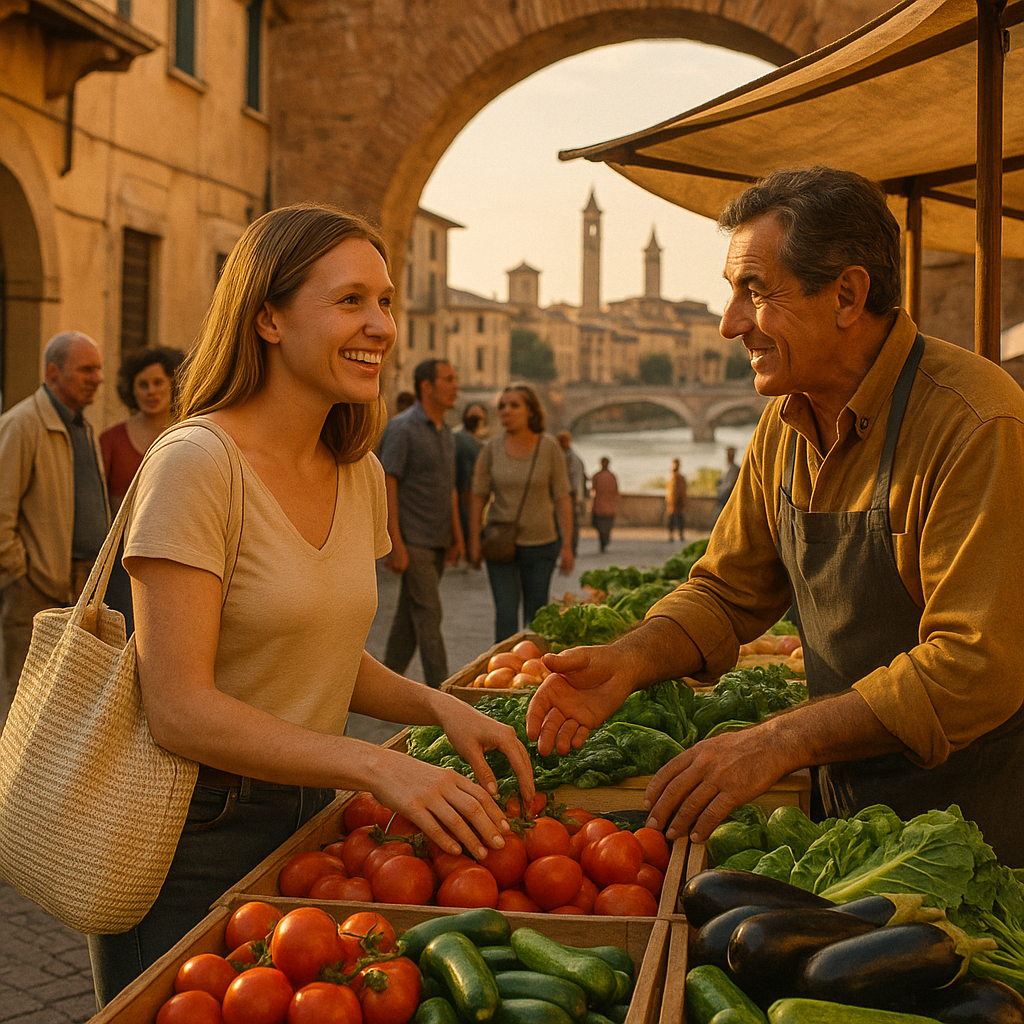
Picture this: it’s a sun-drenched morning in Florence. The smell of ripe peaches and freshly baked focaccia mingles with the chatter of vendors. You’re wandering through a bustling outdoor market, dazzled by pyramids of tomatoes, baskets of gleaming olives, and wedges of Parmigiano Reggiano the size of bricks.
You want to buy something—some fruit, a wedge of cheese, maybe that bottle of golden olive oil. You approach a stall, ready to point and smile. But before you can open your mouth, the vendor booms, “Dimmi, tesoro, cosa ti serve?”
Your brain freezes. Wait… what did they say? What do you say back? Why are people suddenly gesturing wildly?
Welcome to one of the most rewarding—and sometimes intimidating—moments of learning Italian: speaking at the market.
Markets are the beating heart of Italian towns and cities. More than just places to buy produce, they’re where life happens. Locals catch up on gossip, vendors passionately defend their tomatoes’ superiority, and negotiations unfold like friendly duels. It’s not merely commerce—it’s social theater.
For visitors and Italian learners, markets offer:
A chance to hear authentic spoken Italian
Exposure to regional accents and colloquial phrases
Opportunities to practice real-life conversation
Delicious cultural immersion
Yet navigating the market requires more than just vocabulary. Italians expect a certain rhythm of conversation, politeness, and participation. It’s not enough to point and say “uno di questo.” Locals appreciate when you:
Greet vendors properly
Ask polite questions
Express curiosity about products
Understand (or at least recognize) typical market expressions
And here’s the beautiful part: markets are forgiving places. Vendors are usually delighted to help learners practice their Italian—as long as you show respect and enthusiasm.
In this article, we’ll explore:
Essential Italian phrases for shopping at markets
How conversations typically unfold
Cultural expectations and market etiquette
Regional variations in language and customs
Tips for sounding more local
How to handle negotiations and prices
Mistakes to avoid
By the end, you’ll feel ready to step into any Italian market with confidence—and maybe even charm a few vendors along the way.
So grab your shopping bag, dust off your Italian phrases, and let’s dive into the art of speaking Italian at the market.
Why Markets Matter in Italy
Markets have existed in Italy since ancient Roman times. Today, they remain:
The source of the freshest ingredients
Cheaper than supermarkets
Social hubs where neighbors gather
From bustling city markets like Florence’s Mercato Centrale to small village squares, markets embody:
Regional culinary identity
Local pride in produce
The Italian belief that food is life
For language learners, they’re perfect “classrooms” to:
Hear real conversations
Practice spontaneous speaking
Absorb local culture
Starting the Conversation: Greetings Matter
Never walk up to a vendor and blurt out what you want. In Italy, greetings are sacred.
Always begin with:
Buongiorno! (Good morning!)
Buonasera! (Good evening!)
Salve! (Hello! Neutral and polite.)
Adding a polite title helps:
Buongiorno, signora! (Good morning, madam!)
Buonasera, signore! (Good evening, sir!)
Italians often greet warmly:
Ciao tesoro! (Hi, darling!)
Amore, cosa ti serve? (Love, what do you need?)
Don’t be surprised by these endearments—they’re part of the market charm!
Expressing Interest and Browsing
If you’re looking around, say:
Sto solo guardando. – I’m just looking.
Posso dare un’occhiata? – Can I have a look?
Curiosity is appreciated. Vendors love explaining products:
Cos’è questo? – What’s this?
È di stagione? – Is it seasonal?
È locale? – Is it local?
For example:
È parmigiano o grana? – Is it Parmigiano or Grana Padano?
Da dove viene? – Where’s it from?
Asking for Quantities
Italy uses the metric system. Know your weights:
un etto = 100 grams
mezzo chilo = half a kilo
un chilo = one kilo
Phrases:
Vorrei un etto di prosciutto crudo, per favore. – I’d like 100 grams of cured ham, please.
Mi dà mezzo chilo di mele? – Could you give me half a kilo of apples?
For loose items:
Quante ne vuole? – How many do you want?
Un sacchetto piccolo, grazie. – A small bag, please.
How Vendors Speak: Rapid-Fire Questions
Be ready for:
Che ti serve? – What do you need?
Solo questo? – Just this?
Li vuoi maturi o meno? – Do you want them ripe or less ripe?
Li vuoi scegliere? – Do you want to choose them yourself?
Don’t panic. Just reply:
Sì, grazie. – Yes, thank you.
No, va bene così. – No, that’s fine like this.
Un po’ più maturi, per favore. – A bit riper, please.
Talking About Prices
Asking the price:
Quanto costa? – How much does it cost?
Quanto viene al chilo? – How much per kilo?
Mi può dire il prezzo? – Could you tell me the price?
After hearing the price:
Va bene. – That’s fine.
È un po’ caro. – It’s a bit expensive.
Me ne fa un po’ di meno? – Can you do it for a bit less?
Haggling is more common at markets for:
Non-food items (clothes, souvenirs)
Bulk purchases
Toward the market’s closing time
For produce, prices are often fixed—but polite negotiation is possible.
Compliments Go a Long Way
Vendors glow when you praise their goods:
Che belli questi pomodori! – What beautiful tomatoes!
Ha un profumo buonissimo! – It smells wonderful!
Sembra freschissimo! – It looks so fresh!
Building rapport can:
Earn you better prices
Prompt vendors to pick the best produce for you
When You’re Not Sure
If you don’t understand:
Non ho capito. – I didn’t understand.
Può ripetere, per favore? – Could you repeat, please?
Parla troppo veloce. – You’re speaking too fast.
Italians will often slow down and explain.
Paying and Saying Goodbye
When you’re ready to pay:
Mi fa il conto, per favore? – Can you give me the total, please?
Tengo il resto. – Keep the change.
Parting words:
Arrivederci! – Goodbye!
Buona giornata! – Have a good day!
Alla prossima! – See you next time!
Regional Variations
Italy’s regions have unique market cultures and dialects.
Northern Italy
Formal, polite speech
Precise weight measurements
Example:
Mi dà due etti di bresaola, grazie.
Central Italy
More informal greetings
Friendly banter
Example:
Oh bella, cosa prendi oggi?
Southern Italy
Warm, expressive language
More likely to call you amore, tesoro, bello/a
Example:
Prendi questi pomodori, sono come caramelle!
Common Market Vocabulary
Produce:
pomodori – tomatoes
insalata – lettuce
mele – apples
fragole – strawberries
uva – grapes
Meats & Cheeses:
prosciutto crudo – cured ham
salame – salami
pecorino – sheep’s cheese
parmigiano – parmesan
mozzarella – mozzarella
Measurements:
etto – 100 grams
chilo – kilogram
pezzo – piece
sacchetto – bag
Mistakes to Avoid
Skipping greetings
Speaking English without trying Italian
Demanding prices aggressively
Touching produce without asking
Haggling rudely over tiny amounts
Benefits of Learning Market Italian
Speaking Italian at the market helps you:
Learn vocabulary in context
Gain confidence in conversations
Feel less like a tourist
Build local connections
Enjoy fresh, authentic food
Every visit becomes a language lesson—and a cultural adventure.
A Sample Market Dialogue
You: Buongiorno, signora!
Vendor: Buongiorno tesoro! Dimmi, cosa ti serve oggi?
You: Vorrei mezzo chilo di mele, per favore.
Vendor: Vuoi scegliere tu o faccio io?
You: Scelgo io, grazie.
Vendor: Perfetto. Solo queste?
You: Sì, quanto viene?
Vendor: Due euro.
You: Va bene. Ecco qua. Arrivederci!
Vendor: Grazie, bella! Alla prossima!
How to Practice Market Italian
Watch Italian YouTube videos of market visits.
Listen to audio lessons focusing on shopping vocabulary.
Role-play market conversations with a tutor or language partner.
Visit local Italian markets in your city to practice.
At Polyglottist Language Academy, we integrate real-life scenarios like market shopping into our classes so you’re ready for authentic conversations.
FAQs About Speaking Italian at the Market
Q: Can I just speak English at Italian markets?
A: In tourist areas, vendors often speak English, but using even basic Italian is appreciated and can improve your experience.
Q: Is haggling expected?
A: It’s common for non-food items, but less so for produce. Always haggle politely.
Q: How much Italian should I know before going to the market?
A: Even a few phrases help enormously. Greetings, numbers, and basic questions go a long way.
Q: Are markets cheaper than supermarkets?
A: Often, yes—especially for seasonal produce. Markets also offer higher quality and freshness.
Q: Do I have to weigh my produce myself?
A: Usually, the vendor weighs it for you. In supermarkets, you might weigh it yourself.
Q: Can I touch the produce?
A: Ask first! Vendors prefer to handle produce to protect its quality.
Q: Are markets open every day?
A: It varies by town. Many markets run several mornings a week, closing by lunchtime.
Q: Are markets cash-only?
A: Many still prefer cash, though larger markets increasingly accept cards.
Ready to Talk Like a Local?
At Polyglottist Language Academy, we believe learning Italian means connecting with real life—from markets to piazzas. Our classes:
Teach practical vocabulary for everyday scenarios
Prepare you for authentic interactions
Include cultural insights for smoother travel and living
Make learning fun and confidence-building
Ready to chat confidently at your local Italian market—or in Italy itself?
👉 Sign up for our Italian classes today!
And if you’re excited to keep exploring the world of languages and cultures, check out these other articles on our blog: