
What You Should Never Do at a Chinese Restaurant
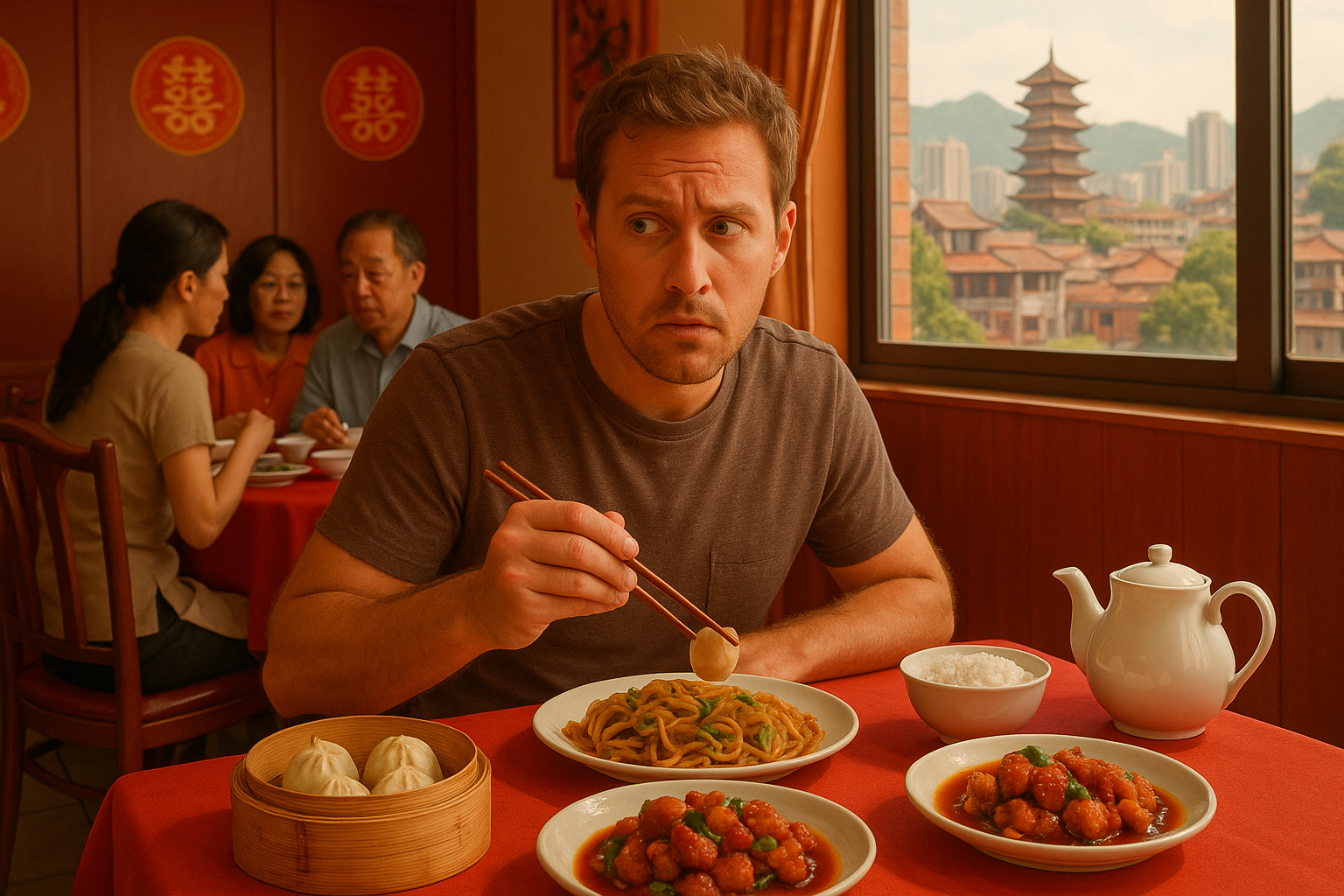
Avoid these common mistakes and enjoy your meal like a local
🥢 Introduction: It’s Not Just About the Food—It’s About the Culture
You step into a Chinese restaurant—maybe it’s a little family-run spot tucked into a side street in Beijing, or a buzzing dim sum house in San Francisco’s Chinatown. You smell garlic, soy, and sizzling spices in the air. You’re handed chopsticks and a menu, and you’re excited to dive in.
But here’s the thing: dining at a Chinese restaurant isn’t just about ordering delicious food. It’s also about respecting the rituals, manners, and expectations that come with the experience.
Many travelers and even well-meaning locals unintentionally commit cultural faux pas at Chinese restaurants—not because they’re rude, but because they simply don’t know the unspoken rules. From how to sit and share dishes to how (not) to use your chopsticks, there’s a lot more going on than meets the eye.
This article will help you navigate Chinese restaurant etiquette with ease. You’ll learn what not to do—along with helpful alternatives—so you can eat confidently, respectfully, and without drawing the wrong kind of attention. Whether you're dining in China or at an authentic Chinese restaurant abroad, these tips will keep you in good standing with your hosts, servers, and dining companions.
🚫 What You Should Never Do at a Chinese Restaurant
1. Don’t Stick Your Chopsticks Upright in Rice
This is one of the biggest no-nos. Why? Because it resembles incense sticks used at funerals and is considered extremely inauspicious. Always rest your chopsticks neatly on the side of your plate or on a chopstick rest.
2. Don’t Start Eating Before the Eldest Person
In Chinese dining culture, hierarchy and respect for elders matter. Always wait until the oldest person at the table begins eating or signals that everyone may start.
3. Don’t Take the Best Piece for Yourself First
Dishes are typically shared, and grabbing the most desirable or premium pieces (like the biggest shrimp or a prized cut of meat) without offering it to others first can be seen as greedy or impolite. Offer those pieces to your elders or guests.
4. Don’t Flip the Fish
When eating whole fish—a common and symbolic dish—never flip it over to get to the other side. In Southern China, especially among coastal communities, this symbolizes a fishing boat capsizing. Instead, carefully lift the backbone to access the other side.
5. Don’t Tap Your Bowl with Chopsticks
Tapping your bowl with chopsticks is associated with beggars asking for food and can be interpreted as disrespectful. Avoid it—even if you’re just trying to get someone’s attention.
6. Don’t Pour Your Own Drink First
In Chinese hospitality, it’s customary to pour tea or drinks for others before yourself, especially for elders or guests. If someone pours for you, pour for them next as a gesture of mutual respect.
7. Don’t Ask for Soy Sauce or Salt Without Tasting the Food First
In many Chinese restaurants, especially those serving refined or regional dishes, asking for condiments before tasting is like insulting the chef. Try the food as it is before asking for additions.
8. Don’t Assume the Server Will Split the Bill
The concept of splitting the bill evenly (or asking the server to calculate individual amounts) is not standard practice. Usually, one person pays—and sometimes people even “fight” for the bill as a show of generosity.
9. Don’t Leave Your Rice Bowl Full
Finishing your rice (but not necessarily every dish) is a sign that you’ve enjoyed your meal. Leaving rice in your bowl, especially if you were served by someone else, can signal disrespect or wastefulness.
10. Don’t Be Loud or Boisterous—Unless Everyone Else Is
Chinese restaurants vary: some are loud and lively, while others are more formal. Match the tone of your surroundings. Excessive noise in a calm setting, or too much silence in a festive one, can feel out of place.
✅ What to Do Instead
Offer food to others before serving yourself.
Hold your rice bowl close to your mouth and eat with care.
Thank your host or server with a smile and, if appropriate, a short phrase in Mandarin like "谢谢" (xièxie).
Observe what locals do—when in doubt, follow their lead.
❓ FAQ: Chinese Dining Etiquette
Q: Is it okay to use a fork if I can’t use chopsticks?
A: Yes, especially in more international or urban restaurants. But trying chopsticks is always appreciated!
Q: Should I tip?
A: Tipping is not customary in mainland China, but in some touristy areas or outside China, it may be expected. Always check local norms.
Q: What if I have dietary restrictions?
A: Learn or write down key phrases in Mandarin (like “I don’t eat pork” or “I’m allergic to peanuts”) to show servers. Apps like Pleco can help.
Q: Is slurping considered rude in China?
A: Not usually. Slurping noodles or soup can actually signal enjoyment, especially in casual eateries.
Q: What should I say to compliment the food?
A: Try "很好吃" (hěn hǎo chī) — it means “very delicious!” and always makes the chef or server smile.
🥡 Want to Go Beyond the Menu?
If you're fascinated by the cultural depth behind a Chinese meal, imagine how much more you could discover by learning the language. At Polyglottist Language Academy, we offer Mandarin classes designed for adults who want to understand Chinese not just linguistically, but culturally.
Whether you're based in San Francisco, Oakland, Berkeley, San Jose, or anywhere online, we offer small-group and private classes that help you speak Mandarin with confidence—and eat like a local the next time you find yourself at a Chinese restaurant.
👉 Sign up for a Mandarin class today and explore the richness of Chinese culture through language.
🍜 More Articles to Satisfy Your Curiosity
What To Expect In Your First Adult Mandarin Class (And Why You’ll Love It)
How Mandarin Can Boost Your Career In The Bay Area Tech And Business Scene
Why Learning Mandarin As An Adult Is More Doable Than You Think
From Dumplings To Dialogues: How To Speak Mandarin At Bay Area Restaurants
Best Mandarin Classes For Busy Professionals In The Bay Area