
Lost in Translation? Why Learning Mandarin Transforms Your China Experience
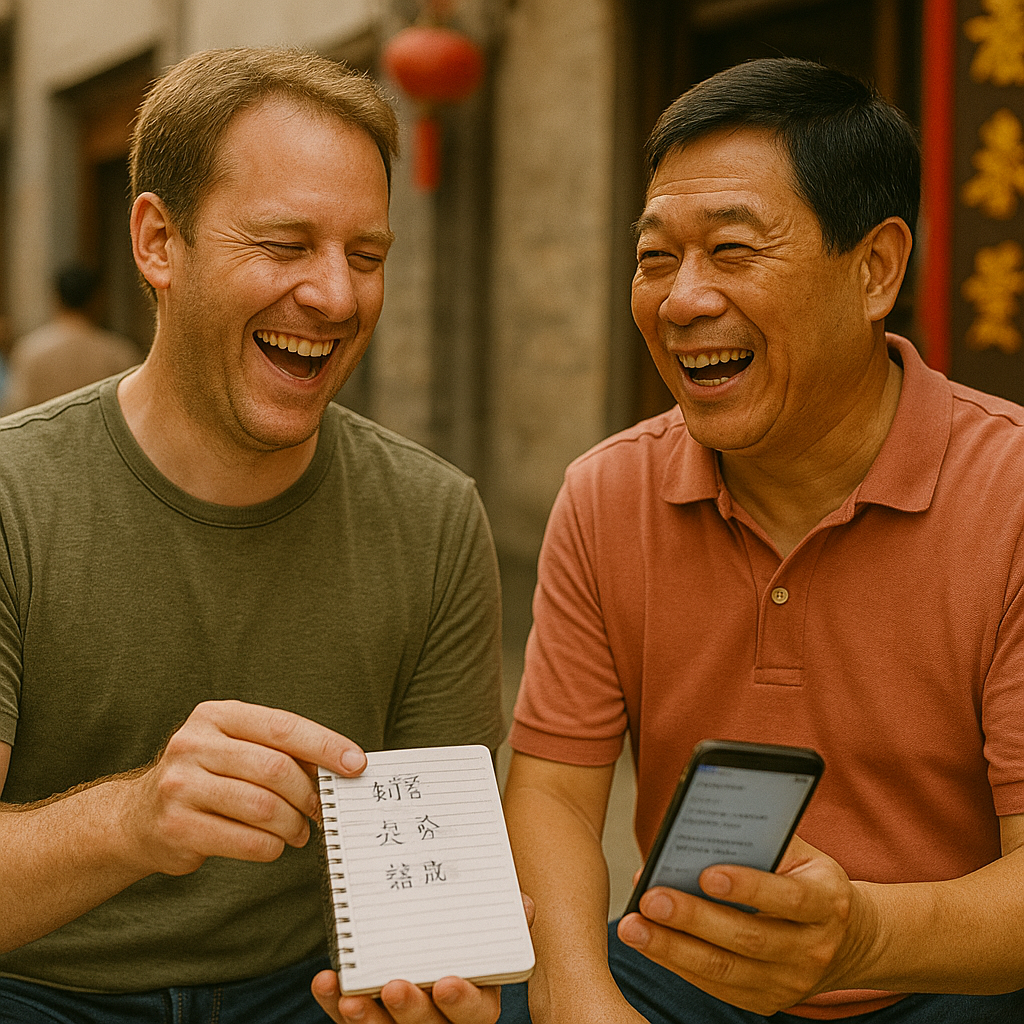
Imagine stepping off the plane and into the dizzying bustle of Shanghai’s Pudong skyline, or wandering through the ancient hutongs of Beijing. You’re surrounded by neon lights, the aroma of sizzling street food, and the rhythmic hum of conversations—none of which you understand. In these moments, the vast linguistic and cultural divide between you and the people around you can feel like an unbridgeable chasm. You’re not just abroad; you’re truly lost in translation.
For many travelers and expatriates, Mandarin is the Everest of languages: imposing, mystifying, and often avoided in favor of simplistic English exchanges. Yet, the very act of learning Mandarin can transform a bewildering adventure into a deeply enriching, life-changing experience. It unlocks the door to authentic human connections, nuanced cultural insights, and a profound respect for China’s millennia-old heritage.
In this article, we’ll explore how learning Mandarin reshapes your journey through China—from fumbling through transactions at a local market to forging lasting friendships over cups of fragrant tea. We’ll delve into the cultural keys embedded in the language, share real-world stories of transformation, and provide practical tips to embark on your own Mandarin-learning journey. By the end, you’ll see that Mandarin isn’t just a tool for communication—it’s the key to unlocking the heart and soul of China.
1. Beyond Words: The Cultural Significance of Mandarin
1.1 Language as a Cultural Mirror
Mandarin Chinese is more than a collection of sounds and characters; it’s a living repository of Chinese history, philosophy, and worldview. Consider the character “仁” (rén)—often translated as “benevolence” or “humaneness.” In Confucian thought, which profoundly shaped Chinese society, rén represents the ideal relationship between people. By learning the very character, you begin to grasp centuries of ethical discourse and social norms that continue to shape modern interactions in China.
1.2 Tone and Context
Mandarin’s tonal nature (four primary tones plus a neutral tone) reflects the subtlety and precision valued in Chinese communication. A misplaced tone can turn “mā” (妈, mother) into “mǎ” (马, horse), leading to comical misunderstandings—but also demonstrating the importance of careful listening and cultural sensitivity. Mastering tones encourages learners to tune into others’ feelings, intentions, and unspoken cues, fostering deeper empathy.
1.3 Idioms and Proverbs
Chinese idioms (成语, chéngyǔ) and proverbs are like linguistic time capsules. For instance, “画蛇添足” (huà shé tiān zú)—“draw legs on a snake”—teaches the folly of overdoing something. Learning these compact expressions offers direct insight into centuries-old stories and moral lessons, enriching your understanding far beyond what a textbook translation can provide.
2. Practical Advantages for Travelers and Expats
2.1 Navigating Daily Life
From ordering xī’ān yángròu pào mó (西安羊肉泡馍)—a hearty lamb and bread stew—to haggling over souvenirs in Yunnan markets, Mandarin makes the difference between feeling like an observer and participating fully in everyday life. A simple “请给我这个,多少钱?” (“Please give me this; how much is it?”) can open doors to local recommendations, insider bargaining tips, and genuine smiles from vendors.
2.2 Professional and Academic Opportunities
China’s economic powerhouse status has created unprecedented opportunities for professionals and students alike. Speaking Mandarin boosts your resume, signals cultural adaptability, and often serves as the deciding factor in competitive job markets. Whether you’re teaching English in a Beijing university or negotiating a joint-venture contract in Shenzhen, Mandarin fluency positions you as a trusted colleague and negotiation partner.
2.3 Social Integration
Knowing just enough Mandarin to chat with your neighbors or attend a local kāfēi huì (咖啡会—coffee meetup) can transform isolation into camaraderie. Shared language fosters trust, leading to invitations for home-cooked dinners, participation in festive celebrations like Chinese New Year, and even lifelong friendships that transcend borders.
3. Personal Transformations: Stories from the Field
3.1 The Solo Traveler Who Found Family
Emily, a solo traveler from Australia, arrived in Chengdu with a phrasebook and a curious spirit. Initially, every taxi ride was a game of charades, and menus were random stabs in the dark. After six months of weekly Mandarin classes and daily practice with local café owners, Emily found herself speaking comfortably with her host family, helping cook dumplings, and even co-hosting language exchange nights. “Learning Mandarin didn’t just help me communicate,” she says. “It gave me a second family.”
3.2 The Executive Who Closed the Deal
Mark, an American VP of Sales, was tasked with securing a multi-million-dollar partnership with a Shanghai-based tech firm. He knew enough basic phrases to be polite, but negotiations faltered—until he invested in intensive Mandarin coaching. By demonstrating respect for his counterparts’ language and culture, Mark not only closed the deal but also established a personal rapport that led to future collaborations. “Speaking their language was a sign of respect that money simply couldn’t buy,” he recalls.
3.3 The Enthusiast Who Became a Bridging Figure
Li Wei, a Chinese-American student studying abroad in Beijing, initially relied solely on English classmates for social interactions. Frustrated by missing out on local culture, she committed to an immersive Mandarin program. Soon, Li Wei was volunteering as a translator at community events, bridging gaps between expats and locals. “My language skills turned me into a connector,” she reflects, “one who fosters mutual understanding in both directions.”
4. Overcoming Common Challenges in Learning Mandarin
4.1 Tackling Tones and Pronunciation
Tonal mastery requires patience and practice. Here are a few strategies:
Shadowing audio recordings: Mimic native speakers’ intonation and rhythm.
Tone-pair drills: Practice sequences of syllables with different tone combinations.
Recording and playback: Compare your pronunciation to native speakers and adjust.
By integrating these methods into daily study routines, learners can demystify tones and gain confidence.
4.2 Memorizing Characters
With over 50,000 Chinese characters in existence, memorization can seem daunting. Focus on the most common 3,000–4,000 characters, which cover over 99% of written texts. Techniques include:
Radical analysis: Break down complex characters into simpler components.
Spaced repetition: Use flashcard apps that schedule reviews at optimal intervals.
Writing practice: Reinforce muscle memory through regular character writing.
4.3 Sustaining Motivation
Language learning is a marathon, not a sprint. To stay motivated:
Set clear, achievable goals: Aim to master 20 new words per week or hold a 5-minute conversation.
Celebrate milestones: Reward yourself for completing a textbook chapter or holding your first full exchange.
Join a community: Participate in language clubs, online forums, or local meetups to share progress and tips.
5. Practical Tips to Kickstart Your Mandarin Journey
5.1 Choosing the Right Learning Resources
Structured Courses: Enroll in programs like HSK preparation courses or university classes for systematic progression.
Language Apps: Supplement your studies with apps like Duolingo or Pleco for on-the-go practice.
Native Media Immersion: Watch Chinese dramas with subtitles, listen to podcasts, or read graded readers to reinforce real-world usage.
5.2 Immersive Techniques
Language Exchange Partners: Partner with a native speaker who wants to learn your language.
Label Your Environment: Stick Post-it notes with Chinese labels on household items.
Daily Life Integration: Practice ordering food, asking for directions, or making small talk in Mandarin whenever possible.
5.3 Leveraging Technology
Speech Recognition Tools: Use apps that analyze pronunciation and provide instant feedback.
Online Tutoring: Platforms like italki offer one-on-one lessons tailored to your level and goals.
Virtual Reality (VR) Simulations: Some cutting-edge programs let you navigate virtual Chinese streets to practice conversational skills in context.
6. The Long-Term Rewards of Mandarin Mastery
6.1 Deeper Cultural Appreciation
Fluency reveals layers of cultural nuance inaccessible to casual travelers. You’ll appreciate the poetic beauty of Tang dynasty poems in their original form, grasp the wordplay in a Chinese film, and understand subtle social codes—like the etiquette of toasting during yàn huì (宴会, banquets).
6.2 Cognitive Benefits
Research shows that bilingualism enhances cognitive flexibility, memory retention, and problem-solving skills. Tackling Mandarin’s tonal system and logographic script exercises different brain regions, strengthening mental agility.
6.3 Professional and Personal Growth
Beyond career advancement and social integration, learning Mandarin cultivates resilience, discipline, and cross-cultural empathy—qualities that enrich all aspects of life, from personal relationships to global awareness.
Frequently Asked Questions
How long does it take to achieve conversational fluency in Mandarin?
Most learners reach a basic conversational level (HSK 3) in 6–12 months of consistent study, averaging 5–10 hours per week. Advanced fluency (HSK 5–6) typically requires 2–3 years of immersion and dedicated practice.Is it necessary to learn Chinese characters to speak Mandarin?
While you can speak and understand spoken Mandarin using pinyin alone, learning characters deepens comprehension, facilitates reading, and opens doors to written culture—so they’re highly recommended.Can I learn Mandarin on my own, or do I need a teacher?
Self-study is possible with apps and textbooks, but a teacher or tutor provides structured guidance, personalized feedback, and cultural context that accelerate progress.What are the best strategies for mastering tones?
Regular tone-pair drills, shadowing native audio, and using tone-marking apps help train your ear and mouth. Recording yourself and comparing with native speakers also reinforces accuracy.How can I maintain motivation during plateaus?
Set micro-goals, celebrate small achievements, switch up study methods, and join language communities for support and accountability.Are there regional variations I should be aware of?
Yes—Mandarin as spoken in Beijing differs slightly from that in Taiwan or Singapore in pronunciation, vocabulary, and expressions. Choose a focal accent based on your goals, but stay adaptable.How much does an average language course cost?
Prices vary widely: group classes can range from €200–€600 per 10-week term, while private tutoring may cost €25–€50 per hour. Many providers offer package discounts.Will learning Mandarin help me in other areas?
Absolutely—language learning boosts cognitive skills, improves memory, enhances cultural empathy, and demonstrates adaptability—traits valued in all fields.
At Polyglottist Language Academy, we believe that Mandarin is more than just a subject to study—it’s a pathway to unforgettable experiences and lifelong growth. Whether you’re a curious traveler, an ambitious professional, or a passionate hobbyist, our expert instructors and immersive courses are designed to guide you from beginner phrases to confident conversation.
Ready to transform your China experience?
👉 Sign up for our Mandarin classes today and start unlocking the rich tapestry of Chinese language and culture!
Explore More on Our Blog
What To Expect In Your First Adult Mandarin Class (And Why You’ll Love It)
How Mandarin Can Boost Your Career In The Bay Area Tech And Business Scene
Why Learning Mandarin As An Adult Is More Doable Than You Think
From Dumplings To Dialogues: How To Speak Mandarin At Bay Area Restaurants
Best Mandarin Classes For Busy Professionals In The Bay Area