
Top Mandarin Phrases to Use in a Chinese Restaurant, Train Station, or Hotel
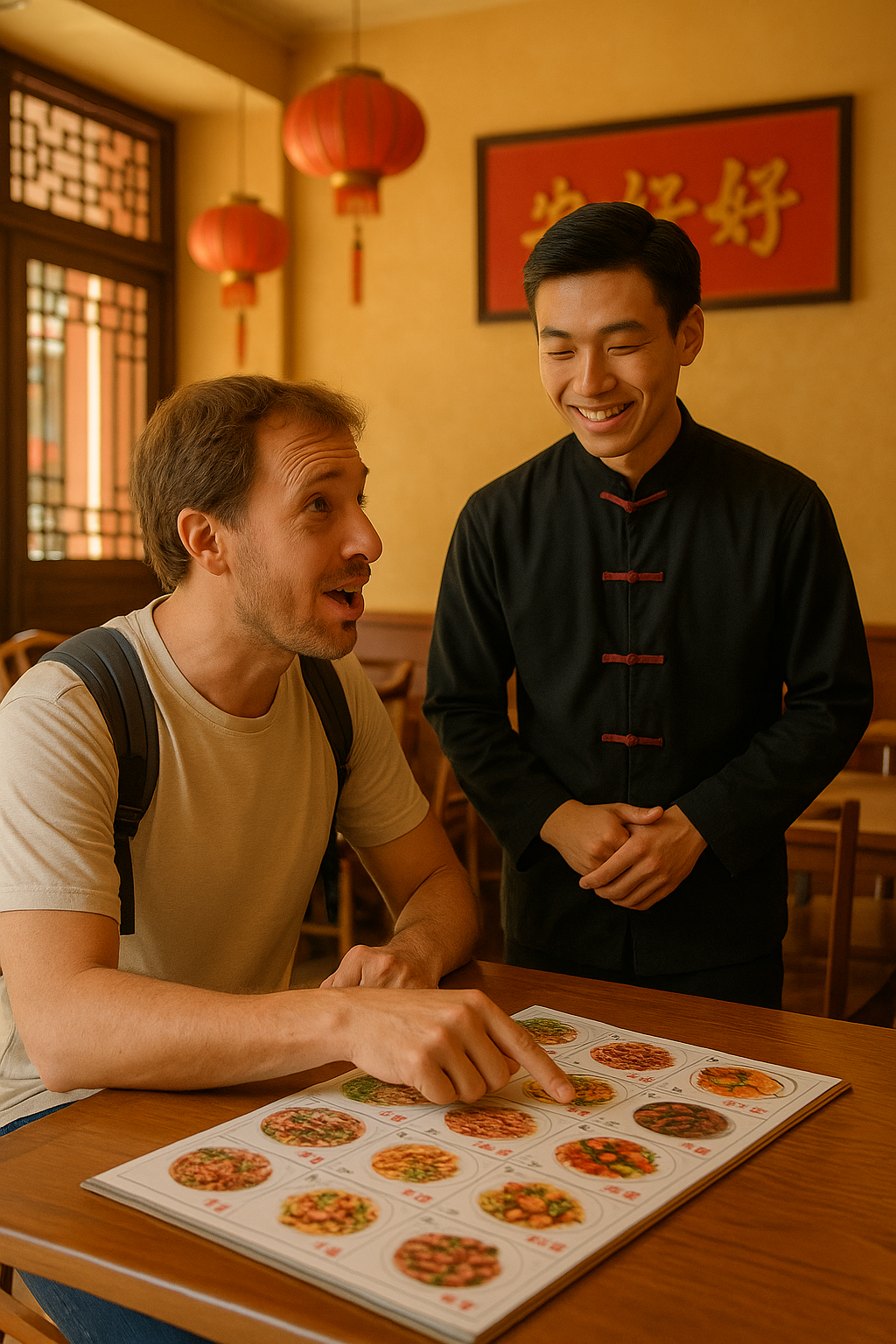
Picture this: you step into a bustling北京 (Běijīng) 烤鸭 (kǎoyā) restaurant, the air thick with the aroma of honey-glazed duck and sizzling scallions. Or perhaps you find yourself in the grand hall of 上海 (Shànghǎi) 火车站 (huǒchēzhàn), the PA system announcing departures every few minutes. Later, you check into a sleek 深圳 (Shēnzhèn) 酒店 (jiǔdiàn), and the front-desk attendant greets you with a courteous “欢迎光临!” (huānyíng guānglín – “Welcome!”).
In each scenario—a restaurant, a train station, or a hotel—the happy traveler is one who can navigate everyday interactions with ease and confidence. Learning a few essential Mandarin phrases transforms you from a wide-eyed tourist into a savvy explorer. Instead of waving menus around or pointing at characters you don’t understand, you’ll place orders like a local, ask for platform changes with clarity, and secure the best room at your hotel without miscommunication.
This comprehensive guide will equip you with the top 100+ Mandarin phrases you need—divided into dining, transportation, and accommodation contexts. You’ll gain insights on pronunciation, useful classifiers, tone reminders, and cultural tips to ensure your interactions are both correct and polite. With practice, these phrases will roll off your tongue naturally, making every meal, train ride, and hotel stay an opportunity for genuine connection. Let’s dive in!
1. Essential Restaurant Phrases
1.1 Greeting and Seating
请进,请坐。 (qǐng jìn, qǐng zuò) – “Please come in, please have a seat.”
几位? (jǐ wèi?) – “How many people?”
有预约吗? (yǒu yùyuē ma?) – “Do you have a reservation?”
这是您预定的桌子。 (zhè shì nín yùdìng de zhuōzi) – “This is the table you reserved.”
1.2 Ordering Drinks
请给我一杯水。 (qǐng gěi wǒ yī bēi shuǐ) – “Please give me a glass of water.”
我要一杯冰的/热的…… (wǒ yào yī bēi bīng de/rè de…) – “I’d like a glass of iced/hot…”
你们有什么饮料推荐? (nǐmen yǒu shénme yǐnliào tuījiàn?) – “What drinks do you recommend?”
1.3 Reviewing the Menu
请给我菜单。 (qǐng gěi wǒ càidān) – “Please give me the menu.”
有什么本地特色菜? (yǒu shénme běndì tèsè cài?) – “What local specialties do you have?”
这个菜辣吗? (zhège cài là ma?) – “Is this dish spicy?”
有没有素食/清真选项? (yǒu méiyǒu sùshí/qīngzhēn xuǎnxiàng?) – “Are there vegetarian/Halal options?”
1.4 Placing the Order
我们要…… (wǒmen yào…) – “We’ll have…”
来一份…… (lái yī fèn…) – “One portion of…”
请不要加味精/香菜。 (qǐng bú yào jiā wèijīng/xiāngcài) – “Please don’t add MSG/cilantro.”
请稍等。 (qǐng shāo děng) – “Please wait a moment.”
1.5 Asking for the Bill
买单,谢谢。 (mǎidān, xièxie) – “Check, please. Thank you.”
可以分开付账吗? (kěyǐ fēnkāi fùzhàng ma?) – “Can we pay separately?”
一共多少钱? (yīgòng duōshǎo qián?) – “How much is it in total?”
我用现金/刷卡。 (wǒ yòng xiànjīn/shuākǎ) – “I’ll pay in cash/by card.”
1.6 Cultural Dining Tips
Use chopsticks properly (“筷子” kuàizi) and never stick them upright in rice.
To show appreciation: 好吃! (hǎochī!) – “Delicious!”
When toasting: 干杯! (gānbēi!) – “Cheers!”
Respect the eldest by serving them first.
2. Key Train Station Phrases
2.1 Arrival and Ticketing
请问,火车站在哪里? (qǐngwèn, huǒchēzhàn zài nǎlǐ?) – “Excuse me, where is the train station?”
我要买到……的票。 (wǒ yào mǎi dào… de piào) – “I want to buy a ticket to…”
二等座/一等座/商务座 (èr děng zuò/yī děng zuò/shāngwù zuò) – “Second class/First class/Business class seat.”
怎么买票? (zěnme mǎi piào?) – “How do I buy a ticket?”
2.2 Platform and Departure
第几站? (dì jǐ zhàn?) – “Which number stop/station?”
几号站台? (jǐ hào zhàntái?) – “Which platform number?”
还有几分钟开车? (háiyǒu jǐ fēnzhōng kāichē?) – “How many minutes until departure?”
请检查车票。 (qǐng jiǎnchá chēpiào) – “Please check your ticket.”
2.3 Onboard and Arriving
这是我的座位吗? (zhè shì wǒ de zuòwèi ma?) – “Is this my seat?”
请让我过去。 (qǐng ràng wǒ guòqù) – “Please let me pass.”
到……了吗? (dào… le ma?) – “Have we arrived at…?”
请提醒我到站。 (qǐng tíxǐng wǒ dào zhàn) – “Please remind me when we arrive.”
2.4 Common Station Signage
出站口 (chūzhànkǒu) – “Exit.”
进站口 (jìnzhànkǒu) – “Entrance.”
候车室 (hòuchēshì) – “Waiting room.”
行李寄存 (xínglǐ jìcún) – “Luggage storage.”
2.5 Train-Travel Tips
Keep tickets handy; tickets are checked upon boarding and exiting.
Watch for announcements: 请注意安全 (qǐng zhùyì ānquán) – “Please pay attention to safety.”
For delays: 列车晚点 (lièchē wǎndiǎn) – “The train is delayed.”
3. Vital Hotel Phrases
3.1 Checking In
我有一个预订。 (wǒ yǒu yī gè yùdìng) – “I have a reservation.”
我的名字是…… (wǒ de míngzì shì…) – “My name is…”
请给我房卡。 (qǐng gěi wǒ fángkǎ) – “Please give me the room key card.”
房间有wifi吗? (fángjiān yǒu WiFi ma?) – “Does the room have Wi-Fi?”
3.2 In-Room Requests
请帮我叫醒我。 (q�ng bāng wǒ jiàoxǐng wǒ) – “Please call me for a wake-up call.”
能再要一条毛巾吗? (néng zài yào yī tiáo máojīn ma?) – “Could I have another towel?”
空调太冷/不够冷。 (kōngtiáo tài lěng/bù gòu lěng) – “The air-con is too cold/not cold enough.”
我要退房。 (wǒ yào tuìfáng) – “I want to check out.”
3.3 Handling Issues
水龙头坏了。 (shuǐlóngtóu huài le) – “The faucet is broken.”
电视不能用。 (diànshì bùnéng yòng) – “The TV doesn’t work.”
请帮我修一下。 (qǐng bāng wǒ xiū yīxià) – “Please fix it for me.”
3.4 Hotel Facilities
早餐几点开始? (zǎocān jǐ diǎn kāishǐ?) – “What time does breakfast start?”
健身房在哪儿? (jiànshēnfáng zài nǎr?) – “Where is the gym?”
有游泳池吗? (yǒu yóuyǒngchí ma?) – “Is there a swimming pool?”
3.5 Hotel Etiquette Tips
Use two hands when presenting your room card to staff.
Offer a polite nod (“谢谢”) whenever staff assist you.
Tipping is not customary, but a small gift or thank-you note is appreciated.
4. Pronunciation & Tone Reminders
Mandarin has four tones (plus a neutral tone). Practice with each phrase, paying attention to tone marks in pinyin.
When in doubt, listen to audio examples on apps like Pleco or HelloChinese.
Slow down slightly; locals will appreciate the clarity and often respond in simpler Mandarin.
5. Cultural Tips for Smooth Interactions
Always pair your request with 请 (qǐng) to soften commands.
Use 谢谢 (xièxie) and 对不起 (duìbuqǐ) liberally to show gratitude and apology for disruptions.
Mirror locals’ volume and pace—most Chinese speak at a moderate volume in public spaces.
FAQs
Q: Can I use English in big hotels and stations?
A: In major hotels and international train stations, some staff speak English. However, using Mandarin phrases shows respect and often results in faster service.
Q: What should I do if I get the tones wrong?
A: Don’t worry—locals will usually ask you to repeat or switch to simpler words. Keep practicing; they appreciate the effort.
Q: Are there apps to help with these phrases?
A: Yes—Pleco for dictionaries, Google Translate for OCR, and HelloChinese for phrase drills are excellent companions.
Q: How many phrases do I need to remember?
A: Focus first on the 30–40 most critical phrases in each category. That core set will cover at least 80% of your interactions.
Q: Should I learn Simplified or Traditional characters?
A: Mainland China uses Simplified (简体字). If you plan to travel in Taiwan or Hong Kong, supplement with Traditional (繁體字) later.
Q: Is it rude to point at the menu or sign?
A: Not rude—pointing is perfectly acceptable when you’re unsure of pronunciation. Smile and say “这个” (zhège – “this one”).
Q: Can I pay with foreign cards at restaurants and hotels?
A: Some international hotels accept Visa/Mastercard. Most restaurants rely on WeChat Pay or Alipay—set those up before you travel.
Q: Do I need to learn the politeness particles?
A: Yes—adding 吧, 啊, and 呢 makes your speech natural and friendly. Practice them with each phrase.
Polyglottist Language Academy offers specialized travel Mandarin courses designed for real-world success:
Restaurant Mandarin Mastery: Essential dining phrases, chopstick etiquette, and cultural nuances
Transportation Mandarin Essentials: Train, subway, bus, and ride-hailing vocabulary
Hotel & Accommodation Etiquette: Check-in/out dialogs, facility requests, and polite expressions
Small Classes & Private Tutoring: Personalized feedback in groups of 3–6 or one-on-one online
Ready to speak Mandarin with confidence on your next trip? Sign up for our Mandarin courses today and make every interaction effortless.
Explore more on our blog:
What To Expect In Your First Adult Mandarin Class (And Why You’ll Love It)
How Mandarin Can Boost Your Career In The Bay Area Tech And Business Scene
Why Learning Mandarin As An Adult Is More Doable Than You Think
From Dumplings To Dialogues: How To Speak Mandarin At Bay Area Restaurants
Best Mandarin Classes For Busy Professionals In The Bay Area