
How Learning Mandarin Changes the Way You See China
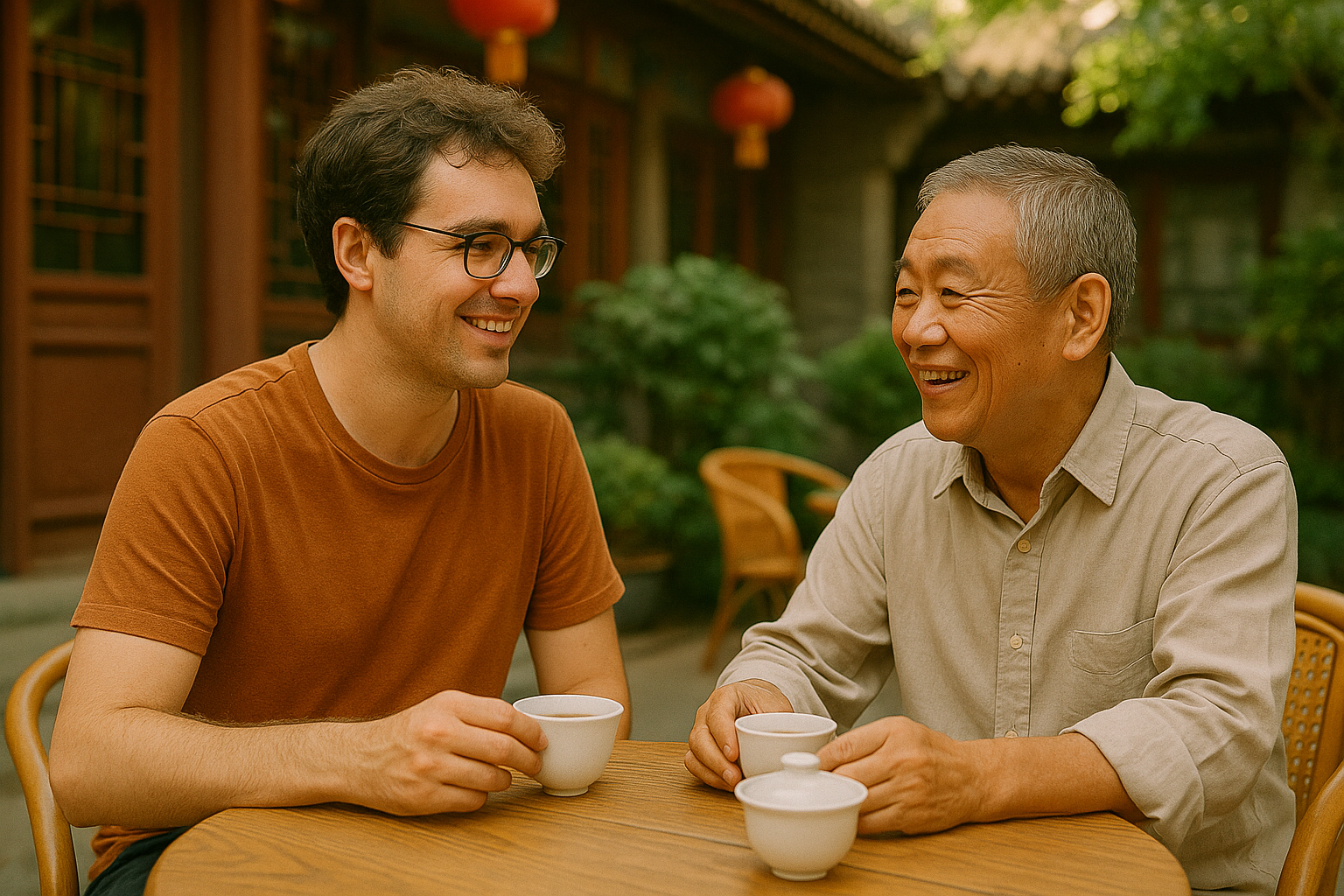
Imagine stepping off a plane into the kaleidoscope of China—towering skyscrapers shimmering in neon, centuries-old temples nestling amid winding alleys, vendors calling out the day’s freshest produce in rhythmic cadence. At first, it all feels beautiful yet bewildering: the characters on signs seem indecipherable, conversations swirl by too quickly to catch a single word, and you’re left grasping at context clues. But then you begin your Mandarin journey. With each new character learned and every tone practiced, China subtly, profoundly transforms before your eyes.
Suddenly, street signs become maps of meaning rather than foreign symbols. A simple greeting, “你好” (nǐ hǎo), opens doors to genuine smiles and invitations into homes. You notice the delicate interplay between words and culture—the way “面子” (miànzi) captures both “face” and social standing, or how “关系” (guānxì) reveals the importance of relationships in business and daily life. Learning Mandarin is not just about communication; it’s a lens that refracts China’s history, philosophy, and worldview into vivid clarity.
In this 3,000-word exploration, we’ll uncover ten profound ways that studying Mandarin reshapes your perceptions of China—from unlocking cultural nuances hidden in idioms to forging deeper human connections with locals. You’ll discover how language study turns you from a passive observer into an engaged participant: reading classical poetry with fresh insight, savoring the untranslatable flavors of regional cuisines, and appreciating the subtle politeness strategies encoded in everyday conversation. By the end, you’ll see that mastering Mandarin isn’t merely an academic achievement—it’s a gateway to understanding the soul of China.
1. From Symbols to Stories: Reading Characters as Cultural Windows
At first glance, Chinese characters can appear as inscrutable art. But once you learn their components—radicals and phonetics—they become stories in miniature. Take these examples:
明 (míng) combines 日 (rì, “sun”) and 月 (yuè, “moon”), evoking “brightness” and symbolizing harmony between yin and yang.
安 (ān) pairs 宀 (a roof radical) with 女 (nǚ, “woman”), conjuring the idea of “peace” under one’s roof.
福 (fú)—a beloved “good fortune” charm—melds 礻(shì, “ritual”) and 畐 (fú, “abundance”), reflecting ancient notions of blessing.
By learning characters, you inhale centuries of Chinese philosophy and worldview. Signs above temple gates, couplets flanking doorway posts, and even brand logos suddenly brim with layered meaning. Characters stop being rote symbols and start narrating China’s evolving values: respect for nature, filial piety, the interplay of heaven and earth.
2. Idioms as Cultural Compressed Time Capsules
Mandarin abounds with 成语 (chéngyǔ)—four-character idioms distilled from classical literature, historical events, or folk tales. These idioms encapsulate wisdom concisely:
画蛇添足 (huà shé tiān zú): “draw legs on a snake”—warning against overdoing something unnecessary.
对牛弹琴 (duì niú tán qín): “play lute to a cow”—illustrating futile efforts when the audience can’t appreciate them.
守株待兔 (shǒu zhū dài tù): “guarding a tree stump waiting for rabbits”—cautioning against lazy hopes of luck.
As you learn these idioms, you delve into the narratives of the Zuo Zhuan, the Shiji, or tales from the Three Kingdoms. Each idiom unlocks historical context and moral precepts that animate daily conversation and public discourse.
3. The Tone of Respect: Unpacking Politeness and Face (面子)
Mandarin isn’t just about words—it’s about social harmony. Grasping phrases like:
请 (qǐng) to invite or politely request,
麻烦 (máfan) to express “sorry to trouble you,”
您 (nín) as the respectful form of “you,”
teaches you how Chinese speakers navigate respect and hierarchy. The concept of 面子 (miànzi)—saving face—pervades interactions, from deflecting praise (“哪里,哪里”) to offering a gift (“小意思” meaning “just a small token”). Studying these nuances helps you understand why a straightforward “no” is often replaced with “我看一下” (wǒ kàn yi xià – “let me take a look”) and why compliments are met with modest denials.
4. Real-World Immersion: Reading Signs, Menus, and Billboards
Everyday ventures into the market become mini-learning adventures. With Chinese under your belt, you can:
Decode ingredient lists on packaged snacks: 糖 (táng, “sugar”), 盐 (yán, “salt”), 辣椒 (làjiāo, “chili”).
Understand promotional billboards: 限时特价 (xiànshí tèjià – “limited-time special price”), 买一送一 (mǎi yī sòng yī – “buy one get one free”).
Navigate transport hubs: 换乘 (huànchéng – “transfer”), 出租车 (chūzūchē – “taxi”), 前门 (Qiánmén – a famous Beijing district).
These small victories ground your learning in practical triumphs, boosting confidence and fueling curiosity about regional vocabulary differences—like 火锅 (huǒguō) menus in Chengdu versus 麻辣烫 (málàtàng) stalls in Shanghai.
5. New Depth in Cultural Content: Films, Literature, and Music
Once you decode subtitles and lyrics, Chinese films and songs come alive:
Films: Dialogues in In the Mood for Love (花樣年華) or Let the Bullets Fly (让子弹飞) reveal subtext lost in translation—nuances of tone, wordplay, and slang.
Literature: Reading Lu Xun’s short stories or Eileen Chang’s novels in original text illuminates stylistic choices and cultural commentary more vividly than translated editions.
Music: Pop ballads by Jay Chou or rap by Higher Brothers carry idiomatic expressions, regional accents, and contemporary slang that offer cultural snapshots.
As your listening and reading comprehension deepen, you’ll appreciate how China’s rapid modernization clashes or melds with tradition—stories that resonate differently in Mandarin than in translation.
6. Unlocking Historical Narratives: Beyond Museum Plaques
In museums, simple exhibit labels—written in Chinese—become portals:
兵马俑 (bīngmǎ yǒng): You learn that 臂 (bì) means “arm,” 马 (mǎ) “horse,” and 俑 (yǒng) “clay figurine,” painting a picture of Qin dynasty funerary practices.
宫廷 (gōngtíng): “imperial palace,” sheds light on dynastic court life with words like 后妃 (hòufēi, “empress consort”) and 太监 (tàijiàn, “eunuch”).
Rather than skimming English labels, you engage with original Chinese captions, gaining richer insights into local perspectives on heritage.
7. Building Authentic Relationships: Beyond “Tourist Mandarin”
When you greet a vendor in Lijiang or strike up conversation at a Shanghai café—using correct tones, honorifics, and local idioms—people respond differently. Instead of rehearsed tourist phrases, they treat you as someone making genuine effort:
A tea shop owner explains subtle flavor notes of 铁观音 (Tiěguānyīn).
A taxi driver shares stories of local festivals using 地道 (dìdào, “authentic”) dialect expressions.
Fellow students invite you home for homemade dumplings, using 温馨 (wēnxīn, “warmhearted”) hospitality.
Your Mandarin skills pave the way for spontaneous invitations and candid cultural exchange—moments that redefine your understanding of China as a tapestry of personal stories rather than a scripted itinerary.
8. Seeing Society Through Local Media and News
Reading Chinese news sites like 人民网 (People’s Daily Online) or watching CCTV’s 焦点访谈 (Focus Interview) in Mandarin offers unfiltered access to public discourse. You’ll notice:
Government messaging styles and keywords reflecting national priorities (e.g., “共同富裕” gòngtóng fùyù – “common prosperity”).
How social media platforms like 微博 (Weibo) or 抖音 (Douyin) frame trending topics, memes, and public debates.
Regional news outlets in Guangdong versus Beijing, revealing contrasting local concerns and linguistic flavor.
Such immersion lets you see China’s complexities—economic initiatives, cultural revival campaigns, and citizen voices—in their authentic voice.
9. Reframing Food and Travel Experiences
Knowledge of 地道 (dìdào, “authentic”) regional terms elevates culinary adventures. Rather than blindly ordering “noodle soup,” you can request 兰州拉面 (Lánzhōu lāmiàn) with specific ingredients, discuss honey-glazed 烤鸭 (kǎoyā) nuances in Beijing, or understand menu specials in Taiwanese night markets:
Recognize descriptors like 微辣 (wēi là, “mildly spicy”) versus 特辣 (tè là, “extra spicy”).
Ask for traditional preparations: 蒸饺 (zhēngjiǎo, “steamed dumplings”) vs. 锅贴 (guōtiē, “pan-fried potstickers”).
Learning the language turns eating into an interactive cultural lesson, transforming every meal into a narrative of local history, ingredients, and culinary philosophy.
10. Personal Growth: Patience, Perspective, and Resilience
Mandarin’s challenges—mastering tones, memorizing characters, navigating grammar—foster personal traits that extend beyond language:
Patience: Embracing incremental progress in character recognition mirrors a broader acceptance of life’s unfolding journey.
Perspective: Understanding idioms and proverbs shifts your worldview, showing how concepts like “harmony” or “collective well-being” differ from Western individualism.
Resilience: Every pronunciation mistake or misunderstood phrase becomes a learning opportunity, reinforcing growth mindset.
As you conquer each linguistic hurdle, you cultivate empathy and adaptability—skills that reshape not only how you see China, but how you engage with any new culture or challenge.
FAQs
Q: How long before I start noticing these changes in perception?
A: Many learners report that by 3–4 months of consistent study (30–45 minutes daily), they begin to think differently—spotting character stories on signs, appreciating idioms in conversation, and recognizing social nuances.
Q: Do I need to learn both Simplified and Traditional characters?
A: It depends on your travel plans. Mainland China uses Simplified characters; Taiwan, Hong Kong, and many overseas communities use Traditional. You can start with one and add the other later—your knowledge of radicals and stroke patterns will transfer.
Q: Can I experience cultural insights without traveling?
A: Absolutely. Reading original-language blogs, watching Chinese dramas or variety shows, and participating in online language exchanges offer windows into local life and mindset.
Q: What role do tones play in cultural understanding?
A: Beyond meaning, tones carry emotional tone and formality. A mispronounced tone can change not only word meaning but also the perceived attitude—so mastering tones deepens cultural authenticity.
Q: How can I practice Mandarin in my hometown?
A: Join local Meetup groups, practice with language-exchange partners on apps like Tandem and HelloTalk, or find community events at cultural centers. Spending just 15 minutes a day speaking with natives can accelerate insight.
Q: Are there specific resources for cultural idioms and proverbs?
A: Yes—books like A Dictionary of Chinese Idioms (汉语成语词典) and online platforms such as The Chairman’s Bao offer graded reading with cultural notes on idioms.
Q: How does learning Mandarin affect business travel?
A: Knowing formal registers, honorifics, and business-culture vocabulary (e.g., 合作伙伴 hézuò huǒbàn – “business partner”) builds trust, demonstrates respect, and can open doors to higher-level discussions.
Q: What’s the best way to maintain cultural awareness as I advance in Mandarin?
A: Diversify media consumption: switch among mainland, Hong Kong, and Taiwanese programming; read regional newspapers; and travel virtually through VR tours or local livestreams.
Polyglottist Language Academy offers comprehensive Mandarin programs designed to transform your travel and cultural experiences:
Mandarin Foundations: Character literacy, tone mastery, and basic idioms
Intermediate Cultural Immersion: Proverbs, regional dialect nuances, and authentic media study
Small Group & One-on-One Formats: Personalized feedback in classrooms of 3–6 students or private online sessions
Ready to see China through a new lens? Enroll in our Mandarin classes today and embark on a journey that transcends language to reveal the heart of Chinese culture.
Continue your adventure—explore more on our blog:
What To Expect In Your First Adult Mandarin Class (And Why You’ll Love It)
How Mandarin Can Boost Your Career In The Bay Area Tech And Business Scene
Why Learning Mandarin As An Adult Is More Doable Than You Think
From Dumplings To Dialogues: How To Speak Mandarin At Bay Area Restaurants
Best Mandarin Classes For Busy Professionals In The Bay Area