
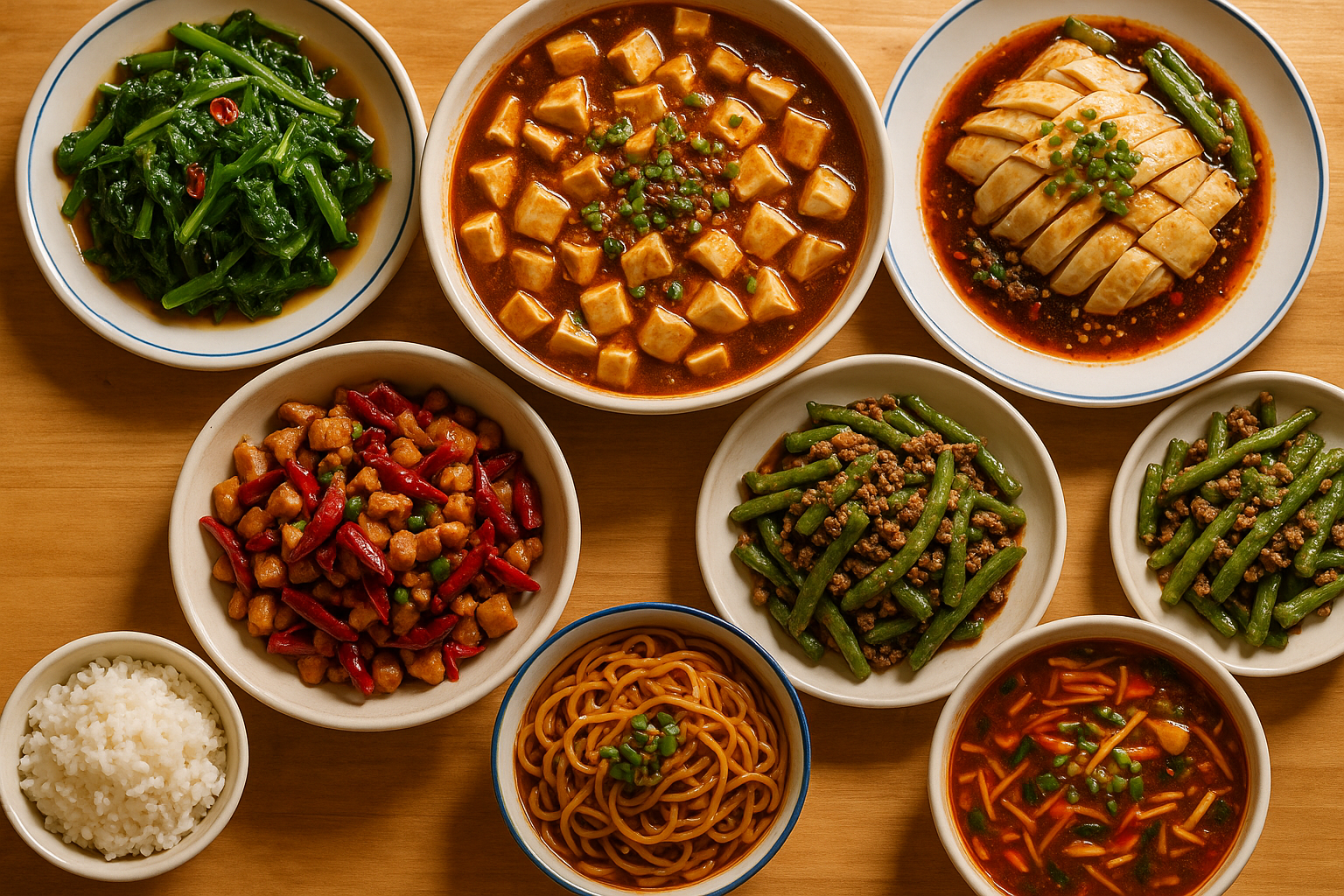
🔥 Introduction: Why Sichuan Cuisine Isn’t Just Food—It’s a Way of Life
There’s something about Sichuan cuisine that captures people’s attention immediately. Maybe it’s the unapologetic heat of a chili oil-laced dish that leaves your lips tingling. Or the deep, smoky aroma that rises from a hot wok. Or perhaps it’s the seemingly magical sensation of málà—that famous pairing of numbing Sichuan peppercorns (má) and fiery chili peppers (là)—which delivers a full-body experience unlike anything you’ve tasted before.
But Sichuan food is much more than spice. It’s a complex culinary tradition, shaped by history, climate, geography, and philosophy. It’s a celebration of contrast and harmony: hot and cold, spicy and mild, soft and crispy, pungent and sweet. It’s a cuisine that doesn’t just satisfy hunger—it tells stories, invites conversation, and connects generations.
Originating from Sichuan Province (四川) in southwest China, this culinary powerhouse is famous not only within China but globally. Restaurants serving mapo tofu, dandan noodles, or kung pao chicken can be found in cities from Chengdu to Chicago. And yet, what most people eat abroad is only a fraction of what Sichuan cuisine really offers.
In this article, we’re taking you on a journey into the sizzle and soul of Sichuan food. From its iconic flavor profiles to its legendary dishes, from street snacks to banquet favorites, we’ll explore what makes this cuisine one of the richest and most exciting in the world.
Whether you’re planning a trip to China, searching for authentic flavors in your hometown, or learning Mandarin to connect more deeply with Chinese culture, understanding Sichuan food is a delicious place to start.
🏞️ Where It All Begins: A Culinary Geography of Sichuan
Sichuan Province, located in China’s southwest, is known for its humid climate, misty mountains, and fertile plains. Historically called the "Land of Abundance" (天府之国, tiānfǔ zhī guó), the region has long been rich in agricultural produce—especially chilis, garlic, ginger, and Sichuan pepper.
This abundance, combined with a need to preserve food in a humid environment, led to the development of bold, pungent flavors and techniques such as pickling, curing, and fermenting.
🌶️ Málà Magic: What Makes Sichuan Food Unique
The hallmark of Sichuan cuisine is the málà flavor—a combination of:
Má (麻): Numbing spice from Sichuan peppercorns
Là (辣): Heat from dried and fresh chili peppers
Together, they create a tingling, mouth-numbing sensation that is strangely addictive and layered with complex aromas.
But that’s just one of the 24 official flavor profiles recognized in Sichuan cooking! Others include:
Yuxiang (鱼香) – “Fish-fragrant,” with garlic, ginger, scallions, vinegar, and sugar
Guaiwei (怪味) – “Strange flavor,” a combo of sweet, sour, spicy, salty, and numbing
Hongyou (红油) – Dishes drenched in spicy red chili oil
Jiaoyan (椒盐) – Pepper-salt flavoring, often on fried meats
Sichuan food is not about overwhelming heat—it’s about layers of flavor that hit different parts of your palate.
🍽️ Essential Sichuan Dishes You Need to Try
1. Mapo Tofu (麻婆豆腐)
Soft tofu in a spicy, numbing sauce with ground pork, fermented bean paste, and chili oil.
2. Dandan Noodles (担担面)
Noodles topped with minced pork, preserved vegetables, scallions, chili oil, and Sichuan pepper.
3. Kung Pao Chicken (宫保鸡丁)
A sweet, sour, and spicy stir-fry of chicken, peanuts, and dried chilis. The real version is far more balanced than its Western counterpart.
4. Twice-Cooked Pork (回锅肉)
Sliced pork belly boiled, then stir-fried with leeks, fermented black beans, and chili bean paste.
5. Fish-Fragrant Eggplant (鱼香茄子)
Deep-fried eggplant bathed in a garlicky, sweet-savory sauce—no fish involved!
6. Sichuan Hotpot (火锅)
A communal feast of raw ingredients cooked in a bubbling pot of chili oil and herbs. A must-experience.
🥢 Sichuan Street Food and Snacks
In cities like Chengdu, the capital of Sichuan, you’ll find night markets and hole-in-the-wall eateries serving spicy street food that locals devour daily:
Chuan Chuan (串串): Mini hotpot skewers dipped into boiling broth
Guokui (锅魁): Crispy flatbread stuffed with meats or spicy paste
Rabbit Head (兔头): A surprisingly popular snack in Chengdu
Liangfen (凉粉): Cold mung bean jelly with garlic, vinegar, and chili oil
Street food in Sichuan is intense, flavorful, and fun. It’s where you’ll find real regional identity in edible form.
🫖 The Role of Tea in Sichuan Dining
Sichuan people are serious about tea. A typical meal is often followed by a visit to a teahouse, where locals sip jasmine, green, or chrysanthemum tea while playing mahjong or chatting with friends. Chengdu teahouses are legendary for their lively atmosphere and relaxed pace—a reflection of Sichuan’s laid-back lifestyle.
Pro tip: Tea helps balance the heat of spicy food, cleanse the palate, and aid digestion.
👨🍳 The Cooking Techniques Behind the Sizzle
Sichuan cuisine is known for its use of:
Stir-frying (炒 chǎo): Often with high heat and hot oil
Dry-frying (干煸 gān biān): Gives dishes a chewy, smoky edge
Steaming (蒸 zhēng) and boiling (煮 zhǔ): For dumplings, soups, and hotpot ingredients
Fermenting (发酵 fāxiào): For bean paste, pickles, and tofu products
The sizzle of chili oil hitting a wok is more than sound—it’s music to a Sichuan chef’s ears.
📜 A Culinary Tradition with Deep Roots
Sichuan cuisine has evolved over thousands of years, influenced by:
Han Chinese imperial kitchens
Local mountain tribes and Buddhist vegetarianism
Foreign traders along the Tea Horse Road
Cookbooks from as early as the Qing Dynasty detail many dishes still eaten today, showing how tradition meets innovation in every bite.
✈️ Traveling to Sichuan for Food: What to Expect
Cities to visit:
Chengdu: UNESCO City of Gastronomy
Leshan: For spicy river fish and Buddhist culture
Yibin: Home of famed Yibin burning noodles (燃面)
Don’t just eat—watch locals cook, take a cooking class, or even visit a chili farm.
🗣️ Want a More Flavorful Trip? Learn Mandarin!
Imagine walking into a Chengdu noodle shop and being able to say:
这道菜辣不辣?(zhè dào cài là bù là?) – “Is this dish spicy?”
我不要太辣。(wǒ bù yào tài là) – “I don’t want it too spicy.”
推荐什么?(tuījiàn shénme?) – “What do you recommend?”
Speaking Mandarin enhances your experience, helps you understand the menu, chat with chefs, and explore hidden gems that tourists often miss.
🙋♀️ FAQs About Sichuan Cuisine
Q: Is all Sichuan food super spicy?
Not all! While spice is common, there are also mild, sweet, and savory dishes.
Q: What if I can’t handle spicy food?
You can request dishes to be made less spicy: 少辣 (shǎo là) or 不辣 (bù là).
Q: Is Sichuan food vegetarian-friendly?
Yes, many dishes like fish-fragrant eggplant or cold mung bean noodles are vegetarian or can be adapted.
Q: What are Sichuan peppercorns, and where can I buy them?
They’re the dried husks of a native flower. You can find them in Asian markets or order online.
Q: What’s the difference between Sichuan and Hunan cuisine?
Both are spicy, but Hunan cuisine is more chili-forward (dry hot) while Sichuan cuisine is numbing and layered.
Q: Can I find authentic Sichuan food outside of China?
Yes—in cities like New York, London, Sydney, and San Francisco—but often toned down. Look for restaurants run by native Sichuanese chefs.
🎓 Want to Speak the Language of Sichuan Cuisine?
To fully appreciate the flavor and cultural depth of Sichuan food, learning Mandarin is one of the best things you can do. You’ll understand menus, cooking shows, family recipes, and—most importantly—the people behind the food.
At Polyglottist Language Academy, our Mandarin courses help you do just that. Whether you're planning to travel, dine with Chinese friends, or just want to appreciate food on a deeper level, our small group and private classes will equip you with the tools to explore language and culture side by side.
📍 Available online or in person in Berkeley and learners from Oakland, San Jose, Sacramento, Santa Rosa, Reno, Portland, and beyond.
👉 Click here to sign up for Mandarin classes today!
🧭 Other Blog Posts You’ll Love
What To Expect In Your First Adult Mandarin Class (And Why You’ll Love It)
How Mandarin Can Boost Your Career In The Bay Area Tech And Business Scene
Why Learning Mandarin As An Adult Is More Doable Than You Think
From Dumplings To Dialogues: How To Speak Mandarin At Bay Area Restaurants
Best Mandarin Classes For Busy Professionals In The Bay Area
Managing Language Anxiety: Psychological Strategies For Relaxation And Focus
Mastering Politeness Levels And Formality In Different Cultures
Building A Daily Language Routine: How Consistency Drives Fluency
Spice up your travel, your taste buds, and your understanding of China—with a bowl of mapo tofu and a few Mandarin phrases under your belt.
Your journey starts with a single bite—and a single word. 🌶️🥢