
Introduction:
If you’ve ever tried greeting someone in Chinese, you probably learned the classic “你好” (nǐ hǎo), which translates to “hello.” It’s simple, universal, and safe for almost any context—right?
Well… not exactly.
While “你好” is understood everywhere in the Chinese-speaking world, it’s not always the go-to greeting in everyday life, and in some regions, it can even feel too formal or distant. Just like how someone from New York might greet you with a casual “Hey” while someone in the South says “How y’all doing?”, Chinese greetings vary by region, setting, and relationship.
From the bustling streets of Beijing to the tea houses of Chengdu, from the skyscrapers of Shanghai to the alleyways of Guangzhou, local cultures shape the way people greet one another. Whether you’re traveling, doing business, or building personal connections across Chinese regions, knowing how to say hello the right way can open doors—and avoid awkward stares.
In this guide, we’ll walk you through the subtle art of greeting people in different parts of China, including Mandarin-speaking regions and southern areas where dialects and customs diverge. Learning these region-specific greetings is about more than just language—it’s a window into Chinese hospitality, values, and unspoken social codes.
Northern China: Straightforward and Reserved
Region Examples: Beijing, Tianjin, Shandong, Inner Mongolia
In the north, greetings are often more formal and to-the-point. A simple “你好” (nǐ hǎo) is acceptable, especially when meeting someone for the first time. But don’t expect effusive friendliness right away—northern Chinese culture tends to value directness and understatement.
For casual situations, northerners often greet with:
“你吃了吗?” (nǐ chī le ma?) – “Have you eaten?”
This is a warm, traditional way to show care, especially among older generations. It doesn’t literally mean they want to eat with you—it’s a polite check-in.“最近怎么样?” (zuìjìn zěnme yàng?) – “How have you been lately?”
Used among friends or colleagues, it shows attentiveness without being overly personal.
Southern China: Warm, Subtle, and Dialect-Rich
Region Examples: Guangdong, Fujian, Guangxi, Hainan
In the south, people are often more reserved in public greetings but more expressive in close relationships. Dialects like Cantonese and Hokkien shape how greetings are expressed.
Common regional greetings include:
Cantonese: “食咗飯未呀?” (sik6 zo2 faan6 mei6 aa3?) – “Have you eaten yet?”
Just like in Mandarin, it’s a warm, habitual greeting—not an actual invitation.Mandarin in the south: You’ll still hear “你好”, but it may be replaced with soft inquiries like:
“忙吗?” (máng ma?) – “Are you busy?”
“去哪儿?” (qù nǎr?) – “Where are you going?”
These may sound nosy in English but are just informal, friendly greetings in southern China.
Shanghai and the Yangtze Delta: Polished and Urban
Region Examples: Shanghai, Jiangsu, Zhejiang
Shanghaiers are famously refined and slightly more formal. You might hear:
“您好” (nín hǎo) – the polite form of “hello,” especially for older people or strangers
“最近好吗?” (zuìjìn hǎo ma?) – “Are you doing well lately?”
In daily interactions, you may hear Shanghainese phrases like:
“侬好” (nóng hó) – “Hello” in Shanghainese
While Mandarin is universally spoken, using a little local dialect—even just a word—can earn you big points.
Sichuan and the Southwest: Friendly and Casual
Region Examples: Chengdu, Chongqing, Guizhou, Yunnan
People in Sichuan and surrounding provinces are known for being relaxed and humorous. Conversations start easily here, even with strangers.
Common greetings include:
“耍嘛?” (shuǎ ma?) – “Out having fun?” or “Are you hanging out?”
Casual and local, this greeting suits the laid-back vibe of the region.“好久不见” (hǎo jiǔ bú jiàn) – “Long time no see”
Often used even after just a short gap in seeing someone—it’s part of the region’s warm tone.
Taiwan: Polite and Affectionate
While not a mainland region, Taiwan offers a Mandarin-speaking culture with distinct social norms. People tend to be gentle, polite, and emotionally expressive.
Popular greetings in Taiwan include:
“你好啊” (nǐ hǎo a) – A warmer, more musical version of “hello”
“你好吗?” (nǐ hǎo ma?) – “How are you?”
“早安 / 午安 / 晚安” (zǎo ān / wǔ ān / wǎn ān) – Good morning / good afternoon / good evening
Don’t be surprised if people add a warm “谢谢” or “麻烦你了” even during a greeting—it’s all part of Taiwan’s famously courteous tone.
Hong Kong: Direct, Bilingual, and Fast-Paced
In this international city, you’ll hear Cantonese, Mandarin, and English greetings. Locals often say:
“你好” (nǐ hǎo) or “哈啰” (ha1 lo3) – A phonetic “hello”
“点呀?” (dim2 aa3?) – “How are things?” in Cantonese
“早晨” (zou2 san4) – “Good morning” in Cantonese
Greeting etiquette is fast and friendly, especially in casual settings. In business, formality increases with titles and handshakes.
FAQs
Q: Is it okay to use “你好” everywhere in China?
A: Yes, it’s always understood and never offensive. But in casual or local settings, people may use more regional or informal greetings—matching those can help you connect more naturally.
Q: Why do people ask if you’ve eaten as a greeting?
A: It’s a traditional way of showing care. In the past, food security wasn’t guaranteed, so asking if someone had eaten was an expression of concern. Today, it’s mostly just a friendly habit.
Q: Should I bow or shake hands in China?
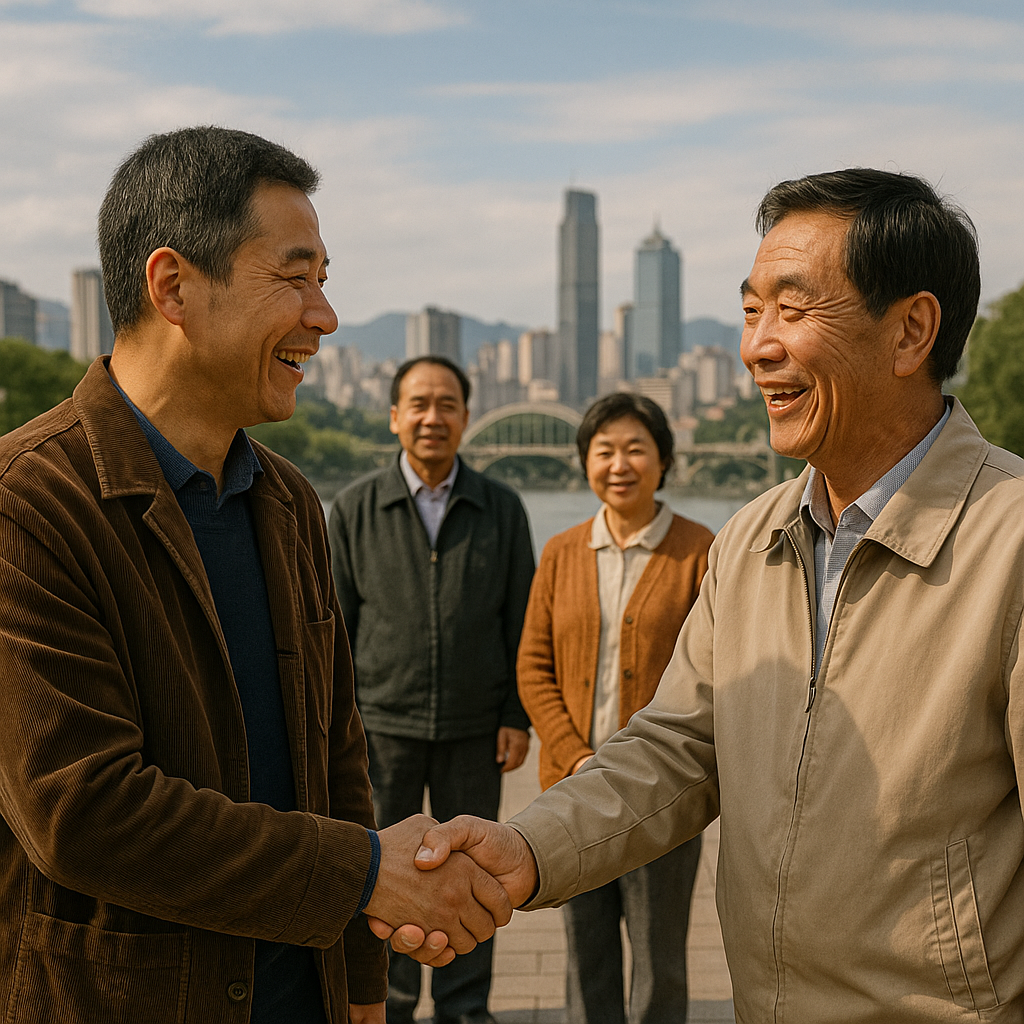
A: Bowing is not common. Handshakes are used in formal or business settings but are usually soft and brief. In casual situations, a verbal greeting and a smile are enough.
Q: Can I use English greetings like “hi” or “hello”?
A: In major cities and with young people, yes—it’s common. But in more traditional or rural areas, using local greetings (even simple ones) is more appropriate and appreciated.
Q: What about greeting elders or superiors?
A: Use “您好” (nín hǎo) for respectful formality. Pair it with a slight nod and polite posture to show deference.
Learn More Than Just Vocabulary—Understand How People Really Speak
At Polyglottist Language Academy, we don’t just teach grammar—we help you connect across cultures. Our Mandarin classes for teens and adults are designed to help you speak with confidence, understand regional variations, and engage in real-life conversations with clarity and authenticity.
Whether you’re greeting a client in Shanghai, chatting with a friend in Taipei, or ordering noodles in Chengdu, we’ll give you the language and cultural insight to do it naturally.
👉 Join our Mandarin classes online or in-person today and speak Chinese with confidence and cultural fluency.
You Might Also Like:
What To Expect In Your First Adult Mandarin Class (And Why You’ll Love It)
How Mandarin Can Boost Your Career In The Bay Area Tech And Business Scene
Why Learning Mandarin As An Adult Is More Doable Than You Think
From Dumplings To Dialogues: How To Speak Mandarin At Bay Area Restaurants
Best Mandarin Classes For Busy Professionals In The Bay Area