
What Chinese Calligraphy Can Teach You About the Language
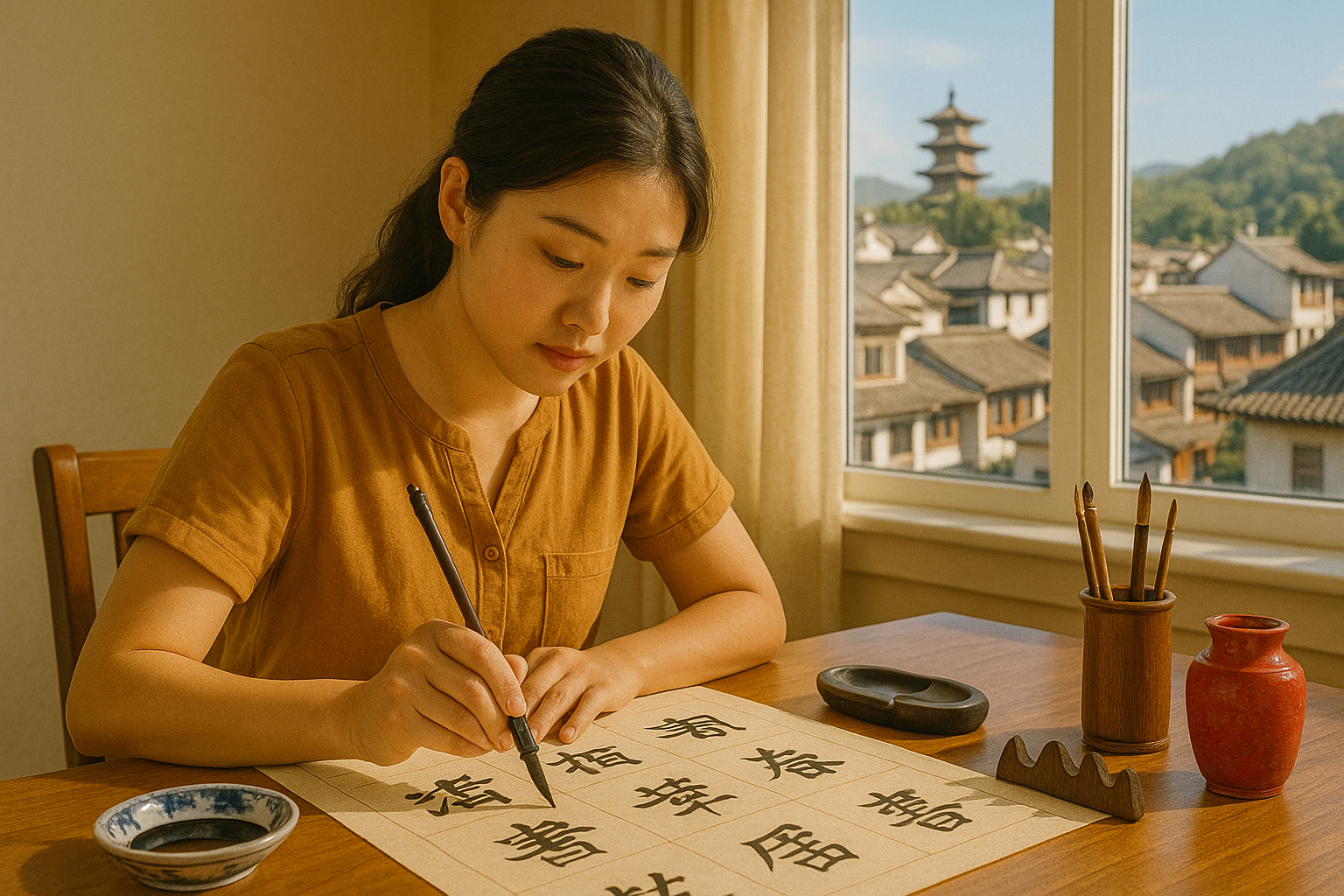
More than art: how practicing calligraphy deepens your understanding of Mandarin
✍️ Introduction: Slow Down, Pick Up a Brush—and Discover the Soul of Mandarin
In a world of quick taps and voice messages, it's easy to forget that language isn't just something we speak—it's something we see, feel, and even create with our hands.
Nowhere is that more evident than in Chinese calligraphy.
For centuries, Chinese calligraphy has been more than a decorative art. It’s a revered tradition that brings together writing, philosophy, mindfulness, and deep cultural identity. And while it’s often admired for its elegance, many language learners don’t realize that practicing Chinese calligraphy is also a powerful tool for learning Mandarin.
You don’t need to be an artist or a history buff to benefit from it. In fact, even writing just a few characters with care and intention can change how you see the language—and how you remember it. Calligraphy can help you improve your stroke order, character recognition, and memory, all while giving you insight into how Chinese evolved not just as a spoken language, but as a visual and symbolic system of meaning.
In this article, we’ll explore what Chinese calligraphy can teach you about Mandarin—from the logic behind characters to the rhythm of the language—and how adding even a little brushwork to your studies can enhance your learning in surprising ways.
🖌️ What Chinese Calligraphy Reveals About the Language
1. Characters Are Not Random—they’re Designed
When you first encounter Chinese characters, they may look like a jumble of strokes. But through calligraphy, you start to see how each character is carefully composed, often with a central structure, balance, and internal logic.
For example:
The character for person (人) flows with a natural balance like two legs walking.
The character for tree (木) is literally a pictograph of a tree, with a trunk and spreading branches.
When you add three trees (森), it means forest—a concept you can see.
Writing these characters slowly, with intention, helps you absorb their shape, their meaning, and how radicals build on one another.
2. Stroke Order Matters—and It Makes Learning Easier
If you've ever tried to memorize characters and wondered why stroke order is emphasized, calligraphy will show you.
Each stroke follows a specific sequence—left to right, top to bottom, horizontal before vertical—and that’s not just for tradition. It’s a memory system. Writing characters in the correct order builds muscle memory and visual familiarity, so the forms stick with you longer.
3. Calligraphy Trains Your Brain to Slow Down and Focus
Mandarin learners often struggle with fast-paced memorization. Calligraphy offers the opposite: a slow, meditative experience. As you write each stroke, you’re not just forming a word—you’re entering into a flow state that strengthens your concentration and helps you internalize the language more deeply.
Think of it as language learning through mindfulness.
4. You Learn to Feel the Rhythm of Chinese
Every language has its own rhythm—and in Mandarin, that rhythm is reflected not just in speech, but in writing. The tempo of brushstrokes, the spacing between lines, the pause between characters—it all mirrors the natural flow of the spoken language.
Practicing calligraphy helps you develop a sense of timing, structure, and form that translates back into your reading, speaking, and listening.
5. Cultural Context Becomes Tangible
The brush you hold has a lineage. The ink you use has symbolic weight. The characters you write may be ancient poems, Confucian ideals, or New Year blessings.
When you study Chinese calligraphy, you’re not just learning words—you’re engaging with thousands of years of Chinese philosophy, aesthetics, and cultural values. It connects you with the worldview that gave birth to the language.
✨ Getting Started: Calligraphy for Language Learners
You don’t need fancy tools or hours of training to begin. Here’s how to start small:
Buy a basic calligraphy set or use a brush pen for a simpler version.
Start with simple characters—like numbers, days of the week, or your name.
Practice stroke order using apps like Skritter or handouts from your class.
Set aside 10–15 minutes a day to write slowly and intentionally.
Learn about famous scripts like Kai (regular), Xing (semi-cursive), and Cao (cursive) as your skills grow.
Even a few minutes a day can transform how you understand and remember characters.
❓ FAQ: Chinese Calligraphy and Language Learning
Q: Do I need to be good at art to benefit from calligraphy?
A: Not at all. Calligraphy is about form, flow, and focus—not artistry. Anyone can benefit, no matter their skill level.
Q: Will practicing calligraphy help me learn to speak Mandarin?
A: Indirectly, yes. Writing improves memory and character recognition, which supports vocabulary and grammar retention—key to fluency.
Q: Do I need traditional tools (brush, inkstone, etc.)?
A: They're great, but not required. A brush pen and workbook are enough to get started at home or in class.
Q: Is calligraphy part of modern Chinese education?
A: Yes. Chinese children still learn proper stroke order and practice calligraphy, even in today’s digital world.
Q: Can calligraphy help me read Chinese better?
A: Absolutely. It trains your eye to recognize character structure and layout, making it easier to read menus, signs, and text.
🏫 Ready to Deepen Your Mandarin Through Culture?
At Polyglottist Language Academy, we believe language learning should be more than memorization—it should be a doorway into culture. That’s why our Mandarin classes don’t just teach you how to say things; we show you how the language is built, how it feels, and where it comes from.
Join our in-person or online Mandarin classes in Berkeley, Oakland, San Francisco, San Jose, or from anywhere. Whether you’re a visual learner, a culture lover, or just curious about Chinese characters, we’ll help you go deeper.
👉 Click here to join a class today and discover the language behind the brush.
📚 Keep Learning: Mandarin Language & Culture Guides:
What To Expect In Your First Adult Mandarin Class (And Why You’ll Love It)
How Mandarin Can Boost Your Career In The Bay Area Tech And Business Scene
Why Learning Mandarin As An Adult Is More Doable Than You Think
From Dumplings To Dialogues: How To Speak Mandarin At Bay Area Restaurants
Best Mandarin Classes For Busy Professionals In The Bay Area