
Planning a trip to Italy? Learn how to dodge tourist traps in Rome, Florence, and Venice with these insider tips—perfect for travelers from the San Francisco Bay Area.
Introduction: From Dream Trip to Authentic Italy
Italy is a dream destination for millions of travelers each year—and with good reason. It's a place where ancient ruins meet vibrant street life, where every corner reveals a new piece of art history, and where the food, fashion, and culture seem effortlessly enchanting. Whether it’s your first time planning an Italian adventure or your fifth return to la bella Italia, the anticipation of strolling through cobblestone streets, sipping espresso at a sunlit piazza, or standing in awe before Renaissance masterpieces never really fades.
But amid all the beauty and history lies a challenge that can catch even the savviest travelers off guard: the infamous tourist trap.
You know the type—the overpriced restaurant with lackluster food, the souvenir shop peddling factory-made items at artisan prices, or the long line snaking around a famous monument while hidden gems sit quietly nearby. These tourist traps aren’t just budget-busters; they rob you of the very experience you traveled across the world to find.
And here's the truth: even seasoned travelers can fall for them, especially in Italy’s most iconic cities. Rome, Florence, and Venice are unmatched in their cultural offerings, but they also attract the highest concentration of crowds, scams, and staged experiences. The trick isn't avoiding these cities altogether—it's knowing how to navigate them smartly, with the eyes (and tastebuds) of a local.
If you live in the San Francisco Bay Area—in Berkeley, Oakland, San Jose, or San Francisco itself—you already know how to spot overhyped from authentic. Think of the difference between a chain restaurant on a tourist block and a tucked-away café in North Beach or Temescal. That same instinct can serve you well abroad—especially when it's paired with a little linguistic and cultural knowledge.
This article is here to help you do just that: travel deeper, smarter, and more connected.
We'll guide you through Italy’s most popular destinations and show you exactly how to avoid the traps that turn unforgettable into forgettable. We’ll show you where the locals go, what to skip, how to read the signs of authenticity, and how even a little Italian language can open doors you didn’t know existed.
And if you want to go beyond reading about it—if you want to learn how to speak Italian, order like a local, and blend in instead of standing out—we’ll tell you how you can prepare right here at home with language classes from Polyglottist Language Academy in the Bay Area.
Italy is waiting. Let's make sure you experience the version that's real, rich, and uniquely yours.
We’ll walk you through how to avoid tourist traps in Rome, Florence, and Venice by teaching you:
How to recognize touristy vs. authentic spots
Where locals actually go (and eat)
What to avoid (especially when it comes to food and transportation)
How even a little Italian language knowledge makes a huge difference
And at the end, we’ll show you how you can learn practical Italian with Polyglottist Language Academy—in San Francisco, Berkeley, Oakland, San Jose, or online—so you can make your trip not just unforgettable, but more connected.
Let’s start planning the real Italy.
Rome: Eternal City, Eternal Tourist Traps
What to Avoid:
Restaurants near major monuments (like the Colosseum, Trevi Fountain, or Vatican)
If the menu is laminated and available in six languages, walk away.
Avoid places with photos of food on the menu.
People dressed as gladiators offering photos
These are often pushy and expensive tourist gimmicks.
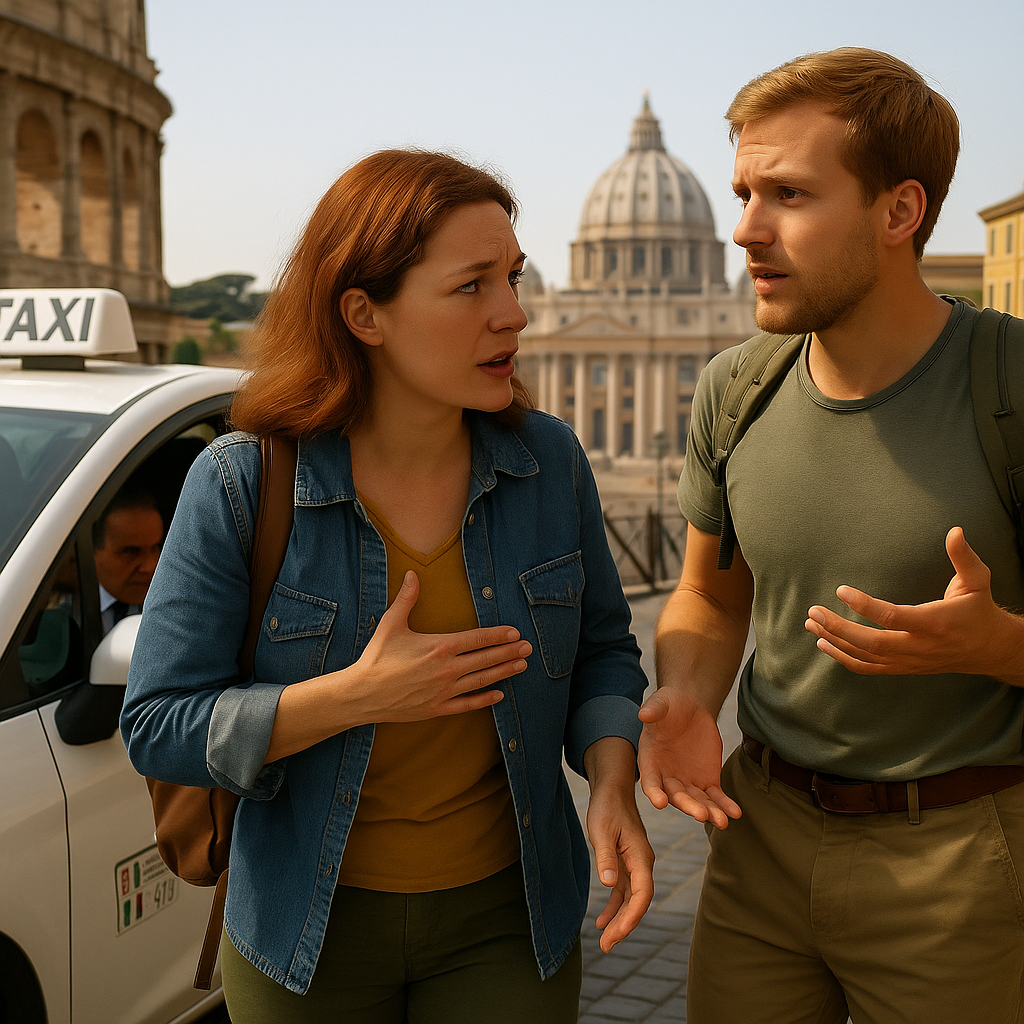
Taxi scams
Always ask for the meter or use apps like Free Now or ItTaxi.
Where to Go Instead:
Eat in Testaccio or Trastevere
Try places like Da Felice a Testaccio or Trattoria Da Enzo.
Visit less-crowded historical spots
Aventine Hill, Baths of Caracalla, and Centrale Montemartini offer fascinating alternatives.
Shop in local markets
Campo de' Fiori (morning only) or Mercato Testaccio for authentic Roman products.
Florence: Art Mecca or Tourist Playground?
What to Avoid:
Michelangelo's David without a reservation
Long lines and tour groups. Book tickets in advance or go early.
Leather markets near San Lorenzo
Overpriced and often low quality.
Gelato in neon-colored heaps
This is a big red flag. That gelato is often industrial and overly sweet.
Where to Go Instead:
Explore the Oltrarno district
Artisan shops, less crowded trattorias, and views from Piazzale Michelangelo.
Eat at family-run spots like Trattoria Sostanza or La Casalinga
Try real gelato at Gelateria dei Neri or La Carraia.
Venice: Beauty, Boats, and Budget-Busters
What to Avoid:
Restaurants in San Marco square
Prices are inflated and service can be subpar.
Buying Murano glass from random shops
Many are imported fakes. Go to certified stores on the actual island of Murano.
Gondola rides from the main tourist routes
They're beautiful but expensive. Avoid peak times.
Where to Go Instead:
Dine in Cannaregio or Castello neighborhoods
These areas are where actual Venetians eat. Try Osteria al Bacco or Al Timon.
Walk the backstreets
Venice is a maze—you'll stumble upon quiet canals, locals, and art galleries.
Take a traghetto
For €2, this gondola-like boat will take you across the Grand Canal with locals.
Language Matters: How Italian Helps You Avoid Traps
Learning just a few Italian words and phrases can be your secret weapon against tourist traps. Locals are more likely to treat you with respect, and you'll have the tools to:
Read the menu without needing English translations
Recognize touristy buzzwords
Ask for recommendations confidently
Understand signage and directions
Say "no" politely but firmly
Essential Phrases:
"Un tavolo per due, per favore."
"Cosa consiglia?" (What do you recommend?)
"Questo è fatto in Italia?" (Is this made in Italy?)
"No, grazie. Sto solo guardando." (No thanks, I’m just looking.)
"Quanto costa?"
Local Tips from San Francisco to Rome
Bay Area residents are already savvy travelers. Here’s how your local mindset gives you an edge:
You know how to spot overhyped tourist spots (just think Pier 39).
You appreciate real food and culture
You're used to diverse languages and want to connect more deeply
Taking an Italian class in Berkeley, San Francisco, Oakland, or San Jose before your trip is a great way to build confidence.
Learn Italian Before You Go
At Polyglottist Language Academy, we don’t just teach grammar. We teach real-world Italian. Our classes are designed to help you:
Order food like a local
Book train tickets or hotels in Italian
Shop at local markets without confusion
Understand regional accents and phrases
Speak confidently in restaurants, taxis, or on the street
We offer in-person Italian classes in Berkeley and we offer online classes that fit your schedule.
👉 Join our upcoming Italian courses and take the first step toward a more authentic Italian adventure.
FAQs: Avoiding Tourist Traps in Italy
Q: How do I know if a restaurant is a tourist trap?
If it has pictures of food, multilingual menus, or a host outside waving you in, it's likely aimed at tourists.
Q: Is it really cheaper to eat away from the main squares?
Almost always. You'll get better food and more local atmosphere a few blocks away.
Q: Do I need to tip in Italy?
Tipping isn't required. Locals usually round up or leave a euro or two.
Q: Will locals help if I try to speak Italian?
Yes! Even if you're not perfect, showing effort in the language goes a long way.
Q: Can I get by with just English?
In tourist zones, yes—but you'll pay more and miss out on deeper experiences.
More from the Polyglottist Blog:
Berkeley Italian Language School Spotlight: What To Expect From Your First Class
Why Taking Italian Classes In The Bay Area Is The Best Decision You'll Make This Year
Where To Learn Italian In Oakland: Top In-Person Courses Near You
Italian Classes In Berkeley: Learn The Language Of Love Close To Home
Don’t be just another tourist. Be a traveler who connects.
Sign up with Polyglottist Language Academy and turn your Italy trip into a cultural experience.