
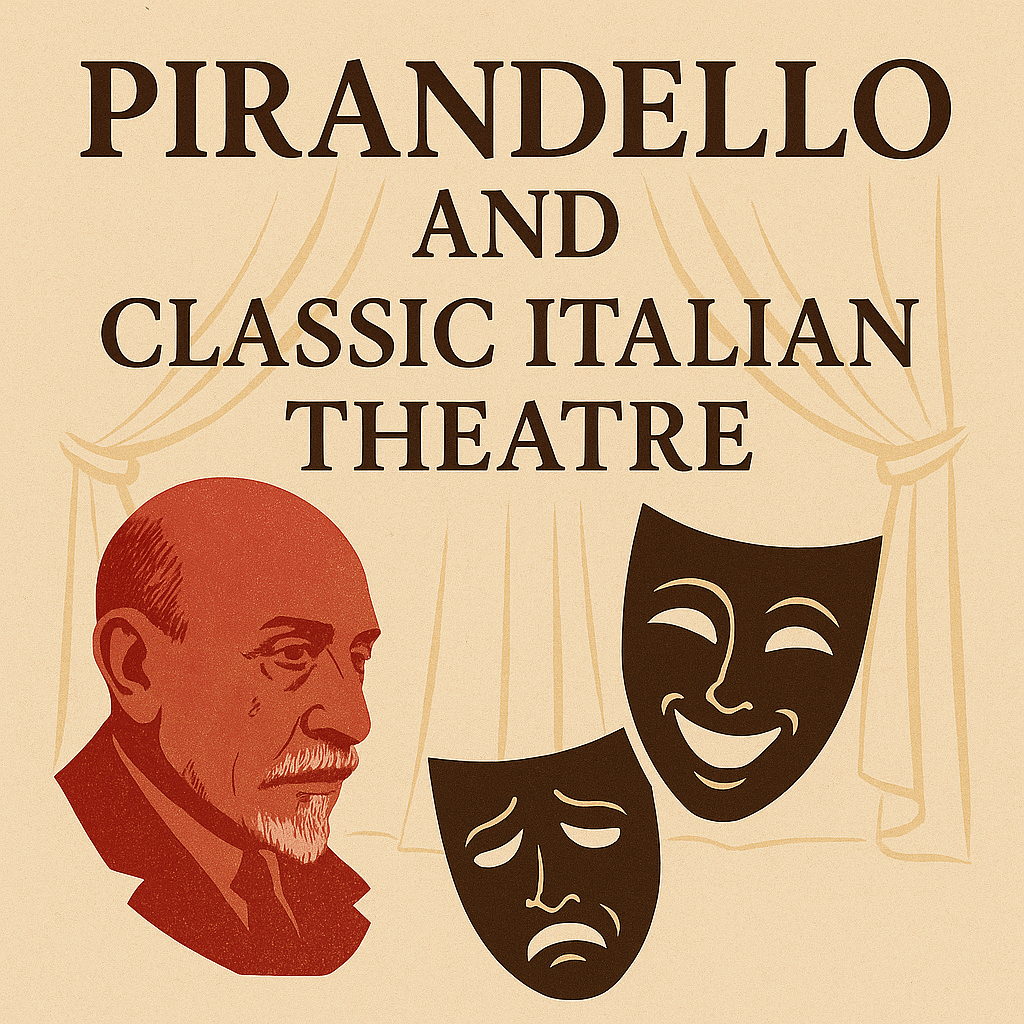
Explore the legacy of Luigi Pirandello and how his plays dissect identity, illusion, and human masks. A deep dive into classic Italian theater and cultural reflection.
In the spotlight of the Italian stage, amid crumbling facades and shifting sets, one man redefined the way we understand theater, selfhood, and the roles we play in life. That man was Luigi Pirandello, one of Italy’s greatest literary minds and a revolutionary figure in 20th-century drama.
While Italy is often associated with opera, Renaissance art, and epic cinema, it is also the birthplace of a uniquely philosophical and experimental theatrical tradition. At the heart of it stands Pirandello, whose works invite us to ask profound questions: Who am I? Who do others think I am? And are these two people the same?
His plays speak not only to theater lovers and literature students, but to anyone who has ever felt trapped by expectations, misunderstood by others, or uncertain about their place in the world. Through tragicomedy, illusion, and brilliant metatheatricality, Pirandello peels back the layers of social convention and reveals the psychological masks we all wear.
In this blog post, we’ll explore Pirandello’s life, most famous works, and lasting impact on modern theater. We’ll also examine the cultural and linguistic richness of his plays—and what makes them essential for anyone learning Italian or seeking deeper insight into the Italian psyche.
1. Who Was Luigi Pirandello?
Born in 1867 in Agrigento, Sicily, Pirandello grew up surrounded by the tension between tradition and modernity, a theme that would dominate much of his writing.
Though initially a poet and novelist, he rose to international fame as a playwright. In 1934, he was awarded the Nobel Prize in Literature, recognized for his “bold and brilliant renovation of the drama and the stage.”
Pirandello’s life was marked by personal struggles, including financial hardship and his wife’s mental illness. These experiences deeply influenced his understanding of identity, perception, and madness.
2. The Masks We Wear: Core Themes in Pirandello’s Theater
Pirandello’s work constantly returns to one fundamental concept: the fragmentation of identity.
Key Themes:
Masks and roles: We wear different “masks” depending on social context.
Truth vs. perception: Reality is subjective and shaped by personal experience.
Madness and sanity: Often indistinguishable in his plays, questioning who gets to define them.
Meta-theater: Plays within plays, actors breaking the fourth wall, and blurred lines between fiction and reality.
His works challenge the very foundation of narrative, character, and truth. And they do so in a way that is both intellectually rigorous and emotionally resonant.
3. Must-Know Works by Pirandello
Six Characters in Search of an Author (1921)
A group of fictional characters interrupt a rehearsal, claiming they are unfinished and seeking someone to complete their story. The play deconstructs the nature of storytelling, authorship, and the autonomy of character.
Right You Are (If You Think So) (Così è (se vi pare), 1917)
A tale of gossip, identity, and the impossibility of knowing another’s truth. Each character insists on their version of reality—and all may be right.
Henry IV (Enrico IV)
A man falls from a horse and believes he is the medieval emperor Henry IV. When others attempt to cure him, the line between delusion and role-playing collapses.
The Man with the Flower in His Mouth (L'uomo dal fiore in bocca)
A one-act play about a dying man’s reflections on life, identity, and how trivial details keep us connected to the world.
Each of these plays is a linguistic and philosophical playground, inviting performers and audiences alike to confront the deepest corners of the human condition.
4. Why Pirandello Still Matters
For Theater and Literature:
Inspired playwrights like Beckett, Ionesco, and Stoppard
Helped lay the foundation for the Theater of the Absurd
Changed the structure and expectations of modern drama
For Italian Culture:
Captures the existential anxiety of the modern Italian
Explores regional identity, especially Sicilian viewpoints
Reflects a historical period of political and social upheaval
For Language Learners:
Rich, expressive Italian that’s ideal for intermediate and advanced learners
Offers insight into philosophical vocabulary, idioms, and nuanced dialogue
A gateway to understanding Italian cultural psychology
5. Language and Expression in Pirandello’s Italian
Pirandello’s writing is precise, layered, and lyrical. His plays are a masterclass in:
Conversational register vs. formal speech
Sicilian expressions and regionalisms
Wordplay, especially around truth and falsehood
His dialogue often mimics real speech patterns but also challenges readers with philosophical paradoxes and metaphysical musings.
For language learners, Pirandello is both a challenge and a reward. Reading him in the original Italian brings you closer to the emotional and intellectual core of the characters.
6. Pirandello’s Influence on Modern Identity Discourse
Pirandello’s exploration of fragmented identity feels incredibly modern. In a world of social media profiles, online personas, and curated images, his insight into the masks we wear is more relevant than ever.
Questions Pirandello Raises:
Are we ever truly ourselves?
Do others define who we are?
Can we ever escape the roles imposed on us?
His plays continue to resonate with anyone questioning their place in a complex and often contradictory world.
FAQs: Understanding Pirandello and Classic Italian Theater
Q: Do you need to be religious or philosophical to understand Pirandello?
A: No. His works are grounded in universal human experiences—doubt, identity, misunderstanding, and the search for meaning.
Q: Is it hard to read Pirandello in Italian?
A: His writing is sophisticated but accessible for upper-intermediate to advanced learners. Start with shorter one-act plays and build from there.
Q: How is Pirandello different from Shakespeare or Chekhov?
A: Pirandello breaks the "rules" of theater. He’s less concerned with plot and more focused on perception, illusion, and self-questioning.
Q: Are Pirandello’s plays still performed?
A: Yes! His works are staged worldwide and remain staples of Italian theater and literature curricula.
Q: What’s a good first play to read?
A: Six Characters in Search of an Author is the most iconic and offers a powerful introduction to his themes.
Want to Read Pirandello in the Original Italian?
At Polyglottist Language Academy, we don’t just teach Italian—we bring the culture and literature to life.
📚 Our advanced reading courses explore classic Italian authors like Pirandello, Calvino, and Moravia. 🎭 We offer special thematic classes on Italian theater, literature, and conversation. 🗣️ Small group and private lessons available online and in-person in Berkeley.
Sign up today and deepen your Italian through the art of storytelling, philosophy, and theatrical genius.
Dive Deeper with These Blog Posts:
How Italians Express Love: Romantic Phrases You’ll Want To Steal
Italian For Food Lovers: What To Say At The Market, Bakery, And Trattoria
Italian Grammar Isn’t Scary: Simple Tips For English Speakers
How Learning Italian Can Deepen Your Appreciation Of Art, Music, And History
What To Expect In Your First Italian Class: A Guide For Beginners
Discover Italian Culture In The Bay Area: Food, Festivals, And Film Events
Dating In Italy: What To Expect When Romance Meets Tradition
How To Choose The Right Italian Class In Berkeley, SF, Or Oakland