
5 Common Italian Grammar Mistakes English Speakers Make
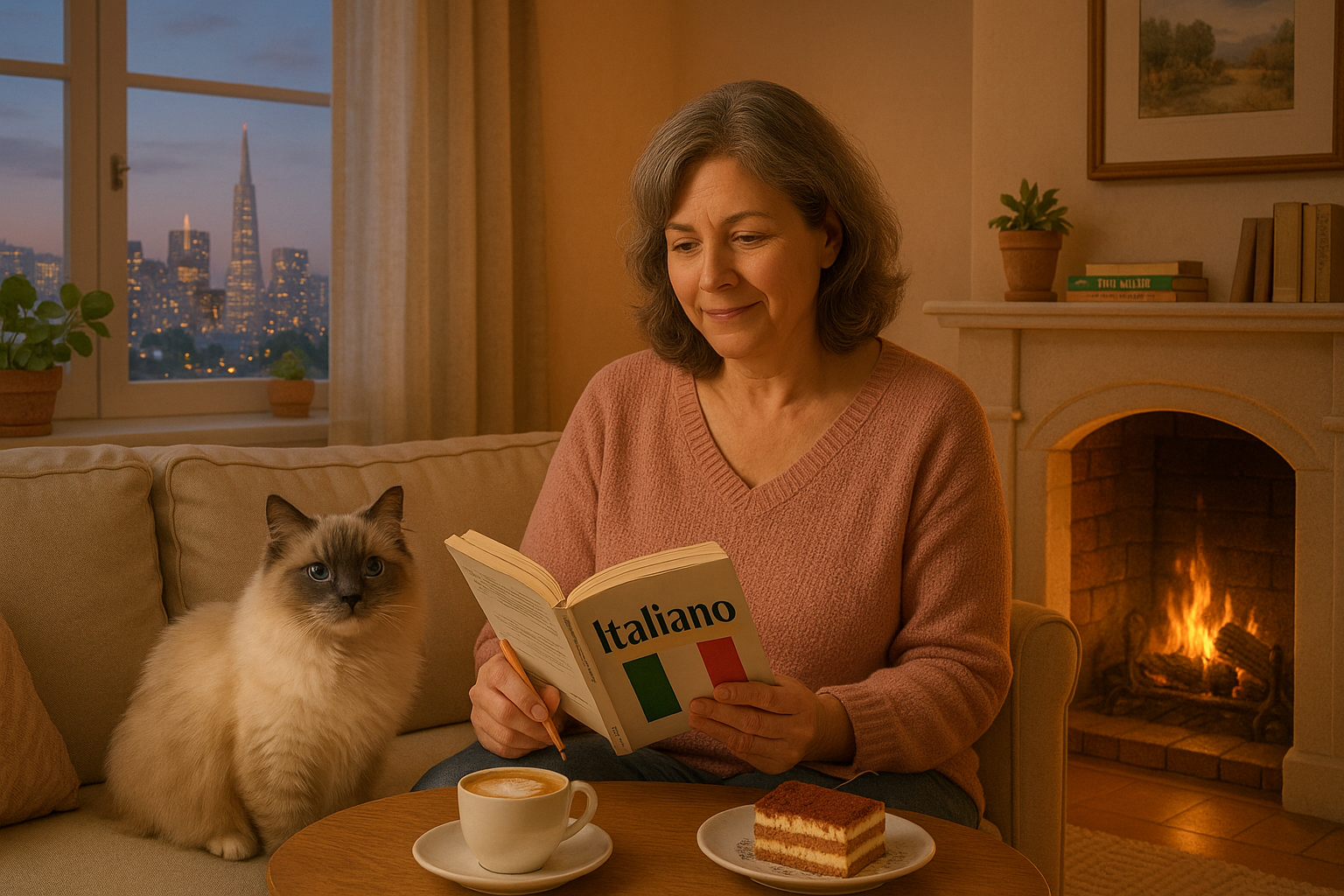
Avoid these 5 common Italian grammar mistakes English speakers often make. Improve your fluency and confidence with expert tips from Polyglottist Language Academy.
🇮🇹 From “Ciao!” to “Che confusione!” — How to Avoid the Pitfalls of Italian Grammar
Learning Italian feels like stepping into a beautifully melodic world—words roll off the tongue, expressions are full of emotion, and conversation sounds like music. But if you’re an English speaker, your brain is probably working overtime behind the scenes. Suddenly, nouns have gender, verbs change endlessly, and the word order sometimes flips like pasta in a pan.
The truth is: Italian is logical—but it’s not English. And many native English speakers fall into the same traps again and again when learning the language.
At Polyglottist Language Academy, we see it all the time. Students come to class excited, motivated, and… confused. Not because they’re not smart, but because their English brain keeps interfering. That’s normal! And fixable.
In this article, we’ll explore the five most common Italian grammar mistakes English speakers make—and how to overcome them. With examples, memory tricks, and real-life phrases, you’ll not only understand the rules, but also learn how to apply them in conversation, writing, and everyday communication.
Let’s dive in—iniziamo!
❌ Mistake #1: Ignoring Gender and Number Agreement
What’s the issue?
In English, adjectives don’t change form. You say “a beautiful boy” and “a beautiful girl”—easy. In Italian, though, adjectives must agree with the gender and number of the noun.
English Italian
a beautiful boy un ragazzo bello
a beautiful girl una ragazza bella
beautiful boys ragazzi belli
beautiful girls ragazze belle
English speakers often forget to change bello to bella, or leave adjectives in the masculine singular regardless of the noun.
How to fix it:
Memorize nouns with their articles: la casa (feminine), il libro (masculine).
Practice adjective transformations in all four forms.
Use visual associations: picture a “pink” (feminine) house and a “blue” (masculine) car if needed.
🧠 Tip: Read aloud full sentences like “Le ragazze italiane sono simpatiche.” This builds instinctive agreement through repetition.
❌ Mistake #2: Confusing “essere” and “avere” in Compound Tenses
What’s the issue?
In English, we say “I went” and “I have gone”—and both use “have” for the past. In Italian, two auxiliary verbs exist: essere (to be) and avere (to have). Choosing the wrong one is a dead giveaway you’re a beginner.
Correct:
Sono andato al mercato. – I went to the market. ✅
Ho mangiato la pizza. – I ate the pizza. ✅
Incorrect:
Ho andato al mercato. ❌
Sono mangiato la pizza. ❌
The Rule:
Use essere with:
Verbs of motion (andare, venire, entrare)
Verbs of change (nascere, morire, diventare)
Reflexive verbs (svegliarsi, lavarsi)
Use avere with:
Transitive verbs (verbs that take a direct object)
Most verbs in general
How to fix it:
Memorize the “essere verbs” as a group. Use the mnemonic “Dr & Mrs Vandertramp” (adapted for Italian) or think of motion/change verbs.
Practice sentences in pairs: Ho visto (I saw), Sono uscito (I went out).
Repeat: “Essere = movement or change. Avere = action with object.”
🧠 Tip: Don’t forget agreement with essere: Sono andata (if you’re female), Siamo arrivati (we arrived – masculine/mixed group).
❌ Mistake #3: Using Subject Pronouns Too Often
What’s the issue?
In English, we rely heavily on subject pronouns: “I speak,” “You understand,” “He likes.” In Italian, however, the verb conjugation already tells you who is speaking—so adding io, tu, lui is redundant (unless you’re emphasizing).
Correct:
Parlo italiano. – I speak Italian. ✅
Vuoi un caffè? – Do you want a coffee? ✅
Incorrect:
Io parlo italiano. (unless for emphasis) ❌
Tu vuoi un caffè? (feels stiff) ❌
Why this matters:
Overusing pronouns makes your Italian sound robotic or foreign. Native speakers often drop them unless they need to contrast or emphasize.
How to fix it:
Focus on verb endings, not just the pronoun.
Listen to native speech and mimic the rhythm.
Use pronouns only when contrast is needed: Io parlo, ma lui no. – I speak, but he doesn’t.
🧠 Tip: If you’re emphasizing something, then pronouns are fine: Io lo voglio! (I want it!)
❌ Mistake #4: Getting Prepositions Wrong (Especially “a” vs “in”)
What’s the issue?
Prepositions are famously tricky in every language. In Italian, English speakers often mix up “a” and “in”—especially with cities and countries.
English Correct Italian Incorrect
I live in Rome Vivo a Roma Vivo in Roma ❌
I live in Italy Vivo in Italia Vivo a Italia ❌
The Rule:
Use “a” for cities and small towns: a Milano, a Venezia
Use “in” for countries and regions: in Italia, in Toscana
Also:
Vado a casa – I’m going home
Sono in ufficio – I’m at the office
How to fix it:
Create flashcards with city = a, country = in
Practice sentence templates: Vado a [city] / Vivo in [country]
Drill common pairings until they feel natural.
🧠 Tip: Think: “A small = a city,” “International = in country.”
❌ Mistake #5: Forgetting to Use the Definite Article
What’s the issue?
In English, we sometimes say “I like pizza” or “Music is important” without the. In Italian, you need the article: la pizza, la musica, il caffè.
Correct:
Mi piace la pizza. – I like pizza. ✅
Amo la musica. – I love music. ✅
Incorrect:
Mi piace pizza. ❌
Ascolto musica. ❌ (in most contexts)
This is one of the most common habits that makes your Italian feel off, even if it’s understandable.
How to fix it:
Practice always pairing nouns with articles: il vino, la gente, i film.
Make a game of it: turn every English noun into an Italian one with the right article.
When in doubt, include the article—it’s more common to include than omit.
🧠 Tip: Watch how native speakers say: Mi piace il gelato, Bevo il caffè ogni mattina.
🧠 Bonus Tip: Embrace Mistakes as Part of the Journey
Even advanced learners still stumble over grammar. What matters is not getting it perfect the first time—but understanding your patterns and correcting them over time. At Polyglottist Language Academy, we create a space where students feel comfortable learning, speaking, and even messing up—because that’s how you grow.
❓FAQs: Grammar and Learning Italian
Q: Will Italians understand me even if I make grammar mistakes?
A: Yes! Italians are generally patient and encouraging—especially if you try to speak their language. The goal is communication, not perfection.
Q: Should I memorize grammar rules or just practice speaking?
A: Both! Understanding grammar helps you build solid foundations. Speaking gives you fluency and comfort.
Q: How long does it take to stop making basic mistakes?
A: With consistent practice, most learners reduce these mistakes significantly within 3–6 months.
Q: What’s the best way to fix bad grammar habits?
A: Take note of recurring mistakes, correct them in context, and review them regularly in writing and speaking.
Q: Are Italian verbs really as hard as they seem?
A: They’re complex but follow clear patterns. With good instruction and real-life use, they become manageable and even fun.
🏫 Want to Learn Italian with Real Confidence?
At Polyglottist Language Academy, we help learners go beyond the basics—and beyond the app.
✅ Small class sizes (3–6 students)
✅ Clear grammar instruction with lots of practice
✅ Real conversation, not just memorization
✅ In-person classes in Berkeley and online
✅ Supportive teachers who actually correct your mistakes—kindly
🎯 Start learning Italian with us today and stop making the same grammar errors over and over. Gain clarity, confidence, and community.
📚 Keep Growing: More Articles from Our Blog
Italian For Food Lovers: What To Say At The Market, Bakery, And Trattoria
Italian Grammar Isn’t Scary: Simple Tips For English Speakers
How Learning Italian Can Deepen Your Appreciation Of Art, Music, And History
What To Expect In Your First Italian Class: A Guide For Beginners
Discover Italian Culture In The Bay Area: Food, Festivals, And Film Events
How To Choose The Right Italian Class In Berkeley, SF, Or Oakland
The Best Places In The Bay Area To Practice Your Italian (Outside The Classroom)