
Spanish Hand Gestures and Body Language: Nonverbal Communication Explained
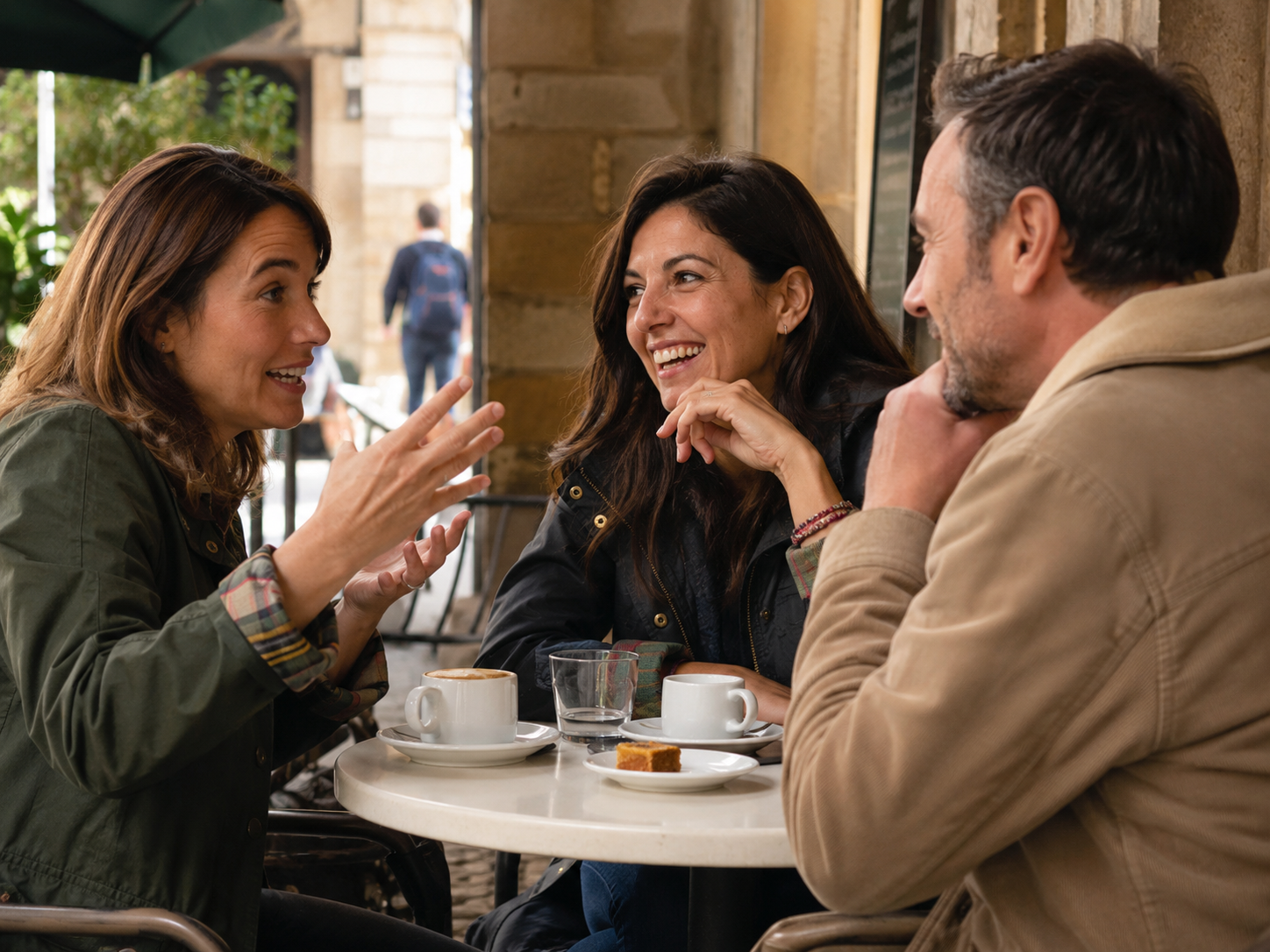
When people begin learning Spanish, they usually focus on the most visible parts of the language: vocabulary, pronunciation, grammar, verb conjugations, sentence structure, and the many differences between Spanish spoken in Spain and Spanish spoken across Latin America. They learn how to say hola, how to order coffee, how to ask for directions, how to use the past tense, and eventually how to express opinions, emotions, plans, doubts, and desires. All of that is essential. But there is another part of Spanish communication that often goes unnoticed until a learner finds themselves in a real conversation with native speakers: the language of the body.
Spanish is not only spoken with words. It is also spoken with hands, eyes, eyebrows, shoulders, posture, physical closeness, facial expressions, pauses, tone, rhythm, and movement. A conversation in Spanish is often a full-body experience. People lean in, gesture, interrupt with enthusiasm, touch someone lightly on the arm, raise their eyebrows to show surprise, shake their head with disbelief, wave a hand to say “come here,” or rub their fingers together to mean “money.” Sometimes a gesture replaces words entirely. Sometimes it softens what is being said. Sometimes it adds humor, warmth, impatience, affection, skepticism, or warning.
For English-speaking learners, this can be both fascinating and confusing. You may understand every word in a sentence and still feel that you are missing part of the meaning. Someone may say sí, claro while their face suggests doubt. A friend may stand closer than you expect, not because they are invading your space, but because closeness communicates friendliness. A group of Spanish speakers may talk over each other, laugh loudly, wave their hands, and sound as if they are arguing, when in fact they are simply enjoying an energetic conversation. A gesture that feels normal in the United States or Northern Europe may look strange, childish, cold, or even rude in Spain, Mexico, Argentina, Colombia, Peru, Chile, Cuba, Puerto Rico, or another Spanish-speaking country.
This is why learning Spanish body language matters. It is not a decorative extra. It is part of cultural fluency. If vocabulary helps you understand what people say, nonverbal communication helps you understand what they mean. It helps you read the emotional temperature of a conversation. It helps you know whether a person is joking, warning you, inviting you closer, politely disagreeing, or expecting a warmer response. It also helps you avoid awkward moments that come from transferring your own cultural habits directly into Spanish-speaking contexts.
Of course, there is no single “Spanish body language.” Spanish is spoken in more than twenty countries, each with its own regional habits, social norms, histories, and local gestures. Spain is not Mexico. Mexico is not Argentina. Argentina is not Colombia. Colombia is not Puerto Rico. Even within one country, body language can vary by region, age, social class, gender, personality, setting, and relationship. A business meeting in Madrid will not feel the same as a family lunch in Seville. A formal introduction in Bogotá will not feel the same as a casual reunion in Buenos Aires. A young group of friends in Mexico City may greet each other differently from older professionals in Lima.
Still, there are broad patterns that Spanish learners can observe. Many Spanish-speaking cultures are more expressive, more tactile, and more comfortable with physical closeness than many English-speaking or Northern European cultures. Hand gestures are common. Facial expressions are important. Eye contact often signals attention and sincerity. Greetings may involve cheek kisses, hugs, or warm handshakes. Silence, distance, stiffness, or a very neutral face may be interpreted not as politeness, but as coldness or lack of interest.
The goal is not to imitate native speakers mechanically or to force yourself into gestures that feel unnatural. The goal is to become more aware. When you understand Spanish hand gestures and body language, you become a better listener, a more natural speaker, and a more sensitive participant in cross-cultural communication. You also become less likely to misread warmth as flirtation, enthusiasm as anger, or direct eye contact as confrontation. In other words, you begin to understand Spanish not just as a language, but as a way people connect.
Why Nonverbal Communication Matters When Learning Spanish
Every language has a culture of movement. In English-speaking contexts, especially in the United States, Canada, the United Kingdom, and Northern Europe, many people are taught to value personal space, controlled gestures, moderate volume, and relatively clear turn-taking. That does not mean English speakers never gesture or speak emotionally, but the cultural baseline can be more restrained.
In many Spanish-speaking environments, communication may feel more animated. People often use their hands to emphasize meaning. They may lean forward to show interest. They may make strong eye contact. They may use touch to express warmth. They may respond before the other person has completely finished speaking, not necessarily because they are being rude, but because lively overlap can signal engagement.
For learners, this matters in several ways.
First, body language helps you understand meaning. A phrase like no pasa nada can mean “don’t worry,” “it’s fine,” or “let’s move on,” depending on tone and expression. A shrug, a raised eyebrow, or a quick hand movement may completely change the feeling of the sentence.
Second, body language helps you build rapport. If you speak correct Spanish but stand very far away, avoid eye contact, keep your arms tightly crossed, and respond with a flat expression, people may think you are uninterested or uncomfortable. You do not have to become someone else, but a warmer facial expression, a little more eye contact, and a more open posture can make conversations feel more natural.
Third, gestures help memory. Many language learners remember phrases better when they connect them with movement. If you learn no sé while also practicing the shrug and palms-up gesture, the phrase becomes physical. If you learn ¡ojo!while noticing the gesture toward the eye, you remember that it means “watch out” or “be careful.” Movement can make vocabulary stick.
Finally, nonverbal communication helps you understand culture. A language is never just a list of words. It is a set of social habits. Learning how people greet, disagree, show affection, express surprise, or signal impatience teaches you how the culture works.
Common Spanish Hand Gestures Learners Should Know
Hand gestures are one of the most visible parts of Spanish nonverbal communication. Some gestures are widely understood across the Spanish-speaking world, while others are regional. As a learner, it is best to observe carefully before using gestures yourself, especially if you are in a new country. But knowing the most common ones will help you understand conversations much better.
The “Come Here” Gesture
One of the first gestures learners notice is the gesture for “come here,” or ven aquí. In many English-speaking countries, people beckon with the palm facing upward and the index finger curling toward the body. In Spain and many Spanish-speaking contexts, the gesture is often done with the palm facing downward, fingers together, moving toward the body.
This can surprise English speakers because the palm-down version may look as if someone is waving you away. But in context, it usually means “come here” or “come closer.” You may see it used by parents calling children, friends calling someone over, or a waiter directing someone to a table.
The safest rule is simple: watch what locals do. If someone calls you with a palm-down motion, they are probably not dismissing you. They are inviting you closer.
The Gesture for “Money”
A very common gesture in Spanish-speaking countries is rubbing the thumb against the tips of the index and middle fingers. This means money. Depending on the country, the word paired with it may be dinero, plata, pasta, or another local term.
You might see this gesture when someone is saying that something is expensive, asking whether you have cash, talking about payment, or joking that someone only cares about money. It can be playful, practical, or critical depending on the expression and context.
For example, someone may raise their eyebrows and rub their fingers together while saying, Eso cuesta mucho, meaning “That costs a lot.” The gesture adds emphasis: we are talking about money, and maybe too much of it.
“I Don’t Know” or “Who Knows?”
The shrug is widely understood: raised shoulders, palms up, eyebrows lifted, sometimes with a small head tilt. It goes naturally with phrases like no sé, quién sabe, or ni idea.
This gesture is not unique to Spanish, but it is very common and expressive. In some conversations, the gesture may replace the words entirely. Someone may simply shrug and make a face, and the meaning is clear: “I have no idea,” “Who knows?” or “What can we do?”
The Spanish shrug can also carry emotional nuance. A quick shrug may mean simple uncertainty. A longer shrug with a sigh may suggest resignation: “That’s just how it is.”
The “Crazy” Gesture
The circular motion near the temple with the index finger is generally understood to mean loco or loca, meaning “crazy.” English speakers may recognize this one, since it is similar in many cultures.
However, learners should be careful. Calling someone crazy with a gesture can be insulting, especially if the person is present. Among friends, it may be used jokingly: ¡Estás loco! But in a tense situation, it can feel rude or aggressive.
As with many gestures, context matters. The same movement can be affectionate, humorous, dismissive, or offensive depending on the relationship and tone.
“Be Careful” or “Watch Out”
Spanish has several verbal expressions for warning someone: cuidado, ojo, ten cuidado, aguas in Mexico, and others. These are often accompanied by gestures.
One common gesture is pointing toward the eye or touching below the eye, especially with the expression ¡ojo! Literally, ojo means “eye,” but as an interjection it means “watch out,” “be careful,” or “pay attention.” You may also see someone wag an index finger from side to side as a warning.
For example, if a street is slippery, someone may say, ¡Ojo! Está mojado, while pointing toward their eye. The gesture reinforces the message: pay attention.
“Hurry Up”
To say “hurry up,” Spanish speakers may use quick hand movements, such as flicking the hand rapidly, circling the hand, or making a repeated motion that suggests speed. The words vary by country: apúrate, date prisa, vamos, ándale, venga, or rápido.
This gesture is often used in everyday situations: someone is late, a child is moving too slowly, a friend is taking too long, or a group is about to miss a bus. It can be playful or impatient depending on tone.
“Delicious”
Food is central to social life in much of the Spanish-speaking world, so it is not surprising that there are gestures for deliciousness. In Spain, one gesture involves wiggling the fingers under the chin to show that something tastes very good. In some Latin American contexts, people may kiss the fingertips or bring fingers toward the lips to express qué rico or delicioso.
You may see this at a family meal, in a restaurant, or while talking about a dish. It is an expressive way to say: this is not just good, it is really good.
“Stingy” or “Cheap”
Some Spanish-speaking regions use gestures to suggest that someone is stingy, cheap, or overly careful with money. One gesture involves touching or rubbing the elbow. Another may involve rubbing the fingers together as if counting coins.
The Spanish words vary: tacaño, agarrado, codo, or other regional terms. Be careful with this gesture because it can be mocking. It is usually used to talk about someone, not to compliment them.
“Perfect” or “Excellent”
Learners should be cautious with the “OK” sign, made by forming a circle with the thumb and index finger. In some countries and contexts, it may mean “OK,” “perfect,” or “excellent.” In others, it may be considered vulgar or offensive. Because meanings vary, a thumbs-up is usually a safer positive gesture if you are unsure.
This is one of the best examples of why gestures are not universal. A movement that feels harmless in one place may carry a very different meaning somewhere else.
“I Don’t Care” or “Whatever”
A dismissive hand flick, sometimes from under the chin or outward from the body, may mean “I don’t care,” “whatever,” or “forget it.” In some countries, this can be rude. Learners should understand it if they see it, but avoid using it until they understand the local meaning well.
Dismissive gestures can be stronger than words. A casual me da igual can be neutral, but paired with a sharp flick of the hand, it may sound irritated or disrespectful.
Gestures That Vary by Country
Spanish body language changes from country to country. This is especially important because learners often ask, “Is this gesture Spanish?” The better question is: “Where is this gesture used, and by whom?”
Spain
Spain is often associated with expressive conversation, direct eye contact, animated gestures, and relatively close physical distance. In many parts of Spain, especially in social situations, people may greet with two cheek kisses: one on each cheek. This is common between women, and between men and women, though male friends or relatives may also kiss depending on the relationship.
Spanish conversation can feel direct. People may speak clearly, disagree openly, use humor sharply, and gesture frequently. In some regions, especially in the south, communication may feel especially expressive and lively. However, Spain is diverse. Body language in Andalusia may feel different from body language in the Basque Country or Galicia.
Learners should also be careful with pointing directly at people, overly strong palm gestures, or assuming that a gesture from one region works everywhere.
Mexico
Mexican communication is often warm, polite, and socially attentive. Compared with Spain, verbal disagreement may be softened more often, especially in formal or unfamiliar situations. Body language can communicate warmth, respect, and friendliness.
One cheek kiss is common in many social contexts, especially between women or between a man and a woman, though norms vary by region, age, and setting. The expression ¡aguas! is a very Mexican way to say “watch out,” often accompanied by a warning gesture or facial expression.
For English-speaking learners, Mexico can be a good reminder that body language and politeness go together. A smile, respectful tone, and attentive posture can matter just as much as grammar.
Argentina
Argentina, especially Buenos Aires, has a very expressive conversational culture. People may use hand gestures frequently, speak with strong intonation, and greet warmly. One cheek kiss is common, and in Argentina it is not unusual for men to greet male friends with a kiss on the cheek.
Argentinian Spanish also has local gestures that express impatience, intensity, or emphasis. The cupped-hand gesture, sometimes moved at the wrist, can communicate “a lot,” “what are you saying?” or emotional emphasis depending on context. As always, learners should observe before imitating.
Colombia, Peru, and Chile
In Colombia, Peru, and Chile, people often use warm greetings, polite facial expressions, and one cheek kiss in many social contexts. However, these countries also have their own regional differences. Colombians are often described as warm and polite, with attention to social harmony. Peruvians may be somewhat more reserved in formal settings but warm in family and friendship contexts. Chilean communication can feel fast and full of local expressions, and gestures may be more subtle than in some other countries.
In all three countries, learners should pay attention to the difference between formal and informal body language. A business meeting, a family gathering, and a night out with friends will not follow the same rules.
The Caribbean: Cuba, Puerto Rico, and the Dominican Republic
Caribbean Spanish-speaking cultures are often associated with lively emotional expression, music, rhythm, close social contact, and animated gestures. Conversations may feel energetic, playful, and physically expressive. People may use touch, facial expressions, and movement to communicate warmth and involvement.
In some Caribbean contexts, people may point with their lips rather than their fingers. This can surprise learners, but it is a common nonverbal habit in several cultures. A slight lip movement may mean “over there” or indicate a person or object without using the hand.
As always, avoid stereotypes. Not every person from the Caribbean is extroverted or highly physical. But learners should be prepared for communication that may feel more expressive than what they are used to.
Personal Space in Spanish-Speaking Cultures
One of the biggest adjustments for English-speaking learners is physical distance. In many Spanish-speaking cultures, people stand closer than Americans, British people, or Northern Europeans often expect. In casual conversation, friends may sit close, lean toward each other, touch arms, or stand within what an English speaker might consider personal space.
This closeness usually does not mean flirtation or aggression. It often means warmth, attention, and normal social comfort.
However, personal space varies. Professional settings usually require more distance. Strangers may keep more space than friends. Younger people may behave differently from older people. Large cities may have different norms from smaller towns. And individual personality always matters.
If you feel uncomfortable, you do not have to force yourself to stand extremely close. But be aware that repeatedly stepping back may be interpreted as rejection. You can soften the effect with a smile, friendly tone, and engaged eye contact.
Touch, Greetings, and Physical Contact
Greetings are one of the most important parts of Spanish nonverbal communication. In many Spanish-speaking cultures, greetings are warmer and more physical than in many English-speaking environments.
Handshakes
Handshakes are common in formal situations, professional settings, first meetings, and introductions. A handshake may be accompanied by direct eye contact and a polite greeting such as mucho gusto, encantado, or encantada.
In some contexts, especially when relationships become warmer, a handshake may be replaced or supplemented by a hug, cheek kiss, or touch on the arm or shoulder.
Cheek Kisses
Cheek kissing varies by country. In Spain, two cheek kisses are common in many social introductions, especially between women or between a man and a woman. In much of Latin America, one cheek kiss is more common. In Argentina, cheek kissing is also common among male friends.
The “kiss” is often not a full kiss on the cheek. It may be a cheek touch with an air kiss. The key is not the kiss itself, but the social meaning: warmth, recognition, friendliness, and belonging.
For learners, cheek-kissing etiquette can feel intimidating. The safest approach is to let the native speaker lead. If someone extends a hand, shake hands. If they lean in for a cheek kiss, follow gently. If you are unsure, smile and stay relaxed.
Hugs and Arm Touches
Hugs, shoulder pats, and light touches on the arm are common among friends and family in many Spanish-speaking cultures. During conversation, someone may touch your arm briefly to emphasize a point or express connection. This is usually not romantic; it is often conversational warmth.
In professional settings, touch is more limited, but it may still be warmer than what some English speakers expect. The more formal the context, the safer it is to begin with a handshake.
Eye Contact
Eye contact is powerful in Spanish-speaking communication. In many contexts, direct eye contact shows that you are listening, interested, sincere, and confident. Avoiding eye contact too much can make you seem nervous, distant, or uninterested.
This does not mean staring intensely without blinking. Natural eye contact means looking at the person regularly while speaking and listening, then occasionally looking away. It is a rhythm, not a fixed rule.
With elders, authority figures, or formal situations, eye contact may be slightly softer in some Latin American contexts. But in general, learners should practice looking at people more than they might in a very reserved culture.
Facial Expressions and Emotional Expressiveness
Spanish speakers often communicate a great deal through the face. Eyebrows, smiles, frowns, widened eyes, pursed lips, and head movements can all carry meaning.
A raised eyebrow might show skepticism. A wide smile might soften a correction. A serious face may show concentration, not anger. A sudden laugh may signal recognition, embarrassment, or affection. A dramatic expression of surprise may simply be part of storytelling.
English-speaking learners sometimes misread emotional expressiveness. A person speaking loudly with strong gestures may not be angry. They may simply be excited. A group talking over each other may not be fighting. They may be participating enthusiastically.
This is especially important in listening comprehension. If you focus only on words, Spanish can sound fast and intense. But if you watch the face and hands, you may understand the emotional logic of the conversation much better.
Posture, Movement, and Conversational Rhythm
Spanish conversation often has a rhythm that includes the whole body. People may lean forward to show interest, open their hands to emphasize honesty, tilt their head to invite agreement, or move their hands in time with speech.
Turn-taking may also feel different. In some Spanish-speaking contexts, especially among friends and family, people may overlap, interrupt, finish each other’s sentences, or react out loud while someone else is speaking. This does not always mean disrespect. It can show involvement.
For learners, this can be difficult at first. You may wait politely for a long pause that never comes. You may feel that people are interrupting you when they are actually encouraging you. You may also speak too quietly or with too little expression and feel ignored.
The solution is not to become aggressive. It is to learn the rhythm gradually. Practice short responses like sí, claro, exacto, ¿de verdad?, no me digas, qué fuerte, entiendo, and ya veo. These small verbal reactions, combined with facial expression and nodding, show that you are present in the conversation.
Body Language in Formal and Informal Situations
One of the most important things to understand is that body language changes with setting.
In the Workplace
In professional contexts, Spanish-speaking cultures may still feel warmer than some English-speaking workplaces, but formality matters. Use a handshake at first. Maintain eye contact. Smile politely. Avoid overly casual touch unless the relationship has become warmer. Use gestures naturally, but not dramatically.
In Spain, workplace communication may feel direct. In Mexico or Colombia, politeness and indirectness may be more important. In international workplaces, norms may be closer to global business etiquette.
In the Classroom
In a Spanish class, gestures are extremely useful. Teachers often use movement to explain meaning, show verb forms, indicate direction, or help students remember vocabulary. Students can benefit from practicing gestures along with words.
For example, when learning ven aquí, practice the local “come here” gesture. When learning no sé, practice the shrug. When learning ¡ojo!, practice the eye gesture. This connects language to real communication.
In Restaurants and Cafés
In cafés and restaurants, body language helps you get attention politely. Instead of snapping fingers or shouting, use eye contact, a small hand raise, or a polite perdón or disculpe. In Spain, you may need to be a little more active in getting attention than in some American restaurants, but rude gestures are still inappropriate.
In Markets
Markets are excellent places to observe Spanish body language. Vendors and customers may use pointing, facial expressions, hand gestures, and tone to negotiate, clarify, joke, or express surprise at prices. You can learn a great deal by watching how people use gestures with numbers, quantities, and reactions.
In Family Gatherings
Family gatherings can be loud, affectionate, and full of overlapping conversation. People may sit close, interrupt, touch, laugh, and gesture frequently. For learners, this can feel overwhelming, but it is also one of the best environments for understanding the social life of Spanish.
In Dating and Flirting
Spanish-speaking cultures may use warmth, eye contact, compliments, and light touch more openly than some learners expect. However, warmth does not always mean romantic interest. Friendly people may smile, stand close, or touch your arm without flirting. Pay attention to the whole context, not just one gesture.
Common Body Language Mistakes Spanish Learners Should Avoid
Mistake 1: Assuming Gestures Are Universal
They are not. The “OK” sign, pointing, beckoning, and dismissive hand movements can mean different things in different countries. When in doubt, do not use a gesture until you have seen how locals use it.
Mistake 2: Standing Too Far Away
If you always stand far away, you may seem cold or uncomfortable. You do not need to abandon your own comfort, but try to understand that closer distance can be normal.
Mistake 3: Misreading Expressiveness as Anger
Spanish speakers may speak loudly, gesture strongly, and interrupt enthusiastically without being angry. Watch the face, tone, and relationship before assuming conflict.
Mistake 4: Misreading Warmth as Flirtation
A cheek kiss, smile, compliment, or arm touch may simply be friendly. Do not interpret every warm gesture romantically.
Mistake 5: Overusing Gestures
Some learners try too hard and become theatrical. Natural body language comes from observation, not imitation alone. Start small.
Mistake 6: Ignoring Greetings
In many Spanish-speaking cultures, greetings matter. Entering a room without greeting people properly can seem rude. A warm hola, eye contact, and appropriate handshake, kiss, or nod can make a big difference.
How to Practice Spanish Body Language Naturally
The best way to learn Spanish body language is to observe and practice gradually.
Watch Spanish-language films, shows, interviews, and street videos without focusing only on subtitles. Notice how people move when they disagree, joke, greet, apologize, explain, or tell stories.
Observe native speakers in real life if you can. Watch how people greet each other in cafés, how they get a waiter’s attention, how close they stand, how they use their hands while giving directions, and how they show surprise or disagreement.
Practice gestures with vocabulary. Pair no sé with a shrug, dinero with the money gesture, ven aquí with the beckoning gesture, and ¡ojo! with the warning gesture. This makes your Spanish more memorable and more physical.
Use role-play in class. Practice greetings, restaurant situations, introductions, market conversations, and travel problems. Ask your teacher not only “Is this sentence correct?” but also “Would this gesture or tone feel natural?”
For online learners, body language still matters. Your face, eyes, hands, posture, and camera presence all affect communication. Practice looking at the camera occasionally, smiling naturally, and using gestures within the frame.
Most importantly, stay humble. Body language is deeply cultural, and even advanced speakers make mistakes. A curious attitude is more important than perfection.
Why Cultural Fluency Matters as Much as Grammar
Grammar gives you structure. Vocabulary gives you words. Pronunciation gives you sound. But cultural fluency gives you connection.
You can conjugate verbs correctly and still feel distant from native speakers if you do not understand how they use warmth, silence, expression, space, and movement. You can know every word in a sentence and still misunderstand the emotional meaning if you ignore the face and hands. You can speak accurately and still seem stiff if your nonverbal communication does not match the situation.
Learning Spanish body language helps you become a more complete communicator. It teaches you when to lean in, when to soften your voice, when to smile, when to use eye contact, when to greet warmly, and when to step back. It helps you understand that language is not only something that happens in the mouth. It happens in the whole body.
For adult learners especially, this is liberating. You do not have to sound perfect to communicate well. Sometimes a warm expression, a good greeting, a natural gesture, or an attentive posture can make your Spanish feel more fluent than perfect grammar alone.
FAQs About Spanish Hand Gestures and Body Language
Do Spanish speakers use a lot of hand gestures?
Yes, many Spanish speakers use hand gestures frequently, especially in informal conversation. Gestures help emphasize meaning, express emotion, clarify intention, and keep the conversation lively. However, the amount of gesturing varies by country, region, personality, and situation.
Are gestures different in Spain and Latin America?
Yes. Some gestures are widely understood across the Spanish-speaking world, but many vary by country. Spain, Mexico, Argentina, Colombia, Peru, Chile, Cuba, Puerto Rico, and other Spanish-speaking regions all have local habits. A gesture that is normal in one country may be confusing or rude in another.
What Spanish gestures should learners avoid?
Learners should be careful with the “OK” sign, aggressive pointing, strong stop-like palm gestures, dismissive chin or hand flicks, and gestures that mock someone as crazy, cheap, or foolish. It is better to observe first and imitate slowly.
Is cheek kissing common in Spanish-speaking countries?
Yes, cheek kissing is common in many Spanish-speaking countries, but the rules vary. In Spain, two cheek kisses are common in many social settings. In much of Latin America, one cheek kiss is more typical. In formal situations, a handshake may be more appropriate.
How much personal space do Spanish speakers expect?
In many Spanish-speaking cultures, people stand closer than in the United States, the United Kingdom, or Northern Europe. This closeness often communicates warmth and attention. However, distance depends on country, setting, relationship, age, and individual preference.
Is strong eye contact normal in Spanish-speaking cultures?
In many contexts, yes. Eye contact often shows sincerity, confidence, and interest. However, staring too intensely can still feel uncomfortable. Aim for natural, regular eye contact while speaking and listening.
Can body language help me learn Spanish faster?
Yes. Gestures can help you remember vocabulary, understand meaning, improve listening comprehension, and feel more natural in conversation. When you connect words with movement, your brain has more ways to store and retrieve the language.
How can I practice Spanish gestures naturally?
Watch native speakers, pay attention to films and interviews, practice gestures with vocabulary, role-play real situations in class, and ask your instructor for feedback. Do not force dramatic gestures. Start with awareness and gradually become more comfortable.
Do I need to copy native speakers’ body language exactly?
No. You do not need to become someone else. The goal is not imitation, but understanding. You can adapt your body language enough to communicate warmth and respect while still staying comfortable and authentic.
What is the most important nonverbal skill for Spanish learners?
The most important skill is awareness. Notice how people greet, stand, gesture, look, listen, interrupt, smile, and react. Once you begin noticing these patterns, your Spanish will feel more connected to real life.
Learn Spanish with Polyglottist Language Academy
At Polyglottist Language Academy, we believe that learning Spanish is about much more than memorizing verb conjugations or completing textbook exercises. Real language learning means understanding how people actually communicate: the words they choose, the rhythm of their speech, the gestures they use, the cultural references they make, and the social expectations behind everyday conversation.
We offer Spanish classes in person in Berkeley and online, making it possible for students in the Bay Area and beyond to study with experienced instructors in a supportive environment. Our classes focus on communication, structure, pronunciation, listening, speaking, and cultural understanding. You will not only learn how to form sentences; you will learn how to participate in real conversations.
If you are ready to improve your Spanish and feel more confident communicating with native speakers, we invite you to explore our Spanish classes at Polyglottist Language Academy and sign up for an upcoming course.
Check Out Our Other Blog Articles
If you enjoyed this article, you may also like these related posts from the Polyglottist Language Academy blog:
Your Ultimate Guide to Spanish Classes Near You: Learn with Polyglottist Language Academy
The Art of Spanish Conversation: How Spaniards Communicate Differently
Harnessing the Power of Body Language in Cross-Cultural Communication
Best Spanish Classes in Berkeley for Adults: Complete 2026 Local Guide
Why Learning Spanish Online is a Great Choice: Benefits & How to Begin
Beginner Spanish Classes in Berkeley: Start Your Language Journey
Learn Spanish in Guatemala – Why It’s the Best Destination for Spanish Immersion