
Spanish Superstitions and Their Fascinating Origins
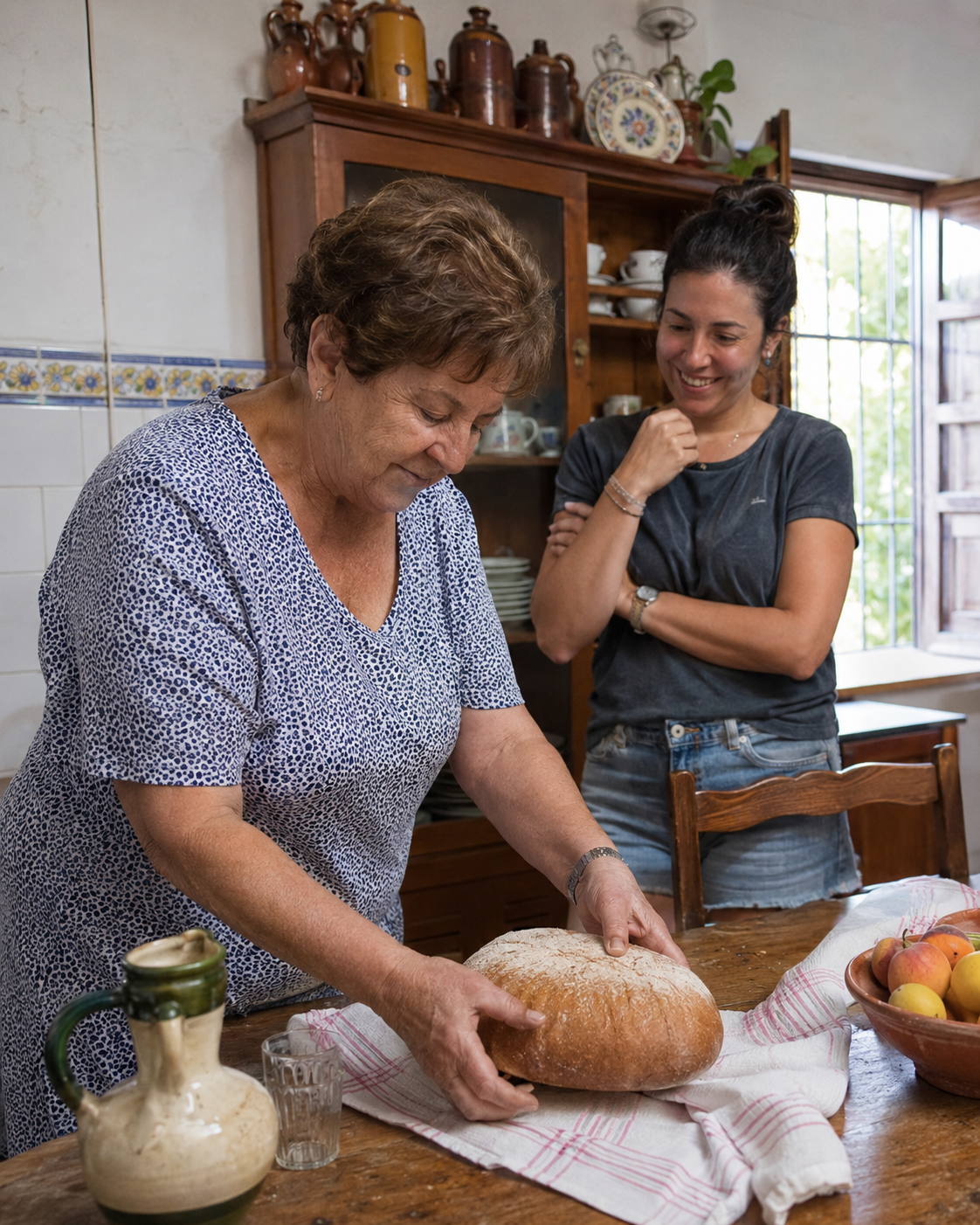
Someone in Spain may tell you quite seriously that they are not superstitious and, a few minutes later, touch a wooden table after mentioning something they hope will never happen. Another person may refuse to leave a loaf of bread upside down, or become mildly uncomfortable when the calendar shows martes 13. The reaction is often accompanied by laughter rather than genuine fear, but the gesture remains.
That is one of the interesting things about Spanish superstitions. Many survive less as firm beliefs than as inherited habits, expressions, family rules, and tiny rituals that people perform almost automatically. Practices such as tocar madera, “to touch wood,” or avoiding certain actions on Tuesday the 13th remain familiar cultural references even among people who would never describe themselves as superstitious.
Their origins are rarely as simple as popular explanations make them sound. Some are connected to Catholic symbolism, others to older Mediterranean ideas about protection and misfortune, and still others to rural folk medicine or much more recent customs. In many cases there is no single moment when a superstition was “invented.” It developed gradually, changed meaning, and acquired new explanations as generations passed it on.
That makes these traditions more interesting, not less.
In Spain, the Unlucky Day Is Tuesday the 13th
English speakers usually associate bad luck with Friday the 13th. In Spain, the date with the darker reputation is martes 13, Tuesday the 13th.
A traditional warning captures the idea neatly: En martes, ni te cases ni te embarques — on Tuesday, neither get married nor set sail. Longer versions add advice against beginning a journey or making important plans.
The Tuesday part is often connected to Mars, Marte in Spanish, the Roman god associated with warfare. The Spanish word martes comes from the same root. The number 13 already carried negative religious and symbolic associations elsewhere in Europe, including its connection with the 13 people at the Last Supper. At some point, the two strands of uneasiness came together.
The exact historical path is difficult to reconstruct. Popular explanations sometimes point to a particular military defeat or disaster as the origin of martes 13, but there is no single event that convincingly explains the entire tradition.
What matters culturally is that Tuesday acquired an unfavorable reputation long before modern Spain. Folk traditions in different parts of the country warned against starting important work, traveling, or marrying on a Tuesday.
Today, many Spaniards treat the idea humorously rather than literally. Even so, martes 13 is instantly recognizable, and the expression still appears in conversation whenever something goes wrong on the “wrong” day.
For Spanish learners, this is a useful reminder that understanding every word in a sentence does not always mean understanding the cultural reference behind it.
The Mal de Ojo Was Once a Serious Explanation for Illness
Of all Spanish folk beliefs, the mal de ojo, or evil eye, has one of the deepest histories.
The basic idea is that a person's gaze can cause harm, intentionally or unintentionally. Envy is often part of the explanation, although affection itself could sometimes be considered dangerous when directed too intensely toward someone vulnerable, particularly a child.
Historically, this was more than a metaphor for jealousy. In some parts of Spain, mal de ojo functioned as a folk explanation for illness. If a child suddenly became weak, feverish, restless, or unusually distressed, the cause might be attributed to the harmful gaze of another person.
Belief in the evil eye did not disappear neatly with modern medicine. Anthropological work in southern Spain has documented continued knowledge of the tradition even in communities with full access to doctors and hospitals. For some people, the folk explanation survived alongside biomedical ones rather than simply being replaced by them.
Protective objects developed around the belief. One of the most striking was the higa, an amulet shaped like a clenched hand with the thumb protruding between two fingers. Such objects were traditionally used to protect people thought to be especially vulnerable, including young children, the sick, the elderly, and women during pregnancy or childbirth.
Protective practices varied considerably by region. In parts of western Spain, olive, laurel, or rosemary blessed on Palm Sunday might be kept around a house, while aromatic plants could be burned around the bonfires of San Juan. Branches, amulets, prayers, and household rituals might all exist together.
It is difficult to separate these beliefs cleanly into “Catholic” and “pre-Christian” categories. Folk religion often developed somewhere in between. A family might use an amulet against the evil eye while also keeping blessed branches in the home and praying to a saint for protection.
For the people practicing these customs, there was no need for the categories to be perfectly consistent.
Why You Should Never Put Bread Upside Down
A loaf of bread sitting upside down on a table does not look particularly ominous. In traditional Spanish households, however, someone might quickly turn it over.
The taboo makes more sense once you consider the symbolic importance of bread.
In Christian tradition, bread carries a sacred association with the body of Christ. In some areas of Spain, placing bread upside down was therefore understood as disrespectful. Older customs also included kissing bread after it fell to the floor before putting it back on the table.
That does not mean every family understood the practice in explicitly theological terms. Over time, the religious explanation could disappear while the gesture remained.
A grandmother corrects the bread without explaining why, a child grows up seeing it done, and decades later the habit survives even when no one in the family believes that an upside-down loaf can actually cause misfortune.
There are other origin stories as well. One popular European explanation connects upside-down bread with loaves supposedly reserved for executioners in medieval France. The story is repeated frequently, but it is difficult to establish as the single historical source of the Spanish custom.
Spanish folk traditions provide a simpler explanation: bread itself deserved respect.
Salt, Knives, Brooms, and Touching Wood
Once you begin looking at traditional Spanish folklore, ordinary household objects become surprisingly complicated.
Spilling salt is associated with bad luck, as it is in several other European cultures. One familiar response is to throw a small amount of salt over the shoulder, symbolically sending the bad luck away.
Knives and scissors have their own rules. Giving a knife or another sharp object as a gift could be interpreted as symbolically “cutting” the relationship between giver and recipient. One traditional solution was for the recipient to hand over a small coin in return. The knife was no longer technically a gift; it had been purchased, and the symbolic danger disappeared.
Brooms could carry their own meanings. Older household traditions warned against sweeping at certain times or in certain directions. In some areas, sweeping toward the front door could be associated with driving unwanted influences out of the house. Another wonderfully practical piece of folk magic involved an unwanted visitor: placing a broom upside down behind the door was said to encourage the person to leave sooner.
The house was not imagined simply as a physical space. Doors, tables, food, tools, and entrances could all have symbolic roles. Good fortune could enter or leave. Relationships could be protected or accidentally “cut.” Everyday objects became part of a small domestic system for keeping things in order.
Tocar madera belongs to the same world.
Imagine someone saying:
Mi familia nunca ha tenido problemas con eso, toca madera.
“My family has never had problems with that, touch wood.”
The speaker may immediately reach for a table.
Tocar madera is so embedded in everyday Spanish that people can use it without considering themselves superstitious at all. The phrase is usually used after saying something positive that the speaker hopes will continue, as if acknowledging good fortune too confidently might somehow tempt fate.
There are several theories about why wood became protective. Some connect the practice to the Christian cross; others point to much older European traditions involving sacred trees. There is no single explanation that convincingly accounts for every version of the custom.
What is clear is that the gesture survived even when its original meaning became vague.
Spain also has verbal ways of trying to send bad luck away. One older expression is ¡Lagarto, lagarto! — literally, “Lizard, lizard!” It has traditionally been used as a spoken charm after hearing something unpleasant or ominous, in much the same way that someone might say Dios me libre, “God forbid.”
Translated word for word, lagarto, lagarto sounds absurd. Culturally, it makes perfect sense once you know what the expression is doing.
That gap between literal meaning and cultural meaning is exactly the kind of thing language learners begin noticing once they move beyond textbook vocabulary.
Spain's Twelve Lucky Grapes Are Younger Than They Seem
Not all superstitions are about avoiding disaster. Some are designed to invite good fortune.
Few Spanish luck rituals are more recognizable than eating twelve grapes at midnight on New Year's Eve. As the clock strikes twelve, people try to eat one grape with each chime. Each grape represents one month of the coming year, and successfully making it through all twelve is traditionally associated with good luck.
The televised clock at Madrid's Puerta del Sol has become the ritual's most famous setting, and every December 31 millions of people across Spain prepare their grapes before midnight.
The tradition feels ancient, but it is relatively modern.
One popular story claims that grape growers in Alicante invented the custom in 1909 after an unusually large harvest left them with too much fruit. The surplus may indeed have helped commercialize and popularize the practice, but references to eating grapes on New Year's Eve appeared before 1909.
Historical accounts suggest that wealthy Spaniards had already begun celebrating the new year with grapes and champagne in the late nineteenth century. Other people in Madrid then adopted, imitated, or even mocked the fashionable custom around Puerta del Sol. Growers and merchants later had every reason to promote it.
This is often how traditions develop. A fashionable habit appears, people copy or parody it, businesses help spread it, public celebrations give it visibility, and eventually everyone forgets that it was once new.
Today, twelve grapes at midnight feel completely Spanish regardless of who first decided to eat them with the clock.
Superstitions Change From One Spanish Family to Another
It would be misleading to imagine that there is one official list of Spanish superstitions practiced identically from Galicia to Andalusia.
Beliefs have always varied by region, village, generation, and family. Agricultural communities developed rituals around crops, animals, weather, and seasonal festivals. Coastal communities had their own traditions connected with the sea. Beliefs surrounding mal de ojo were stronger in some areas than others, while individual households developed their own rules about food, gifts, luck, and religious objects.
They also change with time.
Someone may know that bread should not be upside down without believing God will be offended. Another person may eat twelve grapes every New Year's Eve while laughing at the idea that missing the ninth grape will ruin September. A person who dismisses the evil eye as an old-fashioned belief may still touch wood after talking about good health.
Superstition often becomes culture before it disappears.
That is why asking whether Spaniards “really believe” these things is not always the most useful question. Belief exists on a spectrum. A custom can be taken seriously, practiced jokingly, followed out of family habit, or remembered only as something grandparents used to do.
All of those versions are culturally meaningful.
What Spanish Learners Hear That Textbooks Rarely Explain
Superstitions introduce a surprisingly useful collection of Spanish expressions.
Dar mala suerte means “to bring bad luck,” while tener mala suerte means “to have bad luck.” Ser supersticioso or supersticiosa means to be superstitious. Mal de ojo refers to the evil eye, and tocar madera works much like “knock on wood” or “touch wood” in English.
Then there are expressions whose meaning cannot be understood through vocabulary alone.
En martes, ni te cases ni te embarques makes little sense unless you know Tuesday's traditional reputation. Lagarto, lagarto is nearly impossible to interpret simply by looking up lagarto in a dictionary.
This is the point at which vocabulary turns into cultural knowledge. A learner may understand the grammar of a conversation perfectly and still wonder why someone suddenly touches a table after mentioning good health, why an older relative turns a loaf of bread over, or why everyone is frantically eating grapes while a clock strikes midnight.
For adults who would like to develop their Spanish alongside a deeper understanding of the cultures in which it is spoken, Polyglottist Language Academy offers Spanish classes for adults. Cultural expressions like these are especially useful because they show how language continues to carry history even when speakers no longer consciously think about where a phrase or gesture came from.
The most revealing Spanish superstition may therefore be the one practiced by someone who insists they are not superstitious.
They would never cancel a trip because it falls on martes 13. They do not believe an upside-down loaf can alter their future, and they certainly do not think a wooden table controls fate.
Still, after saying that nothing bad has happened yet, their hand may quietly reach for the nearest piece of wood.